The Science Behind Play and Brain Development
When children play freely - inventing rules, negotiating roles, redirecting when something doesn't work - they're doing some of the most cognitively demanding work of their day. Research in developmental psychology consistently links self-directed play to stronger executive function, the cluster of mental skills that includes working memory, flexible thinking, and impulse control. These are the same skills associated with academic success and healthy social relationships.
Animal studies and longitudinal human research both suggest that play deprivation in early life is associated with poorer emotional regulation and reduced adaptability. While causation is complex, the pattern is consistent enough that major pediatric organizations, including the American Academy of Pediatrics, have issued statements recognizing play as essential to healthy development.
~25%
Decline in children's free play time since 1981
Research published by Sandra Hofferth and John Sandberg found significant reductions in unstructured outdoor play over the final two decades of the twentieth century.
3-5x
More time in organized activities vs. 1981
The same longitudinal data set shows children spending substantially more time in structured, adult-led activities compared to earlier generations.
75 min
Average outdoor play time per day for U.S. children
Estimates from survey data suggest many American children fall well short of the physical activity and outdoor exploration recommended by pediatric health authorities.
Importantly, unstructured play appears to offer something structured activities cannot fully replicate: the experience of self-regulation under uncertainty. When a child invents a game, they must manage frustration, negotiate with peers, and adapt plans - all without an adult resolving the tension for them.
Why Free Play Has Declined - and What It Costs
Over the past several decades, children's free time has contracted substantially. Increased homework loads, more scheduled extracurricular activities, safety concerns about outdoor play, and the rise of screen-based entertainment have all contributed. Research by developmental psychologist Peter Gray and colleagues has documented this trend, noting that the same period has seen rising rates of childhood anxiety and declining measures of creative thinking in standardized assessments.
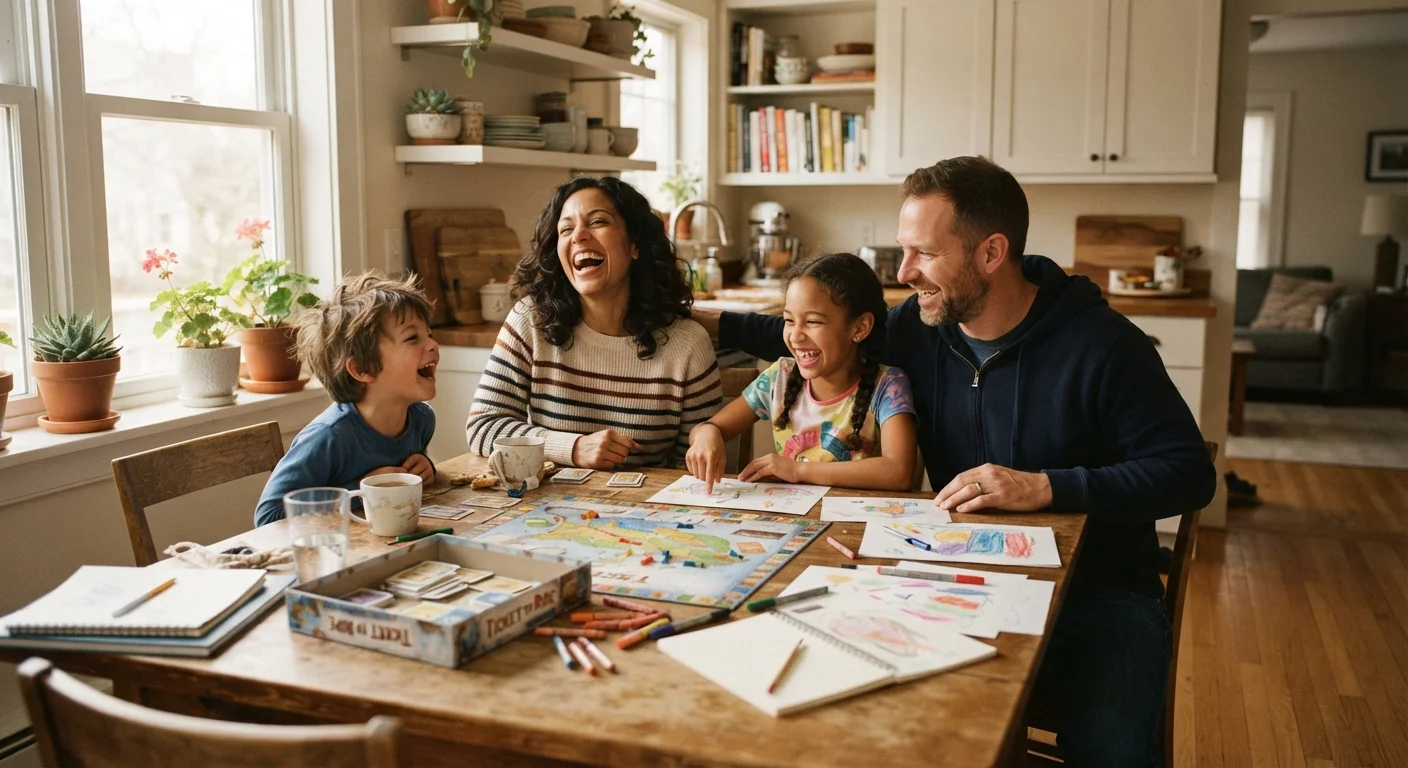
This doesn't mean organized activities are harmful - they offer real benefits including skill development, teamwork, and goal-setting. The concern is imbalance. When nearly every hour is directed by an adult, children lose practice in self-direction. For a closer look at how structured and free time each contribute, our guide to structured vs. unstructured family time explores the trade-offs in depth.
Try a 'Boredom Window' Each Day
Some families find it helpful to build in a deliberate period - even 30-45 minutes - where screens are off, no activity is scheduled, and children are expected to find their own direction. Initial resistance often gives way to genuine creative engagement within a few sessions. The goal isn't to entertain; it's to hand the reins back to your child.
What Unstructured Play Actually Looks Like
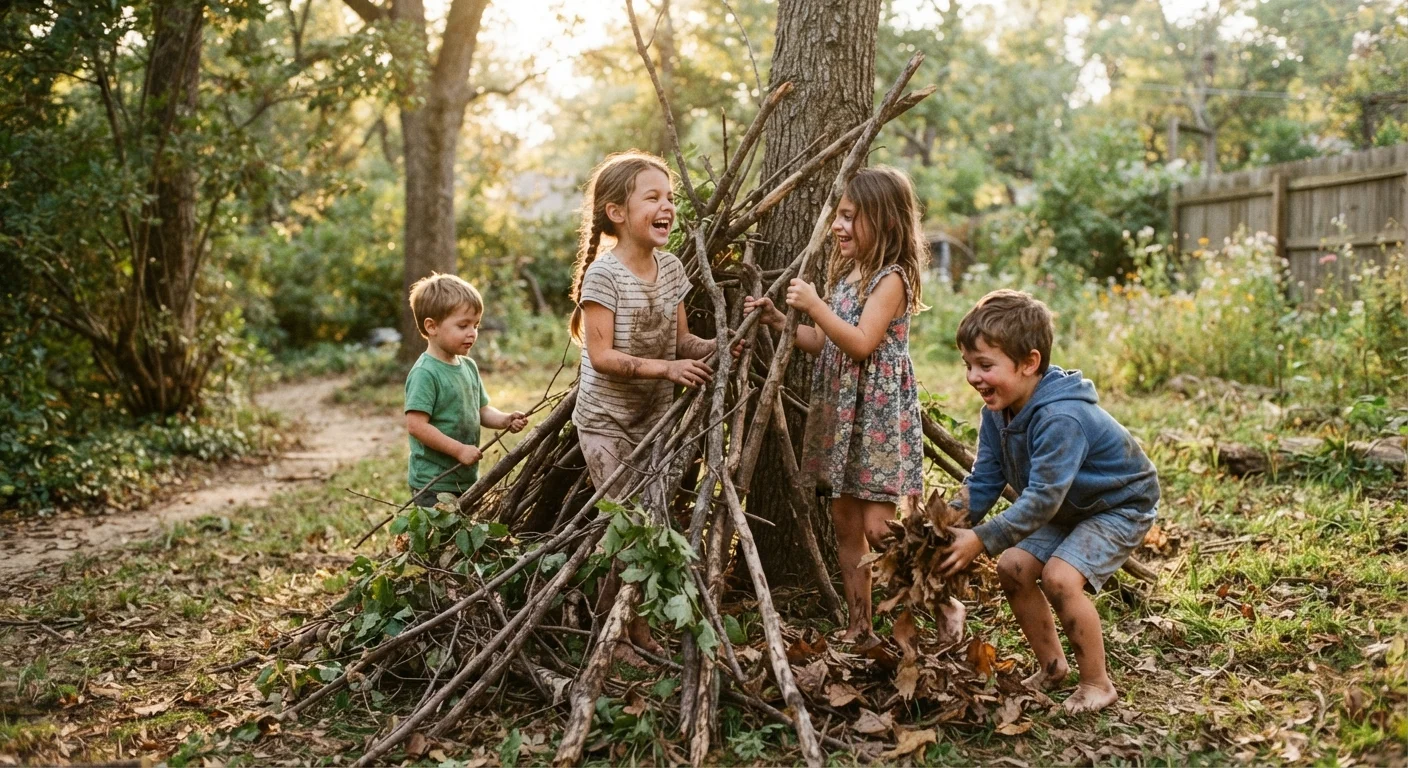
Free play doesn't require special equipment or a particular setting. It can happen indoors or out, alone or with others. What defines it is child agency - the child is choosing the activity, shaping its direction, and setting the terms.
Play also shifts in character across developmental stages. Toddlers engage in solitary and parallel play, learning through sensory exploration. Preschoolers begin elaborate pretend play with rich social negotiation. School-age children often create complex rule-based games that require sustained cooperation. Each stage builds on the last, and each requires space - time not already claimed by structured demands.
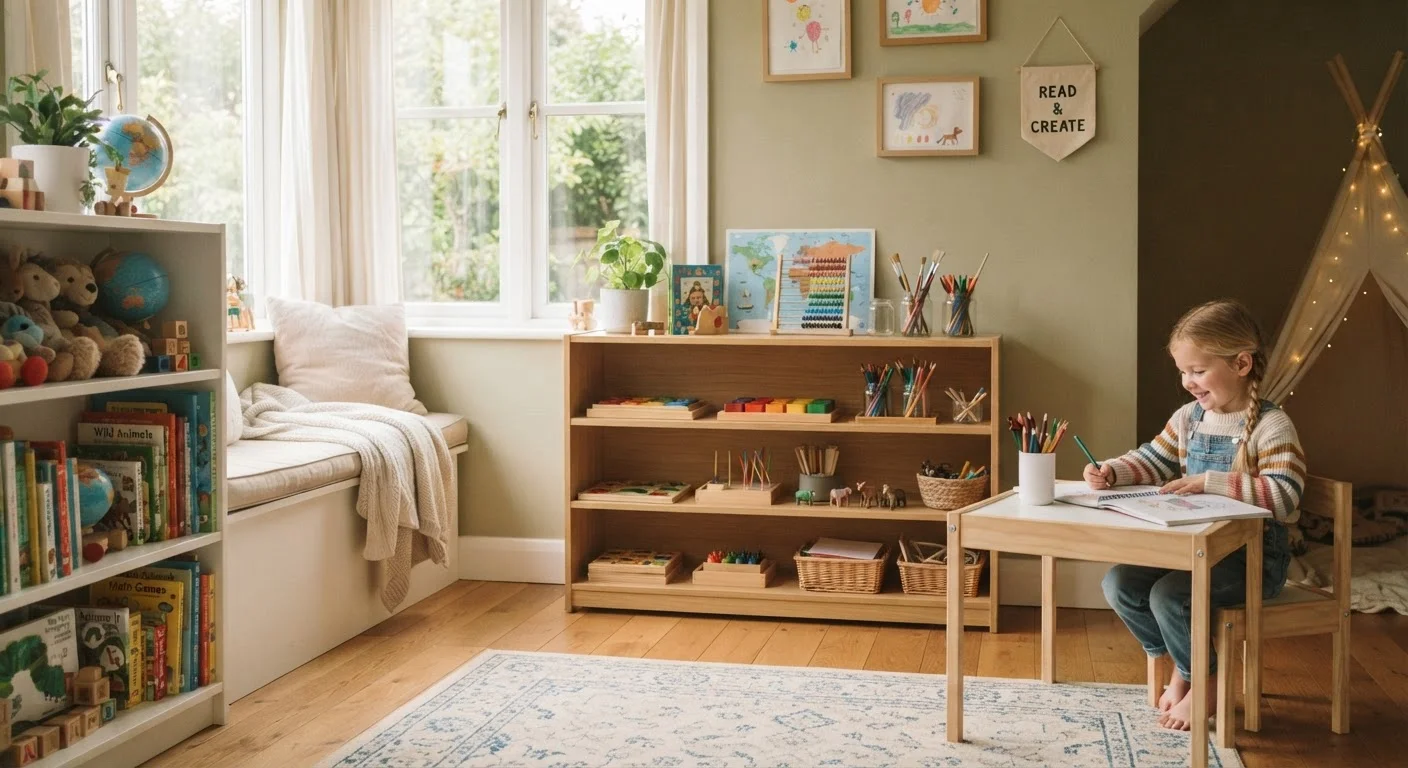
Creating a home environment that supports learning and curiosity doesn't mean filling it with educational toys. It often means clearing predictable time and physical space for play to unfold naturally.
How Parents Can Support - Without Taking Over
The most effective thing many parents can do for their child's play life is protect time for it and then step back. This runs against the instinct to be involved and engaged, but child-led play specifically requires that children experience the full loop: desire, decision, challenge, and resolution - without a parent smoothing every rough edge.
“Play is the work of childhood. It is through play that children learn to master their world, to achieve competence, to create, and to understand social relationships.”
— Fred Rogers, Child development advocate and television educator
Practically, this might look like:
- Scheduling unstructured time as deliberately as you schedule activities - treating it as non-negotiable, not filler.
- Providing open-ended materials (cardboard boxes, art supplies, outdoor space) rather than toys with a single correct use.
- Resisting the urge to redirect or "improve" what the child is doing unless safety is at stake.
- Being available without being directive - nearby if needed, but not running the show.
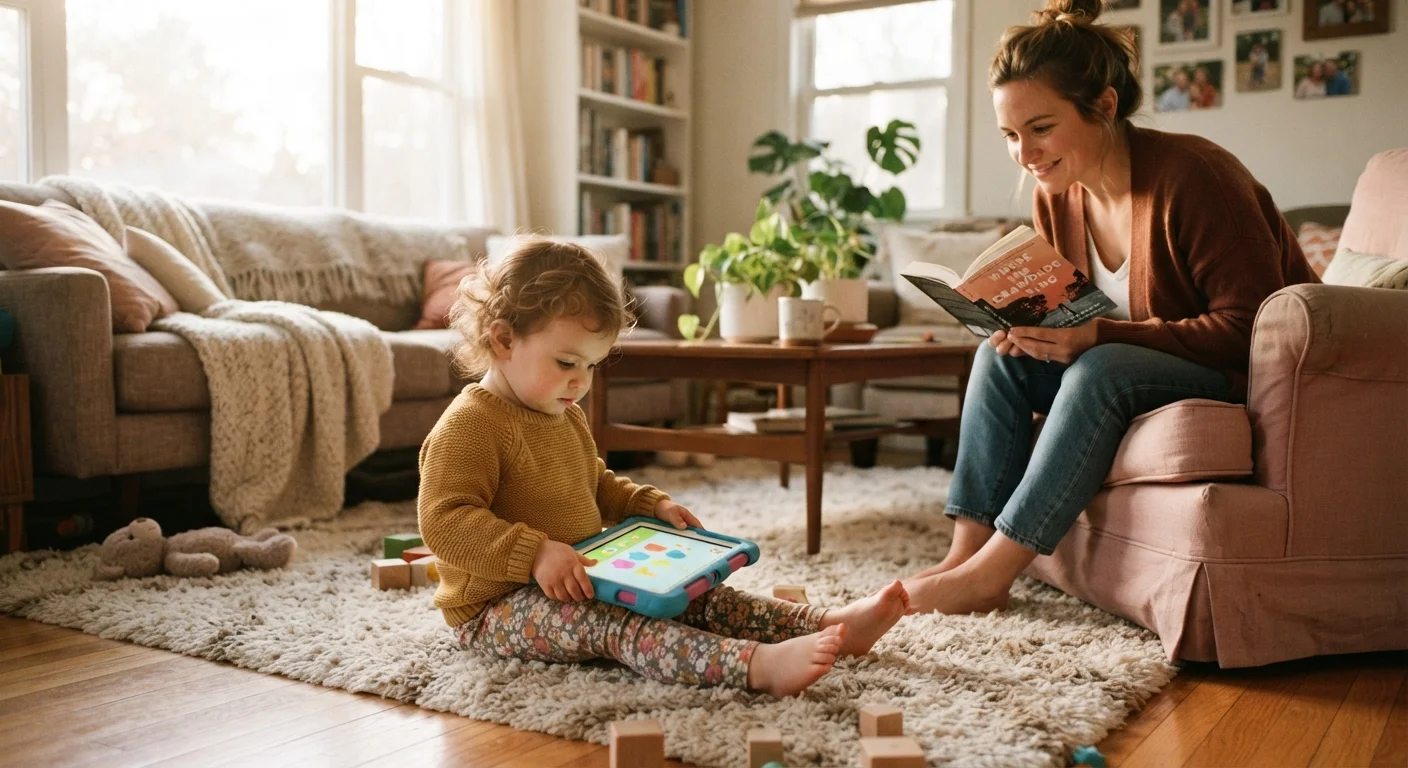
For families thinking about how play intersects with screen time, our overview of screen time approaches offers useful context. And for the broader picture of nurturing your child's cognitive potential, exploring how language-rich environments shape development complements what we know about play.
This article is for informational purposes only and is not a substitute for professional advice from a pediatrician or child development specialist. If you have concerns about your child's development, please consult a qualified healthcare professional.