How to Draw the Line Between DIY and Pro Work
Every homeowner eventually faces the same question standing in front of a dripping faucet or a crackling outlet: Do I call someone, or can I handle this myself? The answer depends on more than YouTube confidence. Three filters should guide every repair decision:
- Safety risk: Could an error injure you, a family member, or a neighbor?
- Legal requirements: Does local code require a licensed professional or a permit?
- Consequences of failure: Would a mistake cause cascading damage-water intrusion, fire, structural compromise?
Answering honestly across all three filters will tell you more than any skill self-assessment. For a deeper look at the broader decision framework, see DIY vs. Hiring a Contractor: How to Think Through the Decision Honestly.
If you're newer to homeownership, First-Time Homeowner's Introduction to Home Maintenance provides the foundational context that makes these judgment calls easier over time.
Repairs That Are Generally Safe to DIY
The following tasks are widely considered appropriate for homeowners with basic tool competency. They don't typically require permits, pose limited risk when done carefully, and are reversible if something goes wrong.
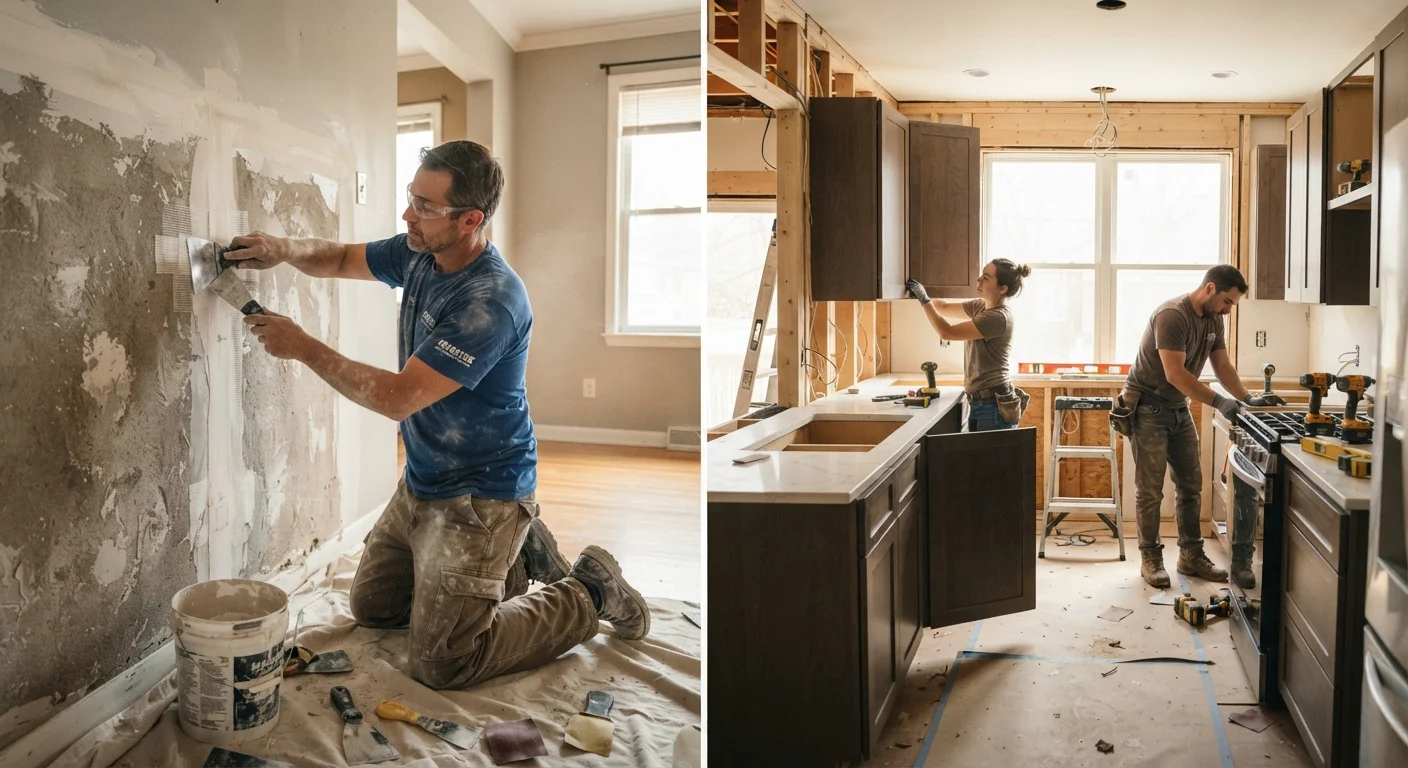
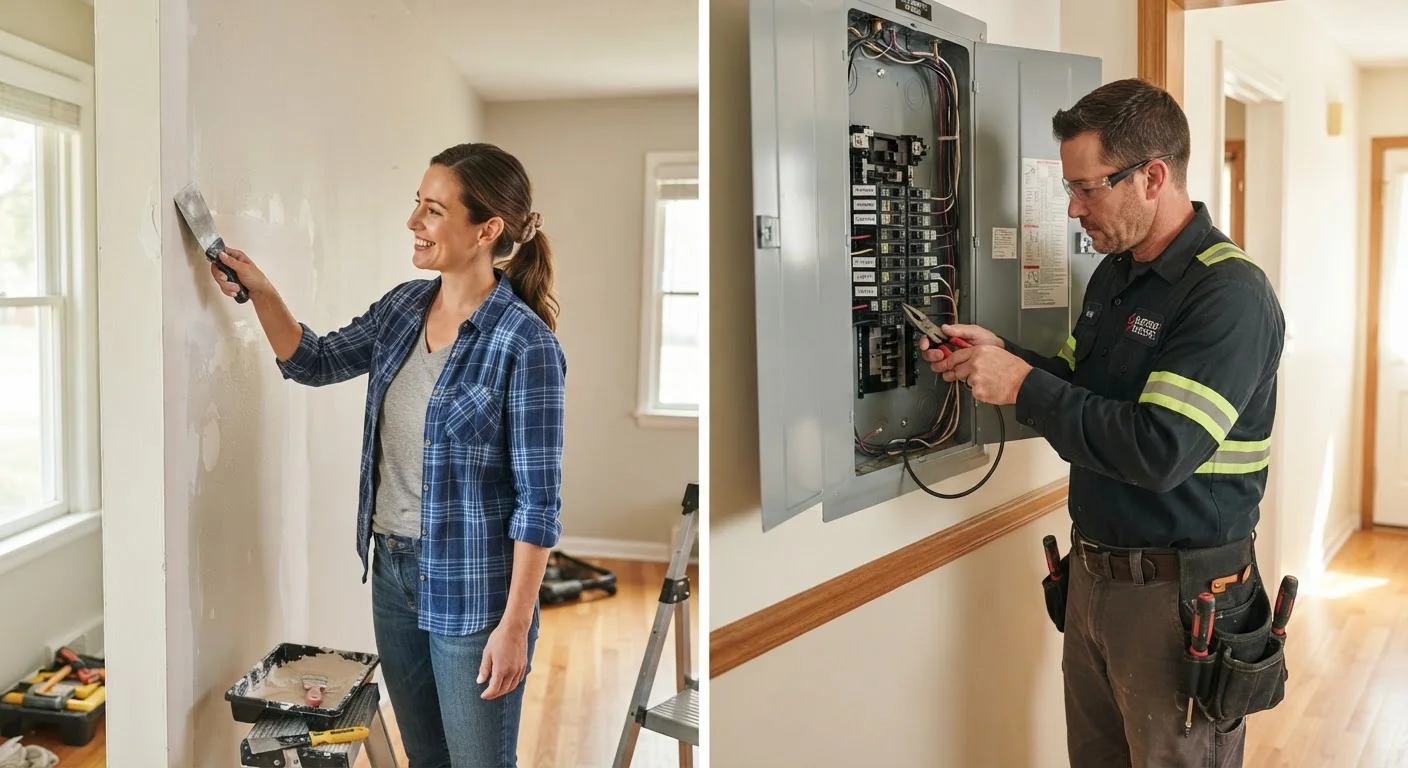
- Patching small drywall holes (under 6 inches) using a patch kit and joint compound
- Replacing outlet covers, switch plates, and light fixtures - provided the circuit is turned off at the breaker first
- Caulking around tubs, sinks, and windows to prevent moisture intrusion
- Fixing a running toilet by replacing the flapper, fill valve, or flush handle
- Repainting interior walls and trim, including light surface prep and priming
- Replacing door hardware such as handles, locks, and hinges
- Cleaning and replacing HVAC filters and maintaining dryer vent connections
- Minor gutter clearing and downspout flushing from the ground or a stable ladder
Always Shut Off Utilities Before Starting
Before beginning any DIY repair, turn off the relevant utility at its source - the circuit breaker for electrical work, the shut-off valve for plumbing tasks. Confirm the power or water is actually off before touching any components. This single habit prevents the vast majority of DIY-related injuries and floods.
Even on safe DIY tasks, turn off relevant utilities (water shut-off, circuit breaker) before starting. A small precaution consistently applied prevents the majority of DIY injuries.
Work That Requires a Licensed Professional
The tasks below are either legally required to be performed by licensed contractors in most U.S. jurisdictions, or carry risks that make professional involvement strongly advisable. Attempting them without proper qualifications can result in failed inspections, insurance claim denials, and serious physical harm.
Permits Protect You - Skipping Them Has Consequences
In most U.S. municipalities, electrical, gas, structural, and major plumbing work requires a permit and inspection before it's legally complete. Skipping permits isn't just a code violation - it can cause your homeowner's insurance to deny related claims and may require you to disclose unpermitted work when selling your home. Always verify local permit requirements through your city or county building department before starting significant work.
- Electrical panel work - adding circuits, replacing breakers, or upgrading service capacity requires a licensed electrician and almost always a permit.
- Gas line installation or repair - any work on gas supply lines, including appliance connections beyond a simple shutoff swap, must be handled by a licensed plumber or gas fitter.
- Structural modifications - removing or altering load-bearing walls, beams, or headers requires engineering assessment and permitted contractor work.
- Roof replacement or major repair - beyond replacing a handful of shingles, roofing work involves fall hazards and waterproofing precision that warrant professional credentials.
- Main sewer line repair - digging into or replacing the main drain line typically requires a permit and licensed plumber.
- HVAC installation or major repair - refrigerant handling is federally regulated; installation requires certification.
Unpermitted work doesn't just risk fines-it can complicate your home sale and affect insurance coverage. How insurers treat repairs vs. renovations is a related nuance worth understanding before starting any significant project.
If you're already experiencing water-related issues, read Detecting a Slow Water Leak Before It Becomes a Disaster before deciding whether to DIY the fix.
Comparing DIY vs. Pro Across Key Factors
The comparison below helps clarify the practical differences between handling a repair yourself and hiring a licensed professional across the criteria that matter most to homeowners.
| DIY Repair | Licensed Professional | |
|---|---|---|
| Upfront cost | Lower (materials only) | Higher (labor + materials) |
| Permit eligibility | Limited; many permits require licensed trades | Full permit access in all jurisdictions |
| Insurance implications | Unpermitted DIY can void claims | Licensed work typically maintains coverage |
| Safety accountability | Homeowner bears full responsibility | Contractor carries liability insurance |
| Skill requirement | Varies; cosmetic tasks accessible | Specialized training and certification required |
| Suitable task types | Cosmetic, minor plumbing, maintenance | Electrical, gas, structural, HVAC, major plumbing |
Neither option is universally better - the right call depends on the specific task, your verified skill level, and local requirements. For guidance on what to verify before hiring a contractor, review the key questions around licensing, written contracts, and insurance before any work begins. And if you've encountered conflicting advice about what's safe to DIY, common home maintenance myths debunked can help separate fact from folklore.
~$170B
Annual U.S. DIY home improvement spending
Harvard's Joint Center for Housing Studies has tracked significant DIY spending as a share of total home improvement activity over multiple years.
35%
Home fires linked to electrical failures
The U.S. Fire Administration has reported that electrical failures or malfunctions are among the leading causes of home structure fires.