
Why Structure Helps Without Becoming a Straitjacket
Most people don't fail at nutrition because they lack willpower - they fail because meals are decided under pressure, when hunger and fatigue make the path of least resistance most appealing. A weekly meal plan shifts those decisions to a calmer moment, when you can think clearly about what your body actually needs. The result isn't a rigid eating schedule; it's a framework that removes the daily friction of deciding what to eat.
Research consistently links meal planning to improved diet quality and reduced food waste, according to nutritional behavior studies. The act of planning, even imperfectly, builds an awareness of food group variety and portion balance that accumulates over time. Done well, a weekly plan also supports other goals - exercise recovery, energy management, and even household budgeting. For families, it can become a shared anchor for the week, as explored in building a family routine that supports sleep, nutrition, and movement.
What you will need
The seven steps below walk you through building your first - or your most effective - weekly meal plan, from setting a goal to reviewing progress mid-week.
This article provides general nutrition information and is not a substitute for personalized advice from a registered dietitian or healthcare provider. If you have a medical condition or specific dietary need, consult a qualified professional before making significant changes to your diet.
Tools That Make Planning Easier
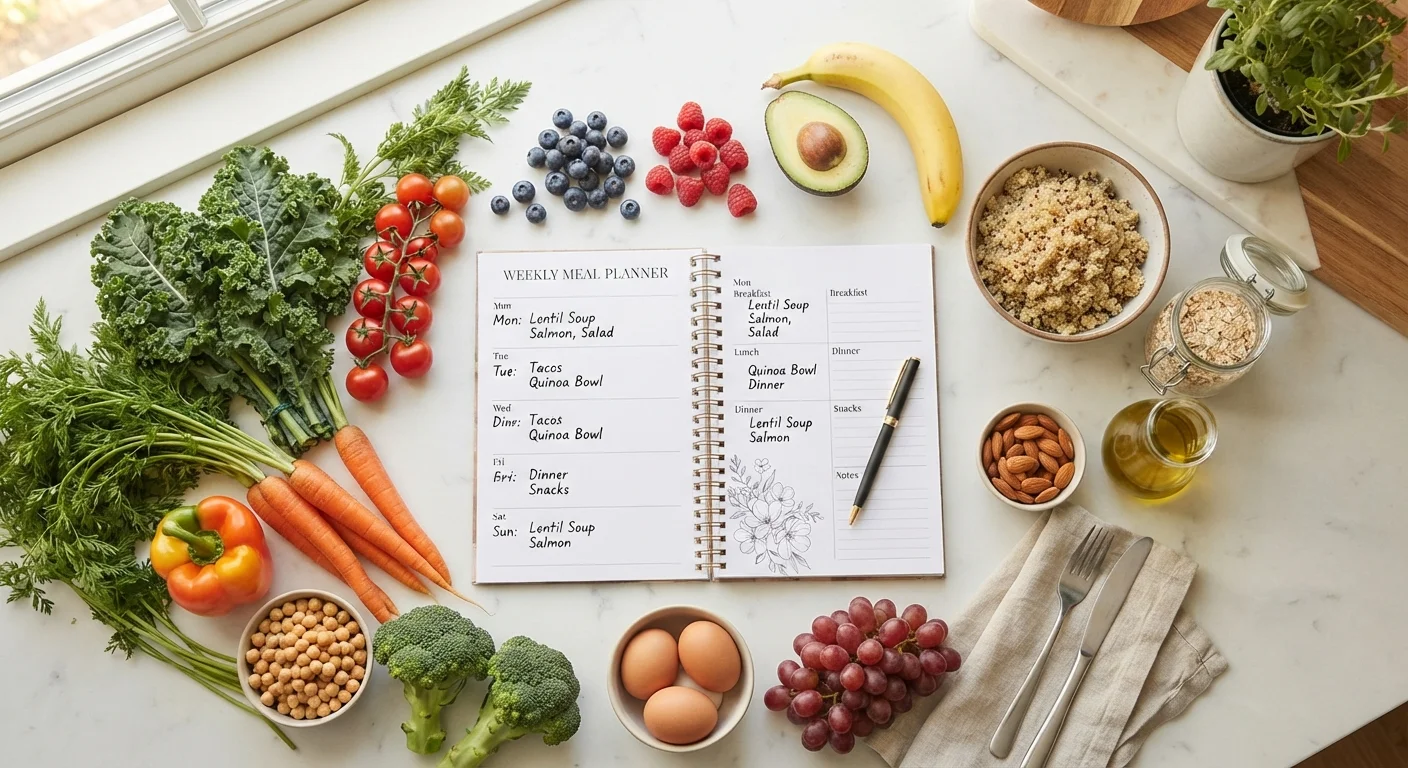
You don't need specialized software or an elaborate system to plan effectively. The most important tool is something that lets you see all seven days at once, whether that's a printed template, a whiteboard, or a simple spreadsheet. Visual overview is the point - it lets you spot gaps and repetition that are easy to miss when you plan one meal at a time.
Weekly planner template (paper or digital)
Provides a structured grid to map meals across all seven days at a glance.
MyPlate or similar food group reference
Used as a quick visual check that each day covers major nutrient categories.
Grocery checklist
Translates the finalized meal plan into a shopping list organized by food category.
Kitchen scale or measuring cups
Helpful for readers tracking specific nutrient targets like protein or carbohydrates.
Clarify your nutrition goal for the week
Before filling in a single meal slot, spend five minutes naming your primary goal. Common examples include increasing vegetable servings, hitting an adequate daily protein intake, reducing heavily processed foods, or simply eating more varied whole foods. A single clear focus makes the rest of your decisions easier and more consistent. If you have a medically guided dietary need, use guidance from your registered dietitian or healthcare provider as your anchor.
Audit what you already have on hand
Check your pantry, refrigerator, and freezer before planning a single new recipe. Note proteins, grains, canned goods, and vegetables that need to be used. Building meals around existing ingredients reduces waste, lowers your grocery spend, and often reveals combinations you hadn't considered. This audit also highlights genuine gaps - the items you actually need to buy.
Sketch a meal structure for each day
Lay out seven columns - one per day - with rows for breakfast, lunch, dinner, and snacks if relevant. You don't need to specify exact recipes yet. Start by assigning a protein source and a vegetable-heavy component to each dinner slot, then work backwards to breakfasts and lunches. Aim for variety across protein sources (legumes, eggs, fish, poultry, lean meat) and produce colors throughout the week rather than perfection at every meal.
The USDA's MyPlate framework is a practical reference here: roughly half of each plate as fruits and vegetables, a quarter lean protein, and a quarter whole grains, with dairy or calcium-rich alternatives on the side. Use it as a loose guide, not a rigid rule.
Check for nutritional balance across the week
Scan the completed grid and look for obvious gaps. If every dinner is built around the same protein, swap one or two slots. If produce appears at dinner but rarely at breakfast or lunch, add a fruit to morning meals or pack raw vegetables for lunch. The goal is balance across the week, not at every individual meal. This wider lens is both more realistic and more sustainable.
For readers managing specific health conditions or following a medically recommended diet, cross-reference your plan against guidance from your care team rather than general population guidelines. You can also explore how to read a special diet plan without getting overwhelmed for support interpreting structured dietary frameworks.
Identify one or two batch-prep opportunities
Look for ingredients that appear across multiple meals - a grain like brown rice, a batch of roasted vegetables, hard-boiled eggs, or cooked legumes. Preparing these once at the start of the week creates ready-to-use building blocks that make assembling lunches and dinners faster and less effortful. Batch prep doesn't require dedicating a full Sunday to cooking; even 30 minutes of focused preparation pays dividends throughout the week.
A weeknight mise en place routine can extend this habit into your daily cooking practice.
Convert your plan into a grocery list
Go meal by meal through your completed plan and list every ingredient you don't already have, organized by section of the store: produce, proteins, dairy or alternatives, grains, and pantry items. A category-organized list saves time in the store and reduces impulse purchases that can push your plan off track. Cross-reference the weekly grocery checklist for balanced nutrition to ensure you haven't overlooked a key food group.
Review and adjust mid-week
A meal plan is a living document, not a binding contract. On Wednesday or Thursday, glance at what you've eaten and what's still in the fridge. If produce is nearing the end of its life, prioritize it. If a planned meal has become unappealing, swap it with something simpler. The habit of mid-week review prevents both food waste and the frustrated abandonment of the entire plan. Consistency matters more than adherence to the exact original grid.
Once your plan is complete and your grocery list is ready, consider pairing it with the weekly meal-planning checklist for nutritionally balanced eating to do a final coverage check across key food groups before you shop.