Why Budgeting Myths Are So Persistent
Most people don't skip budgeting because they're bad with money - they skip it because they've absorbed a set of beliefs that make budgeting seem pointless, painful, or only relevant to other people. These myths are widespread, understandable, and wrong.
The good news: once you can name the misconception, it loses most of its power. The myth-and-fact pairs below tackle the most common blockers head-on, so you can see budgeting for what it actually is - a practical planning tool available to anyone. If you'd like a plain-language overview before diving in, see what a budget actually is and why the concept gets misread so often.
Myth
Budgeting is only necessary if you're in debt or struggling financially.
Fact
Budgeting is a planning tool for anyone who earns and spends money - regardless of income level or financial health.
This is one of the most common reasons people delay starting. The assumption is that a budget is a remedial measure - something you do when things go wrong. In reality, budgeting is how you prevent things from going wrong. People across every income bracket use budgets to reach savings goals, manage irregular expenses, and make deliberate spending choices. The Consumer Financial Protection Bureau (CFPB) consistently emphasizes budgeting as a foundational tool for financial stability at all income levels, not just for those in crisis. If you want to explore the relationship between saving and managing debt, a budget is the natural starting point either way.
Myth
You need to be good at math to budget effectively.
Fact
Basic addition and subtraction are all the math a budget requires. The challenge is behavioral, not arithmetic.
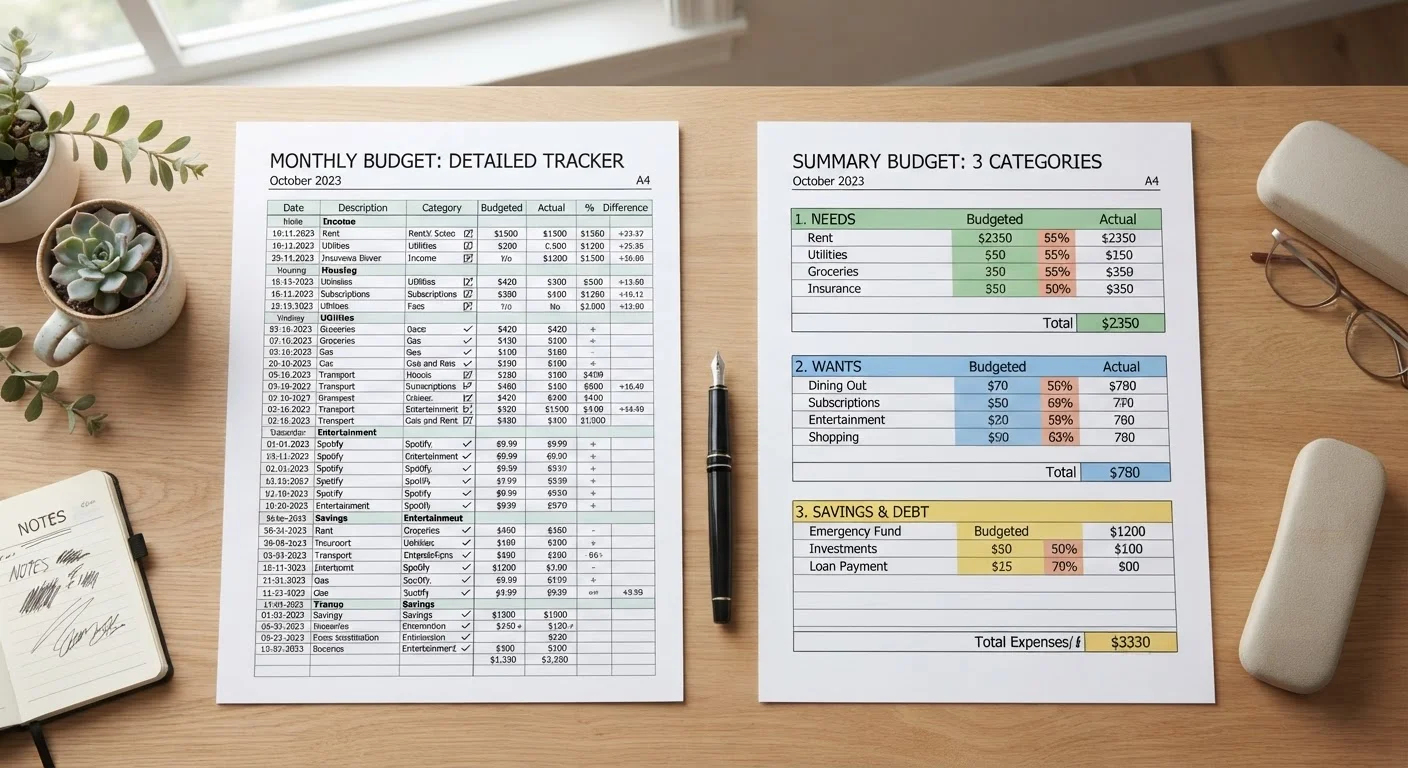
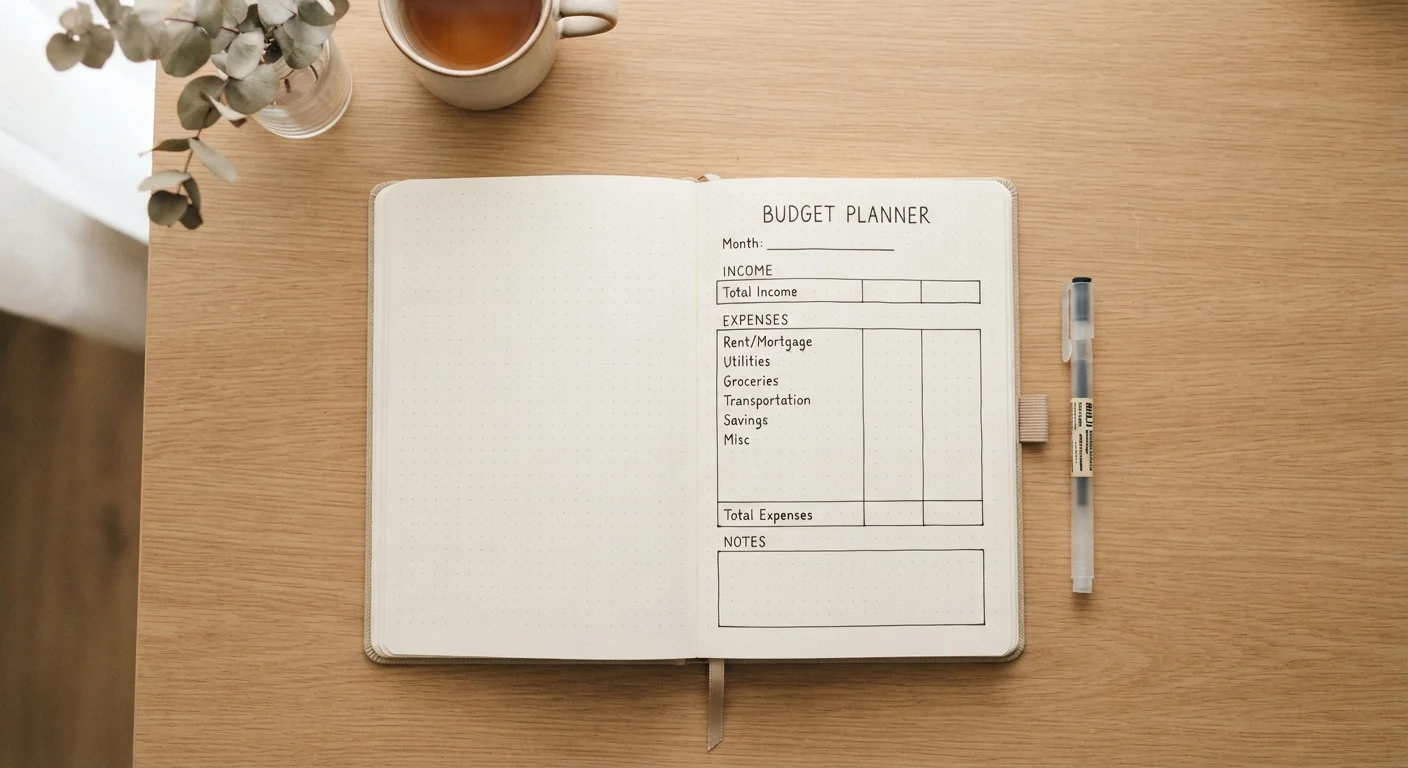
The mental image of a budget - rows of formulas, color-coded spreadsheets - intimidates a lot of people who consider themselves non-mathematical. But a functional budget simply adds up income, lists expected expenses, and checks whether the numbers balance. A pencil and paper works. So does a free app, a simple spreadsheet, or even the envelope method. Familiarizing yourself with core budgeting terms removes the vocabulary barrier without requiring any numerical sophistication. The friction in budgeting is almost always about habits and consistency, not calculation.
Myth
A budget means you can't spend money on things you enjoy.
Fact
A budget doesn't eliminate discretionary spending - it allocates it deliberately, which often means you can enjoy it without guilt.
The word "budget" carries a connotation of deprivation, but that framing misunderstands what a budget does. A budget is a plan for all of your money, including the portion you spend on entertainment, dining out, hobbies, or whatever matters to you. The difference is intention: when spending is planned rather than accidental, you know it fits within your means. Frameworks like the 50/30/20 rule explicitly reserve a portion of income - often 30% - for personal wants. Understanding the distinction between needs and wants helps you allocate honestly without eliminating the things that make life enjoyable.
Myth
Budgeting doesn't work if your income is irregular or unpredictable.
Fact
People with variable income can budget effectively using baseline-income methods and flexible spending categories.
Freelancers, gig workers, commission-based employees, and seasonal workers often assume budgeting requires a stable paycheck. It doesn't. The approach simply shifts: rather than budgeting from a fixed monthly figure, you build a plan around a conservative income baseline - typically your lowest expected monthly earnings - and treat anything above that as surplus to allocate deliberately. Budgeting on an irregular income covers practical strategies tailored specifically to income unpredictability. The method looks different, but the core principle - knowing where your money goes - applies just as well.
Myth
You have to track every single purchase for a budget to work.
Fact
Useful budgets require enough tracking to stay on course - not a ledger entry for every cup of coffee.
Hyper-detailed tracking is one reason people abandon budgets within weeks. The goal of tracking is awareness and accountability, not exhaustive accounting. Many effective approaches group spending into broad categories - groceries, transportation, entertainment - and check in weekly or monthly rather than daily. Zero-based and percentage-based budgeting represent two philosophies with different tracking intensities; neither requires recording every small transaction if the broader categories stay on target.
What to Do Once the Myths Are Out of the Way
Clearing up these misconceptions is only step one. The next move is finding a method that fits your actual life - not some idealized version of it. Two of the most widely used frameworks are zero-based budgeting, where every dollar gets assigned a purpose, and the percentage-based 50/30/20 rule, which divides income into needs, wants, and savings. Compare zero-based budgeting and the 50/30/20 rule to see which approach suits your income type and goals.
Don't Wait for the "Perfect" Moment to Start
A common pattern is delaying a budget until after a raise, a move, a debt payoff, or some other milestone. In practice, that moment rarely arrives as planned. An imperfect budget started today will almost always outperform a perfect budget that never gets built. Start with rough estimates and refine as you go - the adjustment process is itself part of how budgeting works.
If you've never built a budget from scratch, the beginner's guide to your first budget walks through every step with no assumed knowledge. And if you've tried before and it fell apart, the issue is likely behavioral rather than mathematical - understanding why budgets fail can help you break the cycle before it repeats.
~33%
Americans with a detailed household budget
Gallup polling has consistently found that fewer than half of U.S. adults maintain a detailed household budget, suggesting most people manage money without a formal plan.
1 in 3
Adults who couldn't cover a $400 emergency
Federal Reserve surveys on economic well-being have found that a significant share of U.S. adults report difficulty covering an unexpected $400 expense - a gap a budget can help close over time.
Budgeting success is less about discipline than about design. The habits that separate people who stick to a budget come down to consistent systems, not willpower. Start small, stay flexible, and adjust as you go.
This article is for general informational and educational purposes only and does not constitute personalized financial advice. Consider consulting a qualified financial professional for guidance specific to your situation.