Why Dietary Patterns Matter More Than Single Foods
Nutrition research has increasingly shifted focus from individual nutrients to overall eating patterns. No single food determines health outcomes; rather, the consistent combination of foods across meals and years is what shapes long-term wellbeing. Three patterns have accumulated substantial research attention - the Mediterranean diet, the DASH (Dietary Approaches to Stop Hypertension) diet, and broad whole-food eating. Understanding each helps you identify which fits your lifestyle, health priorities, and food preferences.
These approaches aren't rigid prescriptions. They're frameworks - and as explored in this overview of why aggressive dietary restriction often backfires, sustainable patterns consistently outperform short-term rules.
The Three Patterns at a Glance
Before diving into nuances, it helps to see how these patterns compare across practical dimensions.
| Mediterranean | DASH | Whole-Food | |
|---|---|---|---|
| Primary focus | Cardiovascular health, longevity | Blood pressure reduction | Minimizing processed food intake |
| Fat guidance | Liberal healthy fats (olive oil, nuts) | Moderate fat, low saturated fat | Unrefined fats preferred, no strict limit |
| Sodium emphasis | Not specifically restricted | Explicitly limited | Limited indirectly via whole foods |
| Dairy inclusion | Moderate, traditional cheeses | Encouraged (low-fat) | Optional, minimally processed |
| Flexibility | Moderate - regionally inspired | Structured with targets | High - adaptable to any cuisine |
| Research depth | Extensive, long-running studies | Strong clinical trial evidence | Broad but less pattern-specific |
Each pattern has a distinct origin and primary research focus, but they converge on more points than they diverge. All three de-emphasize ultra-processed foods, added sugars, and refined carbohydrates. The differences lie in what each highlights most.
Mediterranean: A Pattern Built Around Food Culture
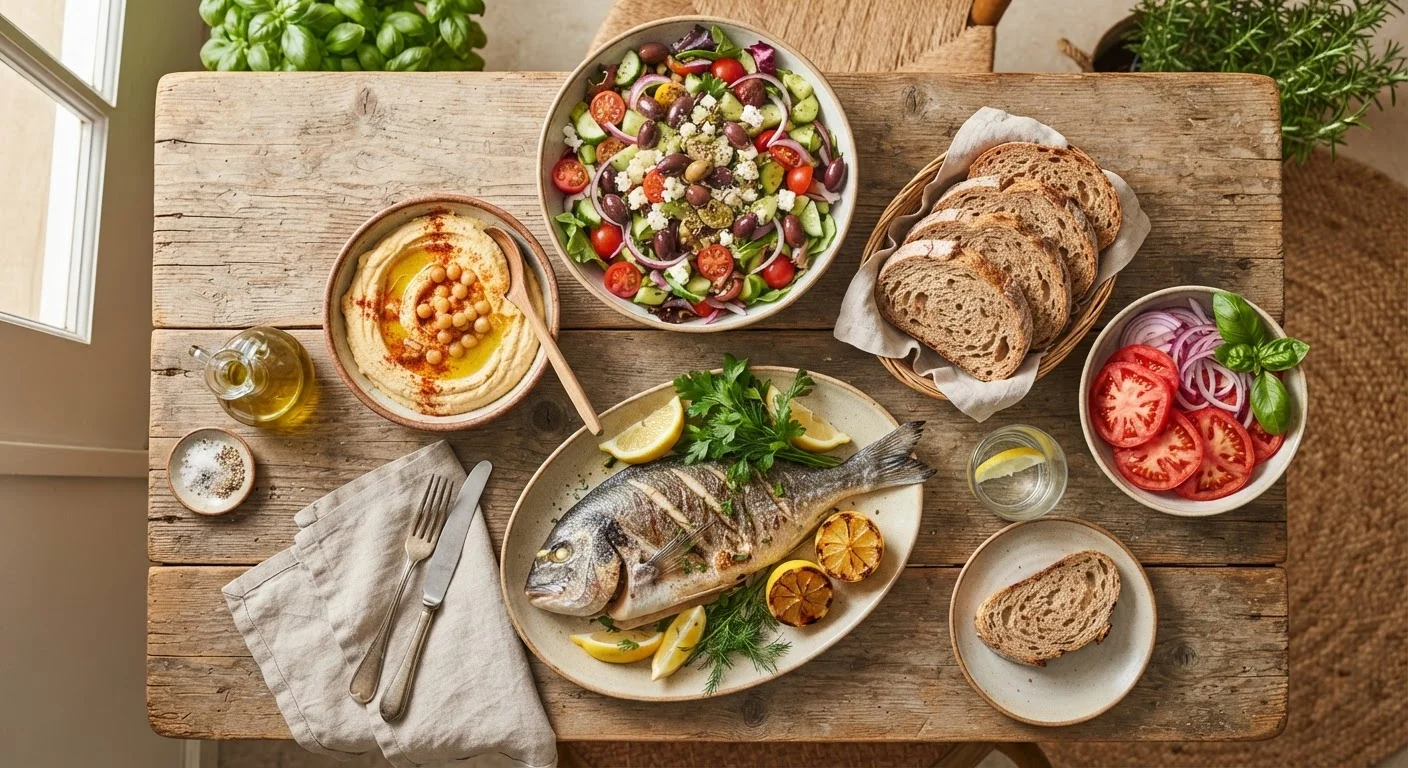
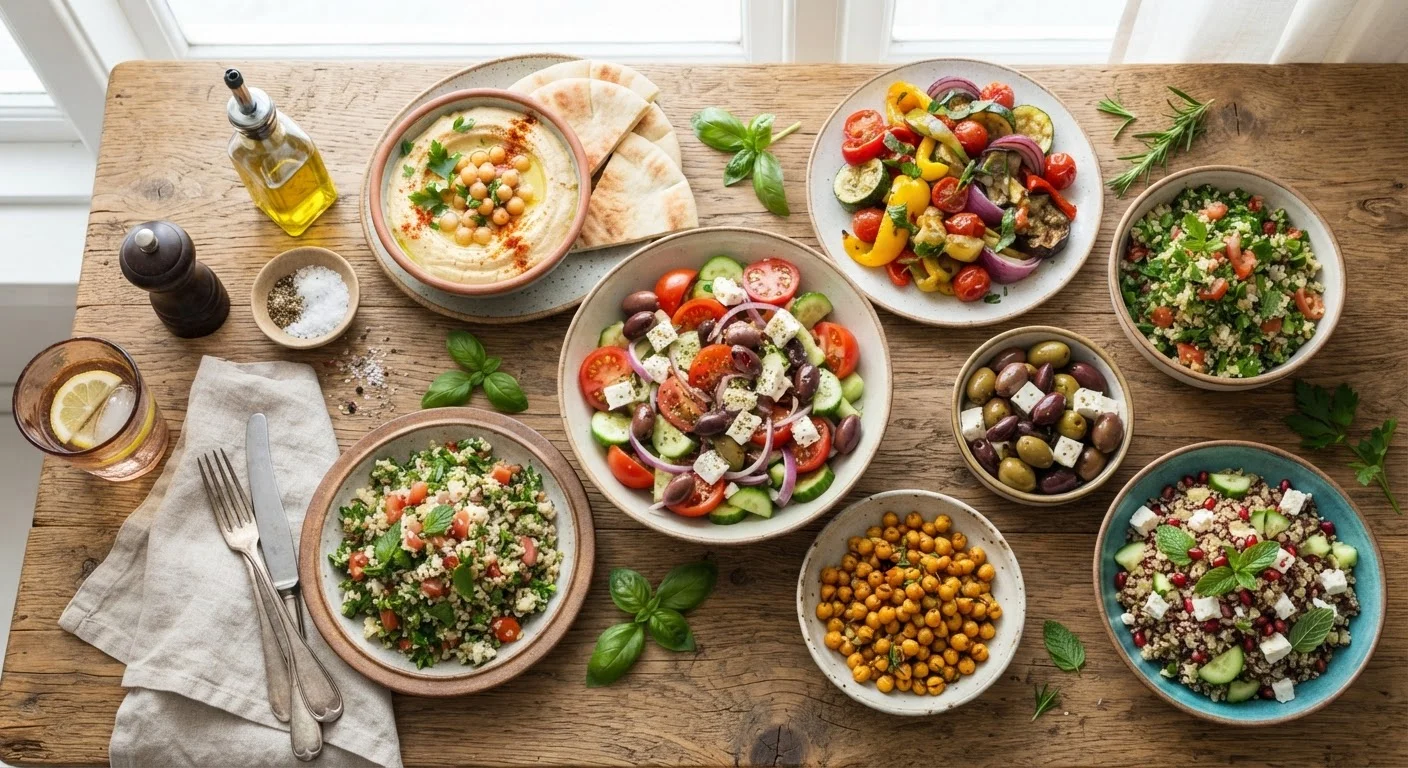
The Mediterranean dietary pattern is derived from the traditional eating habits of countries bordering the Mediterranean Sea. It's characterized by an abundance of vegetables, fruits, legumes, whole grains, nuts, and olive oil as the principal fat source. Fish and seafood appear regularly; dairy and poultry in moderate amounts; and red meat only occasionally.
Research has associated this pattern with reduced markers of cardiovascular risk and inflammation, though it's important to note that dietary studies face inherent limitations - they can identify associations but rarely establish direct cause and effect in real-world settings. The pattern's use of olive oil as a primary fat source distinguishes it from lower-fat approaches. For a closer look at what this looks like meal-to-meal, see what the Mediterranean diet actually looks like on a plate.
Adapting Mediterranean Eating to American Kitchens
You don't need imported ingredients to follow Mediterranean principles. Canned legumes, seasonal local produce, whole-grain breads, and any good-quality olive oil cover the core elements. Focus on making vegetables the largest portion of most meals and using plant-based proteins - like lentils or chickpeas - as frequent anchors.
DASH: Designed With Blood Pressure in Mind
The DASH pattern was developed specifically to address hypertension (high blood pressure) and has since been evaluated for broader cardiovascular and metabolic benefits. It shares the Mediterranean emphasis on vegetables, fruits, whole grains, and lean proteins, but places particular weight on limiting sodium and increasing potassium, calcium, and magnesium - minerals linked to blood pressure regulation.
DASH is notably more explicit about portion guidance and nutrient targets than the Mediterranean pattern, which may suit people who prefer structured frameworks. Its emphasis on low-fat dairy as a calcium source also distinguishes it. Sodium limits in DASH are typically more defined than in other patterns, making it especially relevant for individuals managing hypertension - though anyone considering dietary changes for a health condition should do so in consultation with a healthcare provider.
Don't Self-Manage Blood Pressure Through Diet Alone
While the DASH pattern has a well-documented research basis for supporting blood pressure management, hypertension is a medical condition that requires professional oversight. Dietary changes can be a valuable part of a broader plan, but they should complement - not replace - guidance from a qualified healthcare provider. Never discontinue prescribed medication without medical advice.
Whole-Food Eating: The Flexible Foundation
A whole-food dietary approach lacks the geographic specificity of the Mediterranean pattern or the clinical origin of DASH. Its core principle is straightforward: prioritize foods that are minimally processed and as close to their natural state as reasonably achievable. This means vegetables, fruits, legumes, whole grains, nuts, seeds, and unprocessed proteins - while limiting packaged foods with long ingredient lists, added sugars, refined oils, and artificial additives.
This flexibility makes whole-food eating highly adaptable across cultural food traditions and personal preferences. It doesn't mandate olive oil over other unrefined oils, or fish over other lean proteins. For readers thinking about how eating habits evolve across life stages, this guide on healthy eating through every life stage explores how core principles remain durable even as specific needs shift. Smart, nutrient-dense snacking choices also fit naturally within a whole-food framework.
Choosing the Right Pattern for You
No dietary pattern is universally superior. The research base for all three is meaningful, but study designs vary widely, and individual responses to dietary changes differ. The strongest predictor of benefit is long-term adherence - which depends on personal preference, cultural fit, practical constraints, and enjoyment.
A few questions worth reflecting on: Do you prefer structured guidance or flexible principles? Are you managing a specific health condition like hypertension? Do you have cultural food traditions you want to preserve? What level of cooking complexity is realistic for your daily life?
These patterns aren't mutually exclusive, either. Many people naturally blend elements - Mediterranean fats and produce variety with DASH's sodium awareness and whole-food minimalism. What matters is the overall direction. For context on how eating patterns vary globally and what researchers observe across different food cultures, this overview of dietary patterns studied for longevity offers useful perspective.
This article is for general informational and educational purposes only and is not a substitute for professional medical or nutritional advice. If you have a health condition or are considering significant dietary changes, consult a qualified healthcare provider.