Why Visual Portioning Works
Calorie counting can be a useful tool for some people, but for many it is time-consuming, error-prone, and difficult to sustain. Research consistently shows that environmental and visual cues-like the proportion of food on a plate-reliably influence how much people eat without requiring conscious calculation.
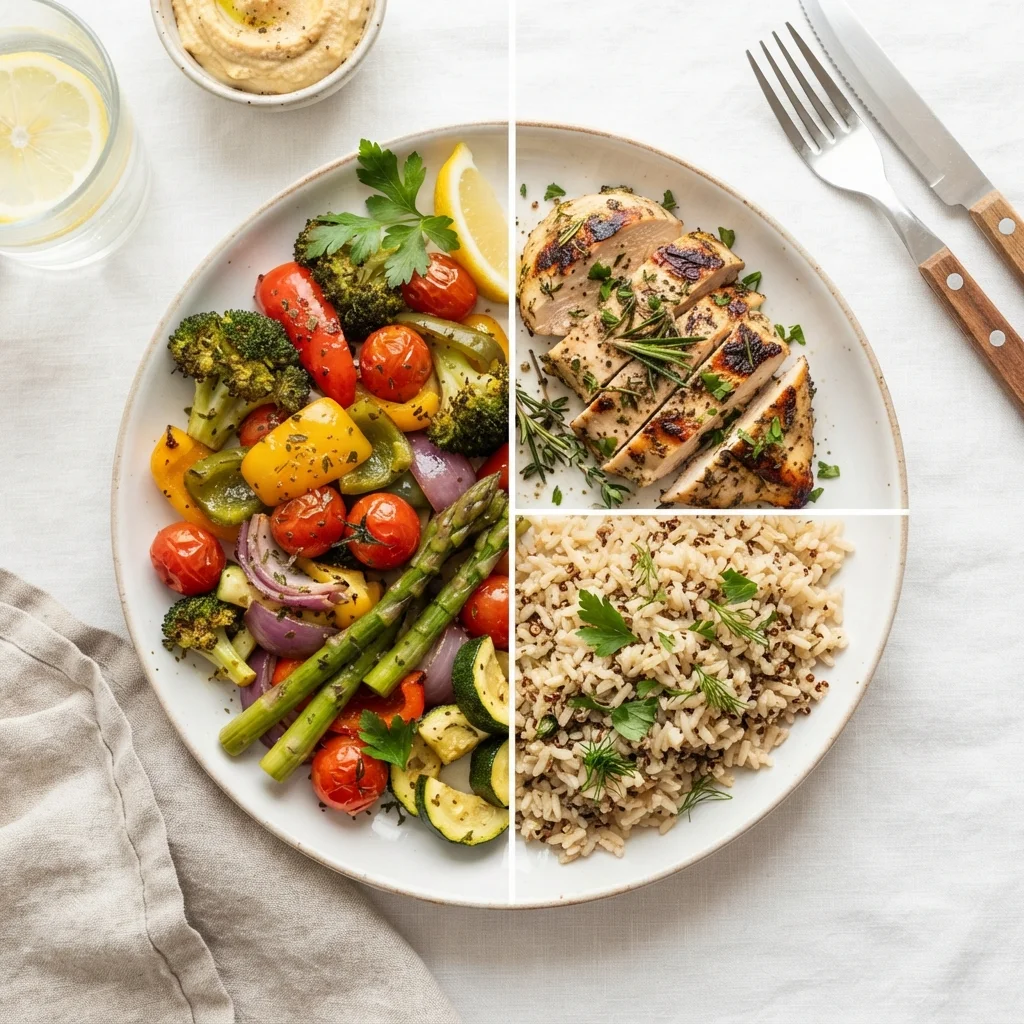
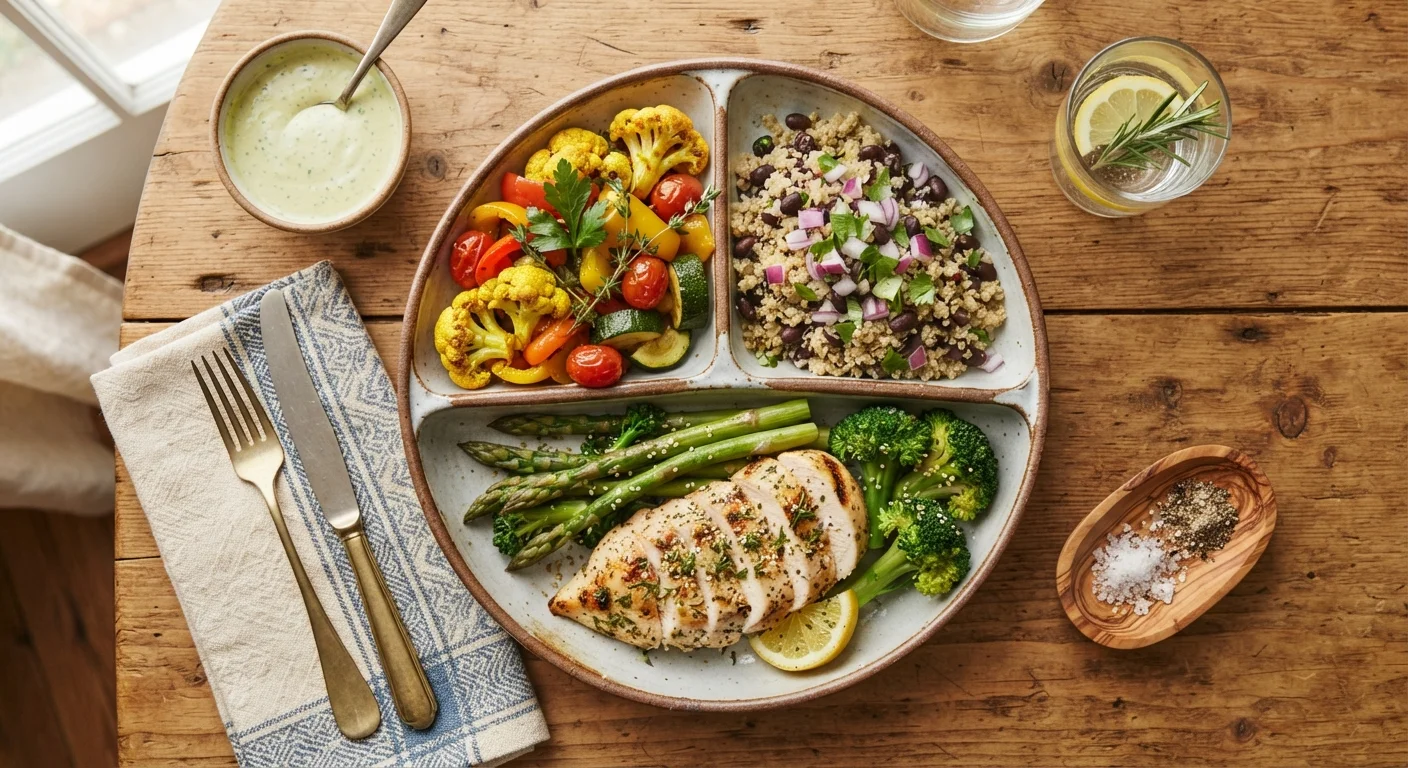
The plate method is endorsed by a range of nutrition organizations as a practical framework for structuring balanced meals. It requires no app, no food scale, and no nutritional database. Before you start, it helps to understand what a balanced plate actually looks like according to nutrition science, so you have a clear mental image to build from.
The approach also adapts naturally to different cuisines, budgets, and lifestyles. Whether you cook at home, eat at a cafeteria, or order from a restaurant, the underlying proportions remain a dependable guide.
What you will need
How to Build Your Plate Step by Step
The five steps below walk you through assembling a nutritionally sound meal using only a standard plate and your hand as reference tools. They apply whether you are cooking from scratch, reheating leftovers, or navigating a restaurant menu.
A standard dinner plate (9-10 inches)
Serves as your visual guide for portioning food groups without any measuring equipment.
Your hand
A built-in portion reference: palm for protein, cupped hand for grains, fist for vegetables.
Small serving spoon or ladle
Helps dish consistent amounts when serving from shared pots or pans.
Fill half your plate with non-starchy vegetables
Before adding anything else, dedicate the larger half of your plate to non-starchy vegetables-think leafy greens, broccoli, bell peppers, zucchini, tomatoes, cucumbers, or carrots. These foods are rich in fiber, vitamins, and minerals while adding volume that promotes satiety.
Variety matters: aim for at least two different colors to broaden your micronutrient intake. Frozen and canned vegetables (with no added salt or sauce) count just as much as fresh.
Add a lean or plant-based protein to one quarter
Allocate roughly one quarter of your plate to a quality protein source. Options include skinless poultry, fish, eggs, legumes (beans, lentils, chickpeas), tofu, tempeh, or low-fat dairy like cottage cheese. Protein supports muscle maintenance, immune function, and lasting fullness between meals.
A useful hand-based guide: a portion roughly the size and thickness of your palm is a reasonable serving for most adults.
Reserve the remaining quarter for whole grains or starchy vegetables
The final quarter is for energy-dense carbohydrates. Prioritize whole-grain options-brown rice, quinoa, whole-wheat pasta, oats, or barley-over refined versions, as they retain fiber and additional nutrients. Starchy vegetables such as sweet potato, corn, or winter squash are equally valid choices.
If you are more physically active on a given day, slightly increasing this portion is reasonable; if you are sedentary, leaning toward the lower end is a sensible adjustment.
Incorporate a small amount of healthy fat
Healthy fats don't occupy their own plate zone, but they belong in every meal. A drizzle of olive oil on vegetables, a small handful of nuts, half an avocado, or a spoonful of nut butter added to a meal supports fat-soluble vitamin absorption (A, D, E, and K) and contributes to satiety.
Because fats are calorie-dense, moderate amounts are the goal-roughly a thumb-sized portion is a practical visual cue.
Choose a beverage that doesn't undermine your meal
What you drink alongside a meal is part of the nutritional picture. Water is the most straightforward choice. Unsweetened coffee, tea, or sparkling water are also low-impact options. Sugar-sweetened beverages add significant calories with little nutritional return, and even 100% fruit juice lacks the fiber of whole fruit.
Milk and fortified plant-based milks can contribute calcium and vitamin D, making them a reasonable accompaniment if they fit your dietary pattern.
Eating Out? Apply the Same Framework
When ordering at a restaurant, mentally map the plate method onto whatever arrives. Ask for extra vegetables, choose whole-grain sides when available, and request dressings or sauces on the side. You don't need a perfect plate every time-consistency over many meals matters far more than any single meal.
This Is General Information, Not Medical Advice
The guidance in this article is intended for general educational purposes only. Individual nutritional needs vary based on age, health status, activity level, and medical conditions. Please consult a registered dietitian or qualified healthcare professional before making significant changes to your diet, especially if you have a chronic condition or specific health goals.
Troubleshooting Common Challenges
Even straightforward frameworks run into real-world friction. Here are the most common obstacles and how to work around them.
Mixed dishes and one-pot meals
Stews, stir-fries, grain bowls, and casseroles blend food groups together. For these, mentally estimate whether vegetables dominate the volume, whether there is a clear protein source, and whether the grain or starch element is a supporting player rather than the main event. Over time this estimation becomes intuitive.
Small appetite or large appetite
The plate method scales with plate size and hunger. If you are consistently hungry after a standard plate, increase the vegetable and protein portions first before expanding grains. If you rarely finish a full plate, start with smaller servings and return for more if needed-this approach supports awareness of true hunger cues.
Making it a consistent habit
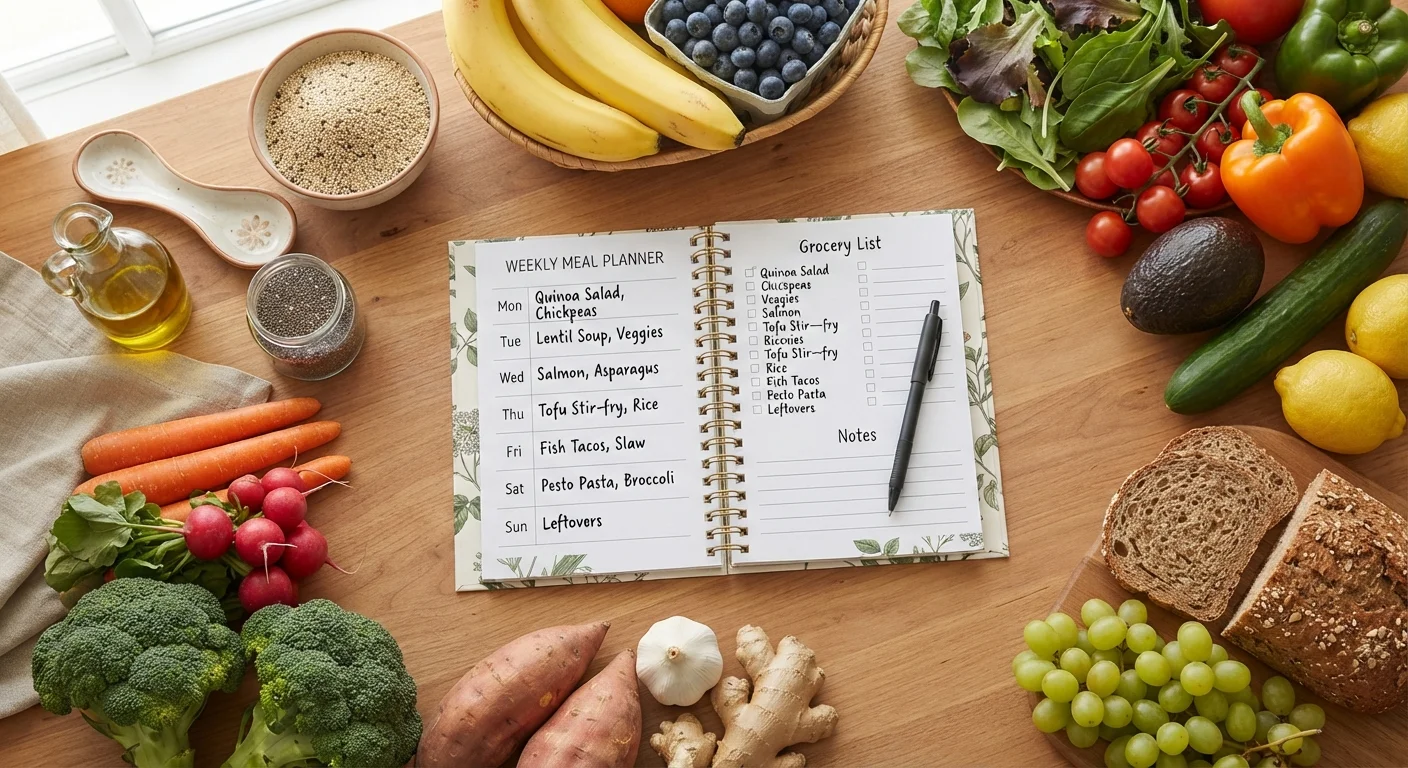
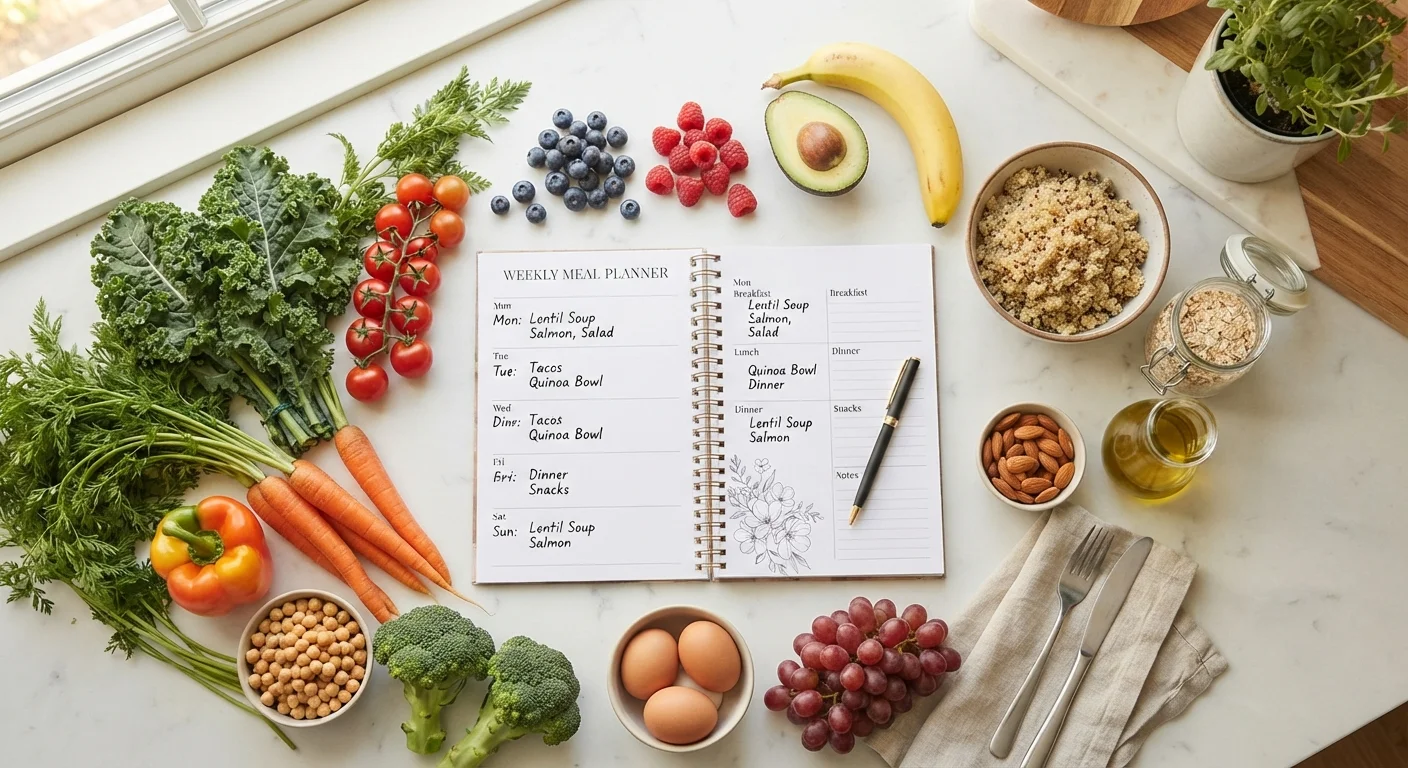
Consistency across many meals matters far more than perfection at any single one. Pairing this approach with a weekly planning routine-like the one outlined in the Weekly Meal-Planning Checklist for Nutritionally Balanced Eating-can reduce decision fatigue and help you maintain the habit without constant effort. For a structured seven-day approach, see building a weekly meal plan around nutrition goals.
Portion Visuals Are Guides, Not Prescriptions
Visual portioning frameworks are helpful starting points for most adults, but they are not one-size-fits-all. Children, pregnant individuals, older adults, and people with conditions such as diabetes or kidney disease have distinct nutritional requirements. If you fall into one of these groups, work with a healthcare provider to tailor these principles to your situation.
If you follow a specific dietary framework, consider reading about how to read a special diet plan without getting overwhelmed to see how these visual principles can coexist with other nutritional approaches.
This article is for general informational and educational purposes only and does not constitute medical or nutritional advice. Consult a registered dietitian or qualified healthcare professional for guidance tailored to your individual health needs.