
Why Fiber Matters More Than Most People Realize
Fiber is one of the most studied nutrients in nutrition science, yet it remains one of the most consistently under-consumed in the American diet. According to data from the Dietary Guidelines for Americans, fewer than 10% of adults meet recommended daily fiber targets - a gap so significant that the guidelines have flagged fiber as a "nutrient of public health concern."
The reasons this matters go well beyond digestive regularity. Fiber plays a direct role in blood sugar management by slowing glucose absorption after meals. Soluble fiber, in particular, has been shown in research to help lower LDL (low-density lipoprotein) cholesterol. And perhaps most importantly for long-term health, fiber acts as the primary fuel source for the beneficial bacteria that make up the gut microbiome - a system increasingly linked to immune function, inflammation regulation, and even mental well-being.
For a broader look at how fiber fits into overall nutrition fundamentals, the Healthy Eating Basics hub provides a useful starting framework.
~15g
Average daily fiber intake for American adults
According to data cited in the Dietary Guidelines for Americans, the average adult consumes roughly 15 grams of fiber per day - well below the 25-38g recommended range.
<10%
Adults meeting recommended fiber intake
The Dietary Guidelines for Americans Advisory Committee has noted that fewer than 10% of Americans consistently meet daily fiber recommendations.
50%+
Of daily calories from ultra-processed foods
Research published in peer-reviewed nutrition journals estimates that ultra-processed foods contribute more than half of daily caloric intake for many American adults - foods that are typically very low in fiber.
Soluble vs. Insoluble Fiber: Understanding the Two Types
Not all fiber works the same way, and understanding the distinction helps clarify why variety in food choices matters.
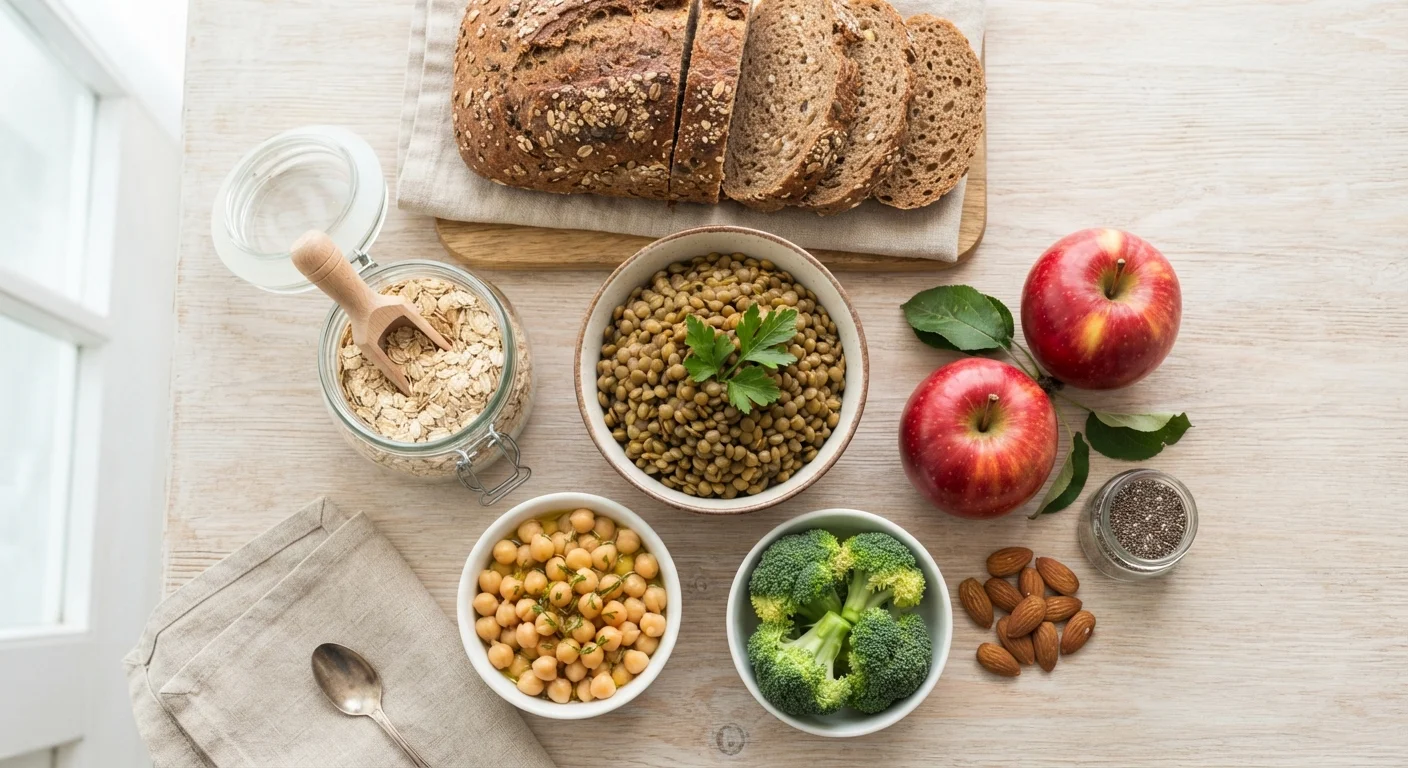
- Soluble fiber dissolves in water and forms a viscous gel in the digestive tract. This slows digestion, helps moderate blood sugar spikes after meals, and binds to cholesterol particles. Oats, barley, apples, citrus fruits, and legumes are particularly rich in soluble fiber.
- Insoluble fiber does not dissolve in water. Instead, it adds bulk and speeds the movement of material through the intestines, supporting regularity and reducing the time potentially harmful compounds spend in contact with the intestinal wall. Whole wheat, bran, nuts, and many vegetables are good sources.
Most whole plant foods contain both types in varying proportions, which is one reason dietary guidance consistently emphasizes food variety rather than targeting a single fiber source. It's also worth noting that some popular nutrition myths cause people to unnecessarily avoid high-fiber foods like whole grains and legumes.
Start Gradually to Avoid Digestive Discomfort
If your current fiber intake is low, aim to increase it by about 5 grams per week rather than jumping to the recommended target all at once. Drinking enough water throughout the day is equally important - fiber needs fluid to move through the digestive system effectively. This gradual approach gives the gut microbiome time to adjust and typically minimizes bloating and gas.
Why the American Diet Falls Short
The shortfall in fiber intake is not random - it reflects the structure of the modern American food supply. Ultra-processed foods, which account for more than half of daily calorie intake for many Americans according to dietary research, are typically stripped of the plant matter that provides fiber. White bread, packaged snacks, fast food, and sweetened beverages displace the whole grains, vegetables, and legumes that would otherwise supply fiber throughout the day.
Convenience and cost are real barriers. Whole, minimally processed foods often require more preparation time and can carry higher price tags than packaged alternatives, though staples like oats, dried lentils, canned beans, and frozen vegetables offer fiber at relatively low cost.
Understanding the full landscape of what Americans commonly get wrong about their diets is explored in depth in our article on nutrition myths that refuse to die.
Practical Ways to Increase Daily Fiber Intake
Closing the fiber gap does not require an overhaul of your entire diet. Small, consistent substitutions tend to be more sustainable than dramatic changes. Practical starting points include:
- Swap refined grains for whole grains. Choosing whole grain bread, brown rice, or whole wheat pasta instead of refined versions adds fiber with minimal effort.
- Build meals around legumes. Adding lentils to soups, swapping beans into grain bowls, or using hummus as a snack base are simple, high-impact changes.
- Eat the whole fruit. Whole fruit provides fiber that juice does not. An apple or pear with the skin on is far more fiber-dense than a glass of juice.
- Add vegetables to every meal. Even modest portions - a handful of spinach, a cup of broccoli, or sliced carrots - contribute meaningfully across the day.
One important note: increase fiber intake gradually over several weeks rather than all at once. A rapid jump in fiber consumption often leads to temporary bloating and gas. Pairing higher fiber intake with adequate fluid consumption - as explained in our piece on hydration and how water affects nutrient use - helps fiber move efficiently through the digestive system.
“Dietary fiber is arguably the most underappreciated nutrient in the American food supply. The evidence linking adequate fiber intake to reduced risk of chronic disease is remarkably consistent across decades of research.”
— David Katz, Physician and founding director of Yale University's Yale-Griffin Prevention Research Center
This article is for general informational and educational purposes only and is not a substitute for professional medical or dietary advice. Consult a qualified healthcare provider or registered dietitian for guidance specific to your health needs.