What Each Product Is Actually Doing
Both caulk and weatherstripping are air-sealing products - their shared goal is to close gaps that let conditioned air escape and outdoor air, moisture, and pests sneak in. But they work in fundamentally different ways, and that difference determines where each one belongs.
Caulk is a flexible sealant applied as a bead that adheres to both surfaces of a joint and cures into a semi-rigid seal. It bonds to materials like wood, masonry, vinyl, and metal, filling voids permanently. It cannot tolerate repeated mechanical movement without cracking.
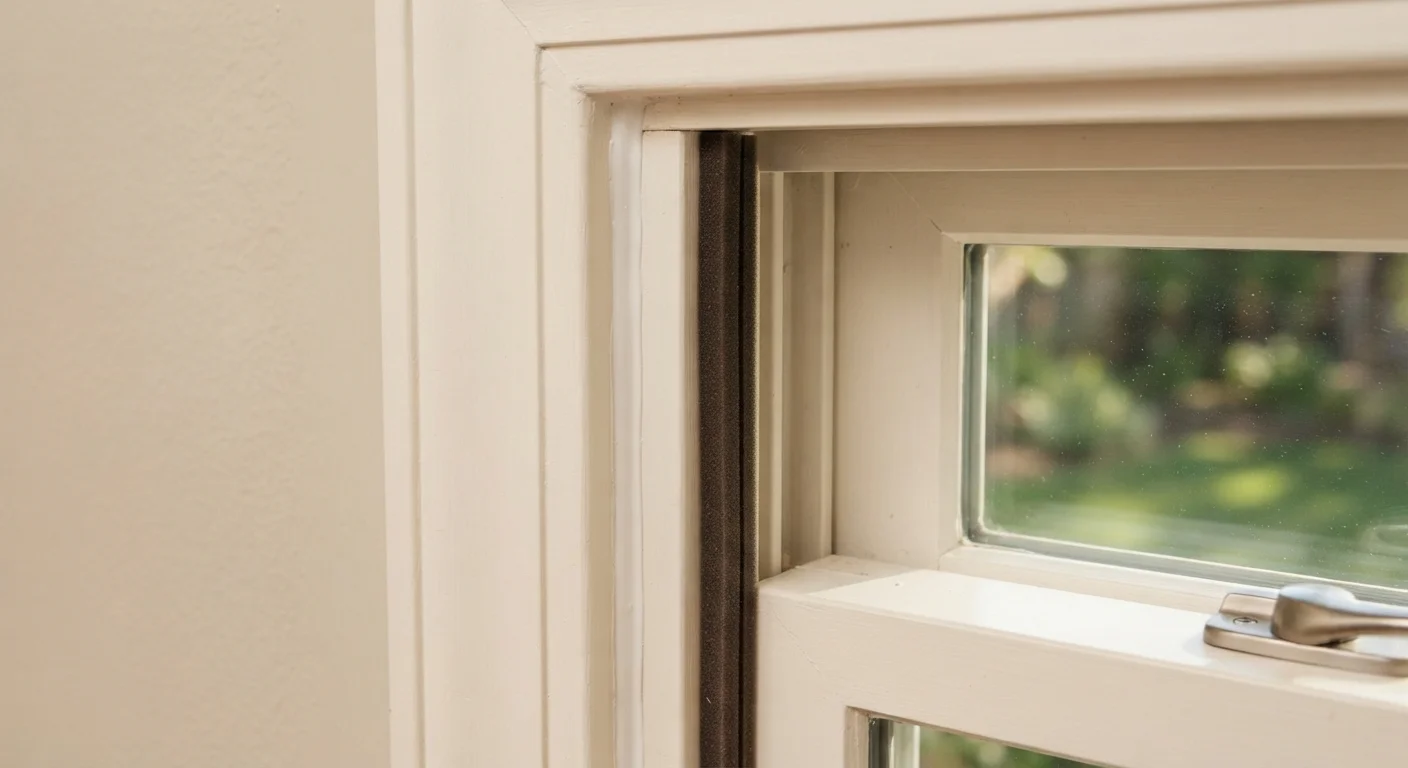
Weatherstripping is a compressible material - foam, rubber, felt, or vinyl - installed along the edges of moving components. When a door closes, it compresses against the frame, forming a seal. When the door opens, it springs back. That resilience is the whole point.
The core rule: if the joint moves, use weatherstripping; if it doesn't, use caulk.
| Criterion | Caulk | Weatherstripping |
|---|---|---|
| Best application | Stationary joints and gaps | Moving doors and operable windows |
| Material form | Applied liquid bead that cures | Pre-formed foam, rubber, or vinyl strip |
| Typical lifespan | 10-20 years (properly applied) | 3-7 years (foam); longer for rubber |
| Handles movement? | No - cracks under repeated flex | Yes - designed to compress and rebound |
| DIY difficulty | Low - caulk gun, steady hand | Low - cut to length, peel-and-stick |
| Common mistake | Layering over old, failed caulk | Using on fixed frames instead of moving sash |
Where Each One Belongs in Your Home
Caulk is the right call around window and door frames where they meet exterior siding, between baseboards and walls, along the base of exterior doors where the threshold meets the floor (the stationary side), around pipe and wire penetrations through walls, and anywhere two dissimilar stationary materials meet.
Weatherstripping belongs on the top and sides of door frames (the door stop area where the door contacts the frame), along the bottom of doors via a door sweep or threshold seal, and around the sashes of operable windows - casement, double-hung, and sliding types.
A common mistake is caulking the movable sash of a double-hung window shut to stop drafts. This seals the gap but renders the window inoperable and can trap moisture. The correct fix is to replace the weatherstripping on the sash instead.
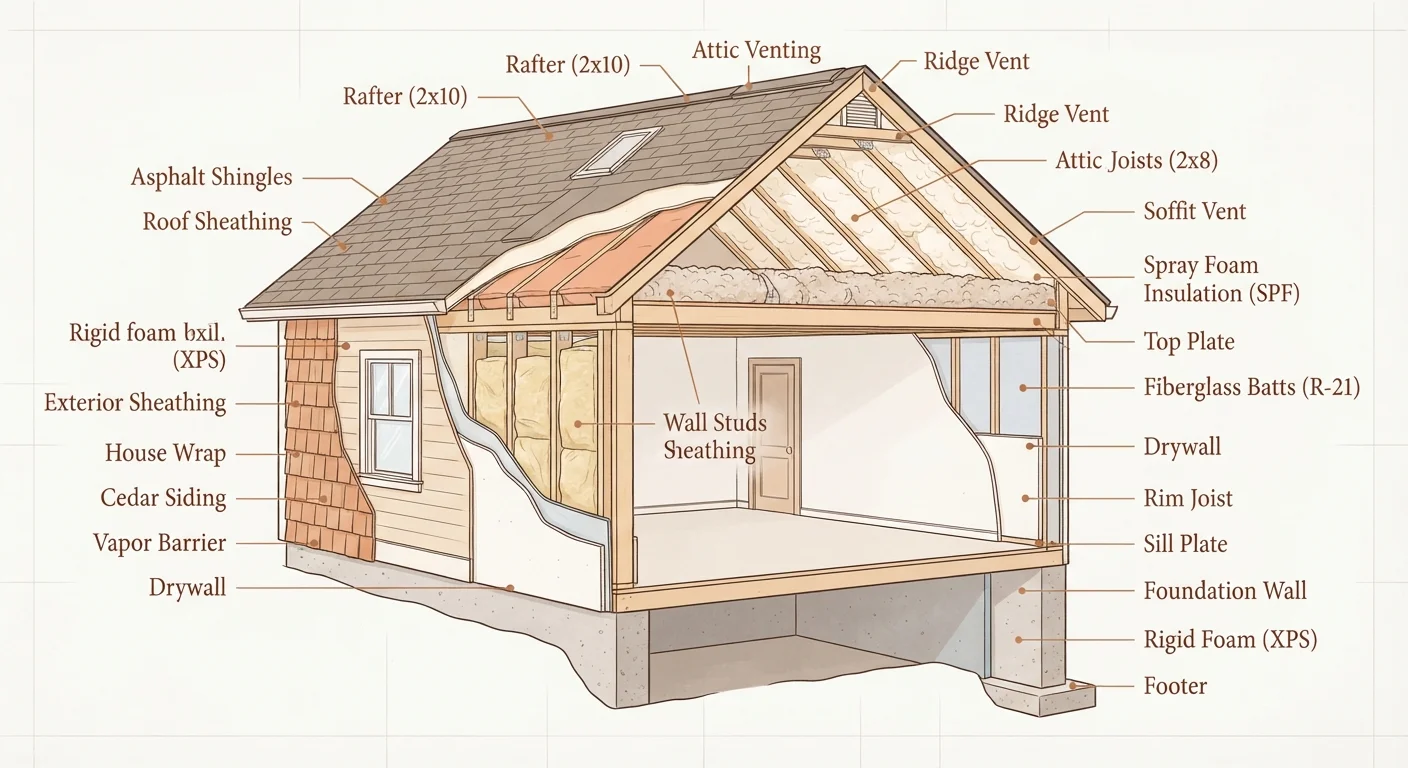
For a broader look at how air sealing fits into your home's overall energy envelope, see our guide to insulation types and placement.
Don't Forget the Threshold Gap
The bottom of an exterior door is one of the highest-traffic air-leak points in most homes. The door sweep (attached to the door bottom) and the threshold seal (the compressible strip on the sill) are both weatherstripping components - not caulk. If you caulk the threshold to the floor, you may create a moisture trap or prevent the door from opening properly. Inspect both the sweep and threshold gasket when checking for drafts.
Lifespan, Maintenance, and When to Replace
Knowing when each product has worn out is as important as knowing where to use it.
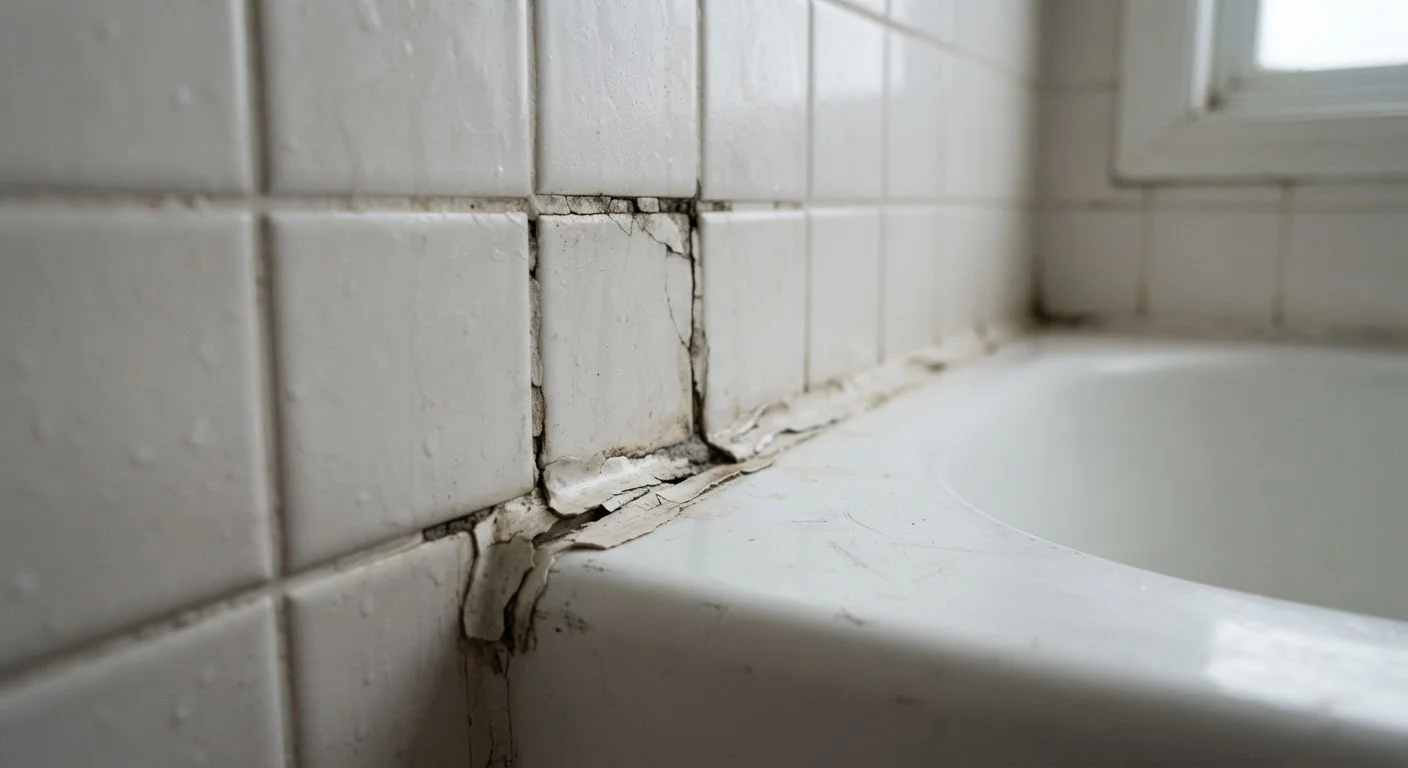
Caulk, when properly applied to a clean, dry surface, can last 10 to 20 years depending on the formulation and exposure. Silicone caulk tends to outlast acrylic latex in wet or outdoor conditions. Signs it needs attention: visible cracks, shrinkage pulling away from one surface, or a chalky, crumbling texture. Always remove old caulk completely before reapplying - layering new caulk over deteriorated caulk produces a weak bond that fails quickly.
Weatherstripping has a shorter service life - typically 3 to 7 years for foam types, longer for dense rubber or vinyl bulb styles. It wears from friction and UV exposure. If daylight is visible around a closed door, the weatherstripping no longer compresses enough to seal. Peel-and-stick foam varieties are the easiest to replace; door sweeps usually require a screwdriver and a few minutes.
If you're also dealing with deteriorating caulk in wet interior areas like tile surrounds, the bathroom maintenance guidance on grout and caulk covers what proper repair looks like there.
Up to 30%
Home heating/cooling energy lost through air leaks
The U.S. Department of Energy estimates that air leaks can account for up to 30% of a home's heating and cooling energy use.
$0-$30
Typical cost of DIY weatherstripping per door
Weatherstripping materials for a standard exterior door are widely available at hardware stores for a modest material cost, with labor being the primary time investment.