Why Busy People Struggle With Eating Well
Time pressure is the single most cited barrier to consistent healthy eating - and with good reason. When the day runs long, cooking from scratch competes with work, family, and rest. The result is often a pattern of improvised meals that leave nutritional gaps, not because people lack knowledge or motivation, but because the system around their eating hasn't been designed for real life.
The good news is that better nutrition doesn't require hours in the kitchen or a complete lifestyle overhaul. It requires a handful of repeatable habits that reduce friction at the moments when time is shortest. For foundational context on what balanced eating actually looks like, the Nutrition Basics hub offers a solid grounding in core principles.
Practical Habits That Actually Hold Up
The practices below are grounded in how nutrition and behavior science intersect - each one targets a specific friction point that derails eating well under time pressure.
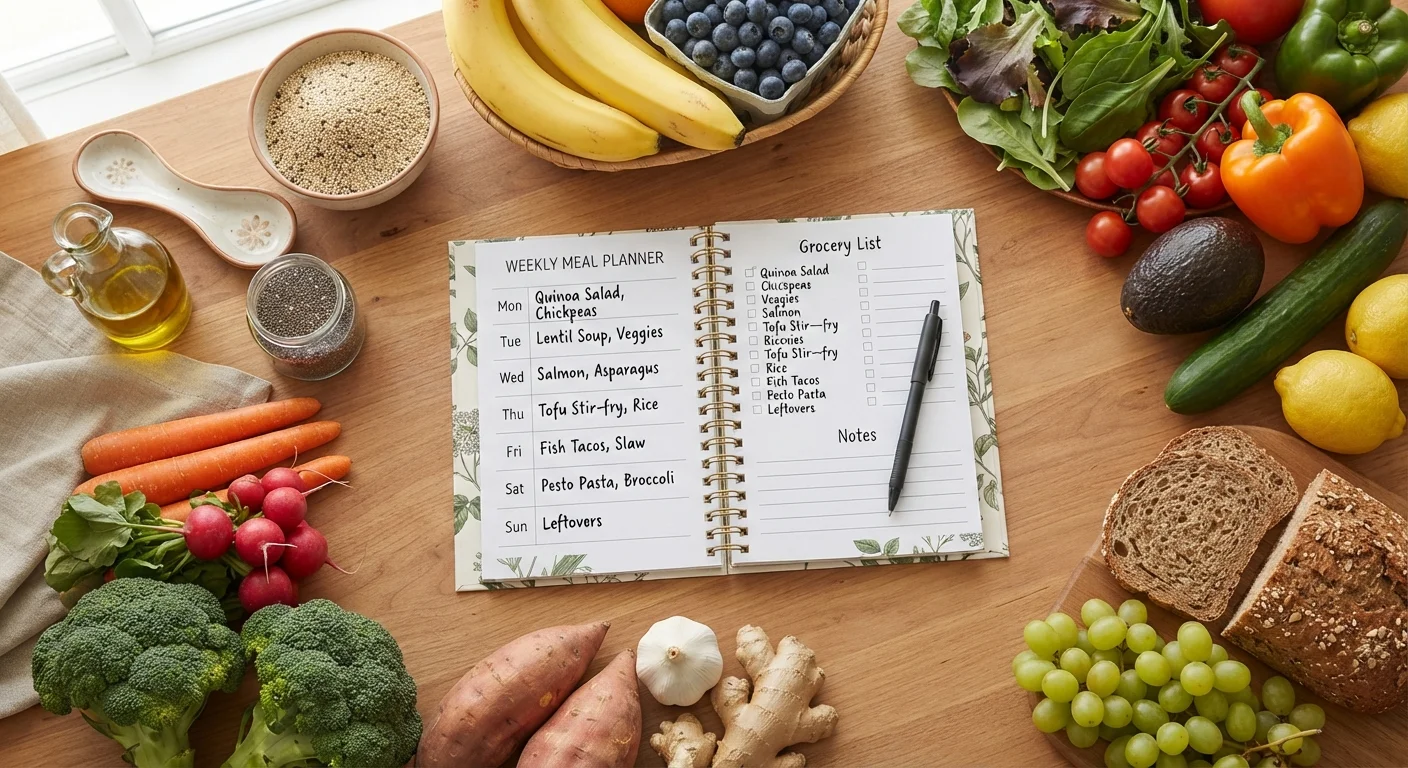
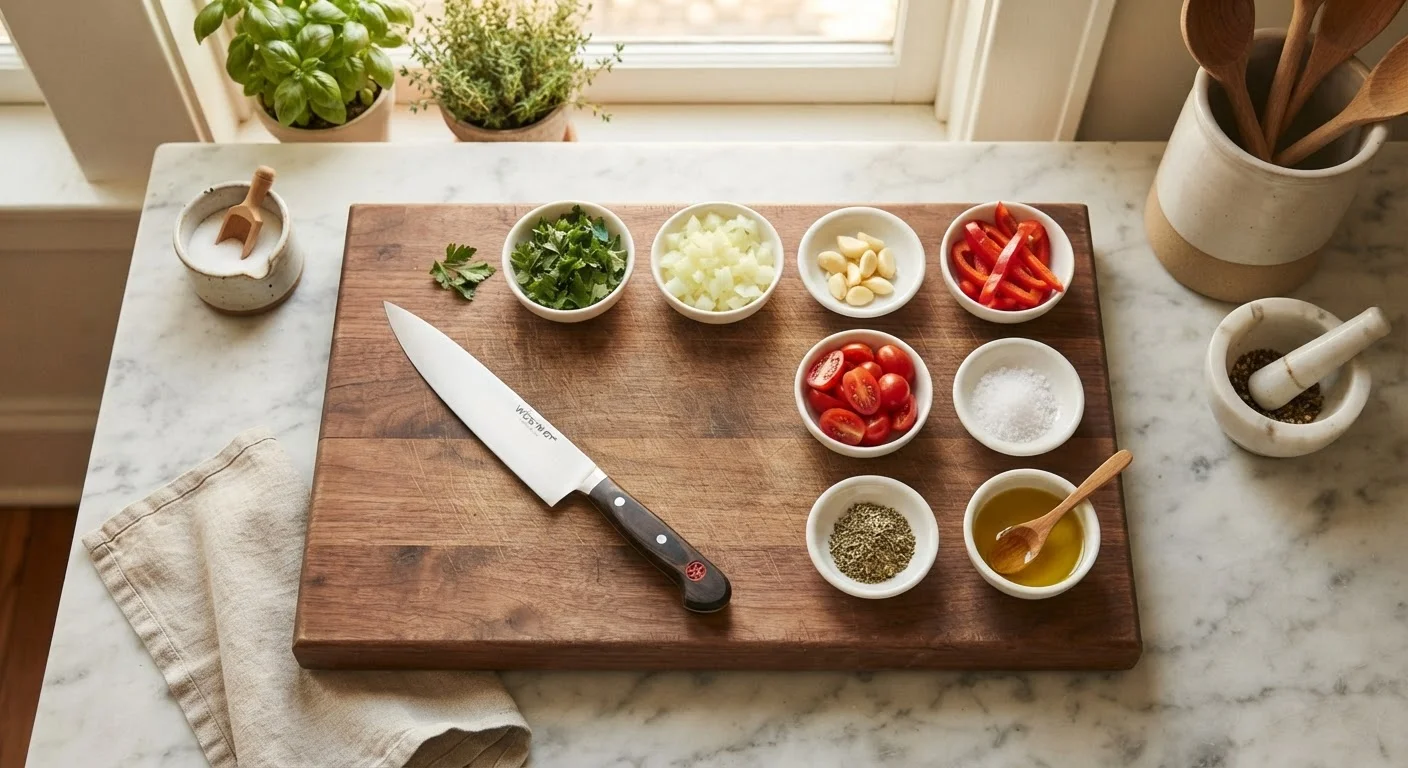
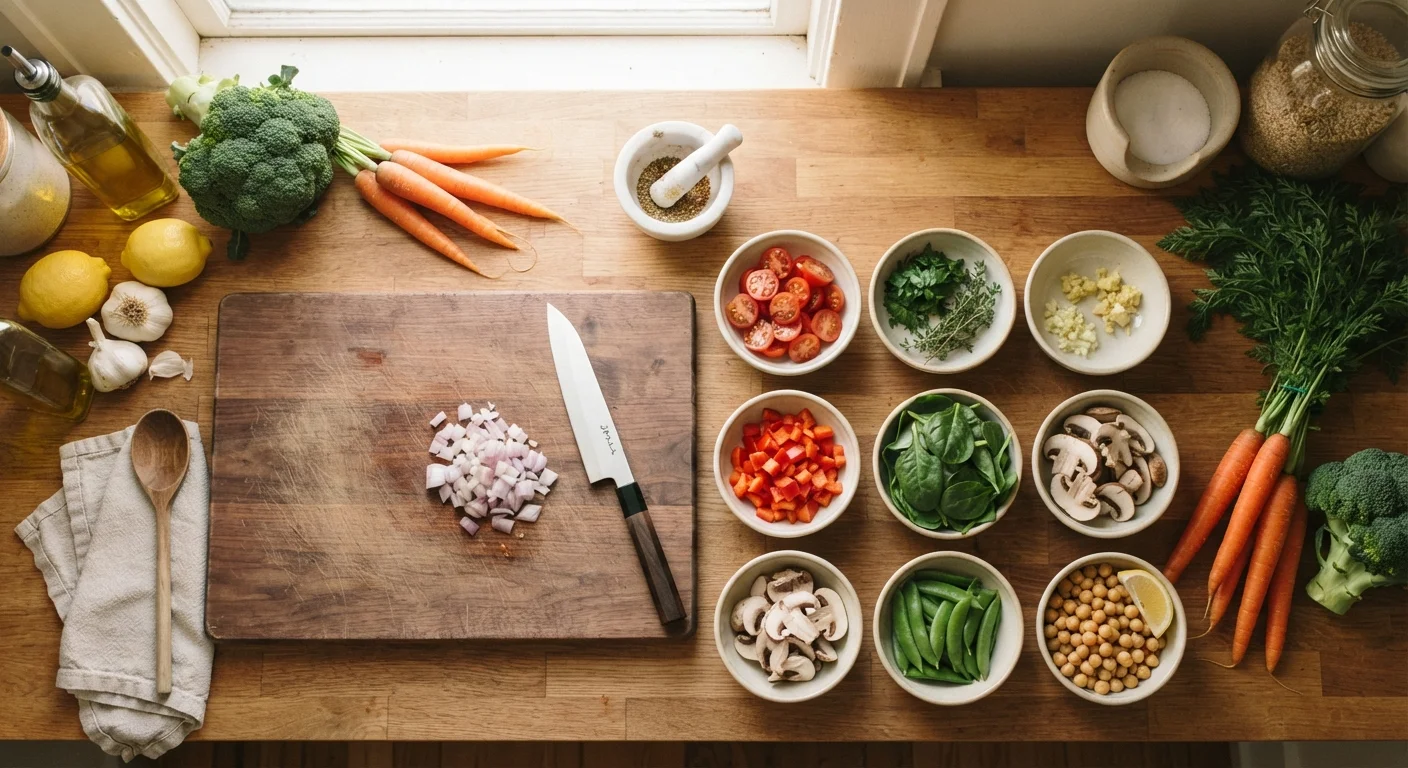
Anchor your week with one batch-prep session
Having cooked grains, washed vegetables, or portioned proteins ready in the refrigerator cuts active cooking time on weeknights to minutes. It also removes the mental load of deciding what to cook when you're already hungry and tired - the moment when less-nourishing choices are most tempting.
Build a pantry of reliable nutritional anchors
A well-stocked pantry means you're never starting from zero. Canned legumes, whole grains, nuts, seeds, and tinned fish provide protein, fiber, and healthy fats that round out any quickly assembled meal. This removes dependence on fresh ingredients that may not be available midweek.
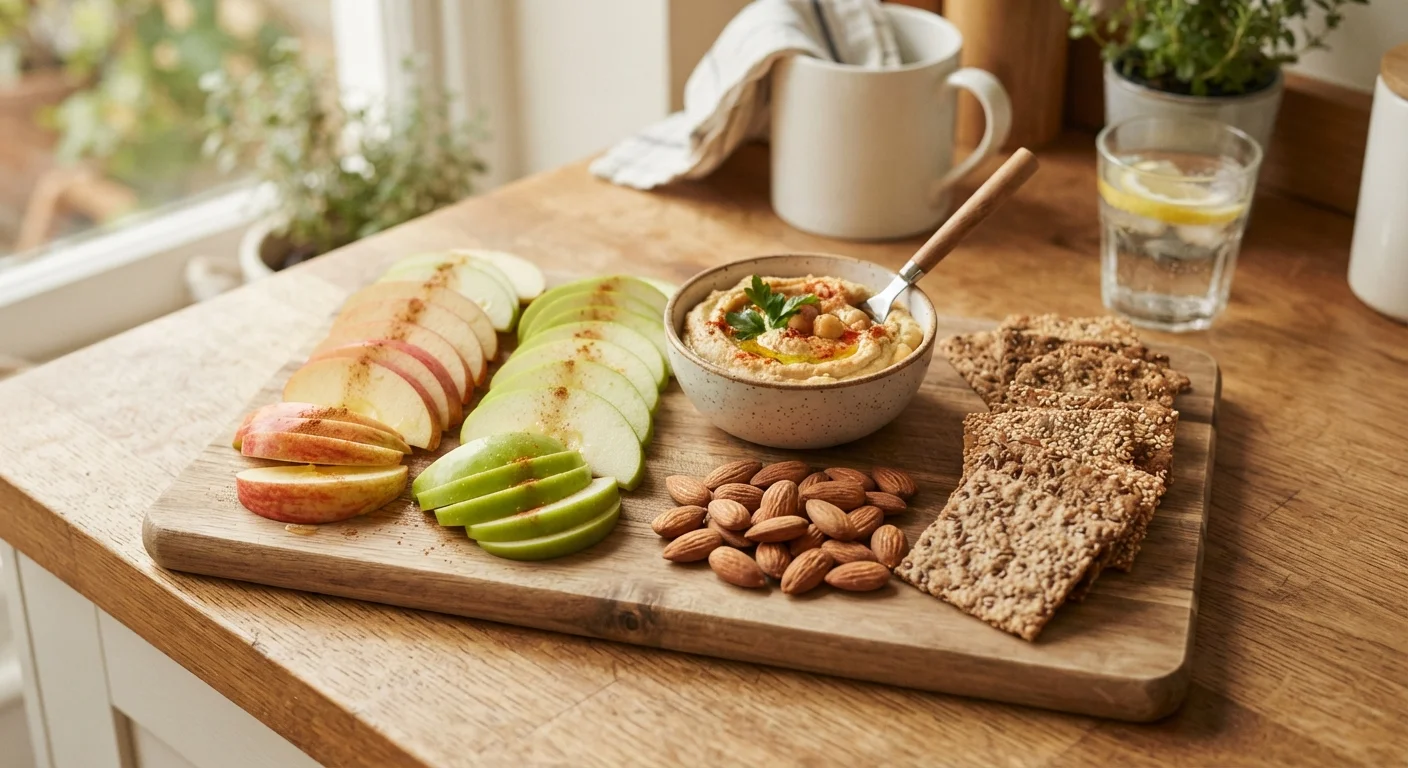
Plan meals and snacks at the same time
Most people plan dinners and leave snacking to chance. This creates energy dips mid-morning or mid-afternoon that lead to grabbing whatever is close. Treating snacks as a planned component of the day - rather than an afterthought - supports more consistent energy and reduces impulse choices.
Default to simple, formula-based meals rather than recipes
Following a full recipe every night is impractical for most people. A reliable meal formula - protein + vegetable + whole grain + a simple sauce - produces nutritionally complete meals without consulting instructions. Formulas are also flexible, so they work with whatever you have on hand.
Keep visible defaults for the lowest-effort moments
When energy and time are both depleted, people eat what's visible and easy, not what requires thought. Positioning fruit on the counter, pre-cut vegetables at eye level in the fridge, and whole-grain bread near the toaster makes the convenient choice also a reasonably nourishing one.
The Two-Ingredient Rule for Busy Nights
On nights when time has completely run out, aim for at least two food groups rather than skipping a meal or defaulting to only one item. Even a bowl of Greek yogurt with frozen berries, or whole-grain toast with nut butter and a banana, covers protein, carbohydrates, and some micronutrients. Perfection isn't the goal - consistency is.
Quick Wins You Can Start Today
Building long-term habits takes time, but there are a few actions that can shift your eating patterns almost immediately. These are low-effort moves with outsized returns - the kind that make everything else easier.
For a deeper look at planning your week's meals with nutrition in mind, the weekly meal-planning checklist is a practical companion to these habits. And if snacking between meals is a recurring challenge, smart snacking principles can help you plan those moments more intentionally.
This article is for general informational purposes only and is not a substitute for personalized nutrition or medical advice. Consult a qualified healthcare professional or registered dietitian for guidance specific to your health needs.