Why the Method Matters
Budgeting frameworks aren't interchangeable. Each one is built around a different assumption about where people tend to lose control of their money - and each demands a different level of daily effort. Before picking one, it helps to understand what problem each method is actually solving.
If you're new to budgeting terminology, our plain-language glossary of budgeting terms can help you get comfortable with concepts like discretionary spending and sinking funds before diving in. For broader money management habits, the Everyday Money Tips hub is a useful starting point.
| Zero-Based | Pay Yourself First | Envelope Method | 50/30/20 Rule | |
|---|---|---|---|---|
| Core idea | Assign every dollar a purpose | Save first, spend the rest | Cash caps per spending category | Split income into three broad buckets |
| Effort level | High - rebuilt each pay period | Low - automate and forget | Medium - track each envelope | Low - broad categories only |
| Best for | Detail-oriented planners | Inconsistent savers | Overspenders in specific categories | Beginners or busy households |
| Savings discipline | Built in by design | Strongest - saved first | Not the primary focus | 20% target built in |
| Flexibility | Low - requires reallocating | High - spending is open | Low - fixed envelope amounts | High - broad percentages |
| Works with irregular income? | Yes, with extra work | Yes, save a percentage | Harder to plan ahead | Yes, percentage-based |
Zero-Based Budgeting: Every Dollar Gets a Job
Zero-based budgeting (ZBB) requires you to assign every dollar of your income to a specific category - expenses, savings, or debt repayment - until your budget reaches zero. That doesn't mean spending everything; it means accounting for everything. A dollar placed into savings counts as assigned.
This method works well for people with variable expenses or those who've struggled to identify exactly where money disappears each month. The trade-off is time: ZBB requires rebuilding or reviewing your budget at the start of each pay period. For a deeper look at how it compares to percentage-based approaches, see our zero-based vs. percentage-based budgeting comparison.
Start With One Pay Period
If zero-based budgeting appeals to you but feels overwhelming, try it for a single pay period before committing. List every expected expense and savings contribution, then assign income until the balance reaches zero. One trial run reveals gaps in your estimates - and shows whether the level of detail is sustainable for you before you invest weeks of effort.
Pay Yourself First: Save Before You Spend
This method flips the conventional budgeting order. Instead of spending on needs and wants, then saving whatever's left, you transfer a set amount to savings or retirement accounts immediately when income arrives - and then live on the remainder.
The psychological appeal is strong: savings become non-negotiable rather than aspirational. Automating the transfer removes willpower from the equation. The downside is that it doesn't help you track where the remaining money goes, so it works best when combined with at least a rough awareness of fixed expenses. Our dedicated article on how Pay Yourself First works in practice covers the mechanics in more detail.
The Envelope Method and the 50/30/20 Rule
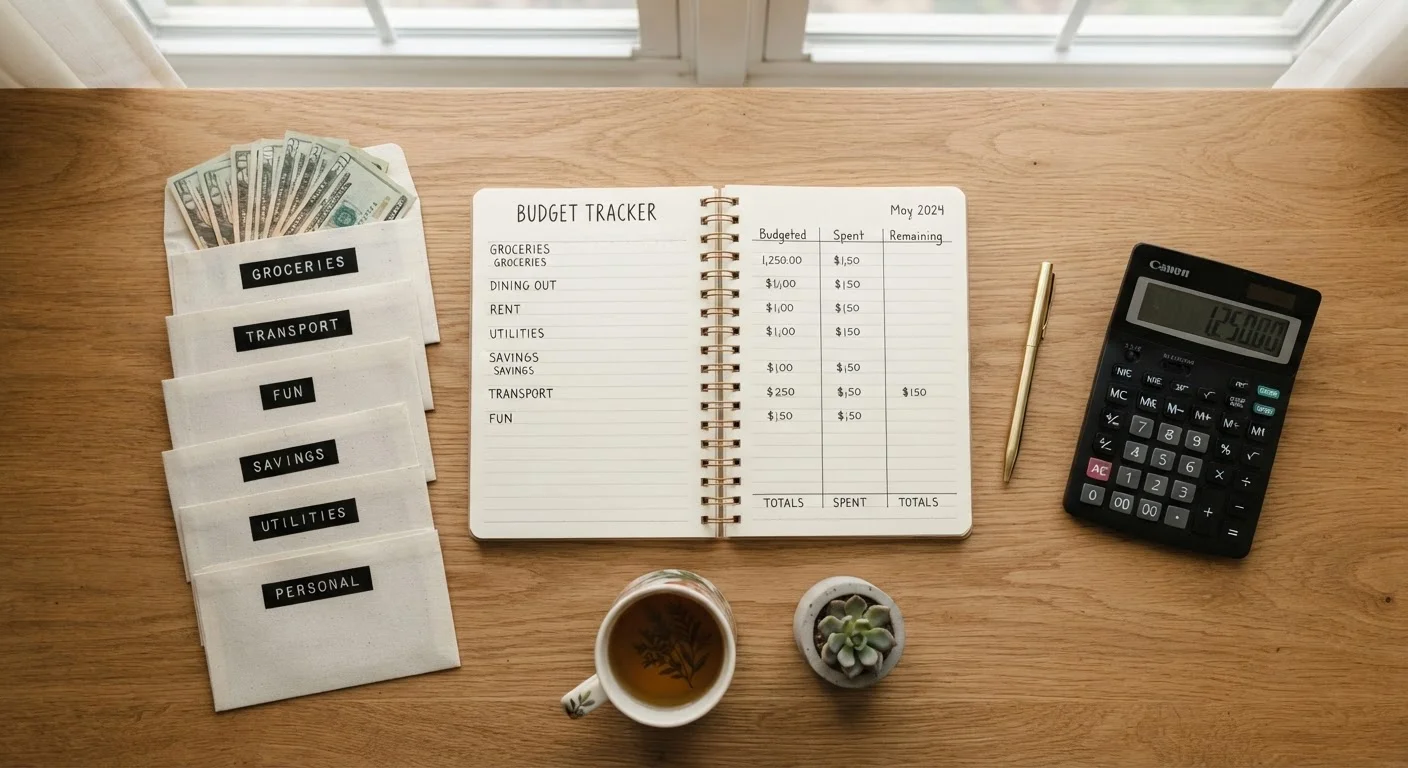
Envelope budgeting divides cash into physical (or digital) envelopes labeled by category - groceries, dining out, gas - and spending stops when an envelope is empty. The tactile nature of handling cash is its core strength: research in consumer psychology suggests that paying with physical money feels more real than swiping a card, which can curb impulse spending. If you're curious whether this decades-old method translates well to modern digital spending, our envelope budgeting in a digital age piece explores that directly.
The 50/30/20 rule divides after-tax income into three broad buckets: 50% toward needs (housing, utilities, groceries), 30% toward wants (dining, entertainment, subscriptions), and 20% toward savings and debt repayment. It's the lowest-friction method on this list - ideal for someone building a first budget or anyone who finds detailed tracking unsustainable. For a full breakdown of how these percentages work across different income levels, see our 50/30/20 rule explainer.
~74%
Americans living paycheck to paycheck
Survey data from the American Payroll Association has consistently found a large share of U.S. workers report spending most or all of their paycheck before the next one arrives.
1 in 3
Adults with no formal budget
A National Foundation for Credit Counseling survey found roughly one-third of U.S. adults do not prepare a monthly household budget of any kind.
Choosing and Combining Methods
Most people don't follow a single method perfectly - and that's fine. A practical approach many find useful: use Pay Yourself First to lock in savings automatically, then apply the envelope method or zero-based tracking only to the two or three spending categories where you tend to overspend. This hybrid keeps effort manageable while protecting savings goals.
The most important factor isn't which method you choose - it's whether the method fits your real life. A high-effort system abandoned after three weeks produces worse outcomes than a simpler one followed consistently for years. Building savings habits and managing debt go hand in hand; the Saving & Debt hub offers additional guidance on both fronts.
This article is for general informational and educational purposes only and does not constitute personalized financial advice. Consider consulting a qualified financial professional for guidance specific to your situation.