The Remarkable Timeline of Early Language
Long before a child utters "mama" or "dada," their brain is already doing extraordinary work. Language development is one of the most complex achievements in human growth - and it begins in the womb. Research shows fetuses can recognize their mother's voice by the third trimester, already tuning in to the rhythms of their native language.
After birth, development accelerates rapidly through recognizable stages:
- 0-3 months: Cooing and responding to voices; distinguishing caregivers' speech from background noise.
- 4-6 months: Babbling begins - strings of consonant-vowel sounds like "ba-ba" and "da-da."
- 9-12 months: Babbling becomes more varied and intentional; children start understanding common words.
- 12-18 months: First words emerge, typically nouns like names, objects, or simple requests.
- 18-24 months: Vocabulary expands rapidly (sometimes called the "vocabulary explosion"); two-word combinations appear.
- 3 years: Most children use sentences of three to five words and are understood by familiar adults.
This progression is part of a broader pattern described in the four domains of child development, which frames language as interconnected with cognitive, social, and physical growth.
What's Happening in the Brain
Children are not blank slates waiting to be filled with words. Linguist Noam Chomsky famously proposed that humans possess an innate capacity for language - what he called a "language acquisition device" - that predisposes us to learn the structures underlying any human language. While the specific mechanisms are still debated among researchers, there is broad scientific agreement that the infant brain is biologically primed for language in a way no other species matches.
“Language is not a cultural artifact that we learn the way we learn to tell time or how the federal government works. Instead, it is a distinct piece of the biological makeup of our brains.”
— Steven Pinker, Cognitive psychologist and author of 'The Language Instinct'
The first three years of life represent a critical window of heightened neural plasticity. During this period, the brain is forming synaptic connections at a staggering rate, and the auditory cortex, Broca's area (linked to speech production), and Wernicke's area (linked to language comprehension) are all actively developing. Children who experience rich language environments during this window build stronger neural pathways for vocabulary, grammar, and communication.
This is also why the path to literacy begins much earlier than most parents realize - the groundwork laid during toddlerhood directly shapes reading readiness in early childhood.
The Role Caregivers Play
Biology sets the stage, but social interaction writes the script. One of the most replicated findings in developmental science is the strong link between the amount and quality of caregiver speech and a child's language outcomes. A landmark body of research found that differences in early language exposure were associated with significant gaps in vocabulary by age 3 - gaps that could persist into school age.
30 million
Word gap in early childhood exposure
Research by Hart and Risley in the 1990s estimated children from lower-income households heard tens of millions fewer words by age 3 than peers from higher-income households, highlighting the impact of early language exposure.
~19,000
Words an average 6-year-old knows
Developmental linguists estimate that by age 6, most children have a receptive vocabulary of roughly 14,000 to 20,000 words - almost all acquired through everyday interaction rather than formal instruction.
3rd trimester
When language recognition begins
Studies using newborn sucking response experiments suggest fetuses begin responding to their mother's language patterns and voice before birth, according to research published in developmental psychology literature.
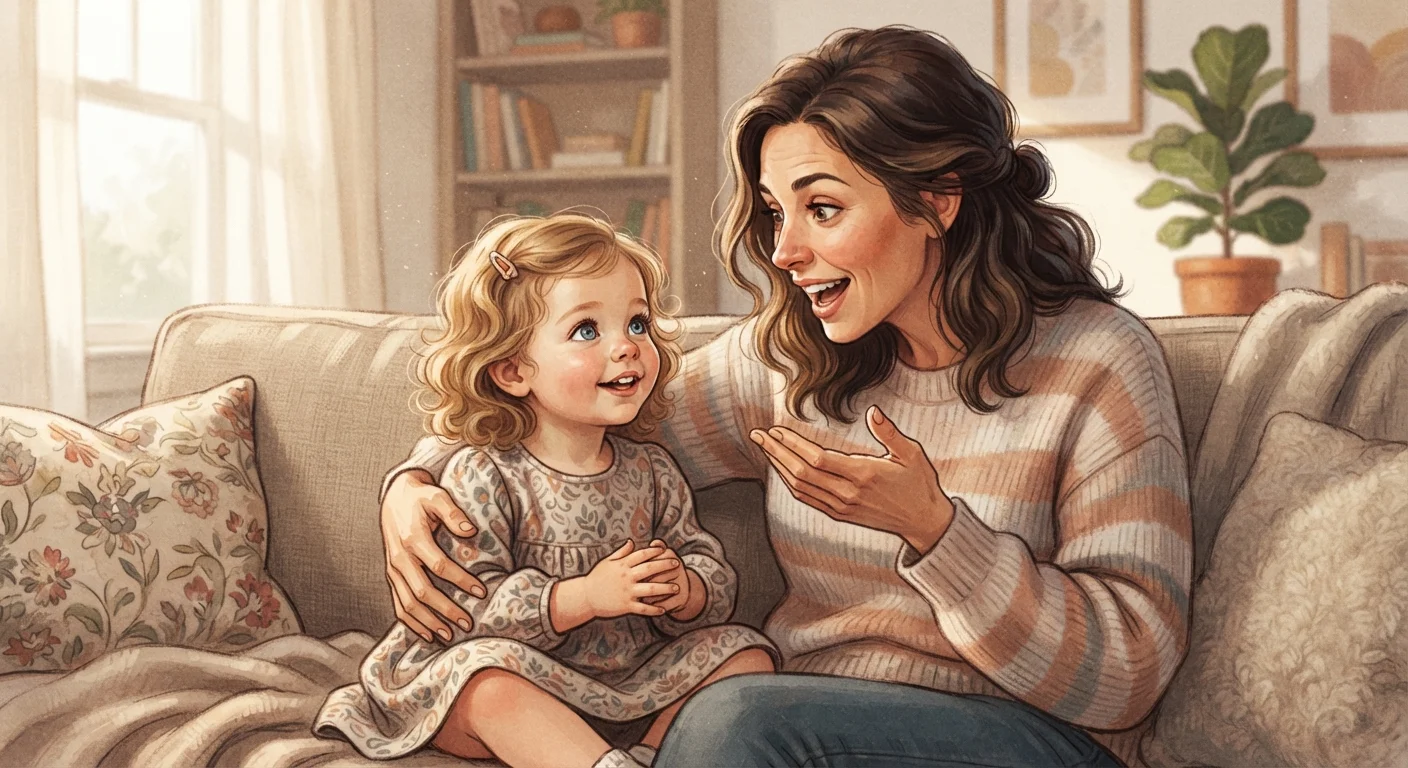
What matters most isn't quantity alone. Responsive talk - where caregivers listen, respond, and build on what a child communicates - is especially powerful. Techniques like narrating daily routines ("Now we're washing your hands - feel the warm water?"), expanding a child's utterances ("Ball! Yes, the red ball!"), and asking genuine questions all build both vocabulary and the cognitive scaffolding behind it.
Make Conversation a Daily Habit
You don't need special activities or apps to support your child's language. Simply talking during everyday routines - meals, diaper changes, errands - provides rich, repeated exposure to words and sentences in meaningful context. The key is to respond to your child's cues, follow their lead, and keep the exchange feeling like a real conversation, even if their side is mostly babble.
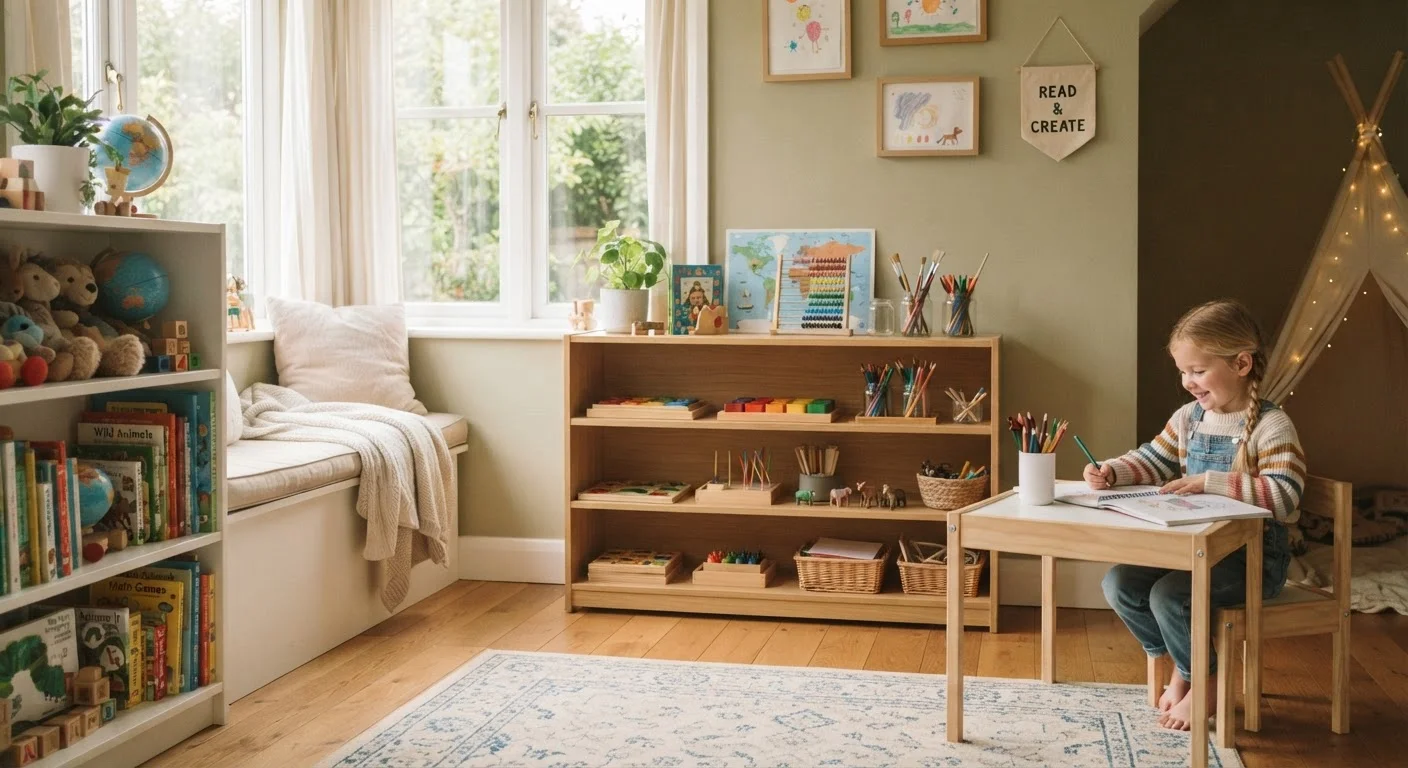
The environment matters too. A home designed to invite exploration and conversation naturally creates more opportunities for rich back-and-forth exchanges that fuel language growth.
When to Seek Support
Language development varies, and some children talk earlier or later than average without any underlying concern. That said, certain patterns are worth bringing to a professional's attention. A child who isn't babbling by 12 months, isn't using any words by 16 months, or isn't combining words by 24 months should be evaluated by a pediatrician or speech-language pathologist. Any loss of previously gained language skills at any age warrants prompt attention.
If your family uses more than one language at home, know that this is a developmental strength, not a liability. Bilingual environments shape cognition in rich ways and do not cause language delay. A bilingual child may be evaluated across both languages to get an accurate picture of their full language system.
Bilingual Children and Language Milestones
Standard language milestones were developed primarily with monolingual children in mind. A bilingual child's total vocabulary across both languages may meet developmental norms even if each individual language seems smaller than average. When assessing language development in multilingual families, clinicians should evaluate the child's full linguistic repertoire. Share your family's language environment with your pediatrician for the most accurate picture.
This article is for general informational and educational purposes only and does not constitute medical advice. If you have concerns about your child's language development, please consult your pediatrician or a qualified speech-language pathologist.