
How Stress Moves Through a Household
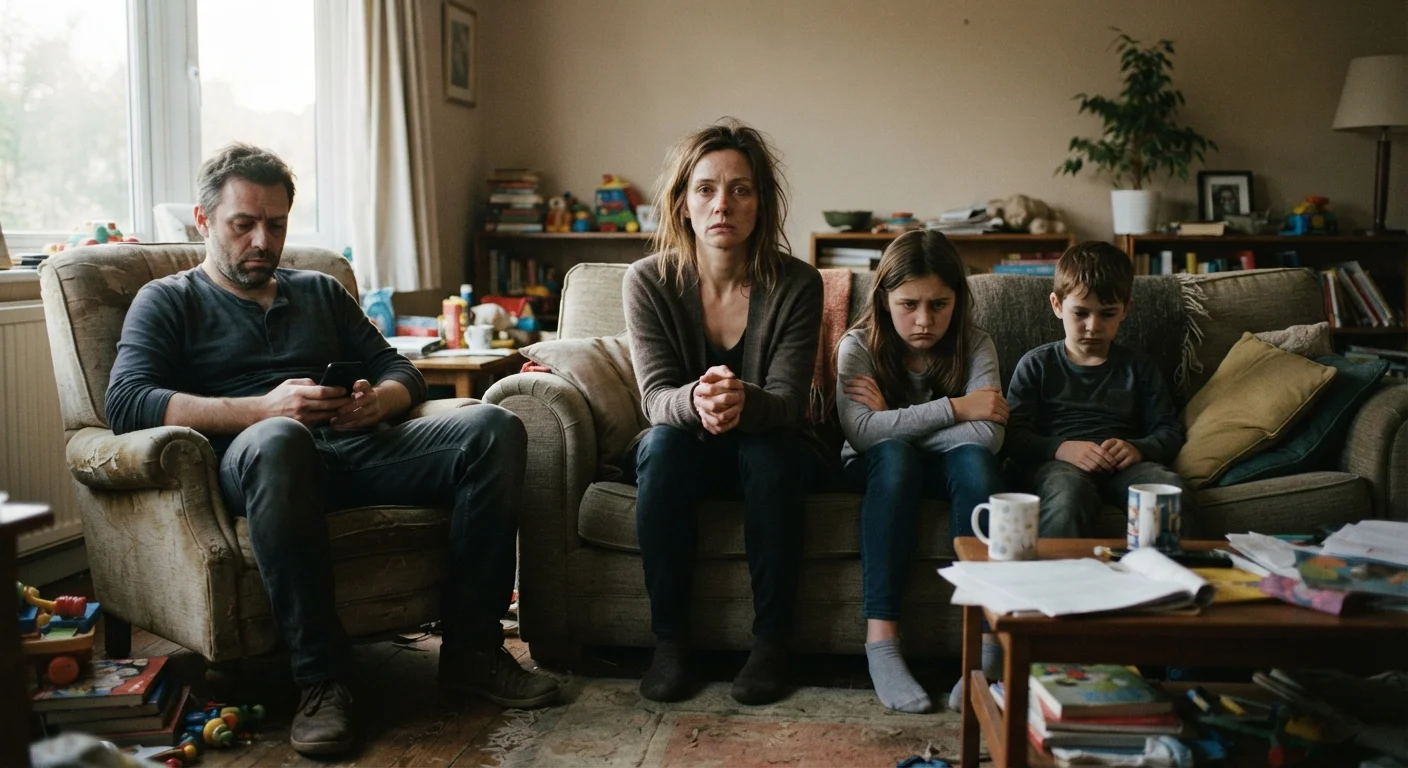
Most parents work hard to protect their children from adult worries - financial pressure, work demands, relationship strain. But stress has a way of seeping through even the most careful boundaries. It travels through tone of voice, shortened patience, disrupted schedules, and the subtle but powerful shift in a home's emotional atmosphere.
Family systems researchers describe this as emotional spillover: the stress one person carries doesn't stay contained to that person. It influences interactions, triggers secondary stress responses in others, and reshapes the daily experience of everyone under the same roof. Children - whose nervous systems are still developing - are especially vulnerable to these ripple effects.
Understanding how stress travels through a family isn't about assigning blame. It's about learning to recognize the signals early, before they become entrenched patterns. See how stress fits into whole-family health across physical, emotional, and social dimensions.
68%
Children who sense parental stress
According to the American Psychological Association's Stress in America survey, a majority of children reported being aware of their parents' stress, even when parents believed they were concealing it.
3x
Higher anxiety risk under chronic family stress
Research published in developmental psychology literature consistently links chronic household stress with significantly elevated rates of anxiety and behavioral difficulties in school-age children.
1 in 5
Children experiencing mental health challenges
The CDC estimates that approximately one in five children in the U.S. has a diagnosable mental, emotional, or behavioral disorder - underscoring the importance of early recognition of stress-related signals.
Behavioral Signals Worth Paying Attention To
Children communicate stress through behavior long before they have words for what they're feeling. Some of the most common signals include:
- Increased clinginess or separation anxiety - especially in younger children who sense instability at home
- Regression to earlier behaviors - bedwetting, thumb-sucking, or baby talk in children who had outgrown these
- Heightened irritability or emotional outbursts - a lower frustration threshold that seems out of proportion to the trigger
- Withdrawal from activities or friends - losing interest in things that previously brought joy
- Sleep disturbances - trouble falling asleep, frequent nightmares, or early waking
Adults under stress also show behavioral changes that compound the problem: shorter tempers, less consistency in discipline, reduced follow-through on routines, and less capacity for warm, engaged interaction. These shifts affect children directly, creating a feedback loop where family stress deepens over time.
Physical Symptoms That Often Go Unconnected
The mind-body connection is well established in adults, but parents sometimes overlook it in children. Recurring stomachaches, headaches, nausea, and general fatigue that don't have a clear medical cause are frequently linked to emotional stress. Pediatricians describe these as somatic complaints - physical symptoms with psychological roots.
This doesn't mean the pain isn't real. It absolutely is. But when a child frequently reports feeling unwell before school, or develops vague physical complaints during a period of household tension, it's worth considering whether emotional factors are contributing. Always consult your child's pediatrician to rule out medical causes and discuss what you're observing at home.
Chronic family stress is also associated with disrupted sleep patterns in both adults and children - and sleep deprivation itself amplifies emotional reactivity, making everything harder to manage. This is one reason that healthy family habits often erode during high-stress periods, removing the very buffers that help families cope.
What Families Can Do When They Recognize the Pattern
Recognition itself is a meaningful first step. When parents begin to see stress as a family-wide experience rather than an individual burden, the response can shift from isolated coping to collective repair.
Some starting points that family and child development specialists consistently point to:
- Name it simply and age-appropriately. Children feel more secure when they know the family is going through something hard - and that the adults are handling it. Silence often feels scarier than honest, reassuring language.
- Protect anchor routines. Regular mealtimes, consistent bedtimes, and predictable transitions act as stabilizers during stressful periods. Even simplified versions of these routines carry significant benefit.
- Model self-regulation. Children learn emotional regulation primarily by watching caregivers. When adults demonstrate how to pause, breathe, and respond rather than react, it builds children's own capacity to do the same.
For families looking to build more sustainable foundations, small, consistent practices can gradually shift how a household feels and functions. And if stress patterns feel persistent or escalating, knowing when stress may signal something more is an important next step to explore with a qualified professional.
This article is for general informational and educational purposes only and is not a substitute for professional medical, mental health, or clinical advice. If you have concerns about your child's physical or emotional wellbeing, please consult a qualified healthcare provider.