Why Small Habits Matter More Than You Might Think
Most parents have felt the pull of the "big reset" - the ambitious plan to overhaul screen time, revamp family meals, and introduce a flawless bedtime routine all at once. But research in behavior science consistently suggests that small, incremental changes are far more likely to stick than sweeping overhauls. When habits are modest enough to practice even on a chaotic Tuesday, they become part of how your family actually lives.
This isn't about perfection. It's about patterns. The core pillars of family wellness - physical, emotional, social, and environmental - don't require a complete reinvention. They're reinforced daily through dozens of small choices that, over time, quietly reshape how your household feels and functions.
The practices below aren't prescriptions. They're starting points - low-friction habits that many families find meaningful and manageable, whatever their size, shape, or circumstances.
Start a brief daily check-in
A simple, low-key question at dinner - "What was one good thing that happened today?" or "What felt hard?" - opens the door for genuine conversation without pressure. These micro-check-ins signal to children that their emotional experience matters, and they give caregivers an early window into stress or struggles that might otherwise go unspoken.
Child development research broadly supports the value of predictable emotional connection; even brief, consistent moments of attunement help children develop self-awareness and feel securely rooted in their family. The key word is consistent. A daily two-minute ritual outperforms an occasional hour-long "serious talk."
A two-minute daily check-in can do more than an occasional long talk.
Move together, even briefly
Shared physical activity doesn't need to be a structured workout. A short walk after dinner, a weekend bike ride, or even a spontaneous dance break in the kitchen all count. Movement as a family serves double duty: it supports physical health while creating low-stakes bonding time where conversation often flows more naturally than when everyone is sitting still and face-to-face.
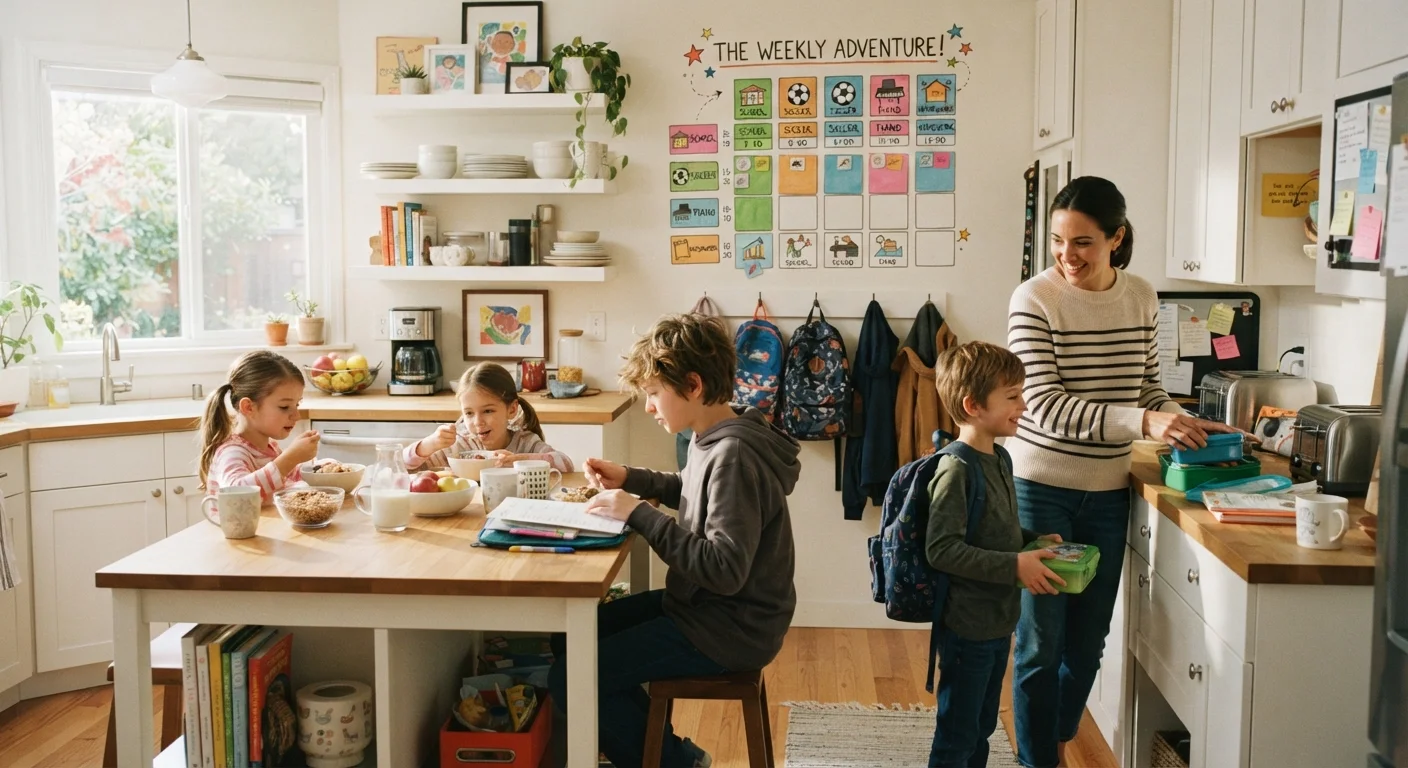
If you're thinking about how to build this into a broader framework, a well-structured family routine can make movement a natural part of your day rather than something you have to carve out separately.
Movement as a family serves double duty - physical health and natural bonding time.
Protect at least one shared meal a week
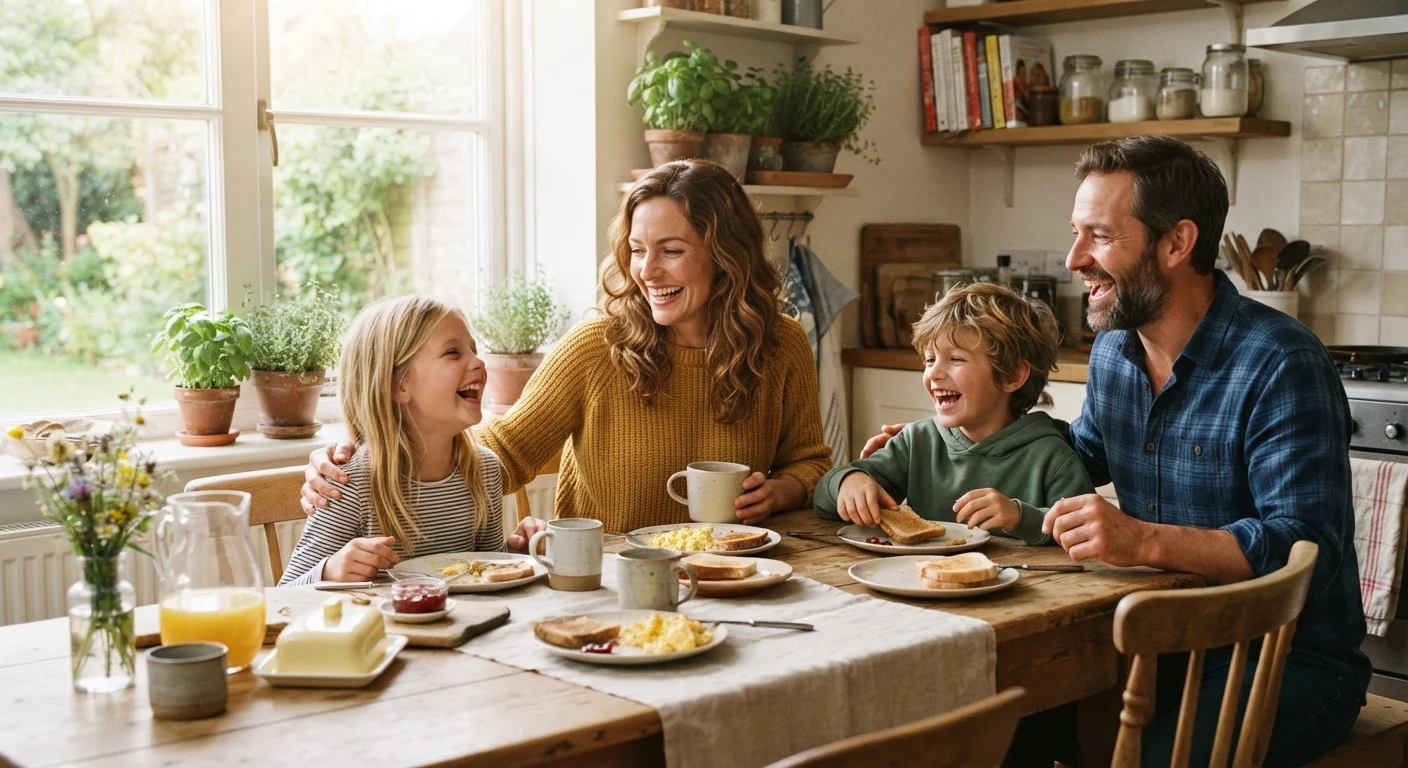
You don't need to eat together every night for shared meals to have an impact - but research generally suggests that even a few structured family meals per week are associated with better outcomes for children across emotional, social, and nutritional dimensions. The meal itself matters less than the ritual of being together without screens, phones, or competing demands.
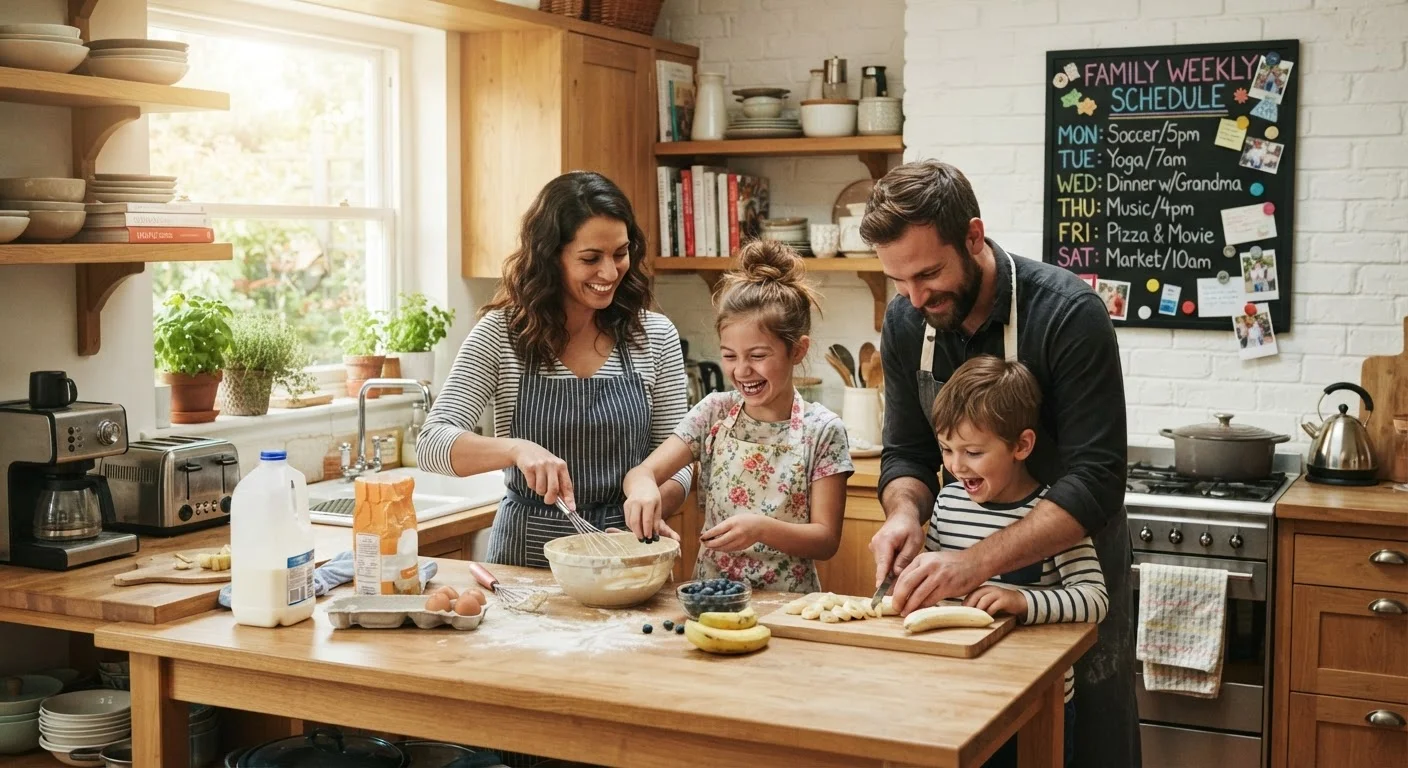
Start with one non-negotiable meal and build from there. Letting children help with simple parts of the preparation or setting the table gives them ownership and increases the likelihood they'll actually show up for it. For more on why these habits can erode and what it costs, see the habits families often drop first.
Even one screen-free shared meal a week can make a meaningful difference for children.
Create space for unstructured time
In households where schedules are packed with activities, unstructured family time often disappears first. But free-form time - where no one has an agenda and children can direct their own play - has distinct developmental benefits. It builds creativity, self-regulation, and intrinsic motivation in ways that structured activities simply can't replicate.
For caregivers, unstructured time also offers a different kind of rest: presence without performance. You don't have to facilitate or entertain. You can simply be alongside your children. Research suggests both types of family time offer distinct and complementary benefits worth protecting.
Unstructured family time builds creativity and self-regulation in ways structured activities can't.
Model the emotional habits you want to cultivate
Children absorb far more from what they observe than from what they're told. If you want to raise kids who can name their emotions, handle frustration with patience, or ask for help when they need it, the most effective practice is demonstrating those behaviors yourself - imperfectly, honestly, and often.
This doesn't mean performing wellness for your children. It means letting them see you take a breath when you're frustrated, apologize when you've made a mistake, or say aloud that you're feeling anxious and here's what you're doing about it. These moments of visible self-regulation are among the most powerful parenting tools available, and they cost nothing. For broader strategies on raising emotionally resilient children, the parenting strategies hub offers a range of evidence-grounded approaches.
Children learn emotional habits primarily by watching the adults around them navigate real moments.
Build in moments of genuine rest
Rest is not the same as entertainment, and it's not a reward for productivity - it's a biological and psychological necessity for every member of the family. Yet it's often the first thing sacrificed when life gets busy. Protecting sleep, quiet time, and low-demand evenings is a form of active family health maintenance.
For younger children especially, consistent bedtime routines create the conditions for better sleep. But caregivers need rest too - modeling that need openly helps children understand that taking care of yourself isn't selfish. The daily habits that quietly shape how you feel, including sleep and downtime, compound in ways that are easy to underestimate until they're gone.
Rest is not a reward - it's a necessity every family member deserves to protect.
Making These Habits Last
The hardest part of building healthier family habits usually isn't the first week - it's the fourth. Novelty fades, schedules collide, and life gets loud. One of the most reliable ways to protect new habits is to anchor them to something already established in your day. A gratitude moment at dinner doesn't require new time; it borrows existing time. A short walk after school replaces a transition that was already happening.
Start with one habit, not six
When families try to change multiple behaviors at once, the cognitive load makes all of them harder to sustain. Choose the single habit that feels most natural or most needed right now, and give it four to six weeks before adding anything new. Small, consolidated wins build the confidence and momentum for what comes next.
It also helps to involve children in shaping the habits you're building together. When kids have a voice in how the family spends its time - even in small ways - they're more likely to participate willingly. This is especially true for school-age children and teenagers, who are naturally developing a stronger sense of autonomy. For a deeper look at structuring routines that grow with your children, see how to build routines that adapt as kids grow.
Finally, be gentle with gaps. Missing a day - or a week - doesn't erase what you've built. The goal isn't a perfect streak; it's a family culture that returns, again and again, to the things that matter most.
This article is for general informational and educational purposes only. It does not constitute medical, psychological, or professional advice. If you have concerns about your family's physical or mental health, please consult a qualified healthcare professional.