
Why Co-Parenting Quality Matters More Than Family Structure
Research in child development consistently shows that what shapes children's adjustment after a family separation is not the separation itself, but the quality of the co-parenting relationship that follows. Children can and do thrive across a wide range of family structures - what matters most is how much conflict they're exposed to and how supported they feel by both caregivers.
Understanding how early bonds shape development helps explain why stability during and after transition is so important. When children sense ongoing tension between parents, their stress response systems can stay activated - affecting sleep, behavior, and concentration. By contrast, children who observe their parents cooperating, even minimally, tend to show greater resilience through change.
Co-parenting well doesn't require a harmonious adult relationship. It requires a shared commitment to keeping children's needs at the center - even when that's hard.
Core Principles for Effective Co-Parenting
The practices below reflect widely supported guidance from child development research and family therapists. They are not about creating a perfect dynamic - they're about reducing harm and building a workable foundation.
Keep adult conflict away from children's eyes and ears
Exposure to ongoing parental conflict is one of the strongest predictors of poor child outcomes after separation, according to decades of family research. Even arguments children overhear - but don't see - can elevate stress. Protecting children from adult tension is a high-impact, immediate act of care.
Establish consistent routines across both households
Predictability is a cornerstone of children's sense of safety. When core expectations - bedtimes, homework habits, screen-time rules - are reasonably aligned, children spend less energy adapting and more energy simply being kids. Perfect alignment isn't required, but major consistency helps.
Speak about the other parent with basic respect
Children identify strongly with both parents. When one parent is demeaned, children can internalize that criticism as a reflection on themselves. Even neutral language - avoiding insults or loaded sighs - protects a child's self-concept and their relationship with both caregivers.
Communicate directly with your co-parent, not through your child
Using children as messengers places them in an adult role they are developmentally unprepared for and creates loyalty pressure. Direct communication - by phone, text, or a shared co-parenting app - keeps children free from that burden.
Make transitions between homes as low-stress as possible
Handoffs can be emotionally charged moments for children. A calm, brief goodbye - without visible tension or lengthy emotional scenes - helps children move between homes with less anxiety. Children take emotional cues from caregivers during these moments.
Present a united front on major parenting decisions
When children sense that parents are in opposition, they may learn to play one against the other - not out of manipulation, but as a natural response to inconsistency. Aligning on significant decisions, even via brief check-ins, reinforces that both parents are still a team.
Supporting Children's Emotional Experience
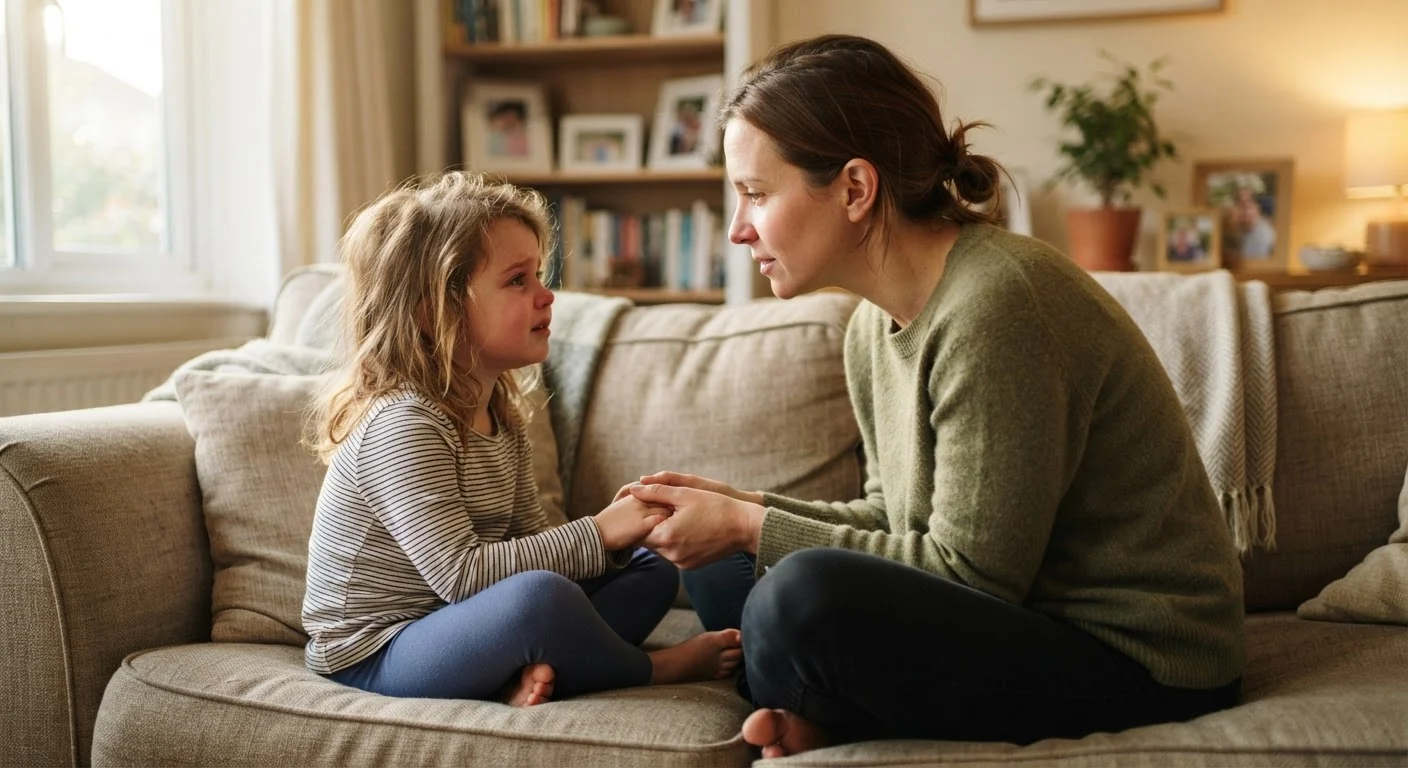
Children going through a family transition often carry feelings they don't yet have words for - grief, confusion, loyalty conflicts, and sometimes relief. How parents respond to those emotions matters enormously. Learning how to validate children's feelings without dismissing them is a skill that pays dividends across every parenting situation, but especially during periods of change.
Children should never be placed in the middle of adult disagreements, asked to relay messages, or made to feel responsible for a parent's emotional state. These situations create loyalty conflicts that can have lasting effects on a child's sense of self and their relationships. If you notice your child withdrawing, acting out, or expressing persistent sadness, speaking with a pediatrician or child therapist is a worthwhile step. For general guidance on building long-term emotional strength, see our article on raising emotionally resilient children.
This article is for general informational purposes only and is not a substitute for professional legal, therapeutic, or medical advice. If you or your children are experiencing significant distress, please consult a qualified professional.