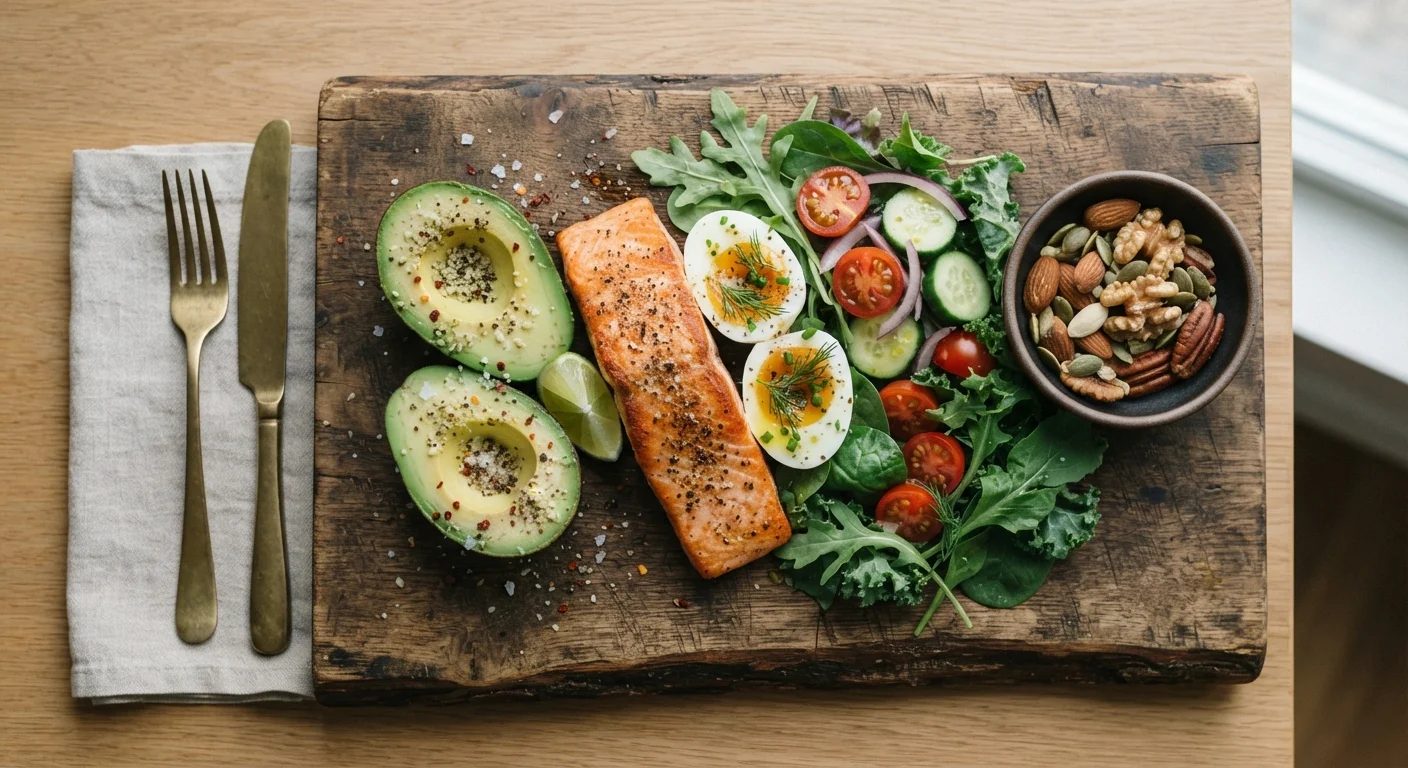

The Core Philosophy Behind Each Diet
Paleo and keto are frequently grouped together as "low-carb diets," but their underlying logic is fundamentally different. Understanding that distinction matters before choosing either approach.
The paleo diet is built around an evolutionary premise: eat only foods available to pre-agricultural humans. This means meat, fish, eggs, vegetables, fruit, nuts, and seeds are in - while grains, legumes, dairy, and anything processed are out. The reasoning is food-quality and ancestral appropriateness, not a specific metabolic target. Carbohydrates from whole-food sources like sweet potatoes or berries are acceptable.
The ketogenic diet is built around a biochemical target: inducing ketosis, a metabolic state in which the liver produces ketone bodies from fat because dietary carbohydrates are too low to sustain glucose as the primary fuel. Achieving and maintaining ketosis requires strict macronutrient ratios - typically around 70-75% of calories from fat, 20% from protein, and under 5-10% from carbohydrates. Food quality is secondary to hitting those numbers. For a deeper look at how ketosis works, see The Ketogenic Diet Explained.
In short: paleo asks what did humans historically eat? Keto asks what macronutrient ratio produces ketosis? Those are very different questions with meaningfully different answers.
Where the Food Rules Diverge
The clearest place to see the philosophical split is on the plate. Despite overlap in excluding grains, legumes, and refined sugar, several key food categories land in opposite columns.
| Criterion | Paleo | Keto |
|---|---|---|
| Core logic | Ancestral food quality | Macronutrient ratio for ketosis |
| Carbohydrate level | Moderate (whole-food sources allowed) | Very low (typically under 50g/day) |
| Fruit | Allowed | Mostly restricted |
| Starchy vegetables | Allowed | Mostly restricted |
| Dairy | Generally excluded | Encouraged (high-fat varieties) |
| Grains | Excluded | Excluded |
| Legumes | Excluded | Excluded |
| Macro tracking required | Not strictly necessary | Typically required to maintain ketosis |
Fruit and starchy vegetables: Paleo welcomes them as ancestrally appropriate whole foods. Keto restricts them sharply - even a medium banana can push daily carb intake above a typical keto ceiling. This is one of the most practical day-to-day differences.
Dairy: Standard keto embraces high-fat dairy - butter, heavy cream, hard cheeses - as efficient fat sources. Traditional paleo excludes most dairy on the grounds that pastoralism post-dates the agricultural revolution the diet seeks to reverse.
Legumes: Both diets exclude beans, lentils, and peanuts, though for different reasons. Paleo cites antinutrients and evolutionary inappropriateness; keto cites carbohydrate content.
It's worth noting that real-world practice often blurs these lines. "Dirty keto" ignores food quality entirely; some paleo followers eat dairy. What the guidelines officially say and what individuals practice can differ significantly. These variations matter when assessing long-term nutritional adequacy - a point worth discussing with a registered dietitian.
Nutritional Trade-offs and Practical Considerations
Both patterns can support healthy eating when followed thoughtfully, but each carries potential gaps worth knowing about.
~20-50g
Typical daily carb ceiling on keto
Most ketogenic diet protocols target fewer than 50 grams of net carbohydrates per day to sustain nutritional ketosis, per clinical dietary guidelines.
1,000mg
Daily calcium RDA for adults (19-50)
The NIH Office of Dietary Supplements lists 1,000 mg as the recommended daily intake for most adults - a target paleo followers must plan for without dairy.
~70%
Proportion of calories from fat on standard keto
Classic ketogenic protocols, as described in peer-reviewed nutrition literature, derive roughly 70-75% of total daily calories from dietary fat.
Paleo strengths and gaps: A well-planned paleo diet tends to be rich in micronutrients from vegetables, fruit, and organ meats. The main nutritional concern is calcium, since dairy exclusion removes a primary dietary source. Leafy greens, canned fish with bones, and almonds can partially compensate, but meeting calcium needs without dairy requires deliberate planning.
Keto strengths and gaps: Keto's very high fat intake can make it satiating and, for some people, easier to maintain caloric awareness. However, restricting fruit, legumes, and whole grains can lower intake of fiber, certain B vitamins, and a range of phytonutrients. Some people also experience an initial adaptation period - sometimes called the "keto flu" - involving fatigue and headaches as the body shifts fuel sources. Long-term adherence rates in research settings are mixed.
Neither pattern is inherently superior or deficient, but both require attention to nutritional completeness. Anyone with a chronic health condition, metabolic concern, or specific clinical goal should discuss either approach with a qualified healthcare provider or registered dietitian before making significant dietary changes. For additional context on how dietary myths can cloud decision-making here, see Nutrition Myths That Refuse to Die.
It's also worth considering sustainability. Highly restrictive eating patterns - regardless of their specific rules - often struggle to hold up over months and years, particularly without structured support.
This article is for general informational and educational purposes only and does not constitute medical or dietary advice. Consult a qualified healthcare professional or registered dietitian before making significant changes to your diet, especially if you have a chronic health condition.