Why a Category-by-Category Approach Works
Most people don't struggle to eat healthfully because they lack willpower - they struggle because grocery shopping without a system leads to an unbalanced cart. Picking up what looks good in the moment often means plenty of snack foods but a shortage of vegetables, or a week's worth of protein and no whole grains to pair it with.
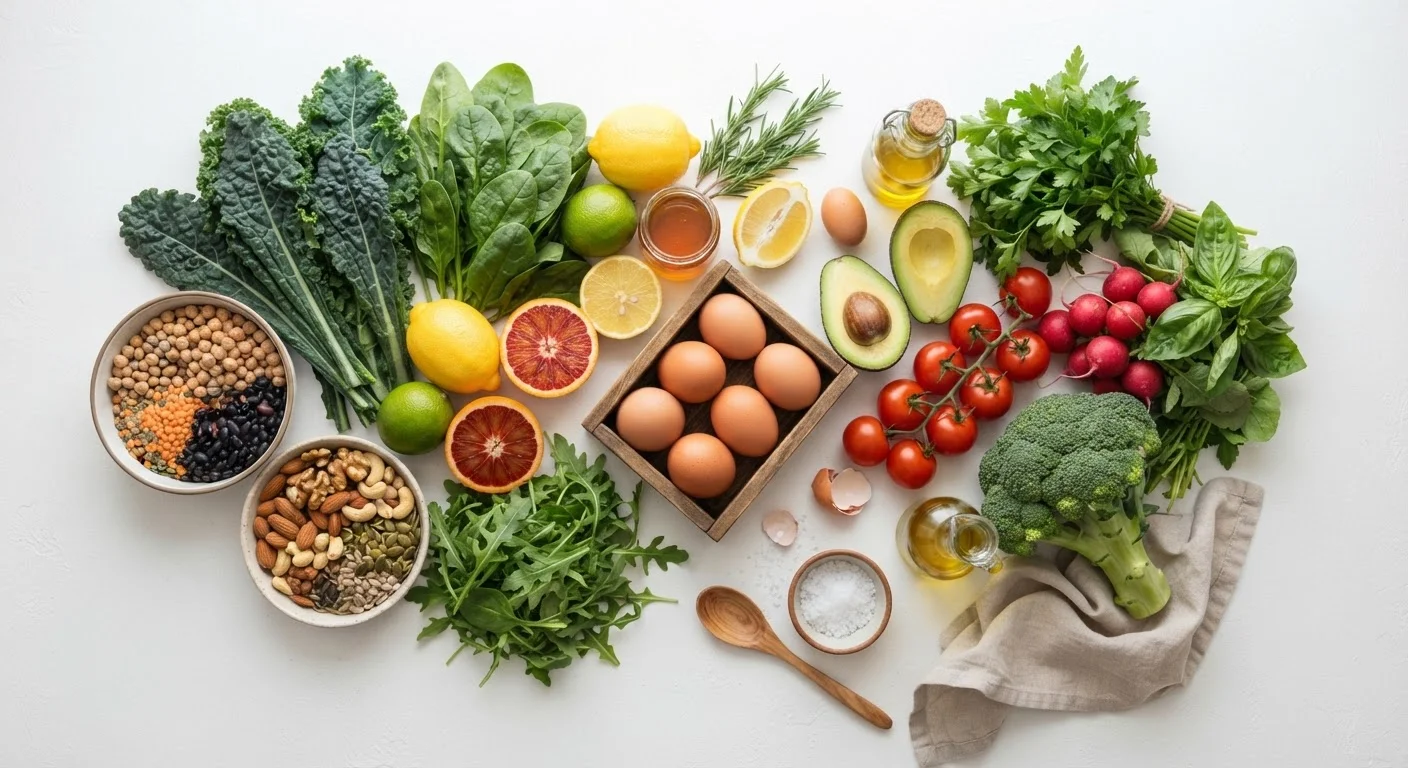
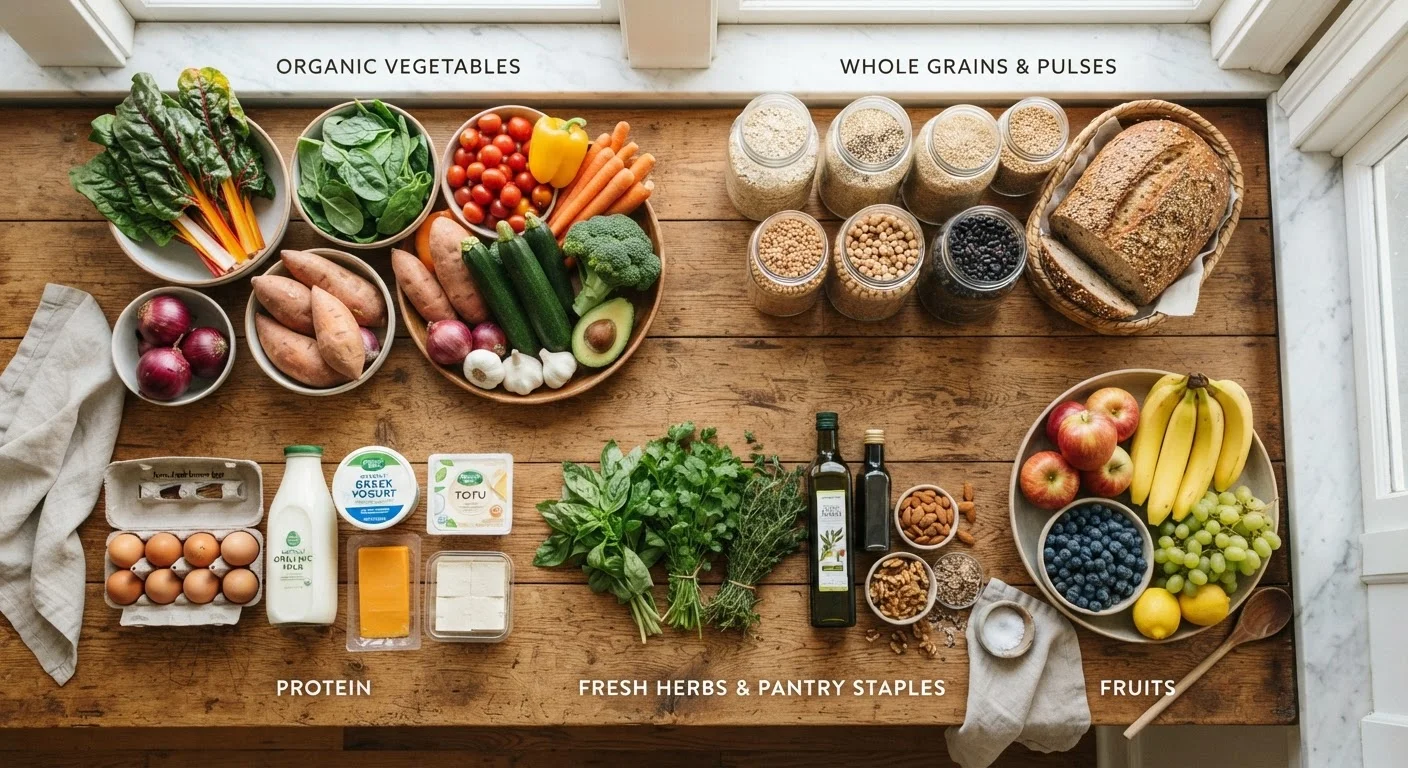
Structuring your shop around food categories - produce, proteins, grains, dairy or dairy alternatives, healthy fats, and pantry staples - is a practical way to ensure nutritional variety without needing to track macros or memorize dietary guidelines. This checklist reflects broad guidance from sources such as the USDA's MyPlate framework, which emphasizes balance and variety across food groups.
Before heading to the store, consider browsing our kitchen prep checklist to make sure you have the tools on hand to actually use what you buy. And if time is a barrier, eating well on a tight schedule offers strategies for turning a stocked kitchen into real meals, even on busy days.
Reusable shopping list (paper or app)
Organize items by category before you enter the store to reduce backtracking and ensure coverage across food groups.
Kitchen inventory notes
A quick check of your pantry, fridge, and freezer before shopping prevents duplicate purchases and clarifies true gaps.
Nutrition label familiarity
Understanding how to read a Nutrition Facts panel helps you compare whole-grain content, sodium levels, and added sugars at a glance.
Insulated grocery bag
Keeps perishable proteins, dairy, and produce at safe temperatures during the trip home, reducing food safety risk.
Using This Checklist
Work through each category below before or during your weekly shop. Items marked must are foundational - they support the widest range of meals and nutritional needs. Should items add important variety and nutrient density. Nice-to-have items round out your kitchen and support more varied cooking without being essential week to week.
You don't need to buy every item in every category every week. The goal is to leave the store with representation across all groups, not to build a restaurant pantry. Adapt quantities to your household size, budget, and any specific dietary needs. For guidance on how specific vitamins and minerals map to these food categories, see our quick-reference micronutrient guide.
This Checklist Is a Framework, Not a Prescription
Nutritional needs vary significantly based on age, health status, activity level, and individual medical history. The categories and items here reflect broad, evidence-based dietary principles suitable for most healthy adults - they are not a personalized meal plan. If you have a specific health condition, food allergy, or are managing a chronic disease, please work with a registered dietitian to develop a shopping and eating approach suited to your circumstances.
Produce - Vegetables
Produce - Fruit
Protein Sources
Whole Grains and Starchy Carbohydrates
Dairy and Dairy Alternatives
Healthy Fats and Oils
Pantry Staples and Flavor Builders
Filling the Gaps: Snacks and Extras
Between-meal foods deserve the same intentionality as your main grocery categories. Rather than defaulting to highly processed options, look for snacks that deliver protein, fiber, or healthy fats - think nuts, seeds, whole-grain crackers, or fresh fruit. Our guide to choosing snacks that actually sustain you explains how nutrient composition shapes hunger and energy between meals.
If you follow a particular dietary approach - whether plant-based, gluten-free, or otherwise - many items on this checklist adapt naturally. The Special Diets hub offers category-specific guidance for common food lifestyles. The core principle stays the same: variety within and across food groups is what drives nutritional breadth over a week's eating.
Watch for Hidden Sodium and Added Sugar
Many pantry staples - canned goods, sauces, flavored grains, and condiments - can contain significant amounts of added sodium or sugar that aren't obvious from the front of the package. Make a habit of checking the Nutrition Facts panel on new products, paying attention to serving sizes. Choosing low-sodium canned beans and tomatoes, and plain rather than flavored grains, gives you more control over how much you add in cooking.
This article is for general informational and educational purposes only and is not a substitute for personalized dietary advice. Individuals with specific health conditions, allergies, or nutritional needs should consult a registered dietitian or qualified healthcare professional.