
What Is Whole30?
Whole30 is a 30-day structured elimination protocol created by Melissa Urban and Dallas Hartwig and first introduced in 2009. Its core premise is straightforward: remove a defined set of food groups entirely for 30 days, observe how your body responds, and then systematically reintroduce those foods to identify which - if any - affect how you feel.
The program frames itself less as a diet and more as a short-term self-experiment. Participants are encouraged to pay attention to energy levels, digestion, sleep quality, mood, and physical sensations throughout the period rather than tracking weight or calories. Understanding the protocol's intent matters because it shapes how you interpret your experience - Whole30 is designed to generate information, not deliver a permanent eating prescription.
For a broader look at how to read and evaluate structured dietary frameworks like this one, see our guide to parsing special diet plans.
Elimination protocol
A structured approach to eating that removes specific foods for a defined period in order to observe how the body responds to their absence and, later, their return.
Reintroduction phase
The period after elimination ends when foods are added back one group at a time to identify which - if any - cause noticeable changes in how you feel.
Compliant food
Within Whole30, a food or ingredient that meets all the program's inclusion rules and contains none of the excluded substances.
Ghee
Clarified butter with the milk solids removed. It is the one dairy-derived fat permitted on Whole30 because its dairy proteins are largely absent.
Added sugar
Any sugar or sweetener added to food during preparation or manufacturing - distinct from naturally occurring sugars found in whole fruit. Whole30 excludes all added sugars, including natural ones like honey.
Carrageenan
A food additive derived from seaweed, commonly used as a thickener or stabilizer in packaged foods. It is excluded on Whole30 regardless of the food it appears in.
What You Remove for 30 Days
The exclusion list is one of the most distinctive features of Whole30. The following categories are fully eliminated for the entire 30-day period:
- Added sugar and artificial sweeteners - including honey, maple syrup, agave, and all non-caloric sweeteners such as stevia and sucralose.
- Alcohol - in all forms, including cooking wine and vanilla extract made with alcohol.
- Grains - all grains, including wheat, oats, rice, corn, quinoa, and gluten-free grain products.
- Legumes - beans, lentils, chickpeas, peanuts, and most soy-based products. Green beans and snap peas are exceptions.
- Dairy - milk, cheese, yogurt, butter, and cream. Ghee (clarified butter) is permitted.
- Certain additives - carrageenan, monosodium glutamate (MSG), and sulfites when added to foods.
The program also prohibits recreating eliminated foods using compliant ingredients - so making grain-free pancakes or almond-flour cookies is not permitted even if every component qualifies. This rule targets the behavioral relationship with comfort foods as much as the ingredients themselves.
The Restart Rule Is Strict
Whole30's official rules require restarting the full 30 days if you consume any non-compliant food or ingredient - even inadvertently. This includes hidden ingredients in restaurant meals, condiments, or packaged foods. Reading ingredient labels on every product you eat is essential to completing the protocol as designed.
What You Can Eat
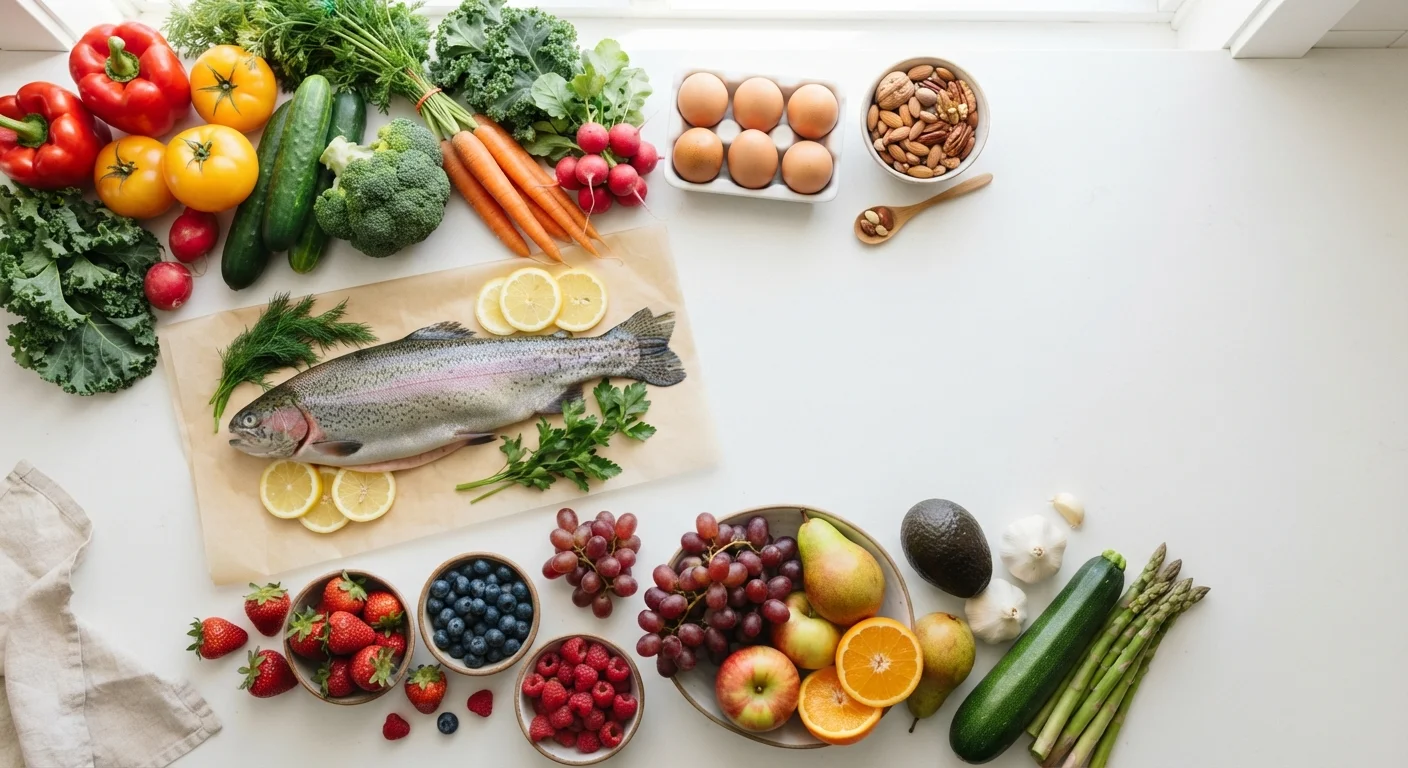
The permitted food list centers on whole, minimally processed ingredients:
- Meat, poultry, and seafood - including eggs. Quality sourcing is encouraged but not required.
- Vegetables - nearly all, including starchy vegetables like potatoes and sweet potatoes.
- Fruit - whole fruit is allowed, though the program suggests keeping it moderate and not using it to satisfy sugar cravings.
- Nuts and seeds - with the exception of peanuts, which are classified as legumes.
- Fats - oils (such as olive and coconut oil), ghee, avocado, olives, and coconut products.
Ingredient label reading becomes essential. Many packaged foods - including items marketed as healthy - contain compliant-sounding ingredients alongside excluded ones like added sugars, soy, or carrageenan. Participants typically find that meal preparation at home becomes the most reliable path through the protocol.
The Reintroduction Phase
The reintroduction phase, which begins on day 31, is arguably the most functionally important part of Whole30. It involves adding back eliminated food groups one at a time, with several days of compliant eating between each test group, and observing any physical or psychological changes.
A common reintroduction sequence includes: legumes, non-gluten grains, dairy, and finally gluten-containing grains - though the order can be adjusted based on personal priority. Each food group is consumed for one day, followed by two to three days of baseline eating before the next group is introduced.
This structured approach is what gives Whole30 its overlap with clinical elimination diet methodology. Without reintroduction, participants gather no actionable data - they only know what 30 days without those foods felt like. With reintroduction, they may be able to identify patterns worth discussing with a healthcare provider.
For comparison, the low-FODMAP protocol uses a similar reintroduction structure but targets a narrower category of fermentable carbohydrates rather than whole food groups.
Practical Considerations Before You Start
Whole30 is demanding in ways that go beyond willpower. The most commonly cited challenges include the time required to prepare meals from scratch, the social complexity of eating out or attending events, and an adjustment period in the first week that many participants describe as fatiguing or irritability-inducing as the body adapts.
Understanding why elimination diets often fail before they start can help you anticipate obstacles and build realistic expectations before you commit.
A few practical notes worth knowing:
- Whole30 is not medically supervised by default. Anyone managing a chronic health condition, taking medication, or navigating a history of disordered eating should speak with a qualified healthcare provider before beginning.
- The protocol is not designed for children, and specific guidance for pregnant or breastfeeding individuals recommends professional consultation.
- Budget and food access matter. A protocol built around quality proteins and fresh produce can be expensive, and availability varies by location.
The program's value ultimately depends on what a participant does with the information they gather. Whole30 is a tool - one that requires honesty, attention, and a clear sense of what you hope to learn from it.
This article is for informational purposes only and does not constitute medical or dietary advice. Consult a qualified healthcare professional before beginning any elimination diet, particularly if you have an existing health condition.
Plan Your First Week Before Day One
The adjustment period in the first several days is when most participants are most likely to abandon the protocol. Preparing a week's worth of compliant meals and snacks before you begin removes the temptation to improvise under fatigue or time pressure. A little pre-planning makes the early days substantially more manageable.