
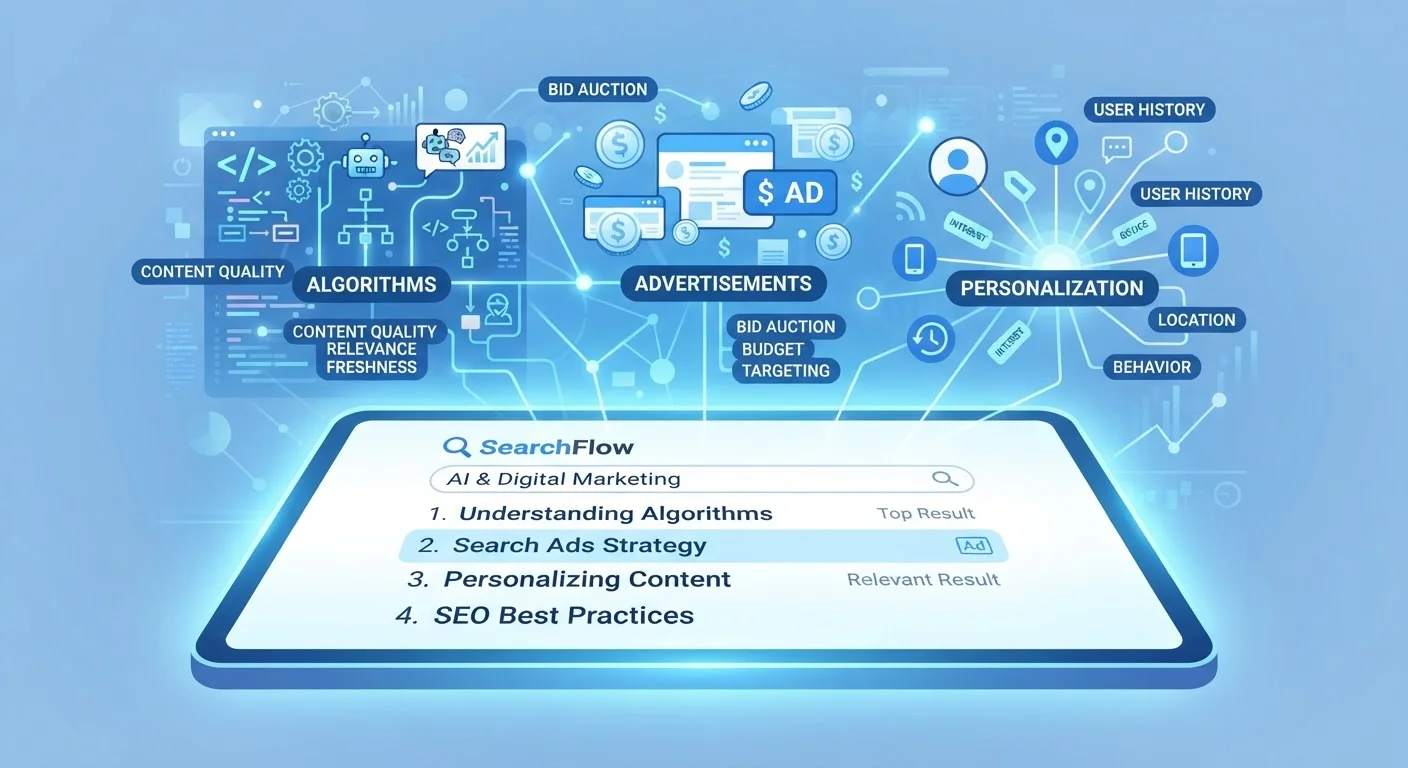
The Anatomy of a Search Results Page
When you type a question into a search engine and press Enter, the page that loads is not a neutral list of the best information on the internet. It is a curated, ranked, and in some cases commercially influenced display - and understanding its structure puts you in a stronger position as a reader.
A typical results page contains at least three distinct zones. At the top, you'll usually find paid advertisements - results that businesses have paid to place there for specific search terms. These are labeled (commonly as "Sponsored"), but the labels are easy to overlook. Below those sit organic results, which are ranked by the search engine's algorithm without direct payment. Depending on your query, you may also see featured snippets - boxed summaries pulled directly from a webpage - along with maps, images, or news carousels. To understand the full journey your browser takes before any of this appears, see what happens when you type a URL and hit Enter.
~68%
Share of online experiences starting with a search engine
According to BrightEdge research, roughly 68% of trackable website traffic originates from organic and paid search.
Top 3
Organic results capture the majority of clicks
Studies of click-through behavior consistently show that the first three organic results receive a disproportionate share of user clicks on any results page.
200+
Signals used in Google's ranking algorithm
Google has publicly acknowledged that its ranking systems consider over 200 factors, though the precise weighting of each remains proprietary.
How Algorithms Rank Organic Results
The organic rankings - the non-ad results - are determined by complex, constantly evolving algorithms. While search companies don't publish their exact formulas, researchers and industry observers have identified several broad categories of signals that consistently matter.
- Relevance: Does the page's content actually address what you searched for? Algorithms analyze the words on a page, how they're structured, and whether the topic is covered in depth.
- Authority and trust: Pages that many other reputable websites link to tend to rank higher. This is the foundation of the original PageRank concept - the idea that links act as votes of credibility.
- Page experience: How fast does the page load? Is it easy to read on a phone? Algorithms increasingly factor in technical quality alongside content quality.
- Freshness: For time-sensitive topics like news or rapidly changing fields, recently updated pages may be prioritized over older ones.
It's worth noting that Search Engine Optimization (SEO) - the practice of engineering content to rank well - means some highly visible results are there partly because of technical savvy, not just content quality. Critical reading remains essential.
“Ranking is fundamentally about predicting the most useful result for a given query at a given moment - but 'useful' is shaped by what we can measure, and what we can measure isn't always what matters most.”
— Danny Sullivan, Google's Public Liaison for Search
Personalization and the Filter Bubble Effect
Even among organic results, what you see is shaped by who you are - or at least, who the algorithm thinks you are. Search engines use signals including your geographic location, past search history, device type, and (if you're signed into an account) your broader activity across the platform's ecosystem to tailor results.
This personalization is designed to be helpful - a search for "coffee shop" should show you places nearby, not across the country. But it also creates what researchers have called a filter bubble: a tendency for algorithms to serve content that aligns with your established interests and prior behavior, potentially narrowing the range of perspectives you encounter.
For everyday research, this means two people in different cities with different browsing histories may get meaningfully different results for the same health, financial, or political query. Understanding how browsers collect and use your data is a useful companion to this topic - the data fueling personalization often begins at the browser level.
How to Search More Effectively
Knowing how search results are constructed leads directly to more confident, critical searching habits.
Scan past the ads. Before clicking, note where the paid placements end and organic results begin. For health, financial, or legal questions especially, consider who is funding the top results.
Use specific, precise queries. Vague terms return results optimized for broad audiences. More specific phrases surface content tailored to your actual question and tend to reduce the dominance of heavily SEO-optimized but thin content.
Try incognito or private browsing. This reduces the influence of your personal history on results, giving you a less personalized view - useful when you want a broader range of sources.
Look beyond the first page. The first page captures the vast majority of clicks, but highly specialized or academic sources often rank lower simply because they're not optimized for general search traffic.
These habits apply across contexts - whether you're researching a medical question, evaluating a news story, or navigating today's job market, where algorithmic curation increasingly shapes what opportunities you discover.