
Why Open Offices Make Focus So Hard
Open-plan offices were sold as collaboration accelerators. In practice, they often function as interruption machines. Research cited by the American Psychological Association suggests that after an interruption, it can take more than 20 minutes to return to a demanding task at the same level of concentration. In a typical open office, interruptions arrive far more frequently than that - making sustained deep work structurally difficult, not a personal failing.
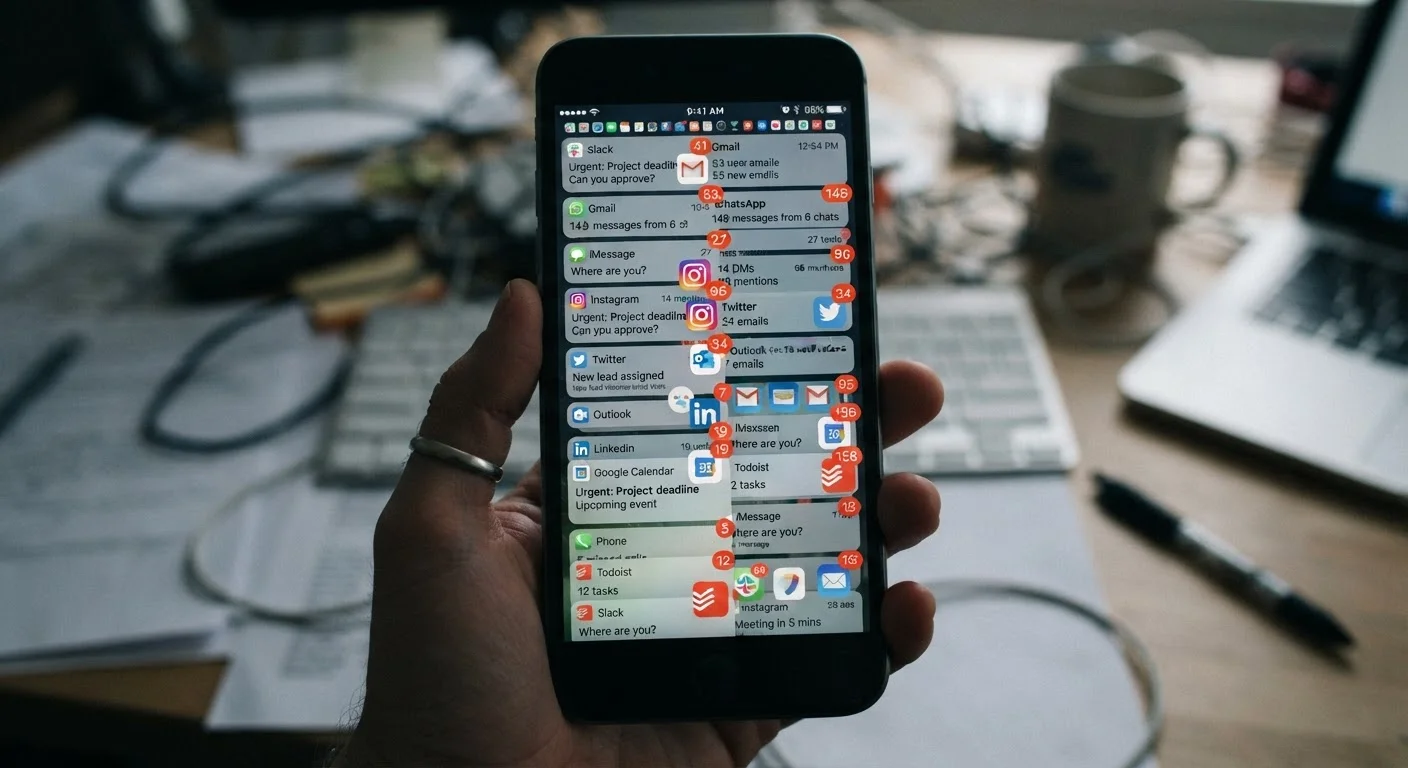
The problem is layered. Ambient noise raises cognitive load. Visual movement in peripheral vision pulls attention. Digital notifications compound the effect. If you feel like you can't get anything done at your desk, the environment is likely a significant contributor. The good news: there are proven strategies that work within these constraints - without requiring you to wall yourself off from your team.
For workers dealing with the digital side of the problem, our companion piece on how notification overload changes the way you focus explains what app alerts do to attention at a neurological level.
Practices That Actually Protect Focus
The strategies below are grounded in workplace research and behavioral science. None require special software or managerial approval - most can be adopted immediately.
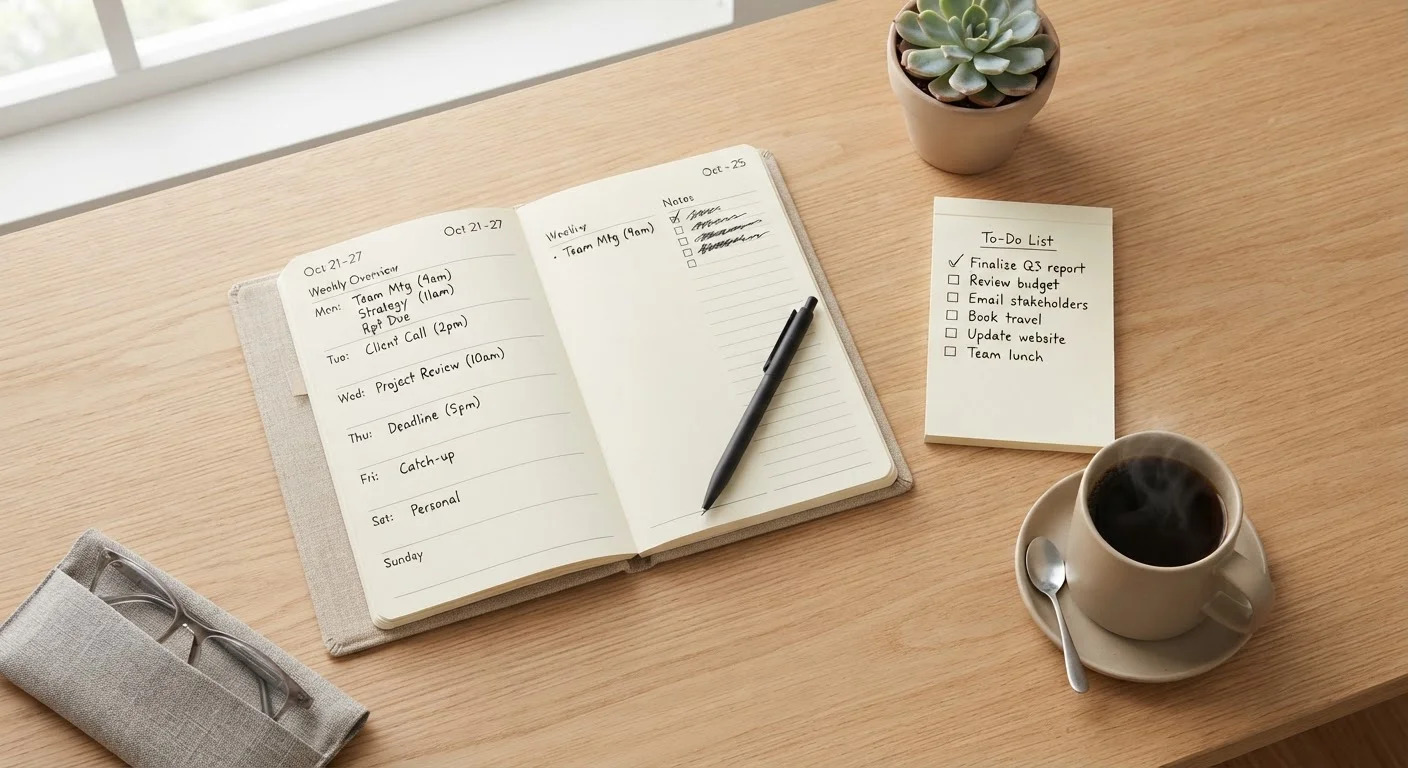
Schedule and name your focus blocks on a shared calendar.
When colleagues can see that you're in a designated focus period, unplanned interruptions drop significantly. It also signals professionalism and self-management rather than rudeness. Visible time protection normalizes the behavior across teams.
Use a consistent, low-tech unavailability signal at your desk.
Physical cues reduce the social awkwardness of turning someone away mid-thought. A clear signal prevents colleagues from investing in a conversation before realizing you're unavailable, which is better for both parties.
Batch reactive work - email, Slack, quick questions - into defined time windows.
Checking messages continuously forces your brain to switch contexts dozens of times per day, each switch carrying a cognitive cost. Consolidating reactive tasks reduces that switching overhead substantially.
Identify your peak cognitive hours and protect them first.
Most people have a two-to-four hour window each day when their thinking is sharpest - often mid-morning. Scheduling complex or creative work in that window and routine tasks outside it aligns effort with natural energy levels.
Create a brief pre-focus ritual to cue your brain for deep work.
Behavioral research suggests that consistent pre-task rituals help the brain transition into a focused state more quickly, reducing the ramp-up time at the start of a work block.
Proactively communicate your availability pattern to your direct team.
Focus strategies fail when they surprise colleagues. A brief, transparent explanation of how you structure your day builds trust and prevents your boundaries from being interpreted as disengagement.
If you're also thinking about how scheduling structures support focus, see our breakdown of time blocking vs. to-do lists for a practical comparison of two popular approaches.
Quick Wins You Can Apply Today
Not every focus improvement requires a structural overhaul. Several high-impact habits can be adopted in a single workday.
Setting boundaries around your focus time doesn't have to harm professional relationships. Our guide on setting work boundaries without damaging your reputation covers how to communicate limits clearly and constructively.
Focus as a Long-Term Career Competency
The ability to produce high-quality, concentrated work is increasingly rare in open, notification-saturated environments - which makes it increasingly valuable. Workers who protect their deep-work capacity tend to produce more visible output, meet deadlines with less stress, and build reputations for reliability.
20+ min
Average recovery time after a workplace interruption
Research referenced by the American Psychological Association indicates it takes over 20 minutes to return to a complex task after being interrupted.
~28%
Workday time spent managing interruptions and recovery
A widely cited University of California, Irvine study estimated that a significant share of the workday is consumed by interruptions and the effort required to refocus.
This isn't about becoming a hermit at your desk. Collaboration still matters. The goal is deliberate alternation: protecting time for focus when it counts, and being genuinely present during collaborative windows. That kind of intentional rhythm - rather than constant partial availability - is what high performers tend to model.
Strong communication habits also reinforce your focus strategy. When colleagues can rely on you to respond clearly and promptly during your available windows, they're less likely to interrupt during focus blocks. Our piece on written communication habits that build professional credibility covers the underlying skills that make this work.
Remote Work Doesn't Automatically Solve This
Home offices carry their own focus challenges - household noise, blurred work-life boundaries, and the lure of domestic tasks. If you're working from home, the same principles apply: structured blocks, notification limits, and a clear signal to others in your space that you're unavailable. For environment-specific tips, see our guide on organizing a home office that supports focus.