Why Seasonal Wellness Matters for Families
Family wellness isn't static - it shifts with school schedules, daylight hours, temperature swings, and the rhythm of each season. As what family wellness actually means makes clear, health isn't just individual - it's relational, environmental, and behavioral. The habits that protect your family in January look different from those that matter most in July, and recognizing that difference is where proactive families start.
Adjusting routines seasonally doesn't require a complete overhaul each quarter. Small, deliberate shifts - in sleep schedules, outdoor time, nutrition, and emotional check-ins - can meaningfully support everyone's wellbeing without adding stress to an already full household plate.
Season-by-Season Wellness Priorities
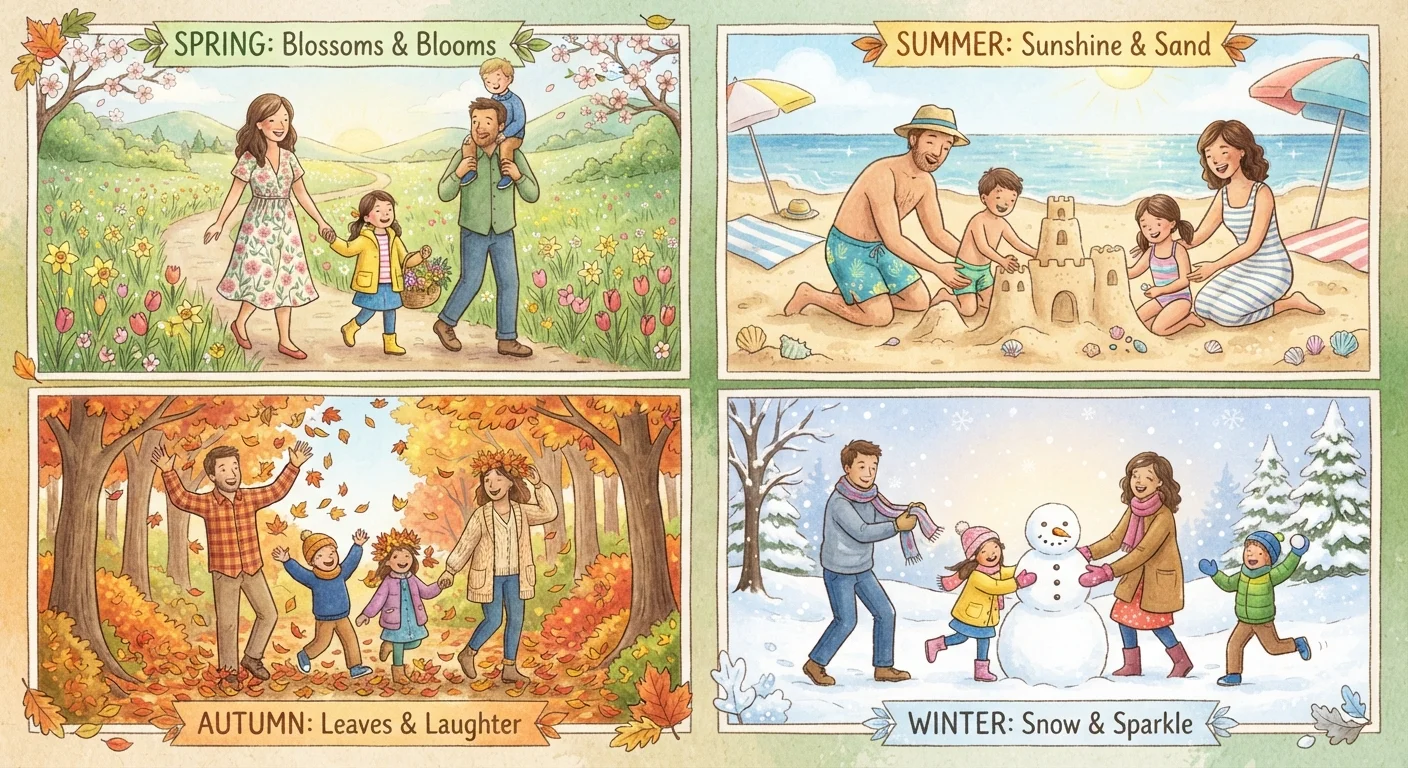
Winter: Prevention and Connection
Cold and flu season coincides with shorter days and reduced outdoor activity, which can strain both physical and emotional health. Key priorities include reinforcing hand-washing habits for all ages, keeping up with recommended vaccinations (consult your family's healthcare provider about which are appropriate for each family member), and maintaining consistent sleep routines even when holiday disruptions tempt everyone off schedule. Mood can also dip in winter months, particularly for those sensitive to reduced daylight. Protecting family connection rituals - shared meals, game nights, low-key routines - provides important emotional ballast. If you notice persistent low mood or fatigue in a family member, speak with a healthcare professional rather than assuming it's purely seasonal.
Spring: Reset and Prevention
Spring is a natural reset point - a good time for annual checkups, vision screenings, and dental visits before summer busyness takes over. A family health checklist can help you stay organized. Allergy season also ramps up in spring for many children and adults; tracking symptom patterns and discussing them with a provider early makes management easier throughout the season. Resume outdoor physical activity gradually, especially after a sedentary winter - over-exertion after a long break is a common source of minor injuries.
Summer: Safety and Structure
Increased outdoor time brings both benefits and risks. Sun protection habits - consistent sunscreen use, protective clothing, hydration - matter most now. Water safety is a top summer concern: swimming lessons and close supervision around any body of water are widely recommended by pediatric health organizations. Summer can also blur routines, which affects children's sleep, nutrition, and emotional regulation. A flexible household routine can preserve structure without eliminating the season's freedom. Screen time often increases during summer breaks - intentional limits and active alternatives help balance this.
Fall: Preparation and Resilience
Back-to-school transitions bring stress, new exposure to illnesses, and schedule upheaval. Rebuilding consistent sleep schedules a week or two before school starts smooths this transition. Fall is also prime time to revisit small, sustainable wellness habits that may have drifted over summer. As daylight decreases, prioritizing outdoor time during daylight hours supports circadian rhythms and mood for the whole family.
Seasonal wellness
The practice of intentionally adapting health habits and routines to align with the distinct risks, opportunities, and rhythms of each season.
Circadian rhythm
The body's internal 24-hour clock that regulates sleep-wake cycles and is influenced by light exposure. Seasonal changes in daylight can disrupt circadian rhythms for children and adults alike.
Preventive care
Healthcare measures taken to prevent illness or detect conditions early, including annual checkups, vaccinations, and screenings recommended by a healthcare provider.
Wellness anchors
Core healthy habits - such as adequate sleep, physical activity, and nutritious meals - that remain relevant across all seasons even as their specific expression changes.
Building Adaptable Habits Year-Round
The most resilient families aren't those with rigid wellness plans - they're those who've built a core wellness framework flexible enough to bend with the seasons. Think of physical activity, emotional check-ins, nutritious eating, and adequate sleep as year-round anchors - and seasonal adjustments as the way you express those anchors differently over time.
It's also worth acknowledging that certain healthy habits tend to slip first under seasonal pressure - outdoor play in winter, family meals during summer travel, sleep during holiday periods. Anticipating these pressure points makes it easier to protect what matters most. For a fuller picture of what whole-family health encompasses, see our look at the dimensions of a healthy family.
This article is for general informational and educational purposes only and does not constitute medical advice. Always consult a qualified healthcare professional for guidance specific to your family's health needs.