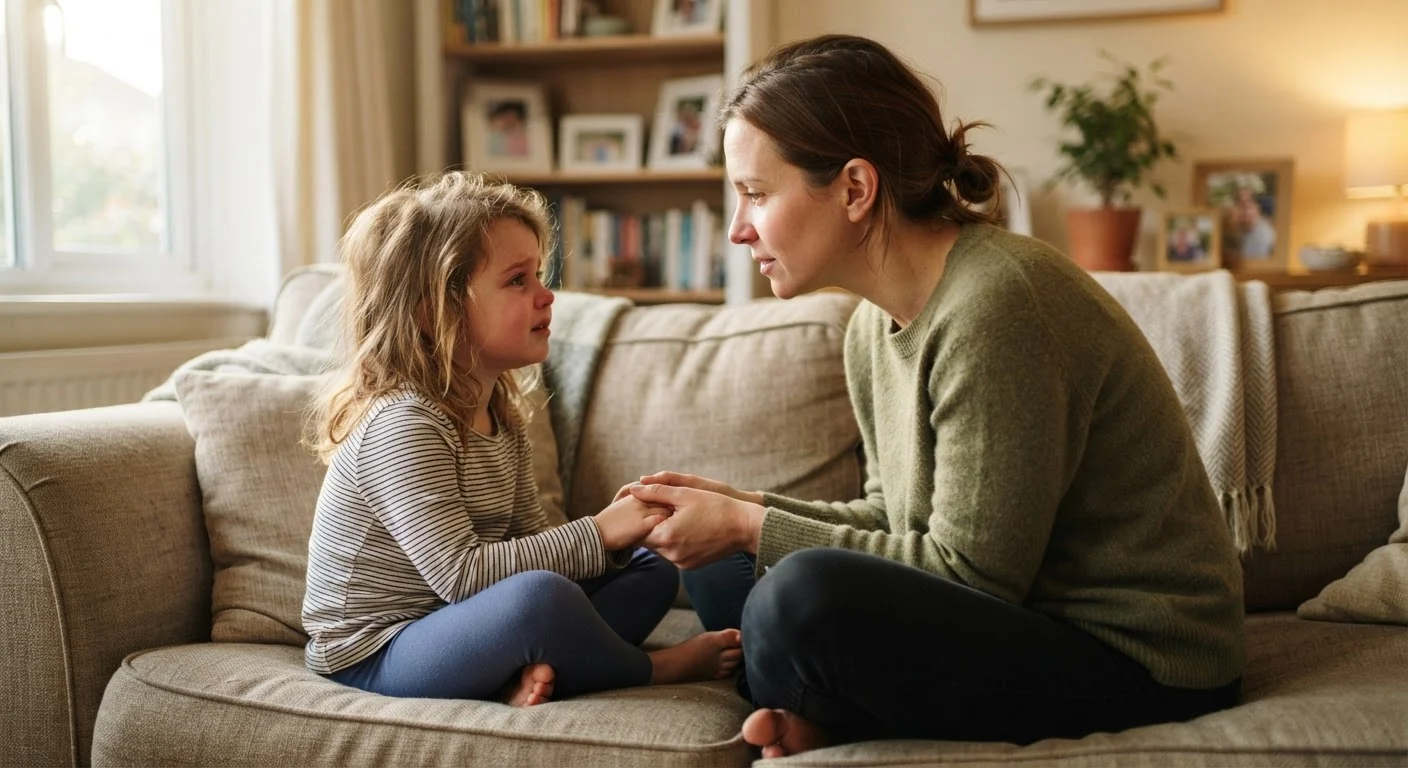

Why These Conversations Matter More Than Silence
Children notice far more than many parents expect. A hushed phone call, a worried expression, a news alert on a tablet - these fragments accumulate into a feeling that something is wrong, which is often more frightening than an age-appropriate explanation. When adults stay silent about difficult events, children tend to fill the gap with imagination, rumor, or anxiety rather than relief.
Child development researchers have long observed that the quality of a parent's response to a scary event - not the event itself - is one of the strongest predictors of how well a child copes. Families that talk openly, even imperfectly, about hard topics tend to raise children with stronger emotional literacy. That capacity for resilience doesn't emerge automatically; it's built through repeated, honest conversations over time. The child development research base makes clear that emotional scaffolding from trusted adults shapes how children interpret and manage the world around them.
Avoid Prolonged News Exposure for Young Children
Repeated viewing of distressing footage - even in the background - can deepen anxiety in children under ten. Child development researchers consistently recommend limiting ambient media exposure during difficult news cycles, not as a way of hiding reality, but to regulate the intensity and frequency of distressing imagery young minds are still developing the capacity to process.
It also helps to consider how children encounter difficult information beyond your household. Social media, peer conversations, and ambient news coverage all play a role - something worth understanding in depth. See the screen time and children guide for what the evidence actually shows about media exposure at different ages.
Before You Start: What You'll Need
Preparation makes a significant difference. These conversations tend to go better when they happen in familiar, low-pressure settings rather than in immediate reaction to a breaking event.
What you will need
Age-appropriate books about feelings and world events
Provides a narrative entry point for younger children who process ideas more easily through story than direct conversation.
A trusted family routine (e.g., dinner, bedtime)
Familiar settings lower a child's defenses and make them more receptive to sensitive conversations.
You don't need a script or expert training. What matters most is availability - being the kind of parent your child trusts to come to. Building that relationship through smaller, everyday conversations about emotions makes the harder ones easier. The companion article on talking about mental health with your kids at every age outlines how to lay that groundwork by developmental stage.
Step-by-Step: How to Have the Conversation
Find out what your child already knows
Before offering any explanation, ask an open question: "Have you heard anything about what happened?" or "What are kids at school saying?" Children often arrive with partial information, rumor, or imagery that is more frightening than reality. Starting here lets you correct misconceptions immediately and calibrate how much detail to add.
Use honest, simple language matched to their age
Children aged 5-7 need very short, concrete explanations focused on what directly affects their daily life. Children aged 8-12 can handle slightly more context and cause-and-effect reasoning. Teenagers often want honest dialogue about complexity and injustice. In every case, avoid euphemisms that confuse (e.g., saying someone "went to sleep" about death) and avoid clinical jargon that distances. Plain, accurate language builds trust over time.
For younger children, a sentence or two is usually enough. For older children, a short paragraph of context followed by an invitation to ask questions tends to work well.
Acknowledge feelings before moving to facts
Name what you observe: "You seem worried - that makes sense." Research in child development consistently shows that emotional validation before explanation reduces distress and improves information retention. This approach also models healthy emotional awareness. For a deeper look at validation techniques, see talking to children about difficult emotions without dismissing them.
Reassure them about their own safety
Even when a child doesn't ask directly, most are quietly wondering: Is this going to happen to me? Are you going to be okay? Address this proactively. Be honest about what you know and what you don't, but be clear about the specific protections in their life - trusted adults, community systems, routines that continue. Avoid making promises you cannot keep, but do emphasize the layers of care around them.
Limit ongoing exposure to news and social media
A single explained conversation is very different from repeated, unfiltered exposure to coverage. Help children understand that you will keep them informed, and then actively manage ambient media in shared spaces. This is especially important for children under ten. For related context on how children encounter difficult content online, the guide on keeping children safer online covers practical tools and awareness strategies.
Invite ongoing conversation and check back in
End the conversation with an open door: "You can always come to me if you have more questions or if you're feeling worried later." Children process information over time, not all at once. A brief check-in the following day - "How are you feeling about what we talked about?" - signals that the topic isn't forbidden and that you're a reliable source. This consistency is a cornerstone of raising emotionally resilient children.
Follow the Child's Lead
Some children want a brief answer and then move on; others have many follow-up questions. Let the child's curiosity set the pace rather than front-loading more detail than they asked for. Revisiting the topic over several shorter conversations is usually more effective than one long discussion.
When to Seek Professional Support
If your child shows persistent sleep disturbances, withdrawal, aggression, or preoccupation with a difficult event for more than a few weeks, consult your child's pediatrician or a licensed mental health professional. These signs may indicate a level of distress that benefits from professional care. This article provides general educational guidance only - it is not a substitute for clinical advice.
As children move into adolescence, these conversations naturally grow in complexity. Teenagers may push back, express cynicism, or want to discuss injustice and systemic causes rather than just personal safety - and that's developmentally appropriate. Understanding what shifts cognitively and emotionally during those years can help parents stay prepared. The article on preparing for your child's adolescence covers what developmental science highlights that many parents don't anticipate.
This article is for general informational and educational purposes only. It is not a substitute for advice from a licensed mental health professional or pediatrician. If you have concerns about your child's emotional well-being, please consult a qualified healthcare provider.