More Than Olive Oil: The Full Picture
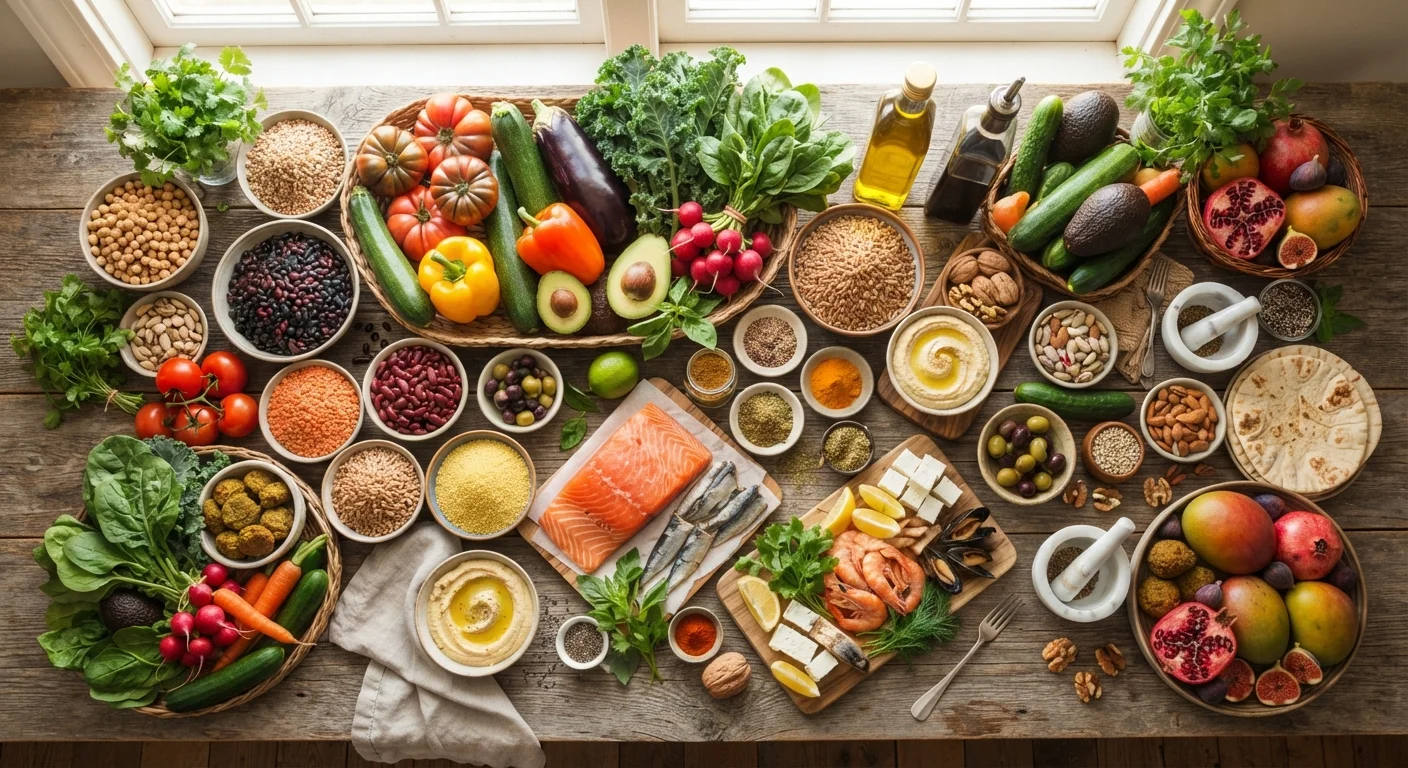
Ask most people what the Mediterranean diet looks like and they will mention olive oil, maybe some fish. But the pattern is considerably richer than those two ingredients suggest. At its core, it is a plant-dominant way of eating built on a wide variety of vegetables, fruits, whole grains, legumes such as lentils and chickpeas, and nuts and seeds eaten daily.
Olive oil serves as the primary source of added fat - used for cooking, dressing salads, and finishing dishes - replacing butter and other saturated fats. Fish and seafood appear several times per week, particularly oily varieties like sardines, mackerel, and salmon that supply omega-3 fatty acids. Poultry and eggs are eaten in moderate amounts, while red meat shows up infrequently - think a few times per month rather than daily.
Dairy is present but not dominant: yogurt and small amounts of cheese appear regularly, while milk is consumed less prominently than in a typical American diet. Fresh herbs, garlic, and spices do the heavy lifting on flavor, reducing reliance on salt.
“The Mediterranean diet is not a single diet but a set of eating habits traditionally followed by people in the Mediterranean region, characterized by an abundance of plant foods and olive oil as the main source of fat.”
— Walter Willett, Professor of Epidemiology and Nutrition, Harvard T.H. Chan School of Public Health
What a Typical Day Might Look Like
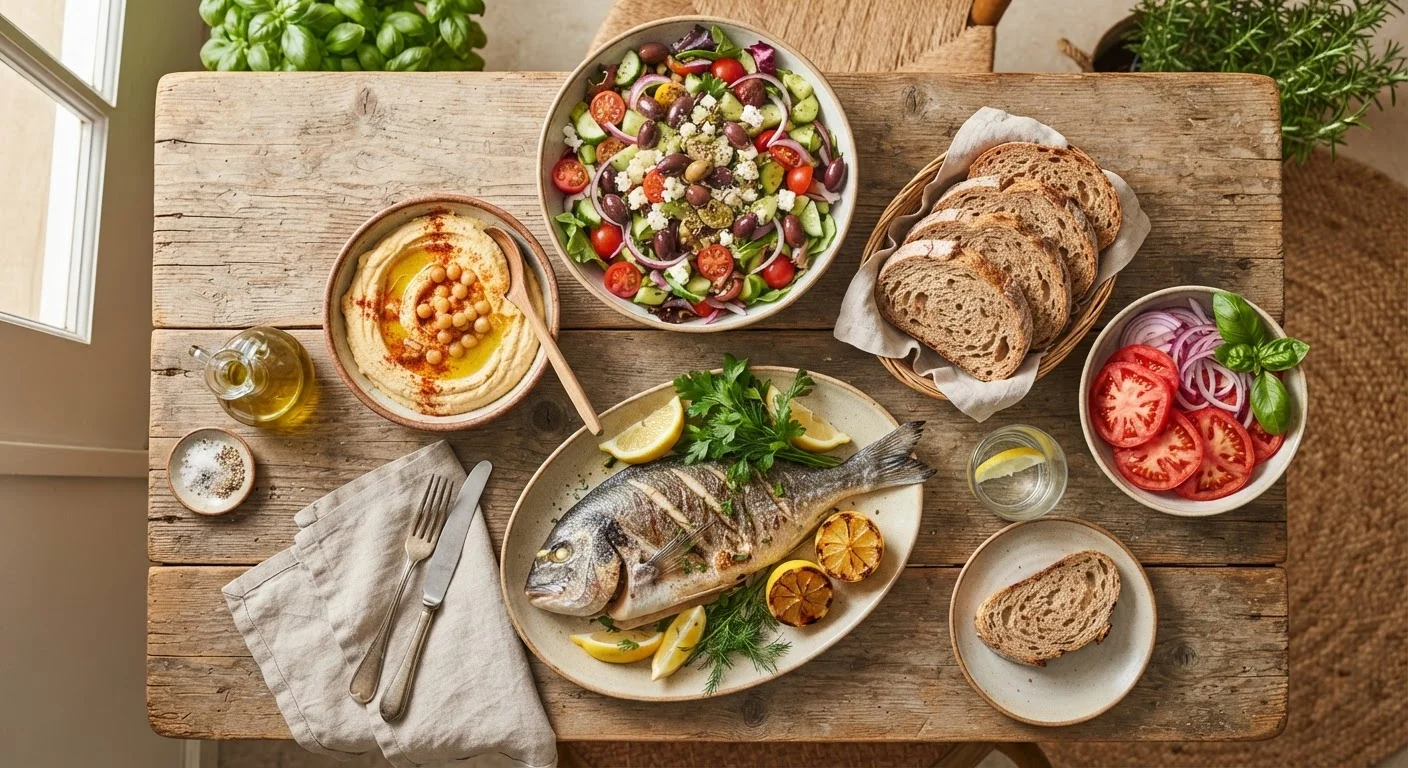
Translating the pattern into actual meals helps demystify it. A morning might start with Greek-style yogurt topped with walnuts and fresh fruit, or whole grain toast drizzled with olive oil alongside sliced tomatoes. Lunch could center on a hearty lentil soup, a large salad with chickpeas and feta, or a whole grain flatbread loaded with roasted vegetables.
Dinner might feature baked salmon or sardines alongside roasted vegetables and a side of farro or brown rice - all finished with a generous pour of olive oil. Snacks lean toward a small handful of almonds, a piece of fruit, or hummus with raw vegetables.
Notice what is mostly absent: packaged snack foods, sugary beverages, fast food, and highly processed deli meats. The Mediterranean pattern is partly defined by what it limits as much as what it includes. For practical strategies on assembling these kinds of meals at home, see our guide on building a balanced plate without counting calories.
7
Servings of vegetables and fruit recommended daily
Traditional Mediterranean dietary guidelines from Mediterranean diet researchers suggest aiming for around 6-8 combined portions of vegetables and fruit each day.
2-3×
Weekly fish servings in the pattern
Most Mediterranean diet frameworks recommend eating fish or seafood at least two to three times per week, with oily fish prioritized for omega-3 content.
>40%
Calories from fat, mostly unsaturated
Unlike many low-fat dietary guidelines, the Mediterranean pattern is relatively high in total fat - but the dominant source is monounsaturated fat from olive oil and nuts rather than saturated animal fats.
What the Research Actually Shows
The Mediterranean diet is among the most studied dietary patterns in nutritional science. The landmark PREDIMED trial, conducted in Spain, found that participants at high cardiovascular risk who followed a Mediterranean diet supplemented with olive oil or nuts showed a reduced rate of major cardiovascular events compared to a low-fat control diet. The study was large, well-designed, and widely cited - though, like all nutritional research, it has limitations and has undergone subsequent reanalysis.
Beyond cardiovascular outcomes, researchers have examined associations with metabolic markers, cognitive function, and overall mortality. The evidence is promising but not conclusive for all claimed benefits, and observational studies cannot always separate diet from other lifestyle and socioeconomic factors common in Mediterranean cultures.
This pattern also appears in discussions of longevity-associated eating traditions worldwide. For a broader look, see dietary patterns researchers study for longevity. Readers interested in how the Mediterranean approach compares to plant-based eating may find value in exploring plant-based vs. omnivorous diet trade-offs.
Start With One Swap at a Time
You do not need to overhaul your entire grocery list overnight. Choosing olive oil over butter, adding a handful of legumes to a salad, or swapping in a fish dinner once a week all move your eating pattern in the Mediterranean direction. Gradual shifts tend to be more sustainable than dramatic all-or-nothing changes.
This article is for general informational and educational purposes only and is not a substitute for personalized medical or dietary advice. Consult a qualified healthcare provider or registered dietitian for guidance suited to your individual health needs.