Why Home Workouts Work - and What Makes Them Stick
The most effective workout is one you'll actually do. For many people, that means removing the barriers of commute time, gym costs, and scheduling conflicts - all of which disappear with a home-based routine. Research consistently supports the effectiveness of bodyweight training for building strength, improving cardiovascular health, and maintaining functional fitness across age groups.
What typically separates people who succeed with home workouts from those who don't isn't motivation - it's structure. Without a clear plan, it's easy to skip sessions or underestimate what your body is capable of. Several common beliefs - like needing heavy weights to build strength - are explored in our guide to common exercise myths, many of which can hold people back unnecessarily.
If you're new to exercise or returning after a break, our personal readiness checklist can help you assess whether you're genuinely set up to begin.
Consult a Professional Before Starting
This article provides general fitness information for educational purposes and is not a substitute for medical advice. If you have existing health conditions, injuries, or have been inactive for an extended period, speak with your healthcare provider before beginning a new exercise program. This is especially important for older adults, pregnant individuals, and those managing chronic conditions.
What You Need Before You Begin
One of the most practical advantages of bodyweight training is how little you actually need. The list below covers everything required to get started safely and effectively.
What you will need
Yoga Mat
Provides cushioning and grip for floor-based exercises like planks and stretches.
Interval Timer App
Helps structure work and rest periods without watching a clock.
Resistance Band
Adds light resistance to bodyweight movements for added challenge as you progress.
Don't Skip the Warm-Up
Beginning intense movement with cold muscles significantly increases your risk of strains and injury. Always spend at least five minutes warming up with light movement before any workout session. Similarly, a brief cool-down with gentle stretching helps your body recover and reduces next-day soreness.
How to Build Your Routine Step by Step
Follow the steps below to design a personalized, progressive home workout routine. Each step builds on the last, so work through them in order before your first session.
Define Your Goals and Available Time
Before choosing a single exercise, get clear on what you want from your routine. Common goals include building muscular endurance, improving cardiovascular health, increasing flexibility, or simply establishing a consistent movement habit. Your goal shapes everything that follows - including exercise selection, session length, and how you measure progress.
Be honest about how much time you can realistically commit each week. Three 25-minute sessions done consistently outperform a 90-minute plan that gets abandoned by week two.
Choose a Simple Weekly Structure
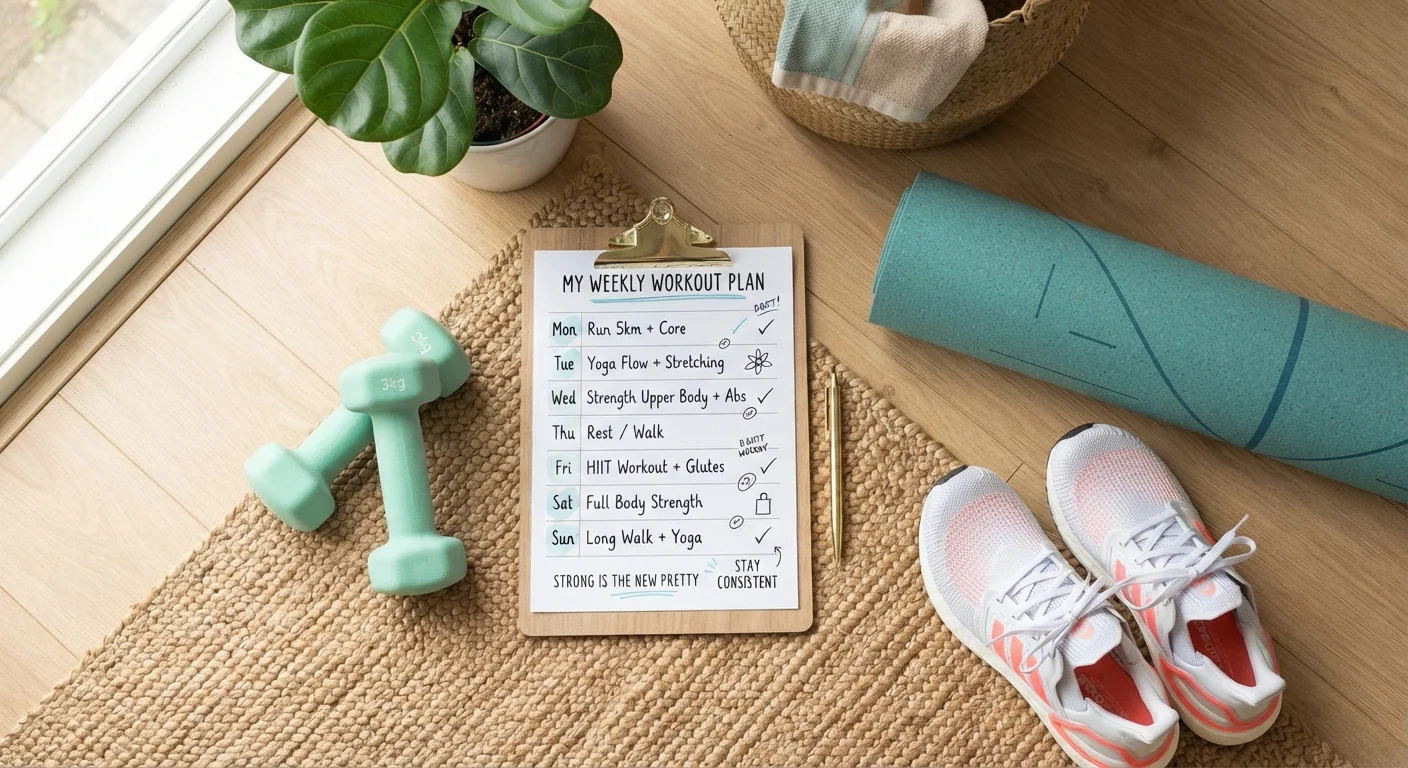
For most beginners, three to four sessions per week with rest or light movement days in between is a solid starting point. A common beginner framework is to alternate between strength-focused days and cardio or mobility days, ensuring no muscle group is worked intensively on consecutive days.
An example week might look like: Monday (strength), Wednesday (cardio/mobility), Friday (strength), with walking or stretching on other days. This structure mirrors the principles explored in our well-rounded weekly exercise guide.
Select Your Core Bodyweight Exercises
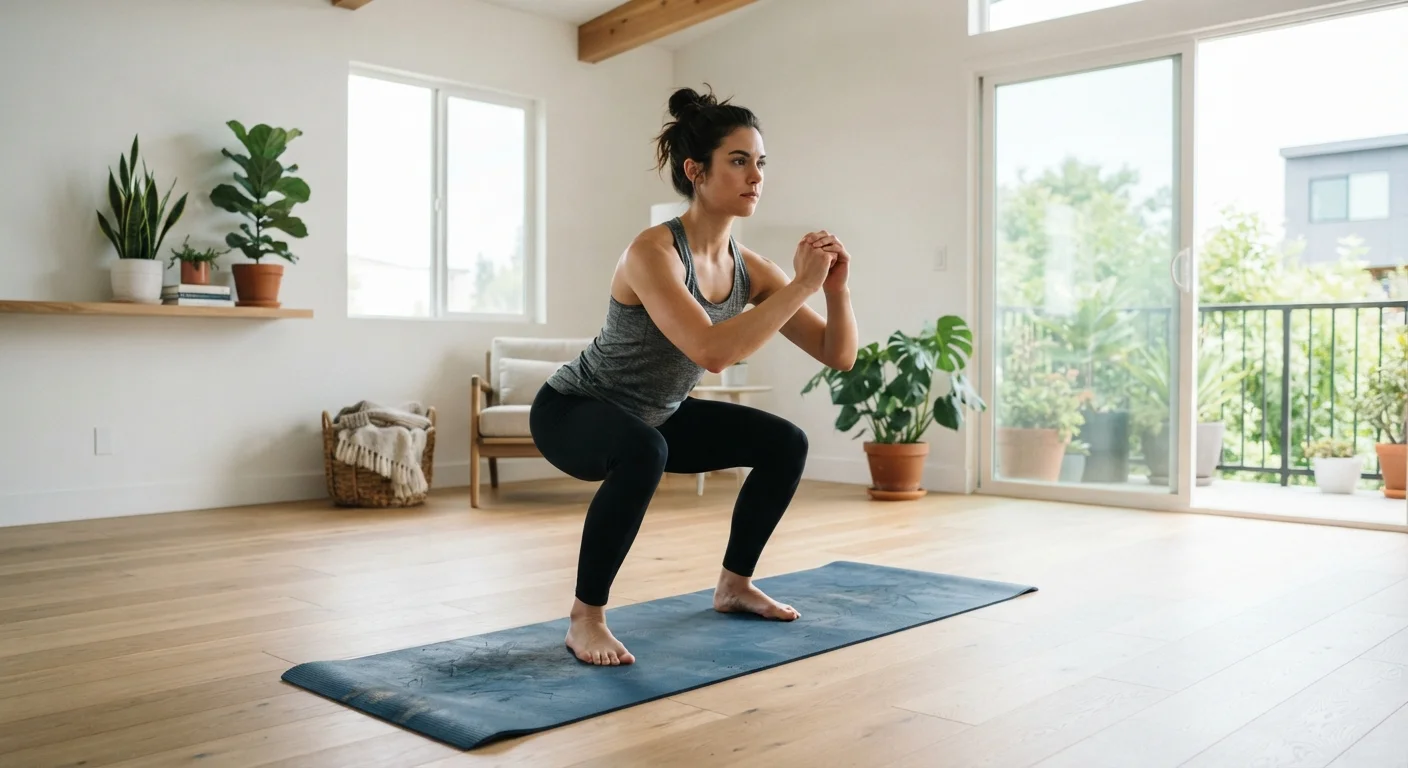
A well-rounded bodyweight routine draws from four movement categories: push (e.g., push-ups, pike push-ups), pull (e.g., door-frame rows if available), hinge/lower body (e.g., squats, lunges, glute bridges), and core (e.g., planks, dead bugs, mountain climbers). Aim for one or two exercises per category per session.
If standard push-ups feel too challenging, start from your knees or against a wall - these are full progressions, not shortcuts. Modifying exercises to match your current ability is how sustainable fitness is actually built.
Structure Each Session with Sets and Reps
For strength-focused sessions, a straightforward beginner approach is 2-3 sets of 8-12 repetitions per exercise, with 60-90 seconds of rest between sets. For cardio-style sessions, work-to-rest intervals such as 30 seconds of effort followed by 30 seconds of rest repeated across several rounds can be effective.
Keep total active exercise time between 20 and 40 minutes. Longer sessions are not inherently better - quality of movement and adherence matter more than duration, particularly at the start.
Build In Progression Over Time
A routine that never changes stops producing results. Every one to two weeks, introduce a small progressive challenge: add one more repetition per set, reduce rest time slightly, or try a more demanding exercise variation. For example, progress from wall push-ups to knee push-ups to full push-ups as strength allows.
This principle - gradually increasing demand on the body - is fundamental to continued improvement and is discussed in more depth in our strength training and cardio balance guide.
Schedule Rest and Recovery
Rest days are where physical adaptation actually occurs. Muscle tissue repairs and strengthens during recovery, not during the workout itself. Plan at least one to two full rest days per week, and treat light movement like walking or gentle stretching as active recovery - not as a replacement for genuine rest when your body needs it.
Sleep quality also plays a direct role in physical recovery. If you consistently feel fatigued or notice declining performance, rest more before increasing workout intensity.
Track Progress Simply
You don't need an app or a spreadsheet - a basic notebook works fine. Jot down what exercises you did, how many reps or rounds, and how you felt. Looking back at even two weeks of entries can reveal meaningful progress that keeps motivation high.
Once you've completed a full month of consistent sessions, our first-month exercise guide offers practical guidance on what to expect and how to keep building.
This article is for general informational and educational purposes only and does not constitute medical or fitness advice. Always consult a qualified healthcare professional before beginning any new exercise program, particularly if you have health conditions or concerns.