
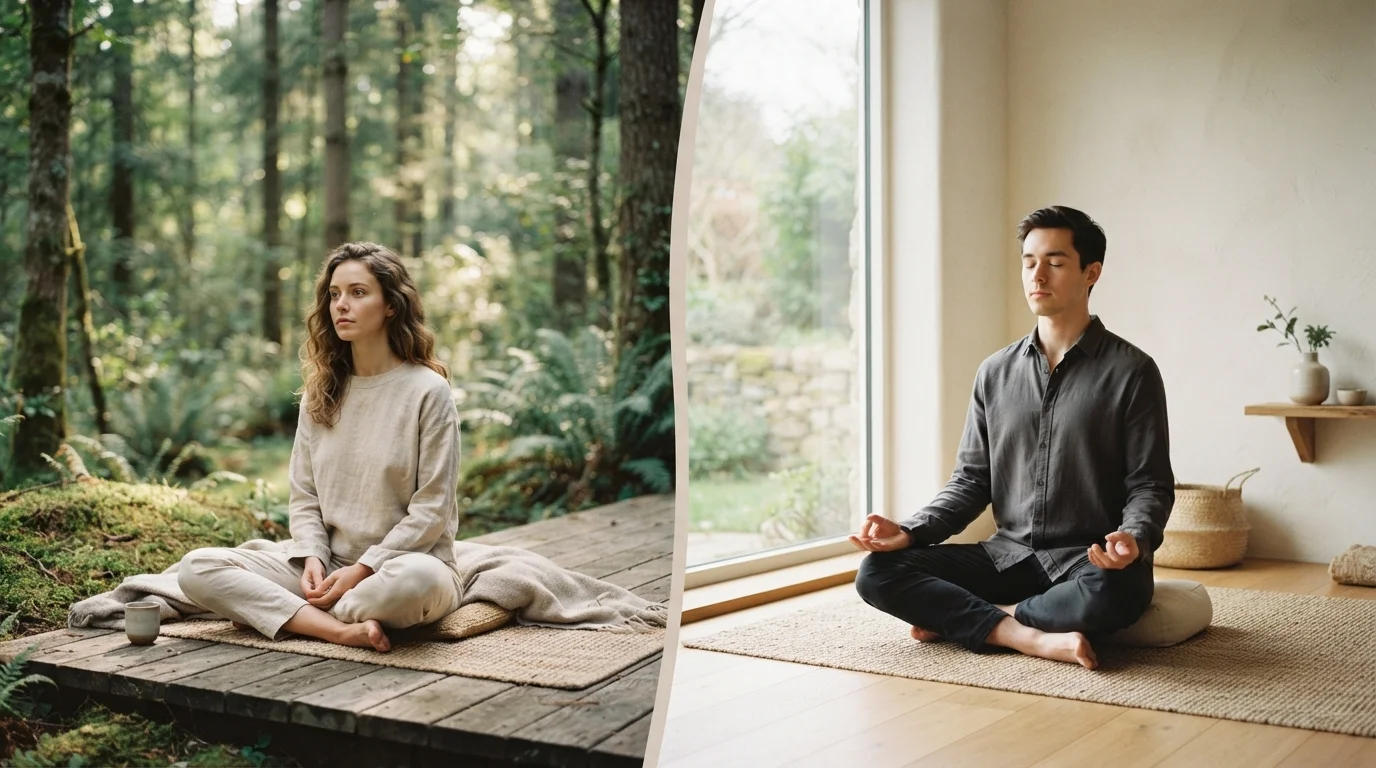
How the Two Terms Are Actually Defined
Mindfulness and meditation appear together so often that many people treat them as synonyms. They're closely related, but they describe different things. Understanding that distinction can help you choose the approach - or the combination - that fits your life best.
Mindfulness is a quality of attention: the practice of observing your thoughts, feelings, and surroundings in the present moment without judgment. It isn't something you do only at scheduled times. You can be mindful while washing dishes, commuting, or having a conversation. The goal is to notice what's happening right now rather than running on mental autopilot.
Meditation is a formal, intentional practice - a set of techniques performed during dedicated time, often in a quiet setting. Breath-focused meditation, body-scan meditation, and loving-kindness meditation are all structured methods designed to train the mind. While many meditation styles cultivate mindfulness, meditation can also target other goals, such as focused concentration or compassion.
A useful way to think about it: mindfulness is a mental skill; meditation is one of the most effective ways to build that skill. You can find these and related terms defined in the Mental Wellness Glossary.
| Criterion | Mindfulness | Meditation |
|---|---|---|
| What it is | A quality of present-moment awareness | A structured practice using specific techniques |
| When it happens | Anytime, embedded in daily activities | During dedicated, set-aside sessions |
| Time required | None - woven into existing moments | Typically 5-30 minutes per session |
| Learning curve | Low - can start immediately | Moderate - benefits from guidance early on |
| Primary goal | Present-moment awareness without judgment | Trained focus, calm, or self-awareness |
| Research support | Strong for stress reduction and attention | Strong across multiple techniques and outcomes |
| Can be done anywhere | Yes - no special environment needed | Generally benefits from a quiet setting |
What the Research Broadly Suggests
Both practices have attracted substantial scientific attention. Mindfulness-based programs, such as Mindfulness-Based Stress Reduction (MBSR), have been studied in clinical and general populations and are associated with reductions in self-reported stress and improvements in emotional regulation. Meditation research - spanning breath-focused, transcendental, and compassion-based techniques - shows similar patterns, along with some evidence of structural changes in brain regions associated with attention and self-awareness.
8 weeks
Duration of standard MBSR programs
The widely studied Mindfulness-Based Stress Reduction program developed at UMass Medical School runs for eight weeks of structured practice.
~13 min
Daily meditation linked to attention gains
A 2018 study published in Psychological Science found that 13 minutes of daily meditation over eight weeks improved attention and memory.
200+
Types of meditation studied scientifically
Researchers have examined a wide range of meditation styles; breath-focused, compassion-based, and body-scan techniques are among the most researched.
It's worth noting that study designs vary widely, sample sizes are often modest, and most research measures self-reported outcomes. These findings are encouraging, but they don't suggest that mindfulness or meditation can replace professional evaluation or treatment for mental health conditions. For general wellness support, though, both appear to offer meaningful benefits accessible to most adults.
To understand where these practices fit within the broader picture of psychological wellbeing, it helps to know what mental wellness actually means and how it differs from mental health.
Choosing What Works for You
There is no universal prescription here - the right approach depends on your schedule, temperament, and what you're hoping to experience. A few practical distinctions worth considering:
- Time commitment: Meditation typically requires a defined window - even five to ten minutes. Mindfulness can be layered into moments that already exist in your day.
- Learning curve: Some people find guided meditation apps or classes helpful for building a meditation habit. Mindfulness can be practiced immediately with no instruction beyond the basic concept of paying attention.
- Sustainability: Research suggests that consistency matters more than duration. A brief daily meditation practice tends to deliver more benefit than occasional long sessions.
- Complementary, not competing: Many practitioners use both - formal meditation sessions to train the mind, and informal mindfulness to carry that awareness into daily life.
If you're weighing whether a solo practice like mindfulness or meditation is enough on its own, it may be useful to explore how solo practices compare to social support for mental wellness.
This article is for general informational and educational purposes only. It is not medical or psychological advice. If you have concerns about your mental health, please consult a qualified healthcare professional.