
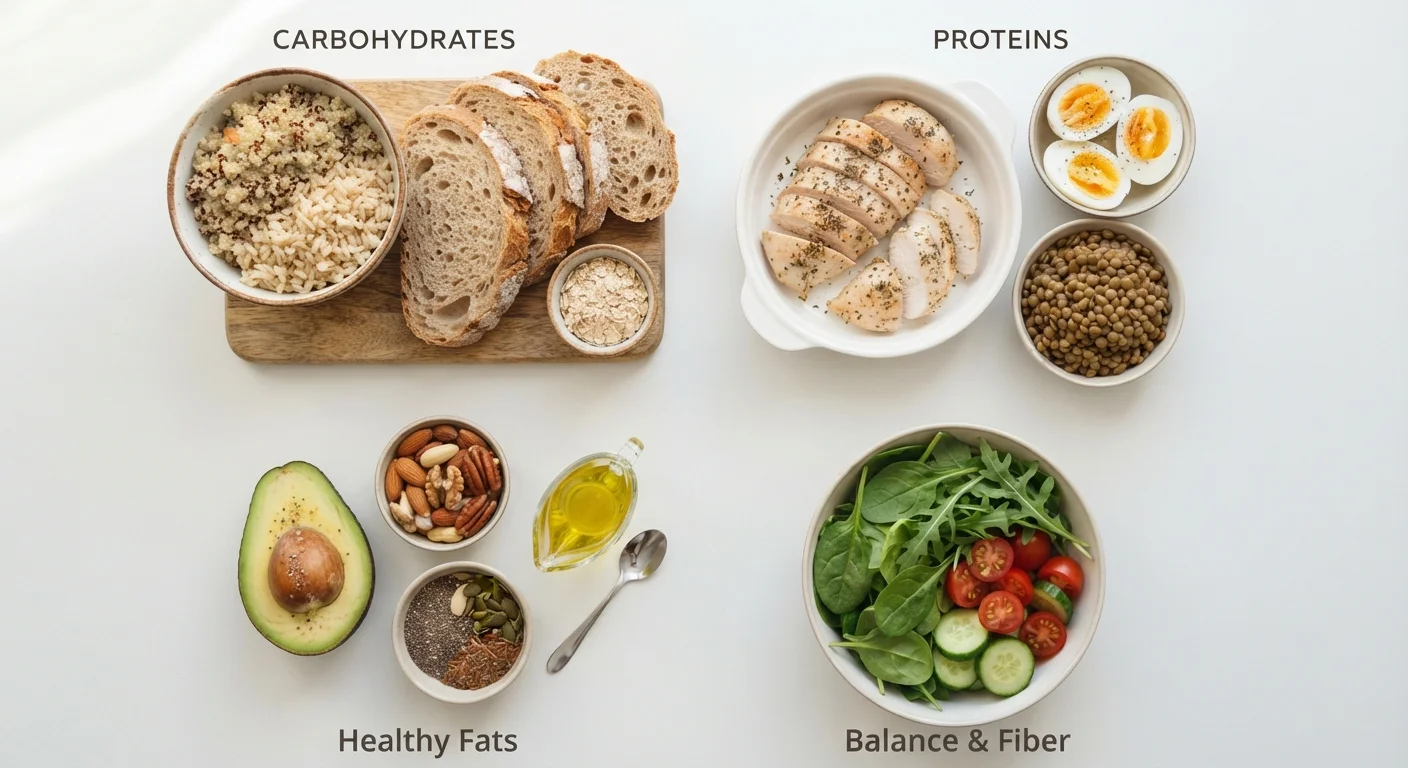
Why Macronutrients Are the Starting Point for Nutrition
Walk into any conversation about diet and you will almost immediately hear about carbs, protein, or fat - often framed as heroes or villains depending on the trend of the moment. Understanding what each macronutrient actually does strips away the noise and gives you a more grounded way to think about what you eat.
Macronutrients are not a modern invention or a marketing category. They are a fundamental biological reality: your body requires all three to sustain life. The amount of each that works best for you can vary based on age, activity level, and health conditions, but the need for all three is universal.
For a broader look at how macros fit alongside vitamins and minerals, see our guide to micronutrients.
~45-65%
Recommended share of daily calories from carbohydrates
According to the U.S. Dietary Guidelines for Americans, carbohydrates should make up roughly 45-65% of total daily caloric intake for most adults.
10-35%
Recommended daily calorie range from protein
The U.S. Dietary Reference Intakes set the Acceptable Macronutrient Distribution Range for protein at 10-35% of total calories for adults.
20-35%
Recommended daily calorie range from fat
U.S. dietary guidance recommends that fat account for 20-35% of total daily calories, with emphasis on unsaturated fat sources.
Carbohydrates: Your Body's First Choice for Fuel
Carbohydrates are broken down into glucose, which cells - especially brain cells and working muscles - use as their primary energy source. When glucose is not immediately needed, the body stores it as glycogen in the liver and muscle tissue for later use.
Not all carbohydrates behave the same way in the body. Whole food sources like oats, legumes, vegetables, and fruit deliver fiber alongside carbohydrates, which slows digestion and supports steadier energy levels. Heavily processed foods with added sugars provide quick energy but little nutritional depth.
Fiber - technically a carbohydrate - deserves special mention. It is not digested for energy but plays a vital role in digestive health, cholesterol management, and feeding beneficial gut bacteria. Most Americans fall well short of recommended fiber intake.
A Simple Way to Think About Carb Quality
When choosing carbohydrate-rich foods, consider whether the food still resembles its original whole form - whole grain bread versus white bread, brown rice versus instant rice, fresh fruit versus fruit-flavored candy. The closer to whole, the more fiber and micronutrients it typically retains. This is a practical rule of thumb, not a rigid requirement.
Protein: Builder, Repairer, and Regulator
Protein is made up of amino acids, often described as the building blocks of the body. Your body uses them to construct and repair muscle tissue, produce enzymes and hormones, support immune function, and transport molecules through the bloodstream.
Of the 20 amino acids involved in human metabolism, nine are considered essential - meaning the body cannot make them and must obtain them through food. Animal proteins (meat, poultry, fish, eggs, dairy) contain all nine essential amino acids in adequate proportions. Many plant proteins are lower in one or more, but a varied plant-based diet can meet needs through complementary food combinations.
Protein also plays a notable role in satiety. It tends to be more filling per calorie than carbohydrates or fat, which can help with managing overall food intake. For a deeper look at protein in practice, see common points of confusion on high-protein diets.
Dietary Fat: Essential, Not Optional
Fat has spent decades unfairly demonized, but it is indispensable. Dietary fat is the body's primary long-term energy reserve, insulates organs, and forms the structural backbone of every cell membrane. It is also required to absorb fat-soluble vitamins - A, D, E, and K - which cannot enter the bloodstream without it.
Fat also underpins hormone synthesis, including sex hormones and those that regulate inflammation. Certain fatty acids - particularly omega-3s found in fatty fish, walnuts, and flaxseed - are considered essential because the body cannot produce them independently.
The type of fat matters more than total fat intake. Unsaturated fats, found in olive oil, avocados, and nuts, are broadly associated with favorable health outcomes in large observational studies. Trans fats, once common in processed foods, are now widely restricted due to consistent evidence of cardiovascular harm. Saturated fat remains an area of active research, and major health organizations generally recommend moderation.
“Dietary fat is not the enemy - the type of fat and the overall dietary pattern matter far more than fat content in isolation.”
— Walter Willett, Professor of Epidemiology and Nutrition, Harvard T.H. Chan School of Public Health
For a closer look at common misconceptions - including the persistent idea that fat automatically makes you gain weight - see popular nutrition myths Americans still believe.
Balance Over Restriction: Putting It All Together
No single macronutrient causes weight gain or guarantees weight loss in isolation. The body is an integrated system, and how the three macronutrients interact - alongside total calorie intake, meal timing, food quality, sleep, and physical activity - determines overall health outcomes.
Most established dietary patterns associated with long-term health, such as the Mediterranean diet or the DASH approach, share a common thread: they include all three macronutrients from predominantly whole food sources rather than removing any group entirely.
Building practical habits - eating a variety of vegetables, including a protein source at most meals, and choosing whole grains and healthy fats - generally does more for long-term health than rigidly tracking numbers. For more on applying these fundamentals, explore the Healthy Eating Basics hub.
And if a headline has ever made you second-guess a food group entirely, nutrition myths that refuse to die examines what the evidence actually supports.
This article is for general informational and educational purposes only and does not constitute medical or dietary advice. Individual nutrition needs vary. Please consult a registered dietitian or qualified healthcare professional before making significant changes to your diet.