Why Oil and Water Need a Mediator
Pour oil into vinegar and shake the jar. For a moment, tiny droplets scatter throughout - then within seconds, the two layers separate again. This happens because oil molecules are nonpolar and water molecules are polar; they have no chemical attraction to each other. Left alone, they always revert to separate phases.
Emulsification changes that outcome. By introducing an emulsifier - a substance whose molecules are attracted to both fat and water simultaneously - you give the two liquids a reason to coexist. The emulsifier coats the dispersed droplets and physically prevents them from pooling back together. The result is a smooth, unified texture that holds for minutes, hours, or even weeks depending on the emulsifier and method used.
Understanding this simple chemistry makes a wide range of sauces far less mysterious. It also explains exactly why things go wrong - and how to fix them.
Temporary vs. Permanent Emulsions
Not all emulsions are meant to last. A basic vinaigrette shaken in a jar is a 'temporary emulsion' - it holds briefly but will always separate. A mayonnaise, by contrast, is a 'permanent emulsion' because the droplet size and emulsifier concentration keep it stable indefinitely under proper storage. Knowing which type you're working with helps set realistic expectations.
The Emulsifiers Already in Your Kitchen
You don't need specialty ingredients to create a reliable emulsion. Several common pantry staples contain natural emulsifiers:
- Egg yolk - Rich in lecithin, a phospholipid that is one of the most effective natural emulsifiers. Mayonnaise and hollandaise both depend on it.
- Mustard - Contains mucilage compounds that act as mild emulsifiers. Even a small amount of Dijon stirred into a vinaigrette noticeably improves its stability.
- Honey and fruit preserves - The natural pectin and sugars in these ingredients provide some emulsifying support in dressings.
- Garlic - Minced garlic adds body and mild emulsifying properties to blended dressings and aioli-style sauces.
For everyday cooking, egg yolk and mustard are the two workhorses. Knowing which one to reach for - and when - is most of what separates a dressing that holds from one that doesn't.
~75%
Oil content in stable mayonnaise
A well-made mayonnaise is roughly 70-80% oil by volume, yet remains completely stable - a testament to how effectively egg yolk lecithin can suspend fat droplets in a water-based medium.
2-5 µm
Typical oil droplet size in mayonnaise
Food science research indicates that stable mayonnaise contains oil droplets in the range of 2 to 5 micrometers - small enough for lecithin molecules to fully coat and stabilize each one.
Technique: How to Build a Stable Emulsion
The method matters as much as the ingredients. The most common mistake home cooks make is adding oil too quickly. When oil enters the water-based phase faster than the emulsifier can coat the droplets, the emulsion breaks - the oil pools on top and the sauce turns greasy or curdled.
Follow these principles for a stable result:
- Start with room-temperature ingredients. Cold egg yolks are less fluid and harder to work with; cold fat emulsifies poorly. Matching temperatures reduces stress on the emulsion from the start.
- Add oil slowly at first. Begin with drops, not a stream. Once the emulsion is established and you see the mixture thickening, you can gradually increase the flow.
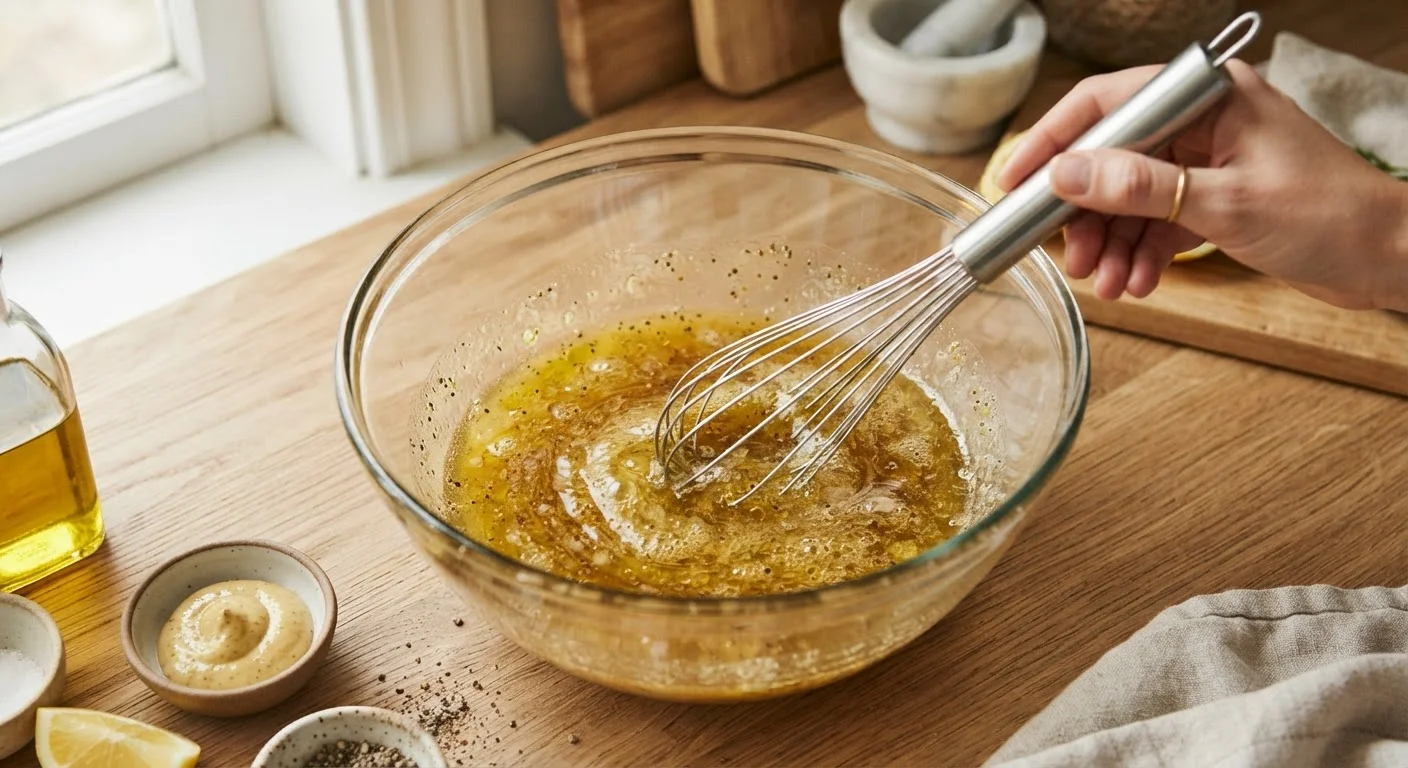
- Use steady, consistent agitation. Whisking by hand, using a blender, or processing in a food processor all work - the goal is to physically disperse the oil into droplets small enough for the emulsifier to surround.
- Balance your acid. Lemon juice or vinegar does more than add flavor - acid helps the emulsion stay cohesive, particularly in mayonnaise-style preparations.
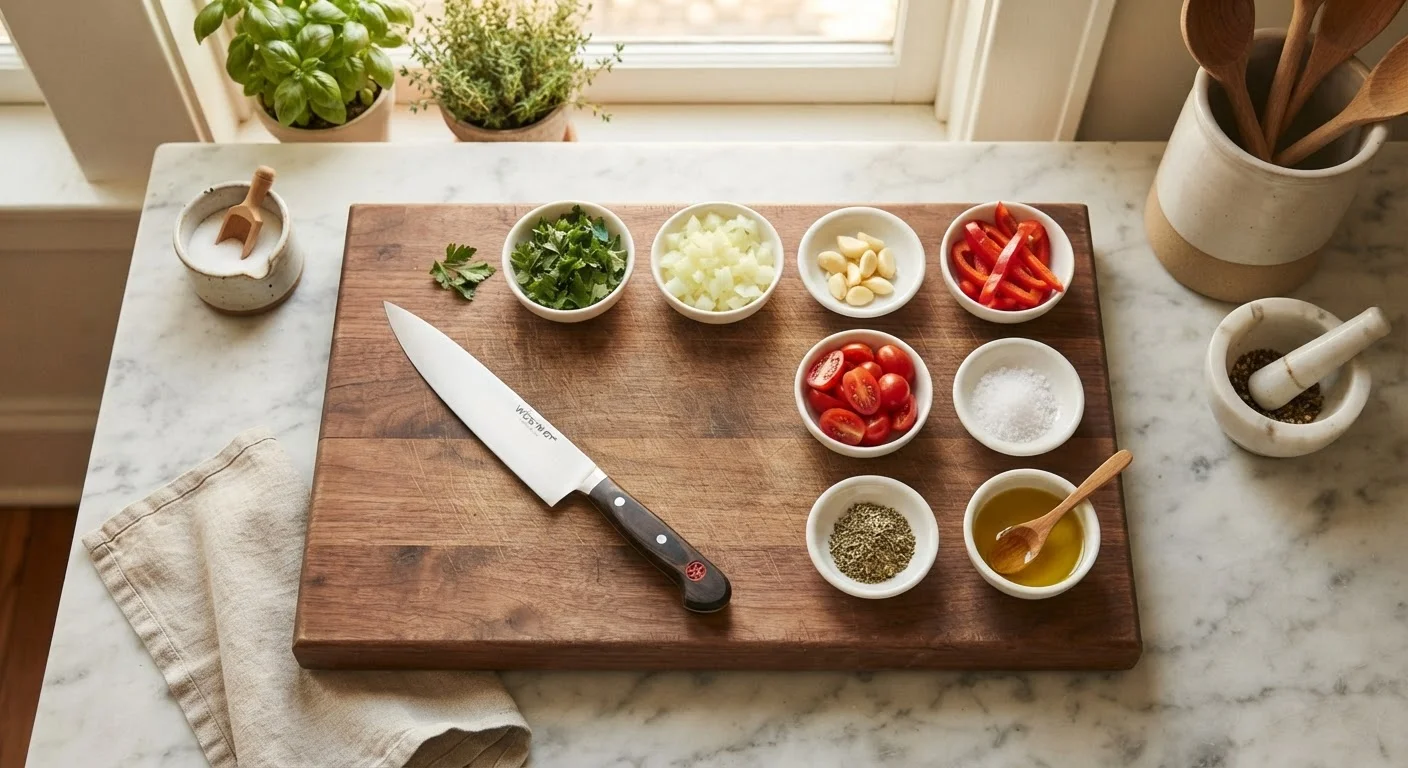
These same fundamentals apply whether you're making a quick weeknight vinaigrette or a more involved hollandaise. And just as a well-organized prep area supports better cooking overall - see building a mise en place routine for details - having your emulsification ingredients measured and ready before you start pays off.
The Immersion Blender Shortcut
For foolproof homemade mayonnaise, place all ingredients in a tall, narrow container - egg yolk, acid, and oil together - then insert an immersion blender all the way to the bottom before turning it on. Hold it still for a few seconds, then slowly lift as the emulsion forms. The confined space forces the blender to create extremely fine droplets quickly, making a broken emulsion far less likely.
Common Emulsions and What Makes Each Unique
Three emulsions appear constantly in home kitchens, each with a distinct structure:
- Vinaigrette
- An oil-in-water emulsion where vinegar or lemon juice is the continuous phase. Without mustard or another emulsifier, it's temporary. With one, it can hold for a day or two in the refrigerator.
- Mayonnaise
- Also oil-in-water, but far more stable because of the high ratio of egg yolk to oil and the much finer droplet size achieved by slow, mechanical mixing. Commercial versions add further stabilizers, but homemade mayo made carefully holds well for up to a week when refrigerated.
- Hollandaise
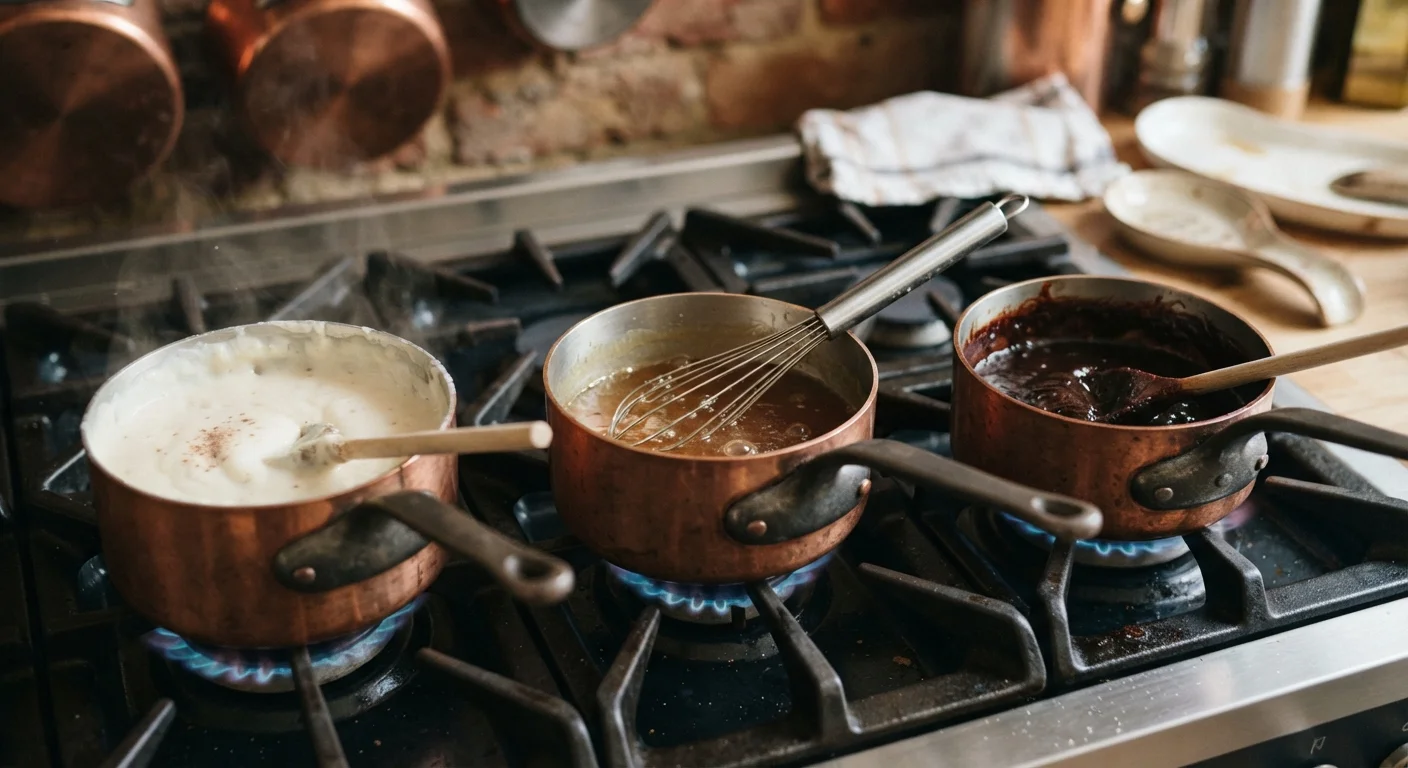
- A warm, butter-in-water emulsion stabilized by egg yolk. It's the most fragile of the three because heat is involved - too little and the sauce is thin; too much and the egg proteins cook unevenly and the emulsion breaks. It's best served immediately after preparation.
Each of these involves the same underlying principle but demands a different level of attention. Understanding emulsification as a concept - rather than following individual recipes blindly - lets you troubleshoot across all of them. For broader sauce-making context, thickening methods like roux and reduction offer complementary skills worth understanding alongside emulsification.
When Emulsions Break - and How to Recover
Even experienced cooks break emulsions. Recognizing what happened is the first step to fixing it.
A broken mayonnaise looks oily and curdled - the fat has pooled away from the yolk base. To rescue it: place a fresh egg yolk in a clean bowl and whisk the broken mixture into it very slowly, a few drops at a time. The fresh lecithin re-coats the oil droplets and pulls the sauce back together.
A broken vinaigrette simply separates into layers. Re-whisking will temporarily re-emulsify it, though it will separate again quickly. For a more durable fix, blend in a small amount of mustard.
Prevention is more reliable than rescue. Keep your oil flow slow and steady, maintain appropriate temperatures, and don't rush the process. Cooking skills like emulsification reward patience more than speed.
This article is for general informational purposes only and is not intended as professional culinary or medical advice.