Why Thickening Method Matters
The way you thicken a sauce shapes far more than its consistency. It affects clarity, sheen, mouthfeel, and even how the sauce interacts with other flavors on the plate. Choosing the wrong method can make a delicate white wine sauce look cloudy and starchy, or leave a braise thin and watery when it should coat a spoon.
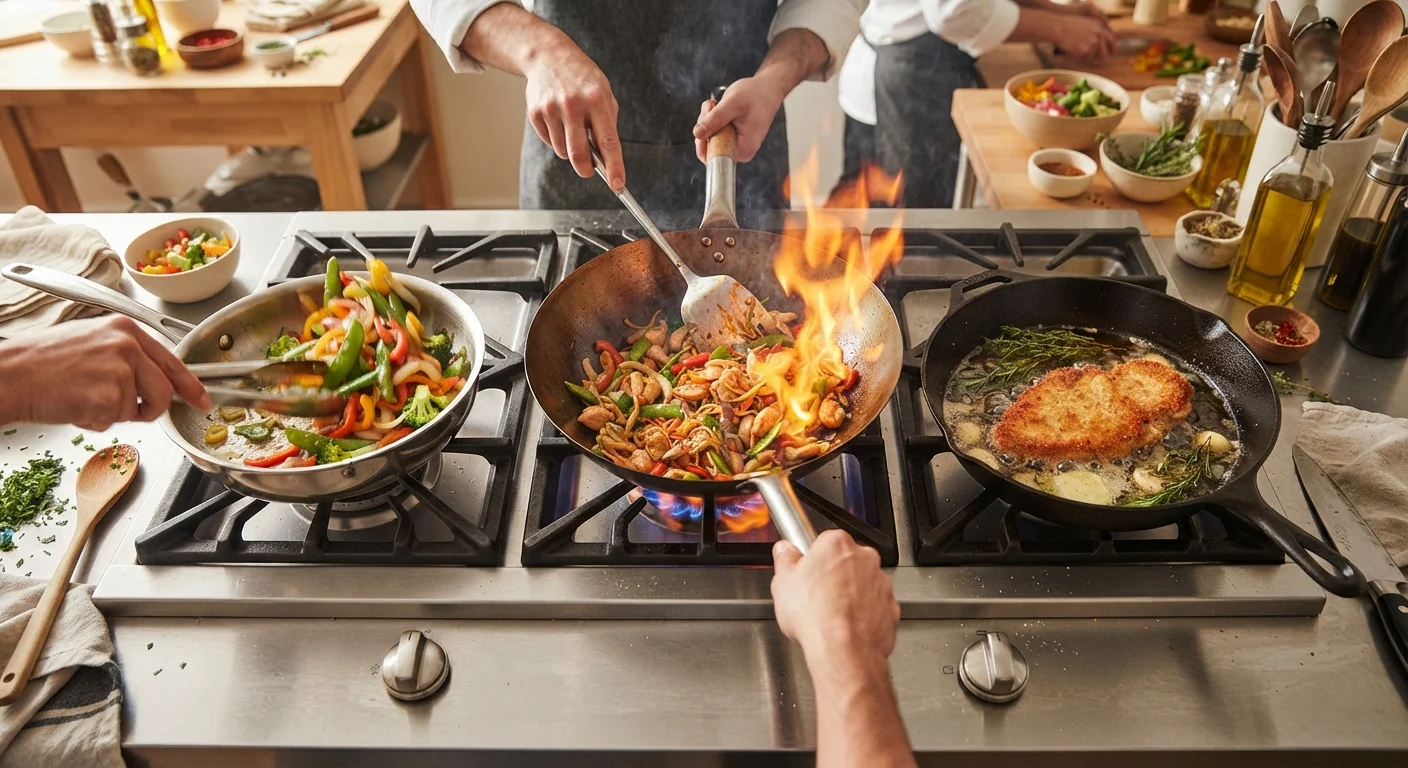
The three most common approaches - building a roux, using a cornstarch slurry, or cooking a sauce down by reduction - each work through a different mechanism. Understanding what each one does at a physical level gives cooks the confidence to improvise and troubleshoot, rather than guessing. For context on how stovetop heat management plays into sauce-making broadly, see our guide to sautéing, stir-frying, and pan-frying.
Roux: The Foundation of Classic Sauces
A roux is a cooked mixture of equal parts fat (typically butter) and all-purpose flour, stirred together over heat before liquid is added. The fat coats the starch granules in the flour, preventing them from clumping when liquid hits the pan. As the mixture heats with liquid, the starches gelatinize and the sauce thickens.
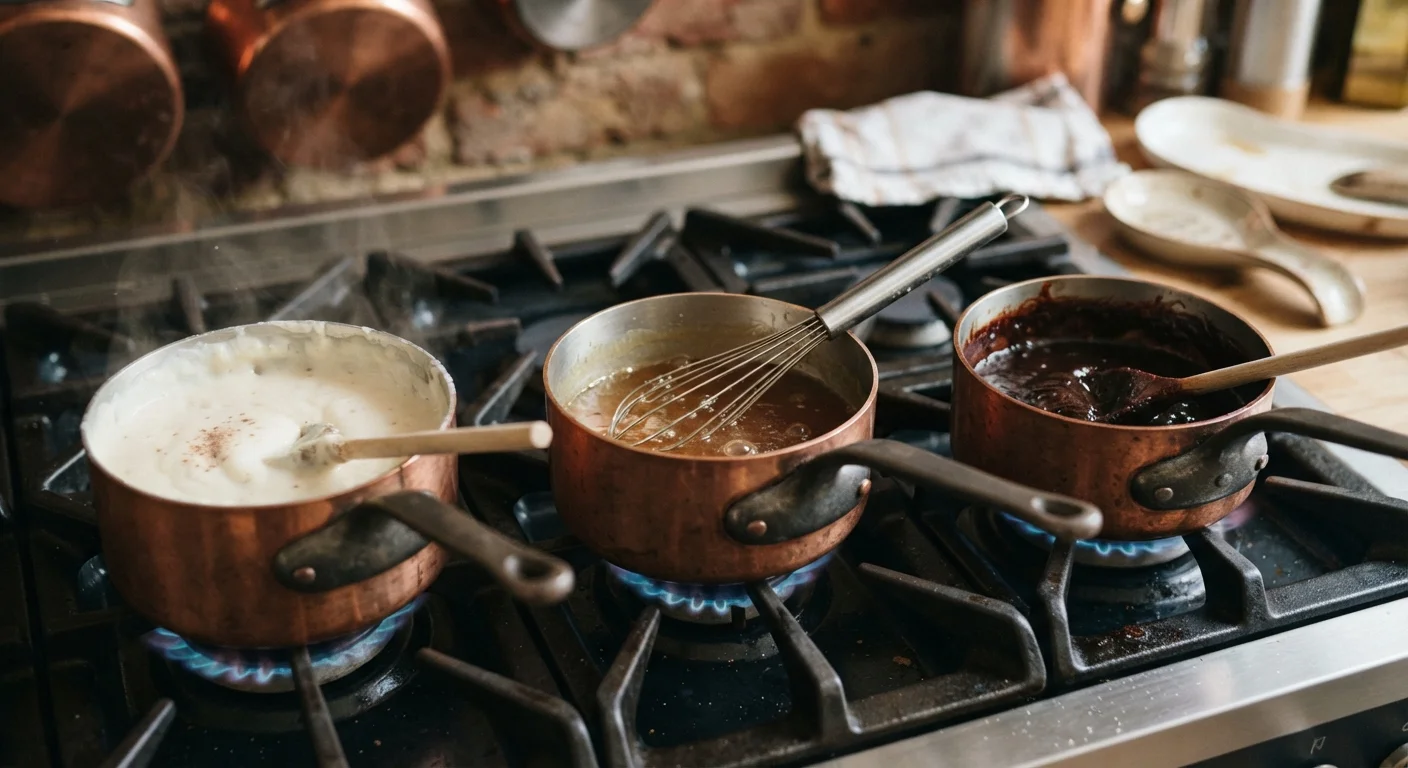
Roux is classified by color - white (cooked briefly, used in béchamel), blonde (slightly longer, nutty flavor, used in velouté), and brown or dark (used in Cajun and Creole cooking, where it contributes deep flavor over a longer cook). The longer a roux cooks, the less thickening power it retains, because heat degrades starch, but the more complex flavor it develops.
Key characteristics:
- Produces an opaque, creamy sauce with a smooth, coating texture
- Requires pre-cooking before liquid is added
- Works well with milk, cream, and rich stocks
- Contains gluten - not suitable for gluten-free diets
Start With Your Liquid Base
The thickener you choose should complement your liquid's flavor and body. A rich, gelatin-heavy stock reduces into a beautiful glossy sauce on its own, while a thinner broth may need a slurry or roux to reach the right consistency. Matching method to liquid from the start saves corrective steps later.
For sauce-making built on stocks, see what sets stock, broth, and bone broth apart - the liquid base matters as much as the thickener.
Cornstarch: Fast, Glossy, and Gluten-Free
Cornstarch thickens through the same gelatinization process as flour, but it is nearly pure starch with no protein, so it produces a very different result. It must first be dissolved in a cold liquid (usually water or broth) to form a slurry before being stirred into a hot sauce - adding it dry causes immediate lumping.
The result is a glossy, semi-translucent sauce with a lighter mouthfeel than a roux-based equivalent. This makes cornstarch ideal for Asian-style stir-fry sauces, fruit pie fillings, and quick pan gravies where clarity and sheen are desirable. However, cornstarch-thickened sauces can break down if overheated, cooked for too long, or frozen and reheated - a property worth knowing before making a sauce ahead of time.
| Roux | Cornstarch Slurry | Reduction | |
|---|---|---|---|
| Appearance | Opaque, creamy | Glossy, translucent | Clear to syrupy, deep color |
| Flavor impact | Mild, slightly nutty | Neutral | Intense, concentrated |
| Speed | Moderate (5-10 min prep) | Fast (1-2 min) | Slow (20-40+ min) |
| Gluten-free | No | Yes | Yes |
| Best liquid base | Milk, cream, rich stock | Any liquid or sauce | Wine, stock, broth |
| Main risk | Lumps if liquid added too fast | Breaks down if overcooked | Over-reduction, saltiness |
Key characteristics:
- Produces a glossy, translucent finish
- Acts quickly - sauces thicken within a minute of adding the slurry
- Gluten-free by nature
- Can thin out if the sauce is acidic or cooked too aggressively
Reduction: Pure Flavor Concentration
Reduction requires no added thickener. Instead, a sauce is simmered uncovered so that water evaporates, concentrating both the liquid's flavor and its naturally dissolved solids (gelatin from stock, sugars, and other compounds). The result is a more intense, complex sauce with a consistency that ranges from lightly syrupy to a thick glaze.
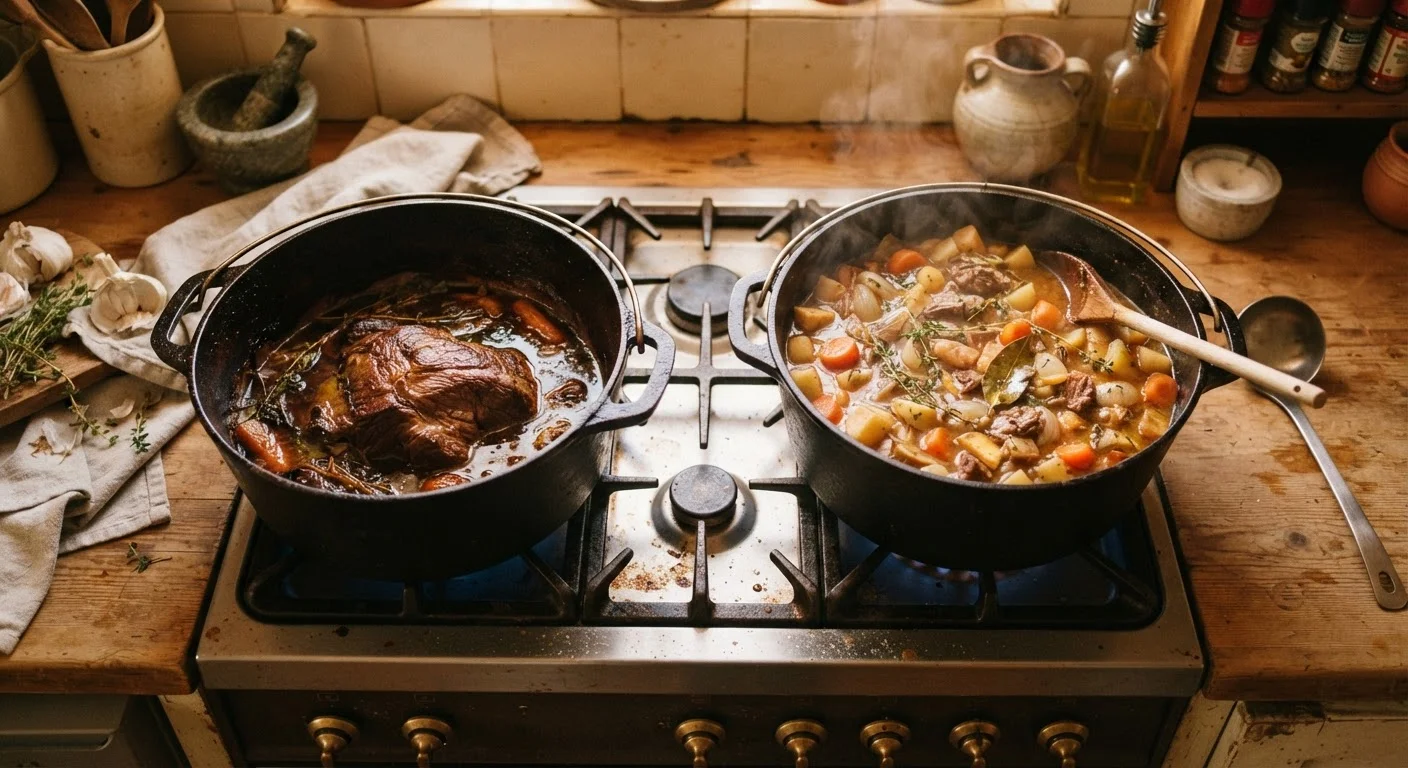
This method is common in French cuisine for pan sauces made from deglazing fond (the browned bits left after searing meat), and for wine-based sauces where the alcohol needs to cook off. It pairs naturally with braises and stews, where the braising liquid itself can be reduced into a sauce at the end of cooking.
Season After You Reduce
Reducing a sauce concentrates everything in it - including salt. If you season a sauce to taste before reducing it significantly, you risk ending up with an over-salted result. Add final seasoning only after the sauce has reached the consistency you want, then adjust from there.
Key characteristics:
- No added starch or fat required
- Intensifies and concentrates flavor, including salt - season after reducing, not before
- Time-consuming - significant reduction can take 20-40 minutes
- Works best with stocks that contain natural gelatin for body
Choosing the Right Method for Your Dish
The right thickener depends on what the sauce needs to do. Ask three questions: Does the dish need opacity or clarity? Is there time to cook slowly? Is gluten an issue? A creamy mac and cheese demands the body of a roux-based béchamel. A ginger-soy stir-fry sauce benefits from the fast, shiny finish of cornstarch. A pan dripping from a roasted chicken transforms best through slow reduction, concentrating every bit of savory flavor.
Understanding these distinctions is also useful when troubleshooting. A lumpy sauce usually means starch was added without proper dispersion first. A thin sauce after long cooking may indicate the starch has broken down - in those cases, reduction is often a better finishing tool. For cooks exploring emulsified sauces like hollandaise or pan vinaigrettes, emulsification in everyday cooking covers the underlying principle that thickens without starch at all.
2:1
Thickening power of cornstarch vs. flour
Cornstarch is generally considered about twice as effective as all-purpose flour by weight as a thickening agent, so smaller quantities are needed.
~50%
Typical liquid lost during reduction
Many classic pan sauce reductions aim to reduce liquid by roughly half to achieve the desired concentration of flavor and body.