Why Layering Salt Matters
Most home cooks salt once - at the table or at the end of cooking. The result is food that tastes seasoned on the surface but flat underneath. Seasoning throughout a recipe builds what chefs often call depth: salt that's been incorporated at multiple temperatures and stages interacts with proteins, starches, and fats differently at each point, producing a more cohesive, fully developed flavor.
This isn't about using more salt overall. It's about when and where salt is applied. A dish salted in four small increments often needs less total salt than one salted all at once at the end, because each addition is doing useful work at the right moment.
Before you start cooking, take a moment to read through the full recipe and identify every point where salt could be added - and where it already exists in the ingredients.
Salt Types Are Not Interchangeable by Volume
Fine table salt is significantly denser than coarse kosher salt. A teaspoon of table salt can contain roughly twice the sodium of a teaspoon of Diamond Crystal kosher salt. Always taste as you go rather than substituting one-for-one by measurement. If a recipe specifies a salt type, follow it or adjust conservatively.
Kosher salt
The go-to for general cooking - coarser grains are easier to control when seasoning by hand.
Tasting spoon
Essential for tasting at each stage without contaminating the pot.
Flaky finishing salt
Adds texture and a bright burst of salinity when added just before serving.
Small pinch bowl
Keeps your working salt accessible and helps you measure visually as you cook.
How to Season at Every Stage
The steps below walk through a typical recipe from prep to plate. Not every dish will hit all five points, but most savory recipes involve at least three of them. Keep a small bowl of salt within reach so you're salting intentionally rather than reaching for the shaker reactively.
What you will need
Season your protein before it hits the heat
Salt applied to meat, poultry, or fish ahead of cooking - even 15 minutes before - draws out surface moisture initially, then allows that moisture (now carrying dissolved salt) to be reabsorbed. The result is seasoning that penetrates rather than sitting on the surface. Pat proteins dry before searing to encourage browning.
Salt your aromatics as they sweat
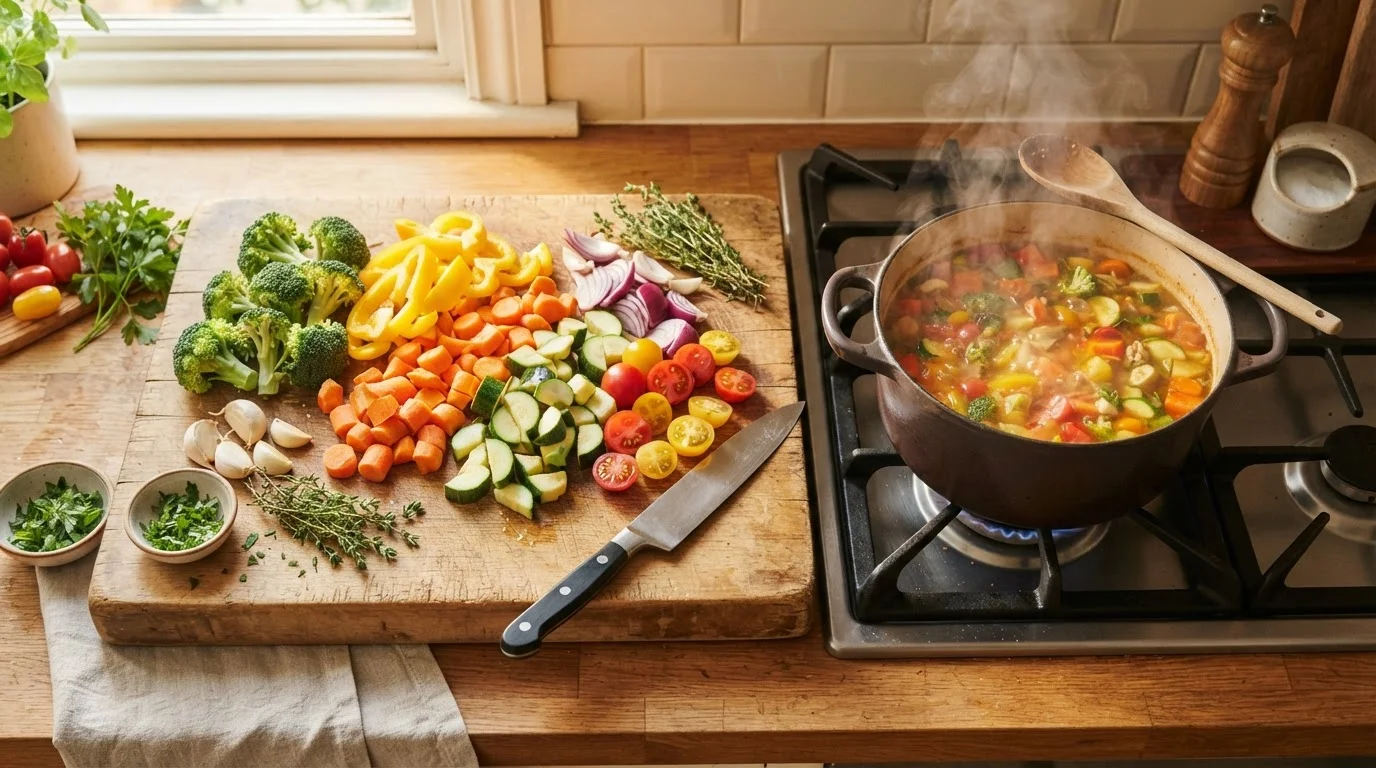
When you add onions, celery, garlic, or other aromatics to the pan, add a small pinch of salt right away. This draws out moisture, speeds softening, and starts building a flavor base. Skipping this step means you're cooking aromatics rather than developing them.
Season cooking water generously
Pasta water should taste noticeably salty - many cooks describe it as resembling mild seawater. The same applies to blanching vegetables. This is the only opportunity to season these foods from the inside out. Under-salted cooking water is one of the most common reasons pasta and vegetables taste flat even when a sauce is well seasoned.
Taste and adjust as the dish develops
As a soup, braise, or sauce reduces and flavors concentrate, the salt level shifts. Taste every 10-15 minutes during longer cooks. Add salt in small increments - it's far easier to add than to correct. Look not just for saltiness but for overall flavor brightness; sometimes a dish that seems flat simply needs a bit more salt to make other flavors register clearly.
Finish with purpose just before serving
A final seasoning check right before plating is not redundant - it's essential. As dishes rest or cool slightly, flavors can mellow. A small pinch of flaky finishing salt on a finished dish adds both flavor and texture. Freshly cooked eggs, roasted vegetables, and grilled proteins all benefit from a finishing touch added at the last moment rather than during cooking.
Use Your Fingers, Not a Shaker
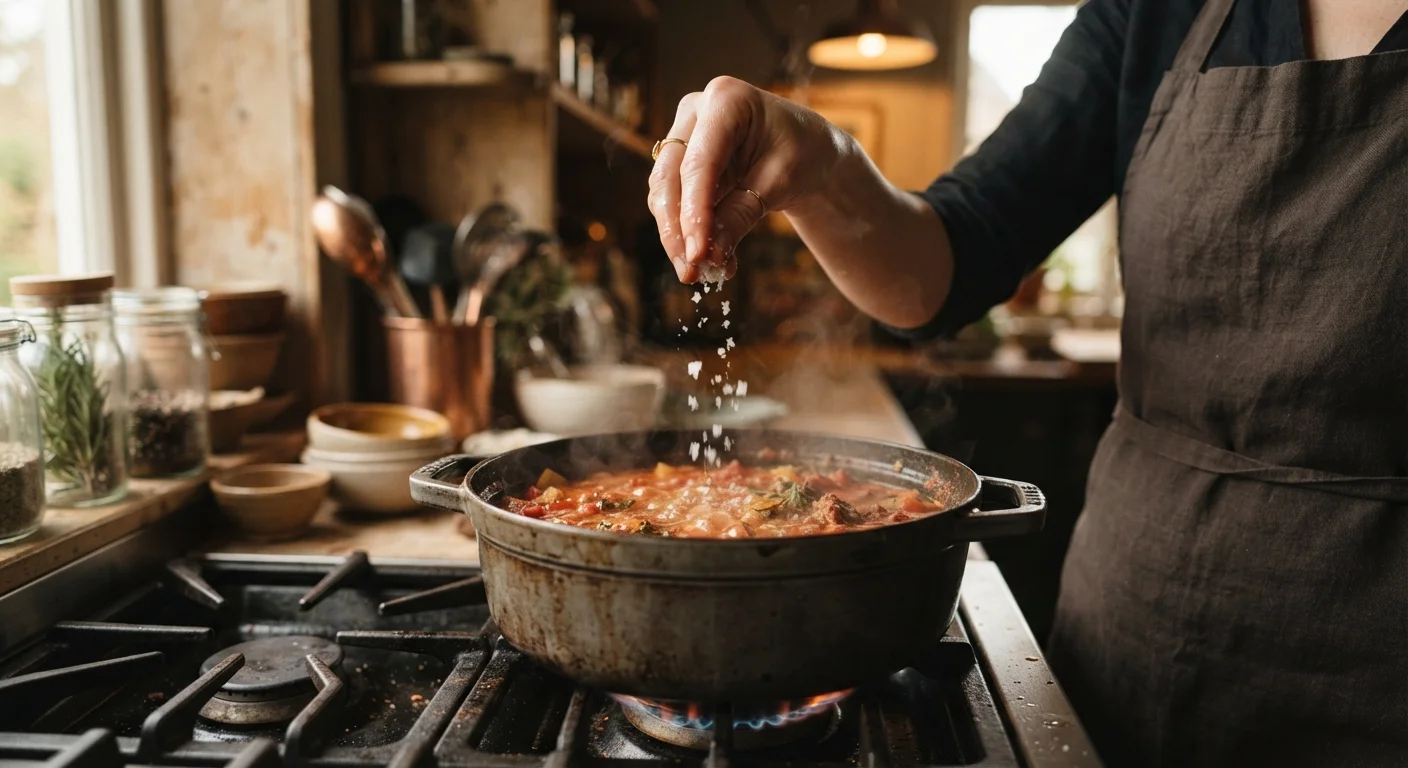
Pinching salt by hand gives you tactile feedback on how much you're adding and helps you distribute it evenly. It also slows you down just enough to be intentional. Most experienced cooks season by feel and taste, not by strict measurement.
Watch Sodium in Processed Ingredients
When your recipe includes canned broth, soy sauce, canned tomatoes, or cured meats, those ingredients bring their own salt load. Season more conservatively early in the process when these are present, and taste before any final additions. Reducing a salty sauce concentrates sodium further.
For more ways to sharpen your technique, see our guide on why home cooks overcook vegetables - many of the same timing principles apply.
This article is for general informational and educational purposes. Individual dietary needs and health conditions vary; consult a qualified healthcare or nutrition professional for personal guidance.