The Real Reason Resting Works
You've heard it in nearly every recipe: let the meat rest before cutting. But the instruction rarely comes with a real explanation, which makes it easy to skip when you're hungry. Understanding the actual mechanism turns this tip from folklore into reliable technique.
When meat is exposed to high heat, its muscle fibers contract rapidly and squeeze moisture toward the center of the cut. The interior becomes pressurized. If you slice immediately, that pressure releases all at once - and a pool of juice ends up on your cutting board rather than in each bite. Resting gives those contracted fibers time to relax and reabsorb moisture more evenly throughout the meat. The result is a noticeably juicier, more cohesive slice.
This is closely connected to carryover cooking - the continued rise in internal temperature that happens after meat leaves the heat source. A large roast can climb 5-10°F during resting, which means pulling it from the oven slightly before your target temperature is intentional, not an error. For thinner cuts, the carryover effect is smaller but still worth accounting for.
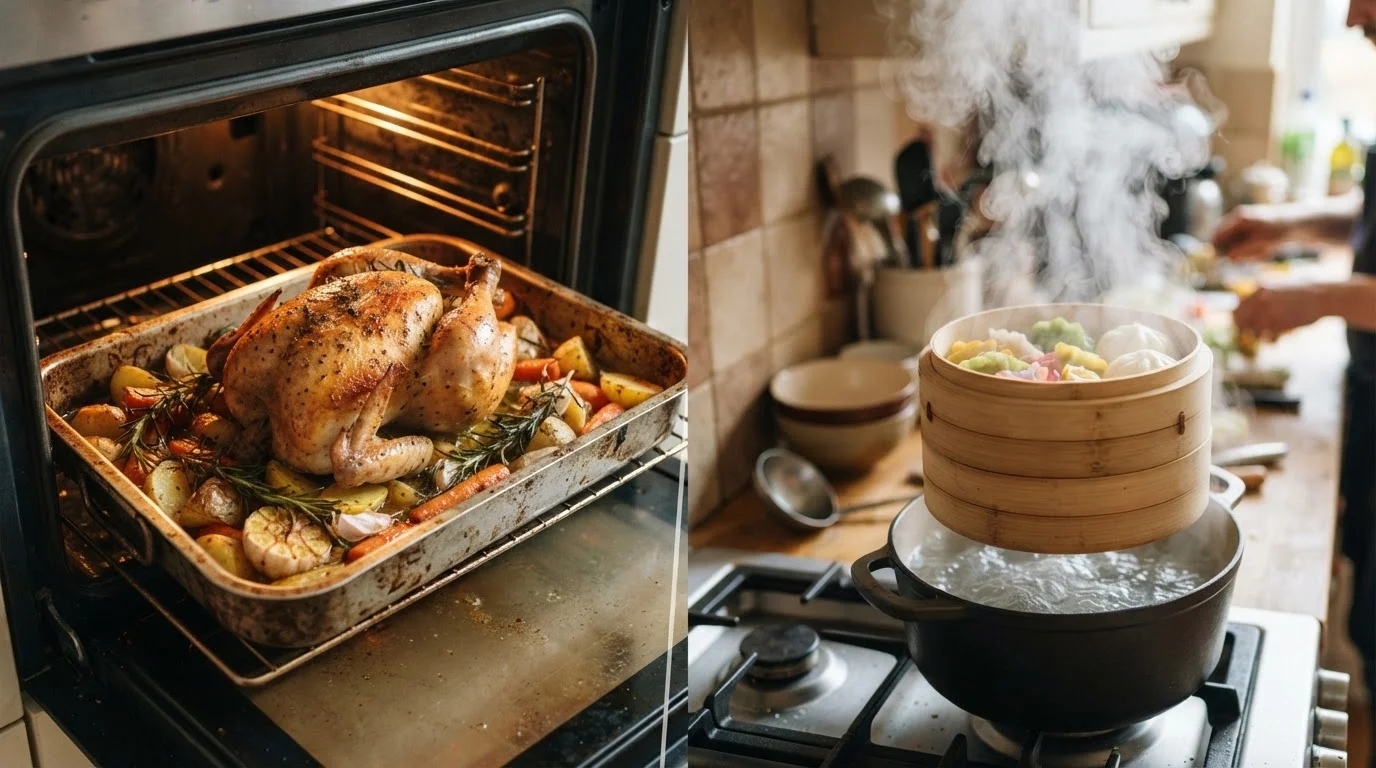
Understanding how heat behaves across different methods deepens this picture. Dry heat vs. moist heat cooking methods affect how quickly moisture migrates and how pronounced the resting benefit becomes - high-heat, dry methods like grilling and roasting produce the most dramatic moisture redistribution.
Common Myths About Resting Meat
Despite being standard culinary advice, resting meat is surrounded by misunderstandings that lead cooks to either skip it entirely or apply it incorrectly. Here's what the science actually supports.
Myth
Resting meat keeps it warm by allowing the heat to spread evenly throughout.
Fact
Resting redistributes moisture, not heat. The meat actually continues to lose temperature during resting.
The primary benefit of resting is juice redistribution, not heat equalization. During high-heat cooking, contracted muscle fibers force moisture toward the center. Resting allows those fibers to relax and reabsorb that liquid more evenly. While carryover cooking does allow residual heat to continue raising the internal temperature briefly, the meat is cooling overall - not warming throughout.
Myth
A quick 2-minute rest is sufficient for any cut of meat.
Fact
Rest time should scale with the size of the cut - large roasts need 15-30 minutes, while thin cuts need just 2-5.
There is no universal resting time. A thin chicken cutlet has a much smaller volume of muscle fiber under pressure than a bone-in leg of lamb, so it requires far less time to allow moisture redistribution. Applying a flat two-minute rule to all cuts ignores the physics involved. The larger and denser the cut, the longer meaningful resting takes.
Myth
Tenting the meat tightly with foil during rest keeps it juicier.
Fact
A tight foil tent traps steam and softens the exterior crust - tent loosely or skip foil for thin cuts.
Steam trapped under tightly sealed foil condenses back onto the surface of the meat, particularly affecting any seared or roasted crust. On a steak, this means a crispy exterior turns soft during resting. A loose foil tent slows heat loss on large cuts without trapping damaging steam. For thin cuts with a desirable crust, resting uncovered is often the better choice.
Myth
The juices that run out when you cut meat are blood - a sign the meat was undercooked.
Fact
That liquid is myoglobin mixed with water, not blood. It is present even in fully cooked meat.
The pinkish-red liquid that escapes when cutting meat is primarily myoglobin - a protein that stores oxygen in muscle tissue - dissolved in water. Blood is largely removed during processing. Myoglobin changes color with heat (which is why well-done meat appears brown throughout), but even meat cooked to a safe internal temperature can release some of this fluid. Resting reduces how much escapes by allowing fibers to reabsorb it before slicing.
~15-20%
Moisture loss from cutting without resting
Food science research has consistently shown that unrested meat can lose a significant fraction of its total moisture to the cutting board compared to meat allowed to rest adequately.
5-10°F
Typical carryover temperature rise in large roasts
Culinary references widely document that large cuts continue rising in internal temperature after removal from heat, making early pull-off temperatures a deliberate strategy.
When Resting Makes a Real Difference - and When It Doesn't
Resting is not equally important for every piece of protein. Knowing where it matters most helps you prioritize the step when it counts.
Large roasts and whole birds benefit most dramatically. A beef prime rib, a pork shoulder, or a roasted chicken should rest 15-30 minutes. The volume of muscle fibers involved means the juice redistribution is substantial and measurable. Cutting too soon on these cuts can result in a noticeably dry finished product.
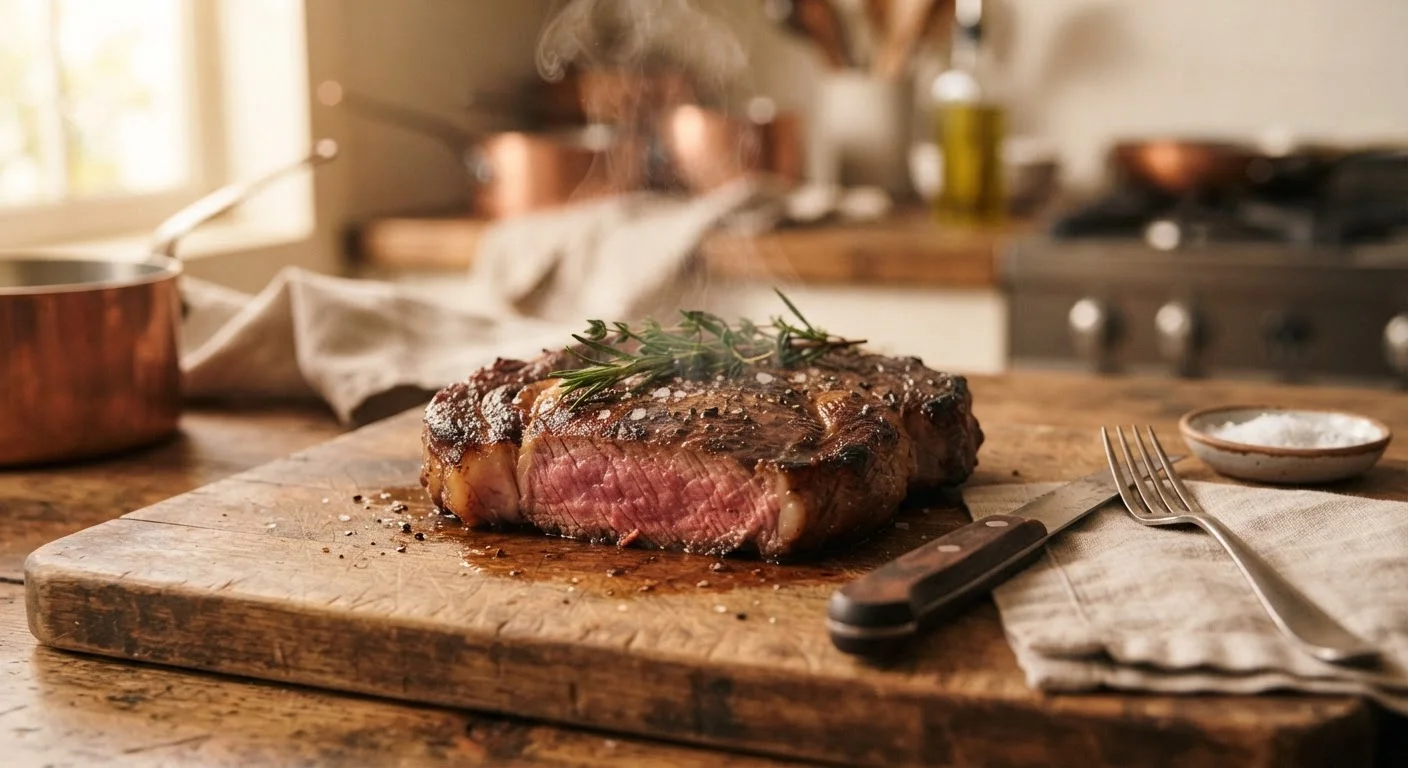
Steaks and thick chops benefit meaningfully from 5-10 minutes of rest. The difference between resting and not resting a 1.5-inch ribeye is visible - a rested steak holds its color and moisture when sliced, while an unrested one bleeds considerably onto the plate.
Thin cuts - a chicken breast pounded thin, a fish fillet, or a minute steak - cool down too quickly for extended resting to be practical. A brief 2-3 minute rest still allows some fiber relaxation, but prioritizing speed is reasonable here.
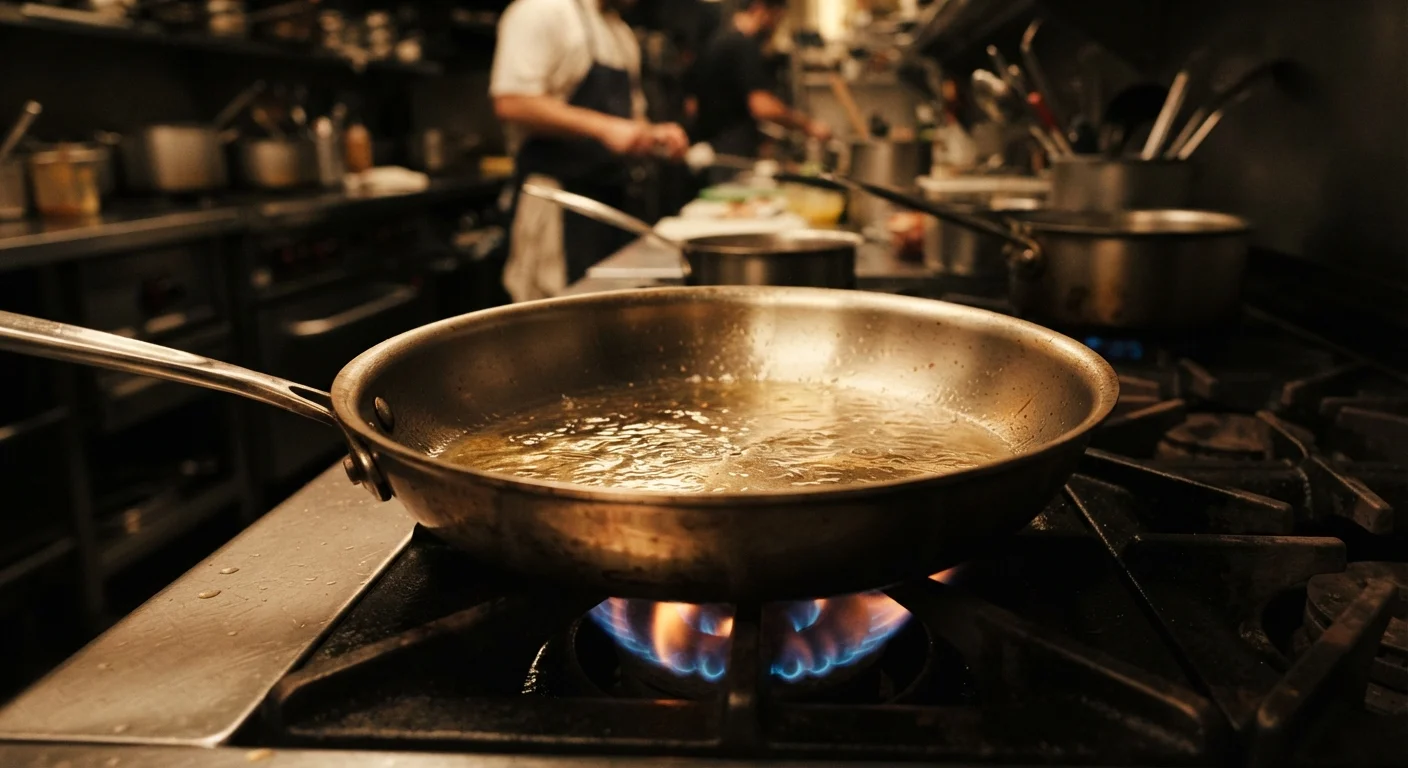
Pan sauces change the equation. If you're building a sauce from the drippings left in the pan, some of those flavorful juices are already captured and returned to the dish. This is one reason that pan temperature control matters so much - the fond that develops depends heavily on how well you managed heat throughout cooking.
Don't Confuse Resting With Food Safety Windows
Resting meat at room temperature for the right amount of time is safe for the cuts and durations described here. However, leaving cooked meat out for more than two hours enters a temperature range where bacterial growth accelerates. Always follow USDA food safety guidelines - if you're resting a large roast, keep track of time and get it carved and refrigerated promptly if not serving immediately.
Practical Resting Technique
Resting doesn't require special equipment - just a warm surface and some patience. Transfer the meat to a cutting board or warm plate. If you're concerned about heat loss on a large roast, tent it loosely with aluminum foil. The key word is loosely: a tight seal traps steam and softens any crust you've worked to develop.
Avoid placing resting meat directly on a cold surface. A room-temperature cutting board is fine; a cold sheet pan pulled from the refrigerator will pull heat from the meat faster than it should. For very large cuts, a wooden board or a warmed plate provides better thermal insulation.
Juices that do collect on the board during resting aren't wasted - pour them back over the sliced meat or incorporate them into a pan sauce or drizzle. They carry concentrated flavor and returning them to the plate recaptures what would otherwise be lost.
The discipline of resting meat shares something with the broader principle that recovery - whether for muscle tissue in training or the fibers in a cut of beef - produces better outcomes than skipping the pause. The step costs almost nothing in time but reliably improves the result.
This article is for informational purposes only. Consult authoritative food safety guidelines such as those from the USDA for safe internal temperature recommendations for specific proteins.