Why a Pre-Cook Checklist Actually Matters
Most cooking mistakes don't happen at the stove - they happen in the two minutes before it. You're mid-chop when you realize the recipe calls for room-temperature butter you forgot to pull out, or you reach for the Dutch oven and find it crusted from last week. A structured prep routine eliminates these scrambles before they start.
Professional kitchens have long relied on mise en place - a French phrase meaning "everything in its place" - as the foundation of efficient cooking. That same discipline translates directly to the home kitchen. If you want to build this habit into a consistent weeknight workflow, the weeknight mise en place guide offers a practical framework for getting started.
The checklist below is organized into four logical phases: reviewing the recipe, gathering ingredients, confirming equipment, and setting up your workspace. Work through each group before you make your first cut.
Recipe Review
Ingredient Preparation
Equipment Check
Workspace Setup
Tools and Supplies to Have on Hand
The right tools don't have to be expensive or specialized - they just have to be present, clean, and appropriately sized for what you're making. Running a quick inventory before you start means you won't discover mid-recipe that your only colander is in the dishwasher.
Chef's knife
The workhorse for chopping, slicing, and dicing produce, meat, and herbs accurately and safely.
Cutting board
Provides a stable, hygienic surface for all prep work; use separate boards for raw meat and produce.
Measuring cups and spoons
Ensures accurate ingredient quantities, which is especially critical in baking.
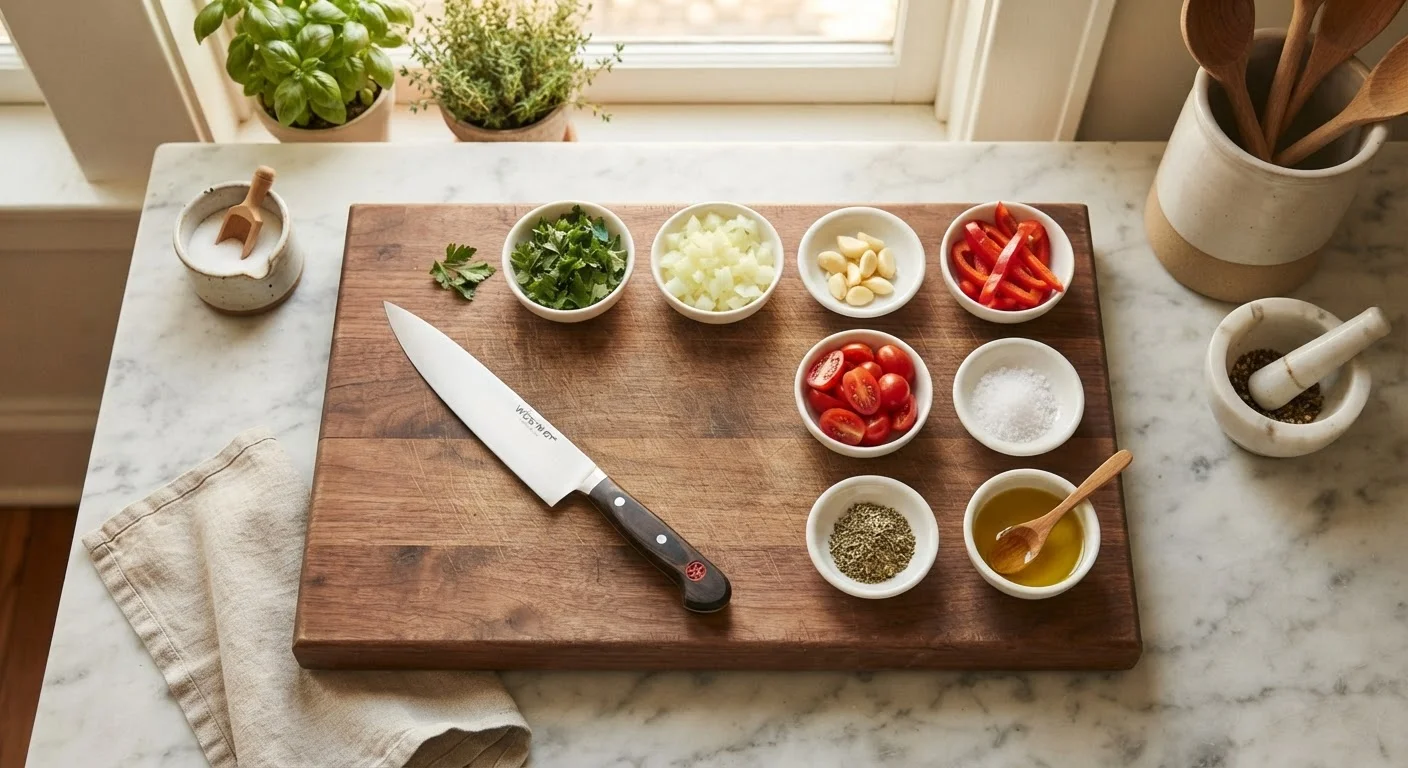
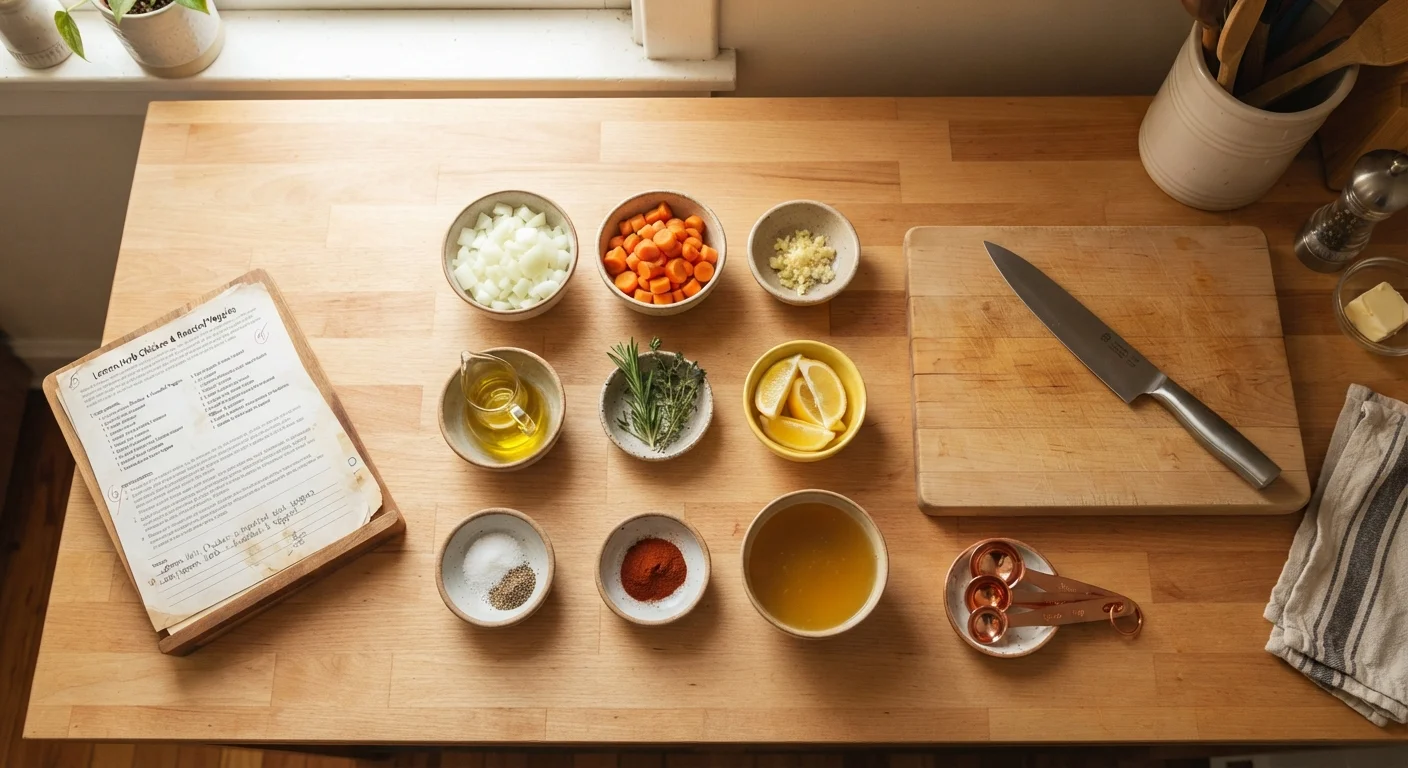
Mise en place bowls or ramekins
Small prep bowls hold pre-measured ingredients so you can add them quickly without pausing to measure mid-cook.
Instant-read thermometer
Confirms the internal temperature of meat and poultry, removing guesswork from doneness.
Kitchen timer
Tracks multiple cooking stages simultaneously so nothing is accidentally over- or under-cooked.
Kitchen scale
Provides weight-based measurements that are more precise than volume for baking and portioning.
Bench scraper
Makes it easy to transfer prepped ingredients from the cutting board to bowls or pans without waste.
Don't Skip Cross-Contamination Barriers
Using the same cutting board for raw poultry and ready-to-eat vegetables is one of the most common causes of foodborne illness at home. Dedicate separate boards - or wash thoroughly with hot, soapy water between uses - and never let raw meat juices contact cooked or fresh foods. The USDA recommends using separate cutting boards as standard kitchen practice.
If your pantry staples need restocking before you cook, the weekly grocery checklist can help you stock a more complete kitchen from the ground up.
A Note on Timing and Sequencing
One often-overlooked prep step is sequencing - understanding which parts of a recipe take the longest and working backwards from your target serving time. If a braise needs two hours or bread dough requires a rise, those steps need to start well before everything else. Scan the recipe for passive time (marinating, chilling, resting) that can run while you prep other components.
Passive Time Is Not Optional Time
Steps like marinating overnight, resting roasted meat, or chilling a dough are written into recipes because they affect food safety, texture, and flavor - not just convenience. Skipping or shortening these steps often produces noticeably inferior results. Build passive time into your schedule before you commit to a cooking start time.
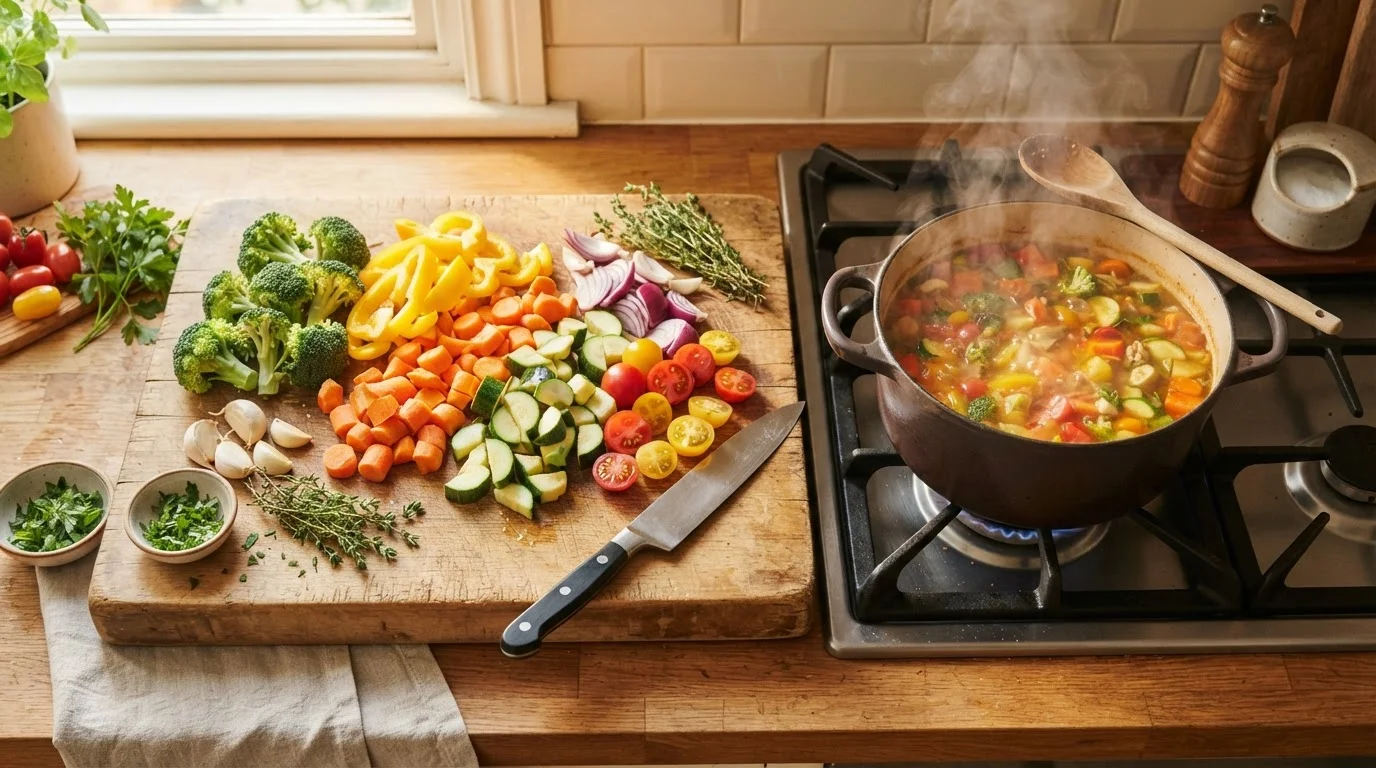
Proper prep is also the single most reliable fix for overcooked vegetables - a problem that almost always starts with poor timing rather than poor technique. The guide on avoiding overcooked vegetables breaks down exactly where timing goes wrong and how to correct it.
This article provides general cooking guidance for informational and educational purposes. It is not a substitute for professional culinary instruction.