Why a Weekly Checklist Makes Nutritional Balance Achievable
Most gaps in nutritional balance don't come from a lack of intention-they come from a lack of structure. When dinner decisions happen at 6 p.m. on a Tuesday, the outcome is rarely a well-rounded plate. A weekly meal-planning checklist gives you a repeatable framework that shifts those decisions to a calmer, more deliberate moment.
This checklist is organized around four planning phases: reviewing your nutritional foundations, building your weekly menu, preparing your kitchen, and checking in after the week. Work through it once at the start of each week-ideally on a weekend day-and adjust as your schedule or preferences change.
For a broader look at how to structure your meals around specific nutrition goals, see our practical walkthrough for seven-day meal planning. If you're managing a particularly busy week, these time-conscious eating habits are worth reviewing alongside this checklist.
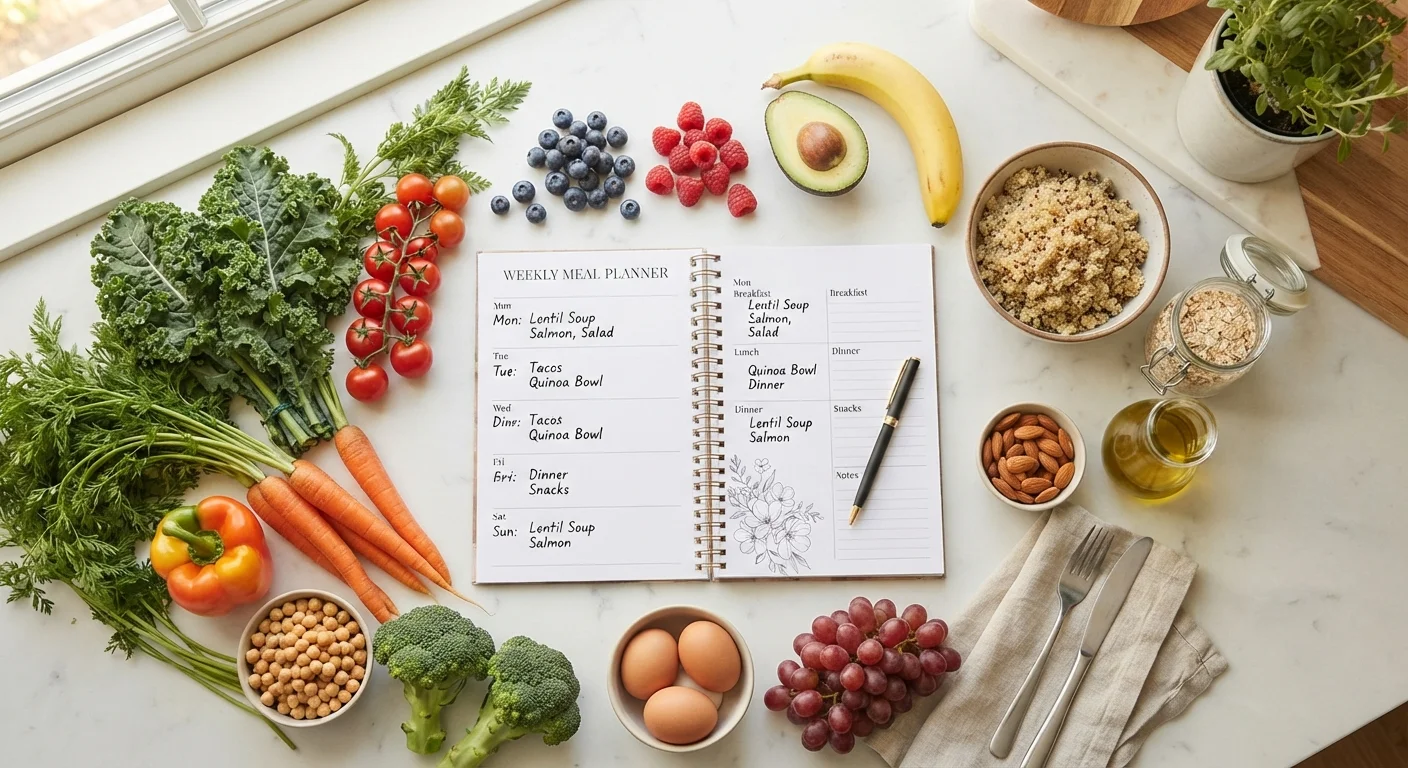
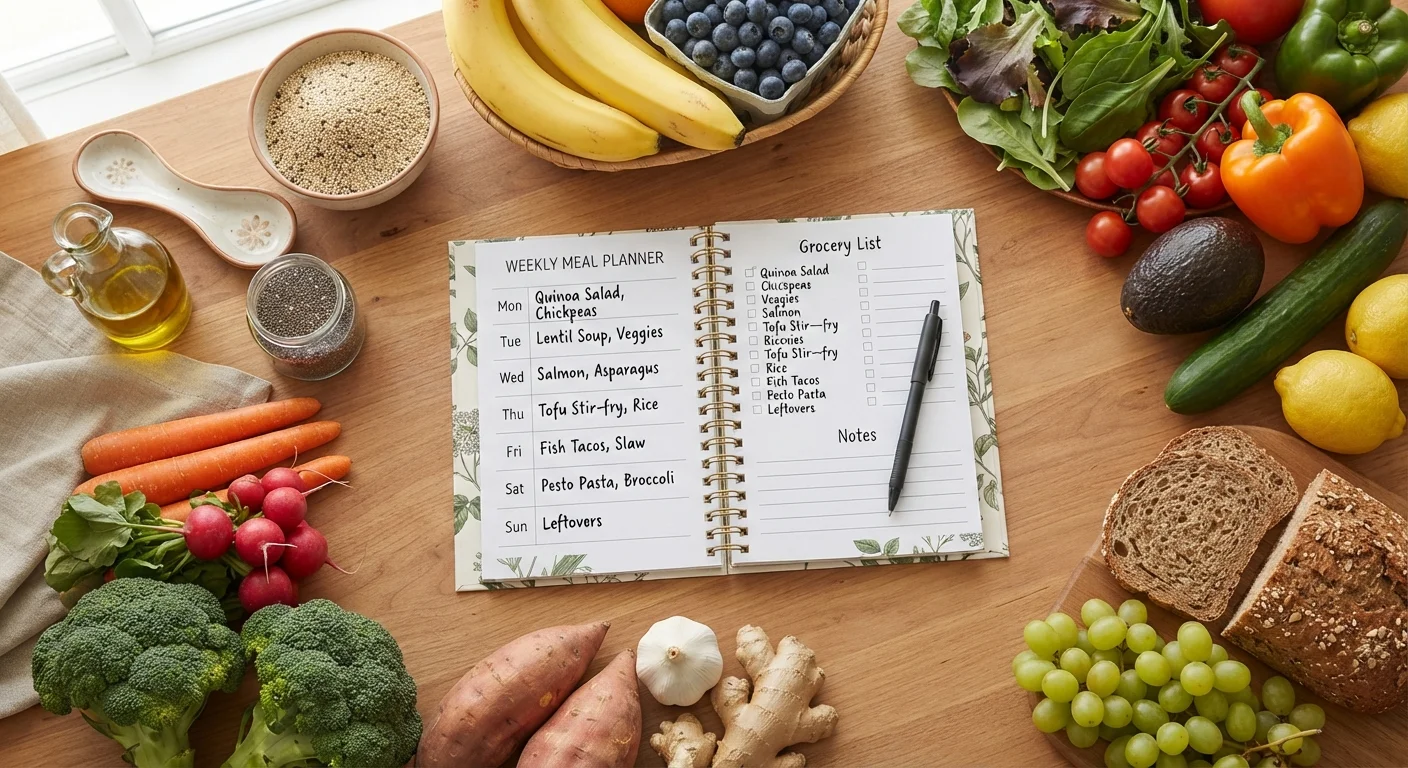
Weekly meal planning template or notebook
Provides a structured space to map out each day's meals before shopping.
Grocery list app or notepad
Translates your weekly menu into an organized, category-based shopping list.
Food storage containers
Essential for batch-cooking and storing prepped ingredients throughout the week.
Kitchen scale or measuring cups
Useful for portion awareness when preparing grains, proteins, or snack ingredients in bulk.
Micronutrient reference guide
Helps you identify which foods supply the vitamins and minerals your weekly plan may be missing.
The Full Weekly Meal-Planning Checklist
Work through each group in order. Items marked must are the non-negotiable foundations of a balanced week; should items strengthen your plan significantly; nice-to-have items add meaningful variety and long-term sustainability.
Review Your Nutritional Foundations
Build Your Weekly Menu
Prepare Your Kitchen
End-of-Week Review
Avoid Repeating the Same Meals Every Day
Nutritional variety matters beyond just covering food groups-different vegetables, grains, and proteins supply different combinations of micronutrients. Eating the same salad or grain bowl daily may leave consistent gaps in nutrients like zinc, magnesium, or B vitamins. Rotating your choices within each food group, not just across them, supports a more complete nutritional profile over time.
Once you've completed your menu plan, use our category-by-category grocery checklist to translate your plan into a well-stocked kitchen. For guidance on building individual plates without obsessive tracking, explore visual and portion-based meal assembly strategies.
Understanding the vitamins and minerals behind your food choices can also deepen your planning confidence-our quick-reference micronutrient guide is a useful companion. And if snacks are part of your weekly picture, these principles for choosing sustaining between-meal foods will help round out your plan.
Individual Nutritional Needs Vary Significantly
This checklist reflects general healthy-eating principles, not a prescription for any individual. Factors such as age, activity level, pregnancy, chronic health conditions, food allergies, and medications can significantly alter what a balanced diet looks like for you specifically. If you follow a medically supervised diet or have specific health concerns, consult a registered dietitian or your healthcare provider before applying these guidelines.
This article is for general informational and educational purposes only and is not a substitute for personalized medical or dietary advice. Nutritional needs vary by individual. Consult a qualified healthcare professional or registered dietitian before making significant changes to your diet, particularly if you have a health condition or specific dietary requirements.