Why Snacking Gets a Bad Reputation
Snacking has been blamed for weight gain, energy crashes, and poor dietary patterns - but research consistently suggests the issue isn't snacking itself. It's the kinds of snacks most people reach for and the reasons they reach for them. Ultra-processed options engineered for palatability dominate convenience snacking, making it easy to consume significant calories with minimal nutritional return.
Understanding the difference between true hunger and habitual or emotional eating is the starting point. If you're routinely snacking out of boredom, stress, or proximity to food rather than physiological need, no amount of nutritious snack options will fully address the pattern. For a broader foundation on building healthier eating habits, see our guide to healthy eating for beginners.
This article provides general nutrition information for educational purposes. It is not medical or dietary advice. Consult a qualified healthcare professional or registered dietitian for guidance specific to your health needs.
The Nutrient Composition Principle
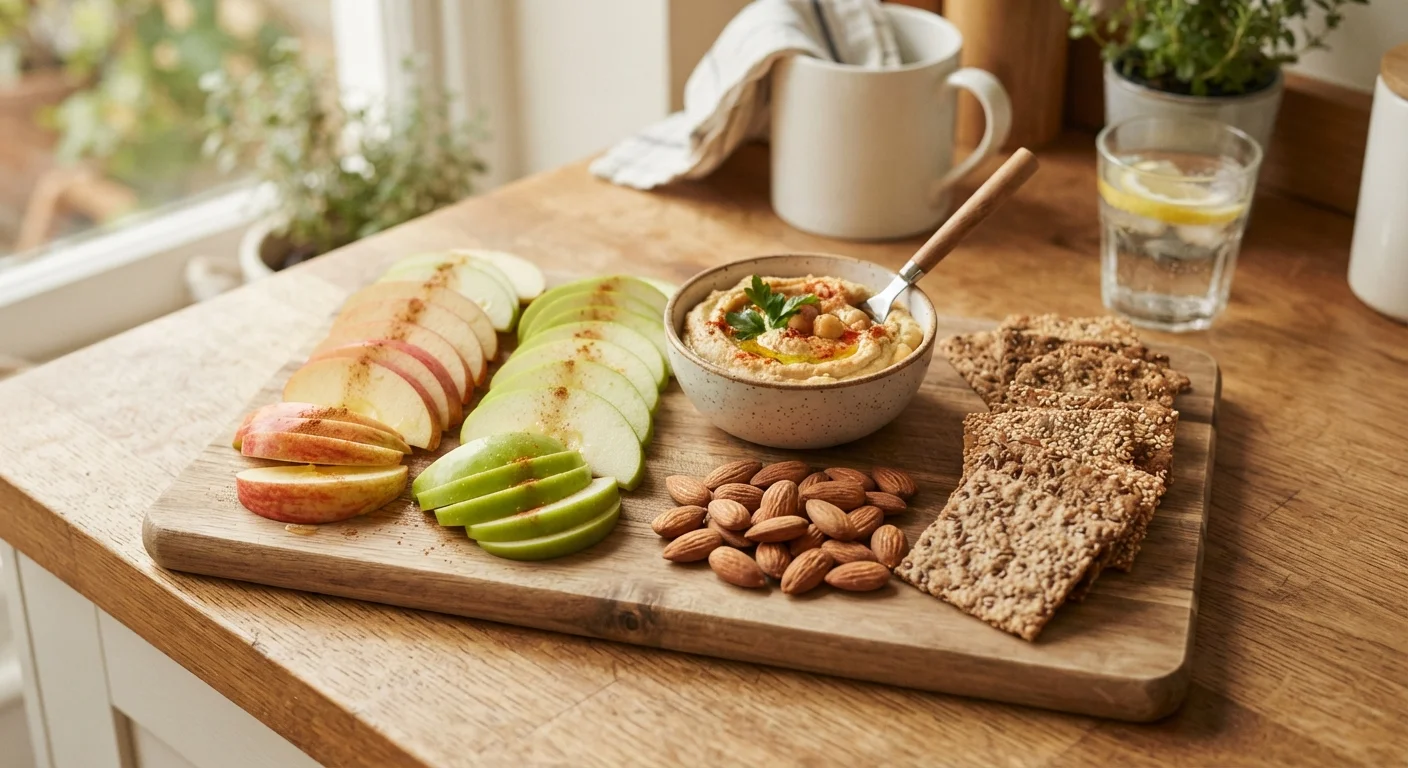
The single most useful framework for snack selection is nutrient composition. Snacks built around a combination of protein, dietary fiber, and healthy fat tend to produce slower digestion, more stable blood glucose responses, and longer-lasting satiety compared to snacks that are predominantly refined carbohydrate and sugar.
Pair a protein source with a fiber-rich food at every snack.
Protein slows gastric emptying and supports satiety hormones, while fiber adds bulk and moderates glucose absorption. Together they create a more sustained energy response than either nutrient alone. Relying on one without the other often leads to hunger returning sooner than expected.
Check in with your hunger level before reaching for a snack.
Eating in response to true physiological hunger - rather than habit, boredom, or environmental cues - helps keep total intake aligned with actual energy needs. A simple 1-10 hunger scale can make this check-in concrete rather than abstract.
Default to whole or minimally processed ingredients over packaged snack products.
Whole foods come with their naturally occurring fiber, vitamins, and minerals intact. Heavily processed snack products often trade these for extended shelf life and enhanced palatability, reducing their net nutritional contribution per calorie.
Keep portions consistent with the role of a snack - bridging meals, not replacing them.
Even nutritious snacks can contribute to unintended calorie surplus when portions are open-ended. Pre-portioning helps maintain awareness and prevents the gradual drift that can happen when eating directly from a large container.
Time snacks to prevent excessive hunger before main meals.
Arriving at lunch or dinner extremely hungry tends to accelerate eating speed and increase overall meal size. A small, well-composed snack roughly two to three hours before a meal can moderate this effect without dulling appetite entirely.
If you want to understand how snack choices fit into a larger eating pattern, our overview of long-term evidence-informed dietary approaches provides useful context.
Reading Labels Without Getting Misled
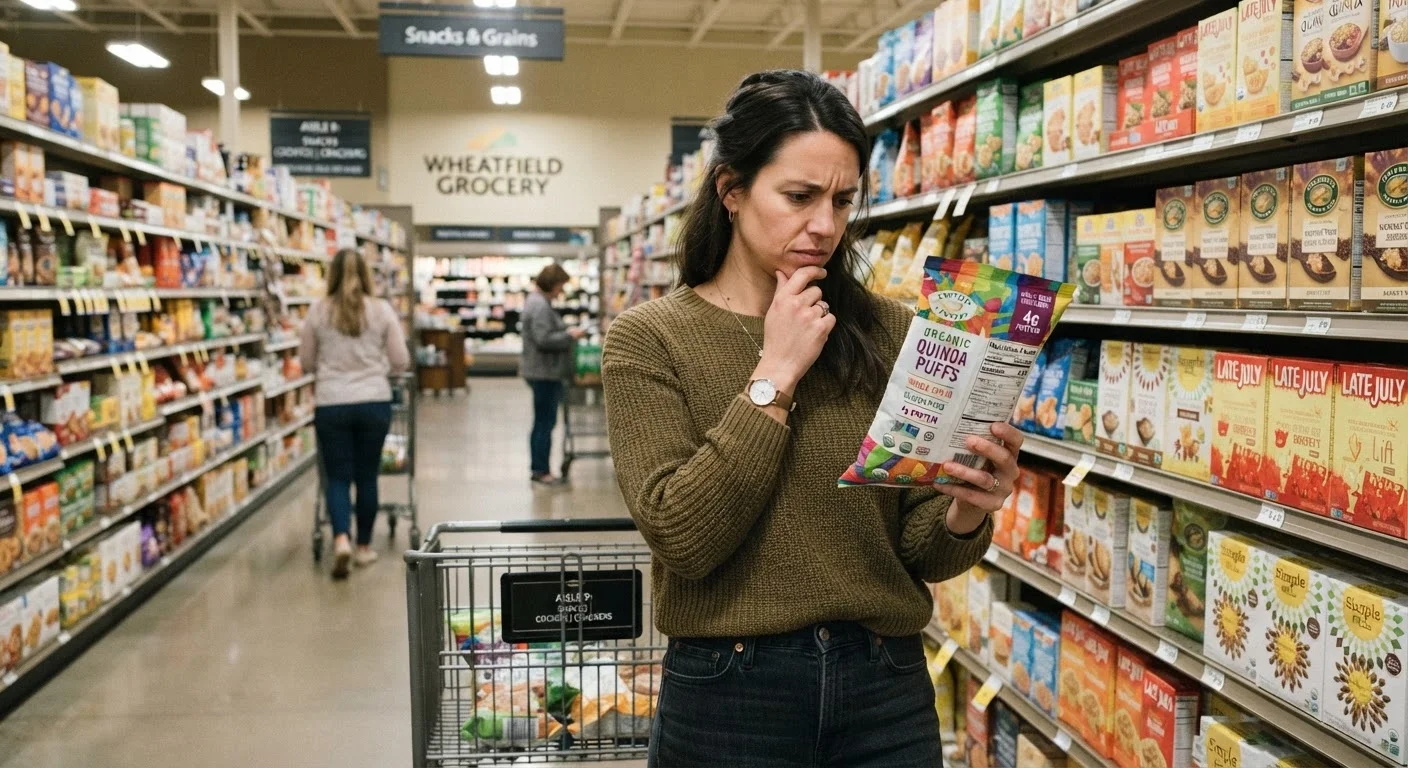
Food marketing has mastered the art of health signaling. Terms like "natural," "grain-fed," "low-fat," or "made with real fruit" are designed to imply nutritional value that labels may not support. A snack labeled "low-fat" can still be high in added sugar; one labeled "high protein" might rely heavily on collagen, which lacks key essential amino acids.
"High Protein" Doesn't Always Mean What You Think
Not all protein sources are nutritionally equivalent. Some snack products boost their protein count using collagen peptides, which are incomplete proteins lacking several essential amino acids. For snacks where protein quality matters, look for sources like dairy, eggs, legumes, or nuts. This doesn't make collagen-containing products harmful - just worth understanding before assuming equivalent benefit.
Checking the ingredient list - not just the front-of-package claims - is a more reliable method. Ingredients are listed in descending order by weight, so if added sugar or a refined grain appears near the top, that tells you more about the product than any logo on the front. For a deeper look at misleading grocery store marketing, see where good intentions go wrong at the grocery store.
Planning Snacks the Same Way You Plan Meals
Spontaneous snacking decisions made under time pressure or moderate hunger almost always favor convenience over nutrition. Preparing snacks in advance - portioning out nuts, slicing vegetables, or keeping hard-boiled eggs on hand - removes the friction that typically leads to vending machine choices.
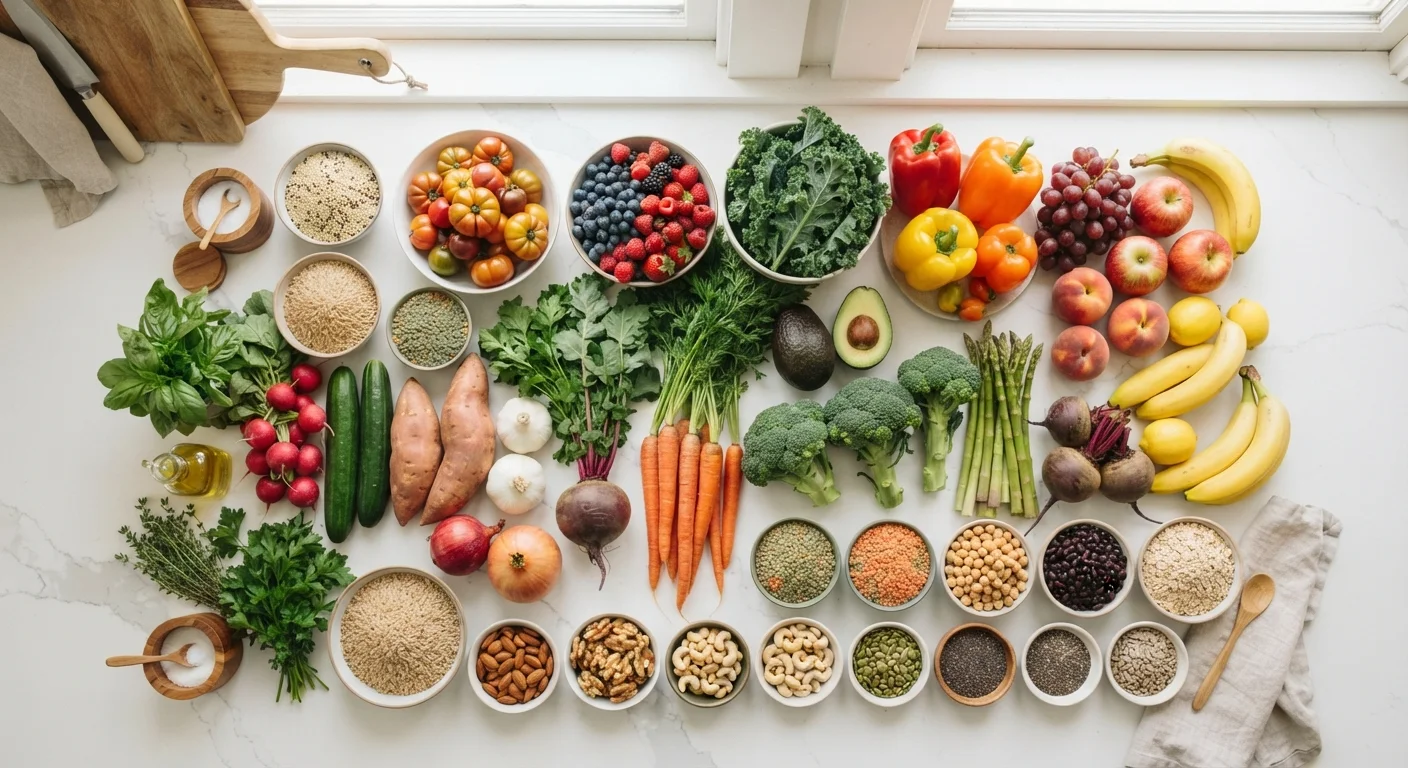
Aligning snack planning with your weekly grocery routine makes the habit much easier to maintain. Our grocery shopping checklist for balanced nutrition can help you stock the building blocks consistently. If your schedule makes meal preparation difficult, the strategies in eating well on a tight schedule apply equally to snack prep.
~25%
Daily calorie intake from snacks for many U.S. adults
Research published in nutrition journals suggests snacking contributes roughly a quarter of total daily energy intake for many American adults, making snack quality a meaningful dietary lever.
2-3x
Longer satiety from protein-fiber snacks vs. refined carbs
Nutrition studies consistently show that snacks combining protein and dietary fiber maintain feelings of fullness significantly longer than carbohydrate-only snacks of similar calorie content.