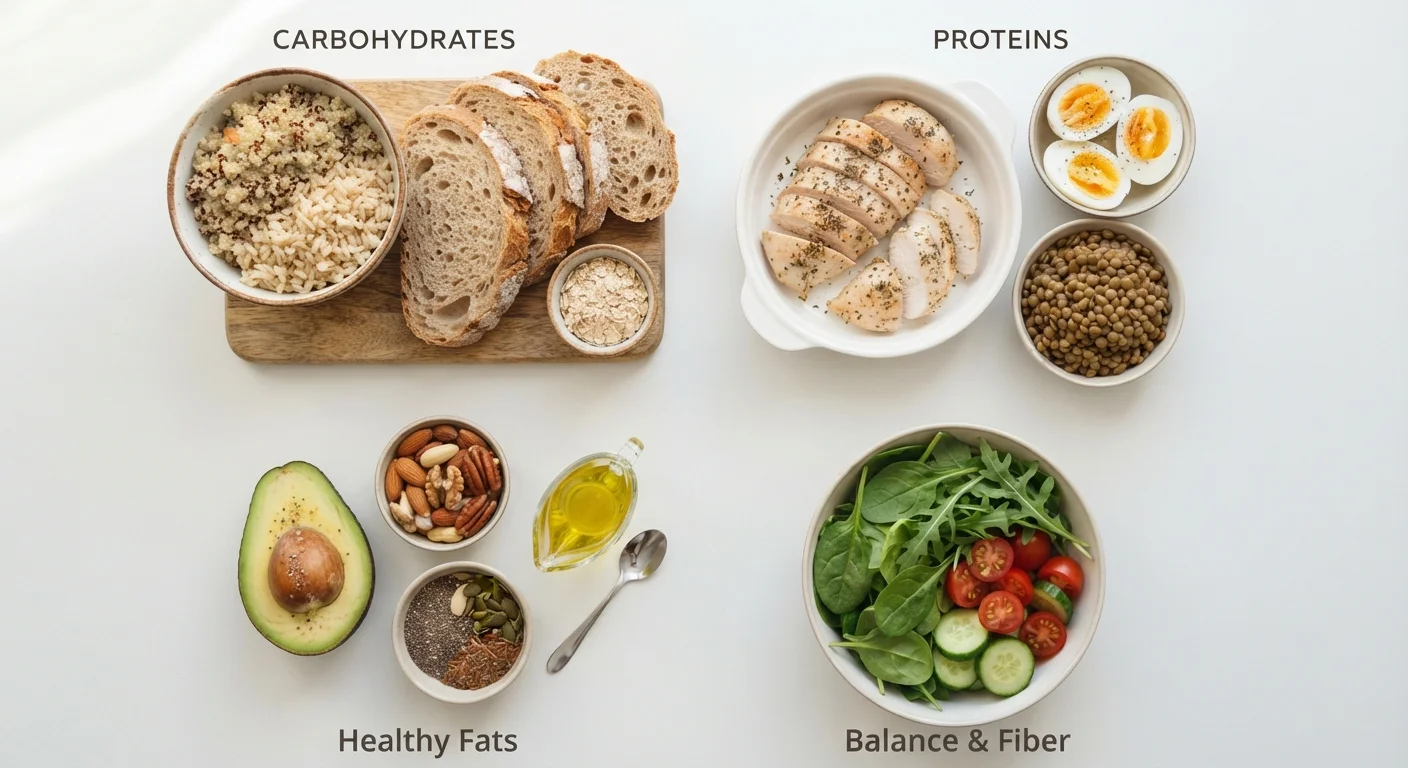

What Micronutrients Are and Why They Matter
Micronutrients are vitamins and minerals that your body needs in relatively small amounts but cannot function well without. Unlike macronutrients like carbohydrates, protein, and fat, micronutrients don't supply calories - they serve as the biological machinery that keeps your cells, organs, and systems running. Enzymes need them to work. Your immune system depends on them. Your bones, blood, and nervous system all rely on a steady, varied supply.
Vitamins are organic compounds (made by plants or animals) divided into two categories: fat-soluble (A, D, E, K), which are stored in body fat and liver, and water-soluble (C and the B vitamins), which are not stored and need regular replenishment. Minerals are inorganic elements drawn from soil and water - calcium, iron, magnesium, and zinc among the most discussed. For a deeper look at what makes micronutrients distinct from macros, see Micronutrients 101.
Micronutrient
A vitamin or mineral required by the body in small quantities for normal physiological function. Unlike macronutrients, micronutrients do not provide energy (calories).
Fat-soluble vitamin
Vitamins A, D, E, and K, which dissolve in fat and are stored in the body's fatty tissue and liver. Because they accumulate, excessive supplementation can potentially lead to toxicity.
Water-soluble vitamin
Vitamins C and the B-complex group, which dissolve in water and are not stored in the body in significant amounts. Regular dietary intake is necessary to maintain adequate levels.
Trace mineral
A mineral the body needs in very small (trace) amounts, such as zinc, selenium, and iodine. These are distinct from macrominerals like calcium and magnesium, which are needed in larger quantities.
Dietary Reference Intake (DRI)
A set of nutritional reference values established by the National Academies of Sciences to guide adequate intake levels for vitamins and minerals across different population groups.
Bioavailability
The proportion of a nutrient that is actually absorbed and used by the body after consumption. Bioavailability varies depending on the food form, preparation method, and other nutrients consumed alongside it.
Key Vitamins: Roles and Food Sources
The table below summarizes the most commonly discussed vitamins, their primary functions, and reliable whole-food sources. This is a general reference - it is not a guide to supplementation or treatment of any condition.
| Vitamin | Main Role(s) | Common Food Sources |
|---|---|---|
| A | Vision, immune function, skin cell renewal | Liver, sweet potato, carrots, leafy greens |
| B6 | Protein metabolism, neurotransmitter production | Poultry, fish, potatoes, bananas |
| B12 | Nerve function, red blood cell formation | Meat, fish, dairy, fortified foods |
| C | Antioxidant, collagen synthesis, immune support | Citrus fruits, bell peppers, broccoli, strawberries |
| D | Calcium absorption, bone health, immune regulation | Fatty fish, egg yolks, fortified dairy/plant milks, sunlight exposure |
| E | Antioxidant protection, immune function | Nuts, seeds, vegetable oils, spinach |
| Folate (B9) | DNA synthesis, cell division, fetal development | Legumes, leafy greens, fortified grains, asparagus |
| K | Blood clotting, bone metabolism | Kale, spinach, broccoli, fermented foods |
~90%
Americans with insufficient vitamin D intake
The 2020-2025 Dietary Guidelines for Americans identifies vitamin D as a nutrient of public health concern due to widespread dietary under-consumption.
~50%
U.S. adults below recommended magnesium intake
Analyses of national dietary survey data suggest roughly half of American adults consume less magnesium than recommended daily amounts.
10 mg
Daily iron recommendation for adult men
The National Institutes of Health Office of Dietary Supplements lists the Recommended Dietary Allowance for iron at 8 mg for adult men and 18 mg for women ages 19-50.
Key Minerals: Roles and Food Sources
Minerals are equally essential. Some - called macrominerals - are needed in larger amounts; others, called trace minerals, are required in much smaller quantities but are no less important.
| Total essential vitamins | 13 (National Institutes of Health, Office of Dietary Supplements) |
| Essential dietary minerals | ~16 recognized (National Academies of Sciences) |
| Most common U.S. micronutrient shortfalls | Vitamin D, calcium, potassium, iron (2020-2025 Dietary Guidelines for Americans) |
| Fat-soluble vitamins | A, D, E, K |
| Water-soluble vitamins | C, B1, B2, B3, B5, B6, B7, B9, B12 |
| Folate importance in pregnancy | Critical for fetal neural tube development (CDC, National Birth Defects Prevention) |
| Mineral | Main Role(s) | Common Food Sources |
|---|---|---|
| Calcium | Bone and tooth structure, muscle contraction, nerve signaling | Dairy, fortified plant milks, tofu, leafy greens |
| Iron | Oxygen transport in blood, energy metabolism | Red meat, legumes, fortified cereals, spinach |
| Magnesium | Muscle and nerve function, blood sugar regulation, energy production | Nuts, seeds, whole grains, dark chocolate, leafy greens |
| Potassium | Blood pressure regulation, fluid balance, muscle function | Bananas, potatoes, beans, dairy, fish |
| Zinc | Immune function, wound healing, protein synthesis | Meat, shellfish, legumes, seeds, nuts |
| Selenium | Antioxidant defense, thyroid hormone metabolism | Brazil nuts, seafood, poultry, whole grains |
| Iodine | Thyroid hormone production, metabolism regulation | Iodized salt, seafood, dairy |
This article is for general informational purposes only and does not constitute medical or nutritional advice. Consult a qualified healthcare professional or registered dietitian before making significant dietary changes or considering supplementation.
Putting It Into Practice
Meeting micronutrient needs doesn't require tracking every gram. A few consistent habits go a long way:
- Eat a wide variety of colors. Different pigments in fruits and vegetables often signal different nutrient profiles. A diverse plate naturally covers more ground.
- Don't skip whole grains and legumes. These are underrated sources of B vitamins, iron, magnesium, and zinc.
- Pay attention to fat-soluble vitamins. Vitamins A, D, E, and K are absorbed better when eaten alongside some dietary fat - a practical reason to pair roasted vegetables with olive oil or avocado.
- Check the label. Fortified foods - certain cereals, plant milks, and breads - can meaningfully fill gaps, particularly for B12, D, and iron. Reading the Nutrition Facts panel can help you make sense of the percentages listed.
For a structured approach to getting this variety week after week, the grocery checklist for balanced nutrition and the weekly meal-planning checklist offer practical frameworks. Both are grounded in the same principle: covering your nutritional bases is largely a matter of consistent variety, not perfection.
A Note on Supplements
While supplements can help address clinically confirmed deficiencies, they are not a substitute for a varied whole-food diet and do not replicate the complex interactions between nutrients that occur naturally in food. Before starting any supplement regimen, consult a registered dietitian or your healthcare provider, as some micronutrients can interact with medications or cause adverse effects in high doses.