
What Are Micronutrients?
Micronutrients are vitamins and minerals your body requires to function - but only in relatively small amounts compared to carbohydrates, protein, and fat. The prefix micro refers to the quantities needed, not to their importance. Many of these compounds are involved in processes so fundamental - forming red blood cells, synthesizing DNA, enabling nerve signals - that even a modest shortfall can have noticeable consequences.
Unlike the three macronutrients, micronutrients don't supply calories. Instead, they act more like tools: they enable the chemical reactions that release energy from food, build tissue, regulate hormones, and defend against cellular damage. Your body cannot manufacture most of them in sufficient quantities on its own, which is why diet is so central to health.
Micronutrient
A vitamin or mineral the body needs in small amounts to support essential functions like immunity, energy metabolism, and tissue repair.
Fat-soluble vitamin
A vitamin (A, D, E, or K) that dissolves in fat and is stored in body tissues, meaning it can accumulate to toxic levels if taken in excess.
Water-soluble vitamin
A vitamin (C or any B vitamin) that dissolves in water and is generally not stored long-term, so regular dietary intake is important.
Trace mineral
A mineral required by the body in very small quantities - such as iron, zinc, or iodine - that is nonetheless essential for key biological processes.
Dietary Reference Intake (DRI)
A set of reference values established by nutrition authorities to guide recommended daily intake levels for vitamins, minerals, and other nutrients.
Bioavailability
The proportion of a nutrient that is actually absorbed and used by the body, which varies depending on the food source, preparation method, and other nutrients consumed alongside it.
This article is for general informational purposes only and is not medical advice. Consult a qualified healthcare professional before making changes to your diet or supplement routine.
Vitamins vs. Minerals: What's the Difference?
Both vitamins and minerals are micronutrients, but they differ in origin and chemistry. Vitamins are organic compounds - meaning they contain carbon and are made by living organisms. Plants and animals synthesize them, and we absorb them when we eat those foods. Minerals, by contrast, are inorganic elements that originate in the earth. Plants absorb them from soil; animals (including humans) get them by eating plants or other animals.
Fat-Soluble vs. Water-Soluble Vitamins
Vitamins are further divided by how the body stores and processes them:
- Fat-soluble vitamins (A, D, E, K) dissolve in fat and are stored in body tissues. Because they accumulate, excessive intake from supplements can become toxic over time.
- Water-soluble vitamins (C and the eight B vitamins) dissolve in water and are generally excreted in urine when taken in excess, though very high supplemental doses of some can still cause harm.
Major and Trace Minerals
Minerals are classified by the amounts the body needs. Major minerals - calcium, magnesium, phosphorus, sodium, potassium, chloride, and sulfur - are required in larger quantities. Trace minerals - iron, zinc, iodine, selenium, copper, and others - are needed in very small amounts but are no less critical. For a detailed reference on each, see our quick-reference guide to vitamins and minerals.
Use Color as a Shortcut for Variety
Different pigments in fruits and vegetables often correspond to different vitamins and antioxidants. Aiming to include two or three different colors at each meal is a simple, low-effort way to broaden your micronutrient intake without tracking every gram.
Micronutrients vs. Macronutrients
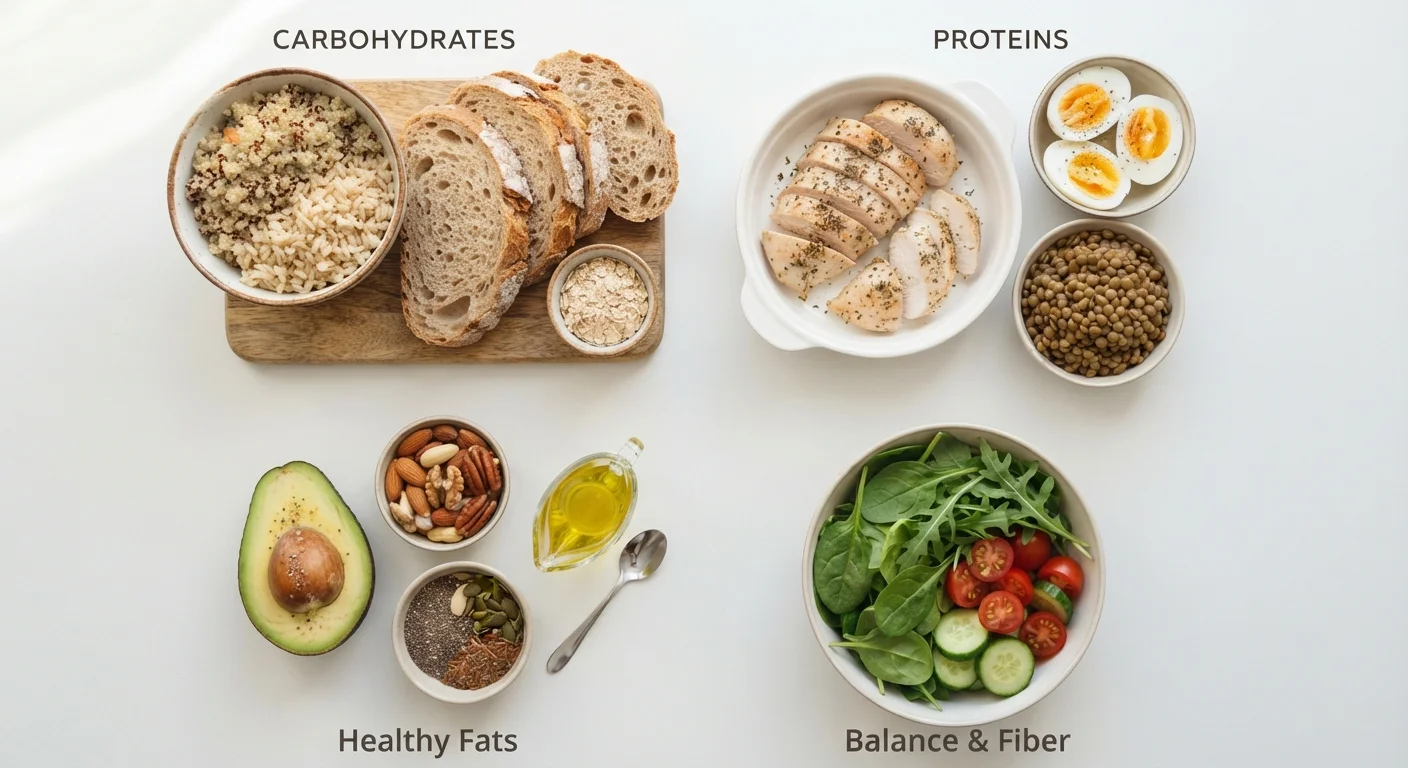
Understanding micronutrients is easier when you can see where they fit alongside macronutrients. Macronutrients - carbohydrates, protein, and fat - are the body's energy sources, measured in grams and hundreds of calories. Micronutrients are measured in milligrams or micrograms, supply no energy, and serve regulatory and structural roles instead.
The two categories are deeply interdependent. B vitamins, for example, are essential cofactors for metabolizing carbohydrates and fat. Calcium and phosphorus give protein-rich bone its strength. Iron is required to transport the oxygen that powers every metabolic reaction. Neither group works well without the other - which is one reason that eating patterns centered on whole, minimally processed foods tend to serve both needs simultaneously.
If you're newer to nutrition concepts, our beginner's guide to healthy eating offers a useful foundation before diving deeper into specific nutrients. You can also explore how macronutrients work in the body for a fuller picture.
Whole Foods vs. Fortified Foods
Fortified foods - such as breakfast cereals or plant-based milks with added vitamins - can help close specific nutrient gaps, especially for people with dietary restrictions. However, whole food sources are generally preferable when available, because they deliver nutrients alongside fiber, phytonutrients, and other compounds that work together in ways researchers are still studying.
Nutrients Americans Most Often Fall Short On
National dietary surveys consistently identify several nutrients that many Americans consume below recommended levels. The U.S. Dietary Guidelines have classified these as nutrients of public health concern:
- Vitamin D: Synthesized by the skin in sunlight but poorly supplied by most foods. Deficiency is widespread, particularly in northern climates and among people with darker skin tones or limited sun exposure.
- Calcium: Critical for bone density, muscle contraction, and nerve signaling. Dairy, fortified plant milks, and leafy greens are key sources.
- Potassium: Supports healthy blood pressure and fluid balance. Found abundantly in fruits, vegetables, legumes, and dairy - foods that remain under-consumed in typical American diets.
- Iron: Required for oxygen transport via hemoglobin. Women of childbearing age face the highest risk of deficiency. Red meat, legumes, and dark leafy greens are leading sources.
- Magnesium: Involved in hundreds of enzymatic reactions, including energy production and muscle function. Whole grains, nuts, seeds, and legumes supply it.
Many of these gaps trace back to the same root cause: a dietary pattern that is high in refined grains and low in vegetables, fruits, and legumes. Fiber shortfalls often accompany micronutrient gaps for the same reason - explore that connection in our article on why fiber is under-eaten.
More Is Not Always Better with Supplements
Taking high-dose supplements of fat-soluble vitamins or certain minerals without medical guidance can cause toxicity over time. Upper tolerable intake levels exist for most micronutrients, and exceeding them carries real risk. Always consult a healthcare provider before beginning a new supplement regimen, especially at doses above standard daily values.
How to Get More Micronutrients from Food
No single food provides every micronutrient in adequate amounts - variety is the core strategy. Nutrition science consistently shows that eating patterns emphasizing a wide range of whole foods deliver the broadest micronutrient coverage. A few practical principles help:
- Eat the rainbow. Different pigments in fruits and vegetables signal different phytochemicals and micronutrients. Rotating colors across meals broadens your nutrient intake naturally.
- Don't ignore whole grains, legumes, and nuts. These foods supply magnesium, zinc, iron, and B vitamins that are often stripped from refined grain products.
- Consider cooking methods. Steaming and roasting preserve more water-soluble vitamins than boiling. Some vegetables - like carrots and tomatoes - actually release certain nutrients more effectively when cooked with a small amount of fat.
- Pair strategically. Vitamin C from citrus or bell peppers boosts the absorption of non-heme (plant-based) iron. Fat consumed alongside fat-soluble vitamins (A, D, E, K) improves uptake.
Supplements can help address confirmed deficiencies, but they aren't a substitute for a varied diet - many beneficial compounds in whole foods work synergistically in ways that isolated supplements cannot fully replicate. If you suspect a deficiency, speak with a healthcare provider rather than self-supplementing at high doses. For a broader foundation, visit the Nutrition Basics hub.