Why the Old Food Pyramid Isn't Enough
For decades, Americans navigated nutrition through food pyramids and rigid serving-count charts. While those tools introduced useful concepts, they often left people more confused than empowered. What's a serving of pasta, exactly? Why is fat at the top if olive oil is good for you?
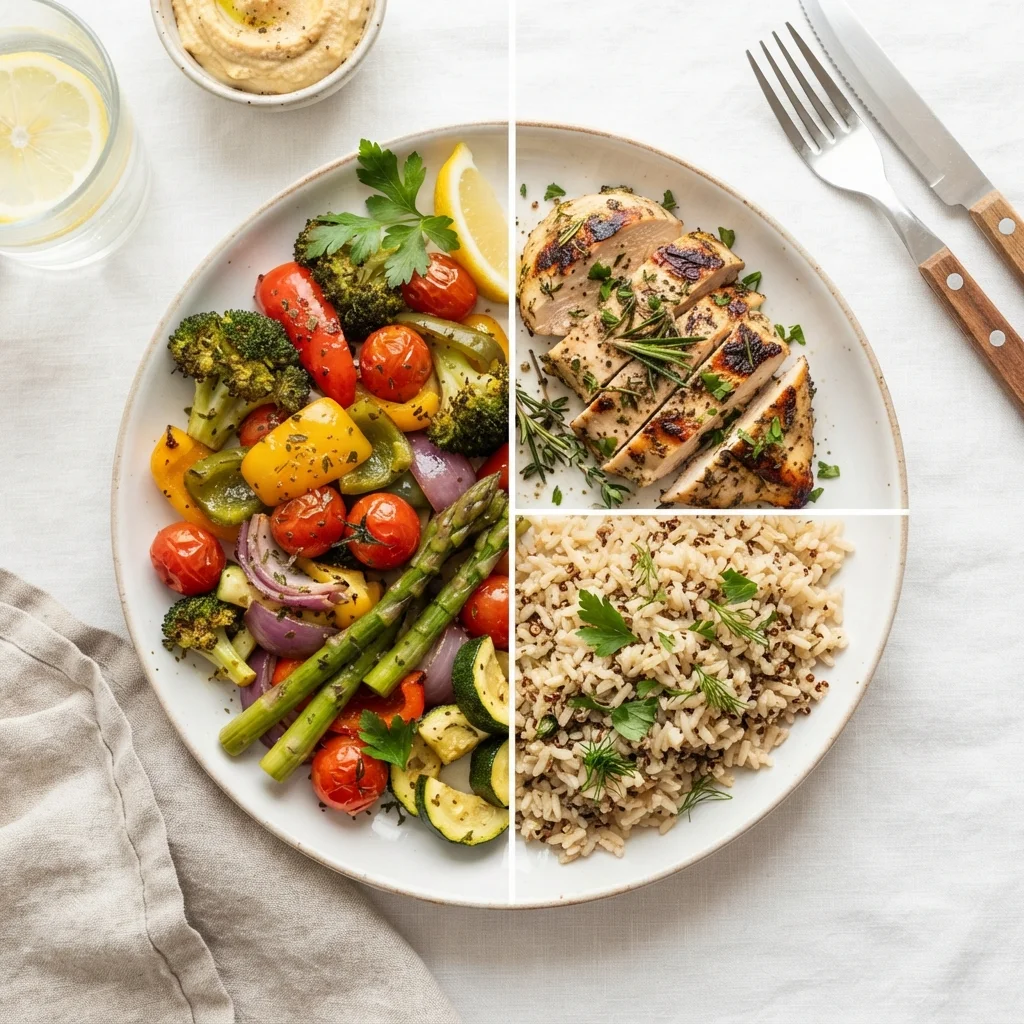
Modern nutrition guidance - including the USDA's MyPlate, introduced in 2011 - shifted toward a simpler, more visual approach. Instead of counting servings, the focus moved to proportions on an actual plate. This shift reflects a broader understanding in nutrition science: the overall pattern of eating matters more than any single food or nutrient.
For a deeper look at how different dietary frameworks present themselves, see how to read a special diet plan without getting overwhelmed.
9 in 10
Americans don't eat enough vegetables
According to CDC data, about 90% of Americans fall short of recommended daily vegetable intake - making the 'half your plate' guideline especially important.
~30g
Daily fiber goal for most adults
The Dietary Guidelines for Americans recommend 25-34 grams of fiber per day for adults, yet average intake in the U.S. is closer to 15 grams - roughly half the target.
Over 70%
Of U.S. calories come from ultra-processed foods
Research published in nutrition journals estimates that ultra-processed foods account for more than 70% of the U.S. food supply by category count, underscoring why whole-food choices matter.
The Four Building Blocks of a Balanced Plate
Regardless of cultural cuisine or personal preference, most nutrition experts agree on four core components every balanced meal should contain:
- Vegetables and fruit (about half the plate): These supply fiber, vitamins, minerals, and antioxidants. Variety is key - different colors signal different phytonutrients. Leafy greens, cruciferous vegetables, berries, and citrus are all strong choices.
- Whole grains or starchy vegetables (about one quarter): Brown rice, quinoa, oats, whole-wheat bread, sweet potatoes, and legumes provide complex carbohydrates and sustained energy. They also contribute B vitamins and fiber that refined grains lack.
- Lean protein (about one quarter): Protein supports muscle maintenance, immune function, and satiety. Sources include poultry, fish, eggs, beans, lentils, tofu, and low-fat dairy. Variety here matters too - fatty fish like salmon adds heart-healthy omega-3s.
- Healthy fats (a smaller, supporting role): Fats from olive oil, avocados, nuts, and seeds are not just acceptable - they're necessary. They aid in absorbing fat-soluble vitamins and support brain and cardiovascular health.
This framework aligns closely with patterns studied in populations with strong health outcomes. For one real-world example, see what the Mediterranean diet actually looks like on a plate.
Use Your Hand as a Portion Guide
You don't need a food scale to build a balanced plate. A rough palm-sized portion works for protein, a cupped hand for grains, and two hands cupped together for vegetables. This flexible, body-proportionate guide travels with you anywhere - no measuring cups required.
Balance Happens Over Time, Not Just at One Meal
One of the most freeing insights from modern nutrition science is that balance doesn't have to be achieved in a single sitting. A breakfast of eggs and fruit, a lunch of soup and whole-grain bread, and a dinner of salmon, roasted vegetables, and brown rice together form a balanced day - even if no individual meal is textbook-perfect.
This also means the occasional meal that's heavy on one food group or light on vegetables doesn't derail your overall diet. Consistency across a week matters far more than perfection at any one table.
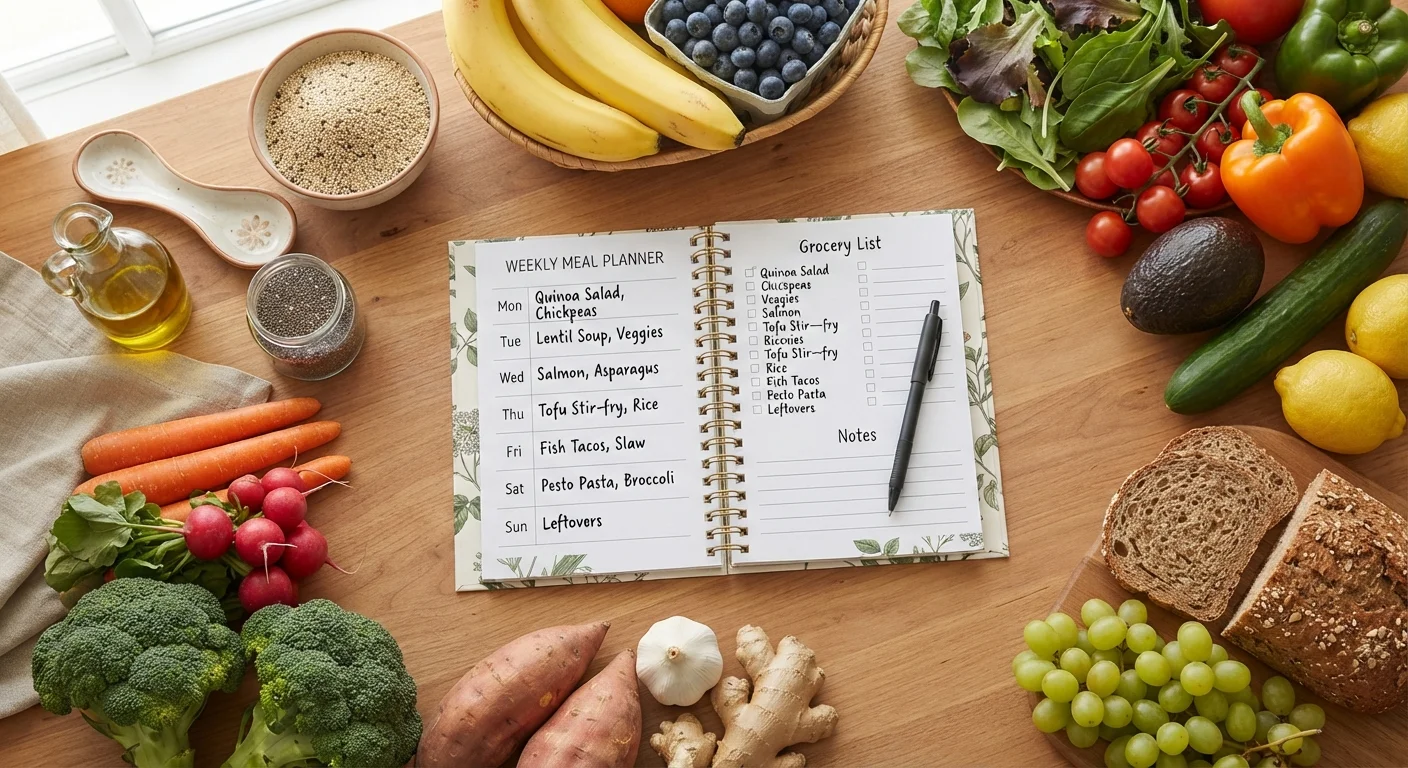
Ready to put this into practice? The weekly meal-planning checklist for nutritionally balanced eating can help you apply this framework across a full week of meals. And when it's time to stock up, the grocery shopping checklist for balanced nutrition walks you through each food category so nothing important gets left off your list.
For more foundational guidance, explore the Nutrition Basics hub or browse approaches to special diets if you're navigating specific dietary needs.
This article is for general informational and educational purposes only and is not a substitute for professional medical or dietary advice. Consult a qualified healthcare provider or registered dietitian for guidance tailored to your individual health needs.