What Do These Terms Actually Mean?
The word "processed" is one of the most misused terms in everyday nutrition conversation. Technically, almost any food that has been washed, cut, cooked, frozen, or packaged has undergone some form of processing. That definition is too broad to be useful at the dinner table.
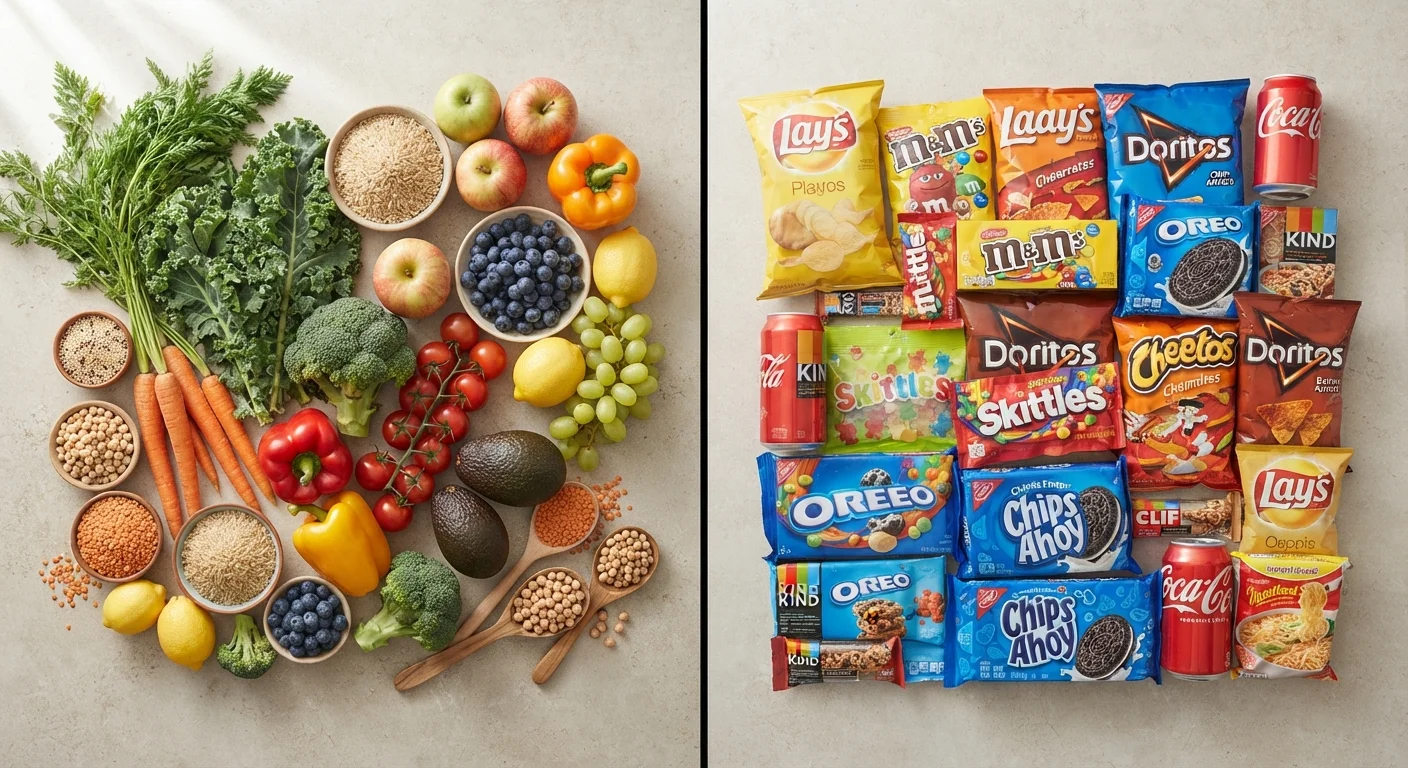
A more practical framework comes from nutrition researchers who classify foods along a spectrum. At one end sit whole foods - items consumed in or very close to their natural state. Think fresh apples, dry lentils, plain oats, or a raw chicken breast. These foods have not had significant nutrients removed or undesirable additives introduced.
At the other end sit ultra-processed foods - industrial formulations made mostly from substances extracted from foods (such as refined oils, starches, and isolated proteins), combined with additives like artificial flavors, colorings, emulsifiers, and preservatives. Most packaged snack foods, sweetened beverages, and many ready-to-eat meals fall into this category.
Between those poles lies a wide middle ground: minimally processed foods (frozen vegetables, pasteurized milk), processed culinary ingredients (olive oil, flour), and moderately processed products (canned tomatoes, plain yogurt). Understanding where a food sits on this spectrum - rather than treating "processed" as a single label - is what equips you to make genuinely informed choices. See our guide to reading ingredient lists for practical tools to identify processing levels on any package.
How the Two Approaches Compare
The nutritional differences between a whole food and an ultra-processed product are rarely about a single nutrient. They reflect how the food was built from the ground up.
| Criterion | Whole Foods | Ultra-Processed Foods |
|---|---|---|
| Ingredient complexity | One or very few ingredients | Long list, many additives |
| Fiber retention | Naturally intact | Often significantly reduced |
| Added sugar | None | Frequently high |
| Sodium content | Naturally low | Often high |
| Shelf stability | Generally short | Extended via additives |
| Nutrient density | High relative to calories | Variable, often lower |
| Convenience | Requires preparation | Ready to eat or minimal prep |
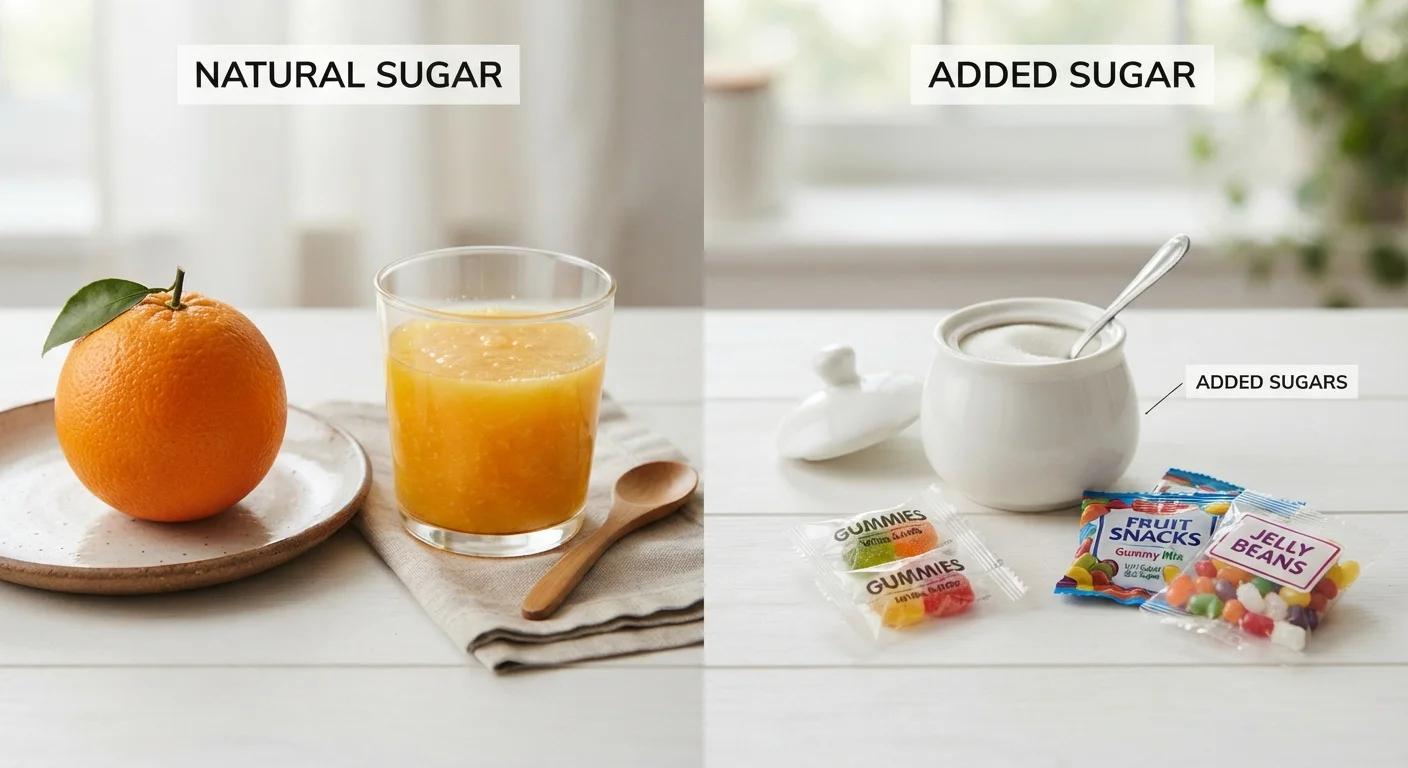
Whole foods tend to deliver nutrients in the context of a complex biological structure - fiber surrounding natural sugars in fruit, for example, slows digestion and affects how the body processes those sugars. Ultra-processed foods often strip away that structure and add back isolated components, which can change the overall metabolic effect of eating that food. For a closer look at one specific example, our article on added sugar versus natural sugar explains why the source of sugar in your food matters beyond the chemistry.
Where Research Points - and Its Limits
57%
Share of calories from ultra-processed foods in average U.S. diet
A study published in BMJ Open estimated that ultra-processed foods account for more than half of daily caloric intake for many American adults.
4x
Greater added sugar intake from ultra-processed foods
Research published in JAMA Internal Medicine found that ultra-processed food consumers had substantially higher added sugar consumption than those eating less processed diets.
A growing body of epidemiological research has associated high ultra-processed food consumption with increased risks of weight gain, cardiovascular disease, and type 2 diabetes. However, nutrition science involves inherent complexity: most large studies rely on dietary self-reporting, and people who eat more ultra-processed foods often differ from those who don't in ways that are difficult to fully account for statistically.
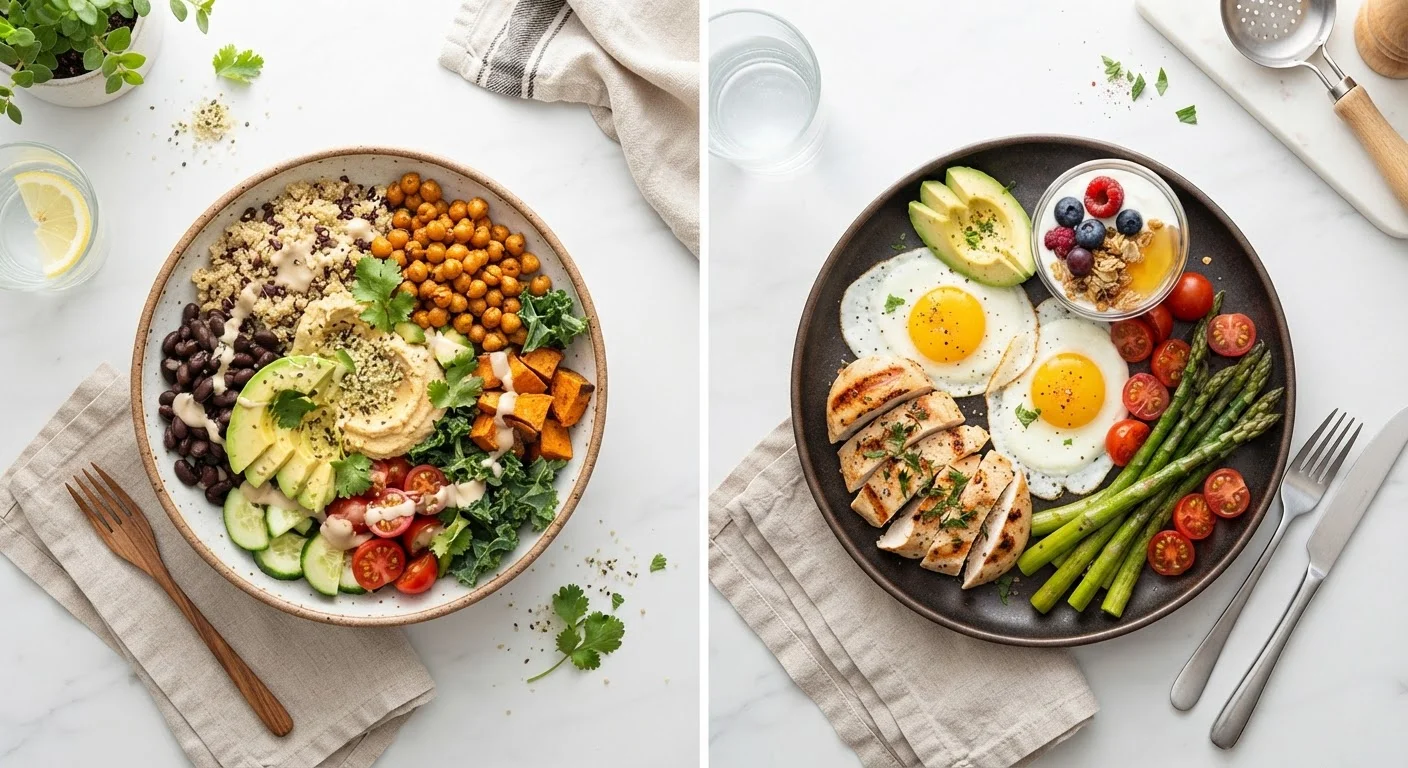
What researchers broadly agree on is that diets built primarily around whole and minimally processed foods - plentiful vegetables, legumes, whole grains, nuts, and lean proteins - tend to support better long-term health outcomes than those dominated by ultra-processed products. This is consistent across many dietary patterns, whether omnivorous or plant-focused. For a deeper look at how different eating frameworks stack up, the article on plant-based versus omnivorous diets explores the trade-offs across multiple dimensions.
Minimally Processed Isn't the Enemy
Frozen spinach, canned chickpeas, and plain rolled oats are all technically processed - but they retain most of their original nutrition and contain no harmful additives. The goal isn't to avoid all processing; it's to recognize when processing has fundamentally altered a food's nutritional character. Practical, whole-food-anchored eating can absolutely include convenient minimally processed staples.
This article is for general informational and educational purposes only and is not a substitute for personalized advice from a qualified healthcare or registered dietitian professional.