
Why the Ingredient List Is Worth Your Attention
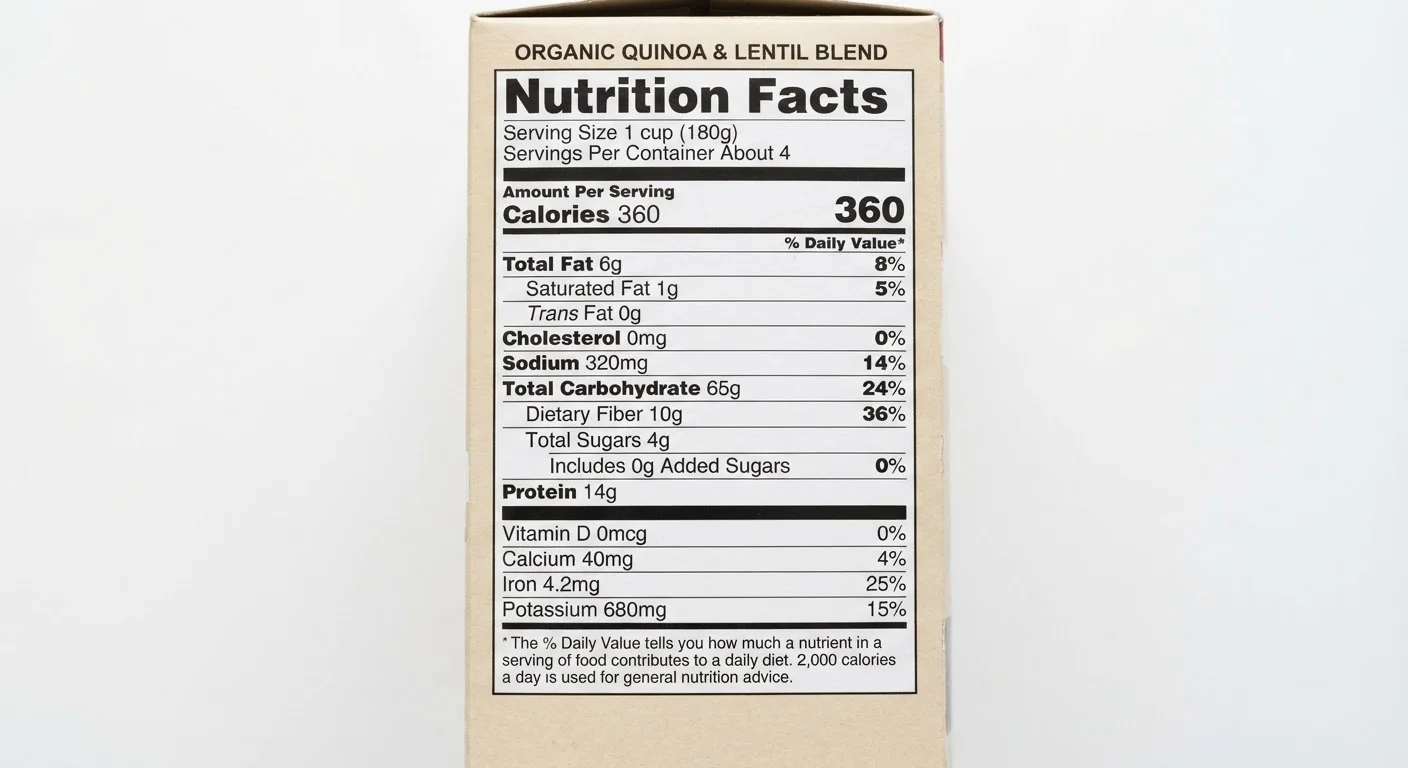
The Nutrition Facts panel gets most of the spotlight, but the ingredient list is where you find out exactly what a food is made of - not just how many grams of fat or sodium it contains. Together, these two panels tell the full story. If you've ever picked up a product that seemed healthy based on its packaging and then felt confused turning it over, you're not alone. Ingredient lists are written in regulatory language for manufacturers, not plain English for shoppers.
The good news: the rules governing ingredient lists in the United States are standardized and consistent across all packaged foods. Once you understand those rules, any ingredient list becomes readable - even the long ones. This guide walks through the process step by step. For a parallel walkthrough of the Nutrition Facts panel itself, see Reading a Nutrition Facts Label Without Getting Lost.
Allergen Disclosure Is Legally Required
Under U.S. federal law, the nine major food allergens - milk, eggs, fish, shellfish, tree nuts, peanuts, wheat, soybeans, and sesame - must be clearly declared on packaged food labels. Look for a 'Contains:' statement immediately after or within the ingredient list. If you or someone in your household has a diagnosed food allergy, always verify this section carefully and consult an allergist for personalized guidance.
What You'll Need
This is a skill you can practice with any packaged food you already have at home. No special tools are required - though having your phone handy for quick lookups can help when you're just starting out.
What you will need
Packaged Food Label
The primary source you'll practice reading - the ingredient list appears on the back or side panel.
Smartphone or Reference Sheet
Useful for quickly looking up unfamiliar ingredient names while shopping.
Step-by-Step: How to Read an Ingredient List
Work through these steps the next time you pick up a packaged product. With practice, most of them happen automatically in a few seconds.
Find the ingredient list on the package
Flip the package to the back or side panel. The ingredient list is typically printed near or below the Nutrition Facts panel, often in small type. On multi-serving packages, it may wrap around a narrow edge. If it's hard to find, check every panel - manufacturers are required to include it, but placement varies.
Understand the order: weight descending
U.S. regulations require ingredients to be listed in descending order by weight before cooking or processing. The first ingredient is present in the greatest amount; the last is present in the smallest amount. This single rule is the most useful tool you have. If sugar or refined flour appears first or second, those are the dominant ingredients by weight - regardless of what the front of the package claims.
Recognize sugar's many names
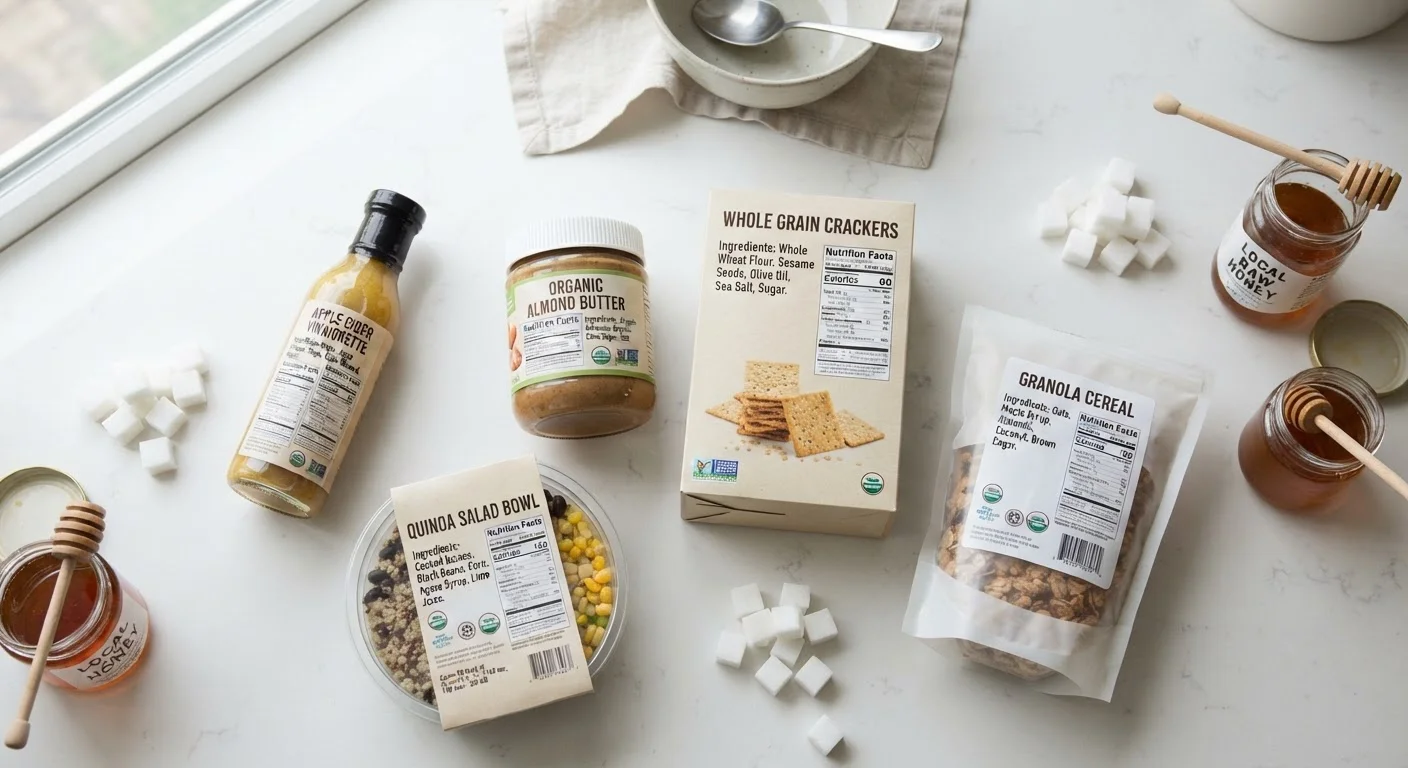
Added sugar is one of the most commonly disguised ingredients on food labels. It can appear as high-fructose corn syrup, cane juice, dextrose, maltose, agave nectar, brown rice syrup, and many other terms. When multiple sugar aliases appear throughout the list, their combined contribution to the product may be significant even if no single entry appears near the top. For a comprehensive guide to spotting these aliases, see Sugar by Another Name.
Decode unfamiliar chemical-sounding terms
Long, scientific-sounding names aren't automatically cause for alarm - many are vitamins, minerals, or standard preservatives. For example, ascorbic acid is vitamin C; tocopherols are forms of vitamin E used as antioxidants; lecithin is an emulsifier derived from soybeans or sunflowers. When you encounter an unfamiliar term, a quick search of a reliable source (such as the FDA's website) can clarify its function. Context matters: an additive used to prevent spoilage at the end of a short list is different from a product whose first five ingredients are all additives.
Note sub-ingredient groupings in parentheses
Ingredient lists sometimes include parenthetical breakdowns - for example, chocolate chips (sugar, cocoa butter, chocolate, vanilla extract). These sub-ingredients follow the same descending-weight rule within that component. Pay attention to these nested lists because they can reveal that a seemingly minor ingredient is itself predominantly sugar, salt, or refined starch.
Check for allergen declarations
After the ingredient list, look for a 'Contains:' statement listing any of the nine major allergens. Also scan for 'May contain' or 'Processed in a facility that also handles' notices - these are voluntary disclosures about cross-contact risk during manufacturing. These notices matter if you're managing a food allergy or preparing food for someone who has one.
Put the ingredient list in context
No single food should be judged entirely on its ingredient list in isolation. A product with a long list isn't necessarily less nutritious than one with a short list - a fortified whole-grain cereal may have many ingredients, while a plain cookie may have few. Use the ingredient list alongside the Nutrition Facts panel and consider how the food fits into your overall eating pattern. For a broader foundation, Healthy Eating for Beginners is a useful starting point.
Use the Ingredient List Alongside the Nutrition Panel
The ingredient list tells you what's in a food, while the Nutrition Facts panel tells you how much. Together they give a much fuller picture. See The Nutrition Label Explained, Section by Section for a detailed walkthrough of every row on the panel.
Common Pitfalls and How to Avoid Them
Even careful readers run into a few predictable traps. The most common is treating ingredient list length as a proxy for quality - it isn't. A scratch-made granola bar and a highly processed one might both have long ingredient lists for entirely different reasons.
A second pitfall is front-of-package marketing language. Terms like 'natural,' 'artisan,' or 'wholesome' carry no standardized definition under U.S. food labeling law and don't reflect the ingredient list's content.
Front-of-Package Claims Can Be Misleading
Words like 'natural,' 'made with real fruit,' or 'multigrain' on the front of a package are marketing terms with limited regulatory definitions. They don't guarantee the ingredient list tells a healthy story. Always flip to the back and read the actual list before drawing conclusions. Our article Where Good Intentions Go Wrong at the Grocery Store covers common label traps in detail.
Finally, keep in mind that the difference between minimally processed and ultra-processed foods isn't always visible from the ingredient list alone - processing method matters too. If you follow a specific dietary framework, Reading a Special Diet Plan Without Getting Overwhelmed can help you reconcile label information with dietary guidelines.
This article is for general informational and educational purposes only and is not a substitute for professional dietary or medical advice. Individuals managing food allergies, medical conditions, or specific nutritional needs should consult a qualified healthcare provider or registered dietitian.