Why These Terms Get Confused
Walk into any grocery store or scroll through a food blog and you'll encounter all three terms - sometimes in the same sentence. They overlap significantly, which is why many people treat them as synonyms. But each carries a distinct meaning, and understanding those distinctions helps when reading labels, evaluating diet plans, or simply having an informed conversation about food.
The confusion is partly linguistic. "Plant-based" has become a marketing phrase that appears on everything from oat milk to fast-food burgers. "Vegan" is both a dietary label and an ethical identity. "Vegetarian" is the oldest of the three terms and itself covers several variations. Sorting them out starts with a clear definition of each.
If you've ever picked up a diet guide and felt lost in the terminology, our guide to reading special diet plans walks through how to parse dietary frameworks without getting overwhelmed.
Defining Each Dietary Pattern
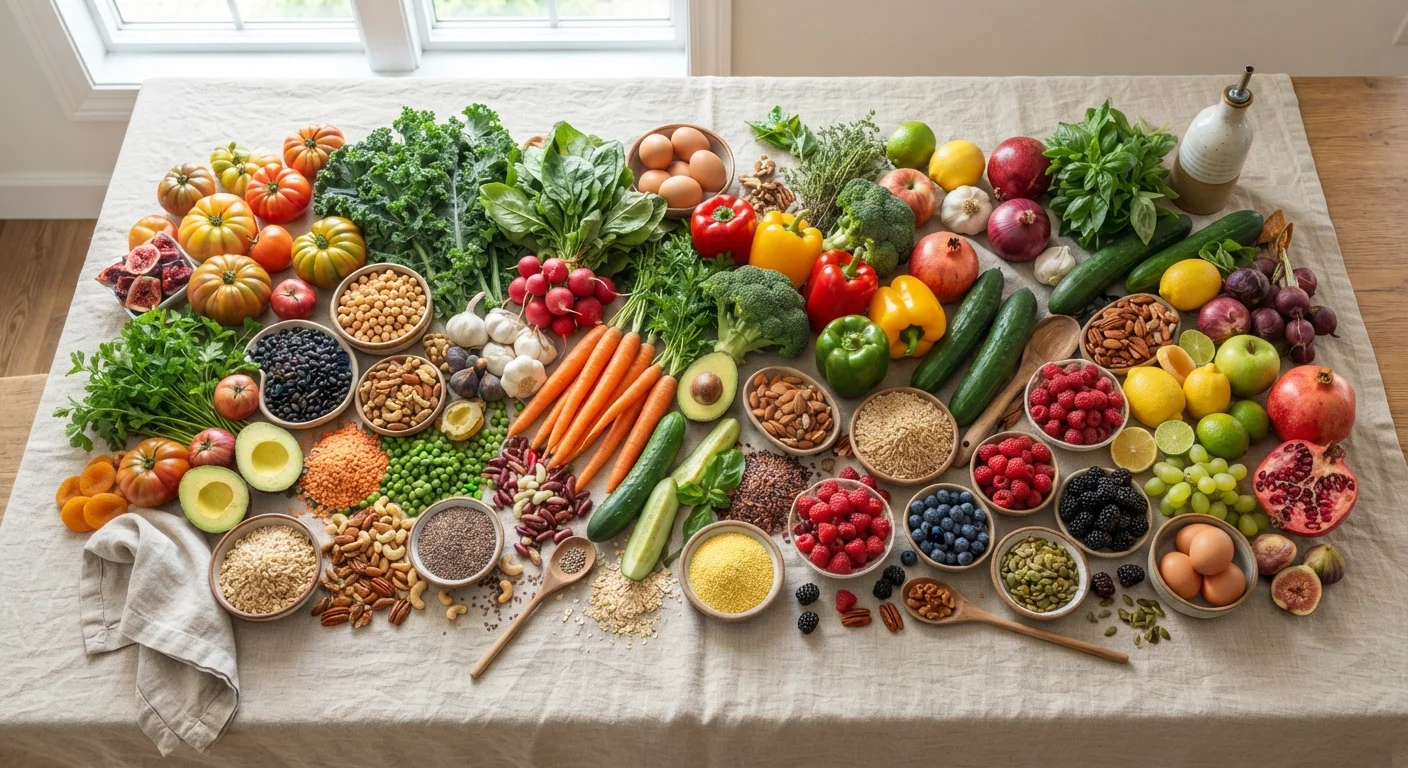
Plant-based eating emphasizes whole or minimally processed foods that come primarily from plants - vegetables, fruits, legumes, whole grains, nuts, and seeds. The term does not inherently mean animal products are forbidden. In research contexts, a "whole-food, plant-based diet" typically limits or excludes animal foods and refined products, but in everyday usage, someone who eats mostly plants but occasionally has fish or chicken may still describe their diet as plant-based. The emphasis is on what you eat more of, not a strict exclusion list. This connects directly to the broader principles covered in healthy eating basics.
Veganism is the most clearly defined of the three. A vegan diet excludes all foods derived from animals: meat, poultry, seafood, dairy, eggs, and honey. For many people, veganism also extends beyond the plate - avoiding leather, wool, cosmetics tested on animals, and other products. The motivation is frequently ethical (concern for animal welfare), environmental, or both, though health reasons also play a role for some.
Vegetarianism eliminates meat, poultry, and typically seafood, but the treatment of other animal products varies by subtype:
- Lacto-vegetarian: includes dairy, excludes eggs
- Ovo-vegetarian: includes eggs, excludes dairy
- Lacto-ovo vegetarian: includes both dairy and eggs (the most common form in the U.S.)
- Pescatarian: includes fish and seafood - often grouped with vegetarianism informally, though technically distinct
| Criterion | Vegan | Vegetarian |
|---|---|---|
| Meat & poultry | Excluded | Excluded |
| Fish & seafood | Excluded | Usually excluded |
| Dairy | Excluded | Allowed in lacto types |
| Eggs | Excluded | Allowed in ovo types |
| Honey | Excluded | Generally allowed |
| Primary motivation | Ethics, environment, health | Health, ethics, preference |
| Lifestyle scope | Often extends beyond diet | Typically diet-focused |
| B12 supplementation need | High - strongly recommended | Moderate - depends on subtype |
Nutritional Considerations Across All Three
All three dietary patterns can support good health when thoughtfully planned. The Academy of Nutrition and Dietetics has noted that well-planned vegetarian and vegan diets are nutritionally adequate and may offer health benefits. That said, a few nutrients deserve particular attention regardless of which pattern you follow.
~6%
U.S. adults identifying as vegetarian or vegan
Gallup polling has consistently found that roughly 5-6% of American adults identify as vegetarian, with vegans representing a smaller subset of that group.
2.4 µg/day
Recommended daily vitamin B12 for adults
The NIH Office of Dietary Supplements sets the adult B12 RDA at 2.4 micrograms per day - a nutrient absent from most plant foods.
~18 mg/day
Iron RDA for women aged 19-50
The NIH notes that vegetarians may need up to 1.8 times the standard iron RDA due to lower bioavailability of non-heme plant iron.
Vitamin B12 is found almost exclusively in animal products, making supplementation or fortified foods essentially necessary for vegans and advisable for some vegetarians. Iron from plant sources (non-heme iron) is less readily absorbed than iron from meat; pairing plant iron sources with vitamin C-rich foods can improve uptake. Calcium is easily obtained by lacto-vegetarians through dairy, but vegans need to rely on fortified plant milks, tofu made with calcium sulfate, and leafy greens like bok choy and kale. Omega-3 fatty acids - particularly EPA and DHA - are less abundant in plant foods, though algae-based supplements can address this gap.
For a deeper look at how plant and animal protein sources compare in completeness and digestibility, see our side-by-side comparison of animal and plant proteins.
This article is for general informational purposes only and is not a substitute for personalized medical or nutritional advice. Individuals with specific health conditions or dietary needs should consult a registered dietitian or qualified healthcare provider before making significant changes to their diet.