
Why a Quick Check-In Matters
Most of us move through our days reacting rather than reflecting. A grounding check-in is a brief, intentional pause that invites you to notice what's actually happening inside - emotionally, physically, and socially - without requiring you to fix anything right away. Think of it as taking your own temperature before the day runs away from you.
Research in the field of mindfulness and psychological well-being consistently points to self-awareness as a foundational skill. When you know how you're feeling, you're better positioned to make choices that support rather than undermine your well-being. If you're building a broader practice, this check-in fits naturally inside a larger personal routine - see our guide to building a personal mental wellness routine for a comprehensive framework.
This checklist works whether you're at your desk, on a park bench, or sitting in your car before a meeting. All you need is a few honest minutes with yourself.
This Is Not a Diagnostic Tool
A grounding check-in is a general wellness habit for self-reflection - it is not a clinical assessment and cannot diagnose any mental health condition. If your check-ins regularly surface feelings of hopelessness, inability to function, or thoughts of self-harm, please speak with a licensed mental health professional. In an emergency, contact 988 (Suicide and Crisis Lifeline) or your local emergency services.
What You'll Need
One of the biggest barriers to regular self-care is complexity. This check-in is designed to eliminate that barrier entirely.
A quiet moment
Even two to five uninterrupted minutes allows you to move through this check-in meaningfully.
Notebook or journal
Writing responses can deepen reflection and create a record to look back on over time.
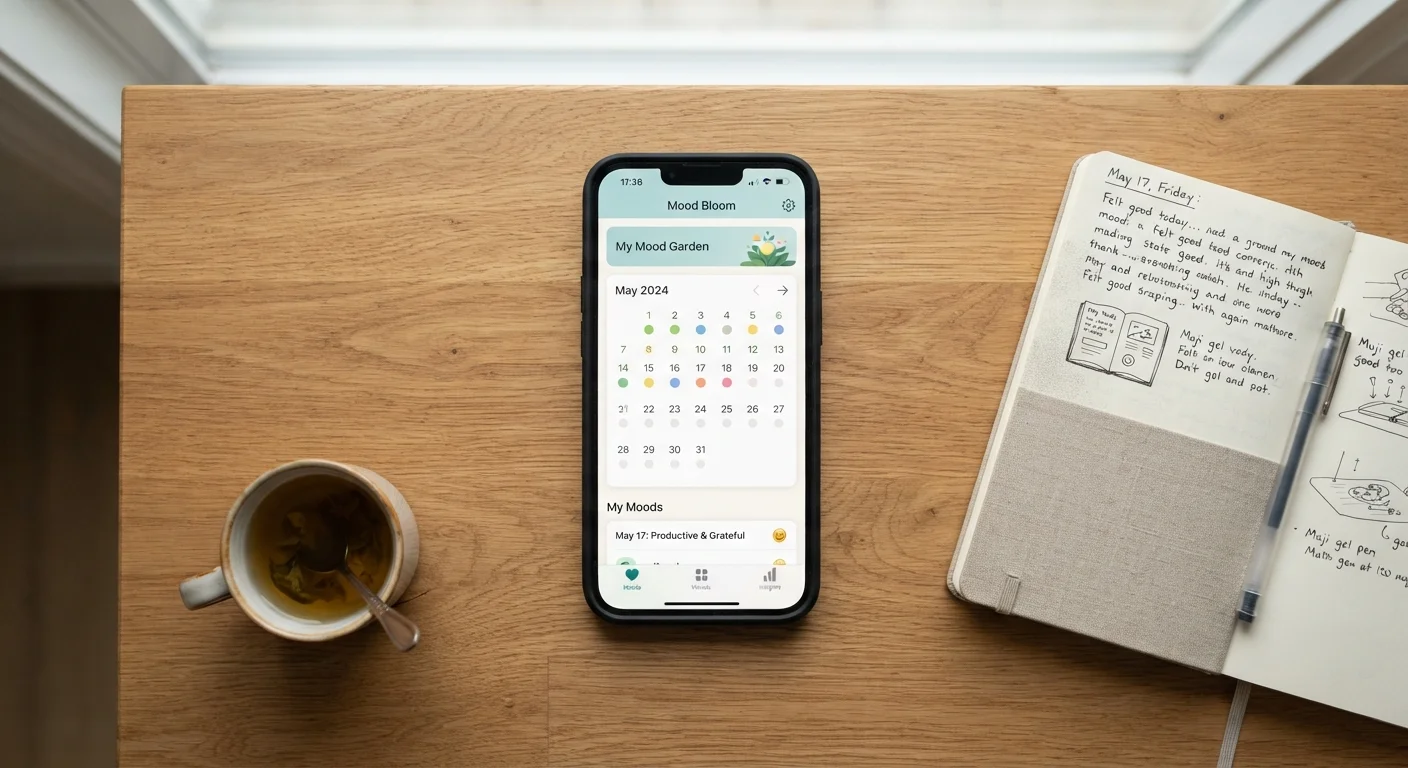
Notes app on your phone
A quick digital alternative to a notebook if you're away from home or prefer typing.
If you prefer to write responses down, a notebook or notes app on your phone works well - but neither is required. The check-in is equally valid done silently in your head.
Your Grounding Check-In Checklist
Work through each group at your own pace. There are no right or wrong answers. The goal is honest observation, not performance. If you notice that mood-tracking tools feel appealing for capturing these check-ins over time, it's worth reading a balanced look at the pros and cons of mood-tracking apps before committing to any tool.
Emotional State
Physical Awareness
Mental Clarity
Social and Connection Check
Wrap-Up and Next Step
Avoid Turning This Into a Performance
The value of a check-in comes from honesty, not from arriving at "good" answers. If you find yourself editing your responses to seem better than you feel, gently notice that tendency and return to what's actually true. Self-compassion, not self-correction, is the goal here.
If you're doing this check-in as part of a broader family wellness effort - for example, before the school year begins - consider adapting these prompts for older children or teens, and see our family health and wellbeing checklist for age-appropriate guidance.
This article is for general informational and educational purposes only and is not a substitute for professional mental health advice, diagnosis, or treatment. If you are experiencing persistent emotional distress or a mental health crisis, please reach out to a qualified mental health professional or contact a crisis helpline in your area.