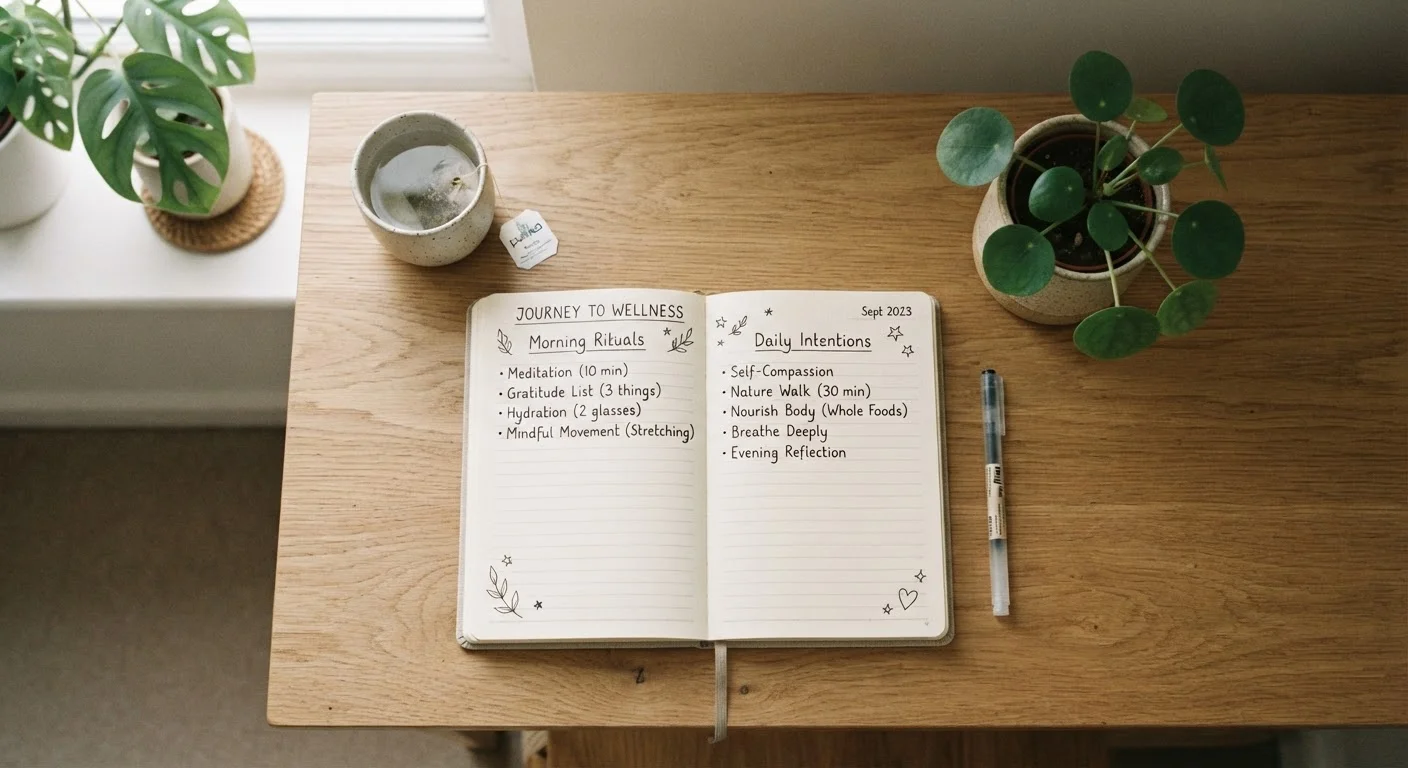

What a Mental Wellness Routine Actually Is
A mental wellness routine is a set of recurring, intentional behaviors designed to support your emotional and psychological well-being over time. Unlike a crisis response or a clinical treatment plan, a routine is proactive - it's something you build into ordinary life to reduce stress, sustain resilience, and maintain a sense of groundedness.
The concept does not require a therapist's prescription or a perfectly curated self-care plan. It can be as simple as a consistent sleep schedule, a few minutes of reflective journaling, or a regular walk outside. What makes it a routine is repetition and intention, not complexity.
For a plain-language breakdown of common terms you'll encounter in mental wellness conversations - from "nervous system regulation" to "cognitive reframing" - see the Mental Wellness Glossary.
This Is Not Medical Advice
The information in this article is for general educational purposes only. It does not constitute medical or mental health advice, and it is not intended to diagnose, treat, or replace professional care. If you have concerns about your mental health, please consult a licensed healthcare provider.
Identifying Your Personal Stressors and Needs
Before adding any new habit, it helps to understand what's actually depleting your mental energy. Common stressor categories include work demands, relationship friction, financial pressure, poor sleep, and lack of physical activity - but the weight each carries is highly individual.
A useful starting point is a brief daily check-in: at the end of each day, note what felt draining and what felt restorative. After a week, patterns often become clear. You may find that screen time late at night consistently disrupts your mood the next morning, or that skipping lunch derails your afternoon focus.
This kind of self-observation doesn't require a formal assessment. It's simply paying structured attention to cause and effect in your own experience. Once you identify two or three consistent patterns, you have a concrete starting point for which habits to build first.
1 in 5
U.S. adults experience mental illness annually
According to the National Institute of Mental Health, approximately one in five U.S. adults lives with a mental illness each year, underscoring how common mental health challenges are.
~30 days
Average time to form a simple new habit
Research published in the European Journal of Social Psychology suggests habit formation varies widely by behavior, ranging from a few weeks to several months.
7-9 hours
Recommended nightly sleep for most adults
The American Academy of Sleep Medicine and Sleep Research Society recommend seven to nine hours of sleep per night for adults to support cognitive and emotional functioning.
Core Habits Worth Building Into Your Day
Research across behavioral health, sleep science, and psychology consistently points to a cluster of everyday behaviors that support mental well-being for most people. These are not guarantees of any outcome, but they represent well-supported starting points:
- Sleep consistency: Going to bed and waking at the same time daily - even on weekends - helps regulate mood, attention, and emotional reactivity. Most adults function best with seven to nine hours, though individual needs vary.
- Physical movement: Regular moderate movement is one of the most researched correlates of reduced anxiety and improved mood. It doesn't require intense exercise - even a daily walk contributes. See what a balanced weekly exercise routine looks like for practical structure.
- Reflective practice: Journaling, brief meditation, or even quiet time without screens gives the mind space to process rather than accumulate. Five to ten minutes consistently tends to produce more benefit than occasional long sessions.
- Purposeful morning structure: The first hour of your day influences your emotional tone more than many people realize. Structuring a morning routine around mental clarity offers a practical framework for this.
When building a new reflective practice, prioritize consistency of timing over duration. The same five minutes each morning will build a stronger neural habit than an occasional thirty-minute session.
Habit research consistently shows that anchoring behaviors to specific time cues - rather than relying on motivation - is one of the most reliable predictors of long-term maintenance.
If you're unsure where to start, pick the one area where you feel most depleted - sleep, movement, or connection - and address only that for two to three weeks before adding anything else.
Attempting multiple behavior changes simultaneously increases the cognitive load and reduces success rates. Sequential habit-building tends to produce more durable results.
Balancing Solo Practice with Social Support
Mental wellness routines are often discussed as individual endeavors - and many of their components are. But social connection is itself a well-documented contributor to mental well-being. Isolation and loneliness are associated with worse health outcomes, while consistent, quality relationships correlate with greater resilience and life satisfaction.
This means an effective routine typically combines both solo practices and social ones. Journaling might help you process emotions privately; a regular call with a trusted friend provides something journaling cannot - the experience of being known and heard by another person.
For a fuller exploration of how these approaches differ and complement each other, see Solo Practices vs. Social Support. And for more on connection specifically, social connection as a wellness practice covers what the research generally shows.
Start With One Social Anchor
Rather than overhauling your social life, identify one recurring connection - a weekly call, a standing lunch, a group walk - and protect it consistently. A single reliable social touchpoint can provide meaningful continuity and a sense of belonging without requiring major schedule changes.
Making Your Routine Stick
Consistency is harder to build than motivation - and more durable. A few principles tend to improve long-term adherence to any wellness habit:
- Start smaller than feels necessary. A two-minute journaling habit is easier to protect than a twenty-minute one, and easier to expand once it's established.
- Attach new habits to existing ones. Pairing a new behavior with something you already do reliably (like making coffee or brushing your teeth) removes the need to remember it separately.
- Track completion, not perfection. Missing a day is not a failure - treating a missed day as a reason to quit is. A simple habit tracker or calendar mark reinforces identity-level consistency over time.
- Reassess every few weeks. A habit that isn't working after honest effort may need adjustment, not more willpower. Flexibility is a feature of sustainable routines, not a weakness.
If you're also thinking about physical fitness as part of your broader wellness picture, the personal readiness checklist for starting a new fitness routine is a useful companion resource.
Avoid Over-Optimization
Wellness routines can sometimes become a source of pressure rather than relief, particularly when every habit is tracked, graded, or treated as mandatory. If your routine is adding anxiety rather than reducing it, simplify. The goal is sustainable support, not a perfect performance.
When to Seek Professional Guidance
A personal wellness routine is general-purpose support for everyday mental health - it is not a substitute for professional care. If you're experiencing persistent sadness, anxiety that interferes with daily functioning, significant changes in sleep or appetite, or thoughts of self-harm, please reach out to a qualified mental health professional.
General wellness habits can coexist with and sometimes complement professional treatment, but they are not replacements for it. A licensed therapist, counselor, or your primary care provider can help you determine what level of support is appropriate for your situation.
If you're building a wellness approach for the whole family rather than just yourself, the family wellness starter framework offers an accessible introduction to thinking about wellbeing across different needs and life stages.
This article is for general informational and educational purposes only and is not a substitute for professional mental health advice, diagnosis, or treatment. Always consult a qualified healthcare provider with questions about your mental health or before making changes to any treatment plan.