Why the Label Exists - and What It Can't Do
The U.S. Nutrition Facts panel is regulated by the Food and Drug Administration (FDA) and standardized so every packaged food presents information the same way. That consistency is the label's biggest strength: once you know how to read one, you can read any of them. What the label can't do is tell you whether a food is inherently "good" or "bad" - it simply reports what's inside a specific amount of that product.
Think of it as a tool for comparison and awareness rather than a scorecard. If you're new to nutrition, the label is one of the fastest ways to build practical food literacy without needing a degree in dietetics.
What you will need
How to Work Through the Label Step by Step
The Nutrition Facts panel is designed to be read top to bottom, with each row building on context established above it. Follow these steps each time you pick up a new product, and the process will become second nature within a few shopping trips.
Find the Serving Size
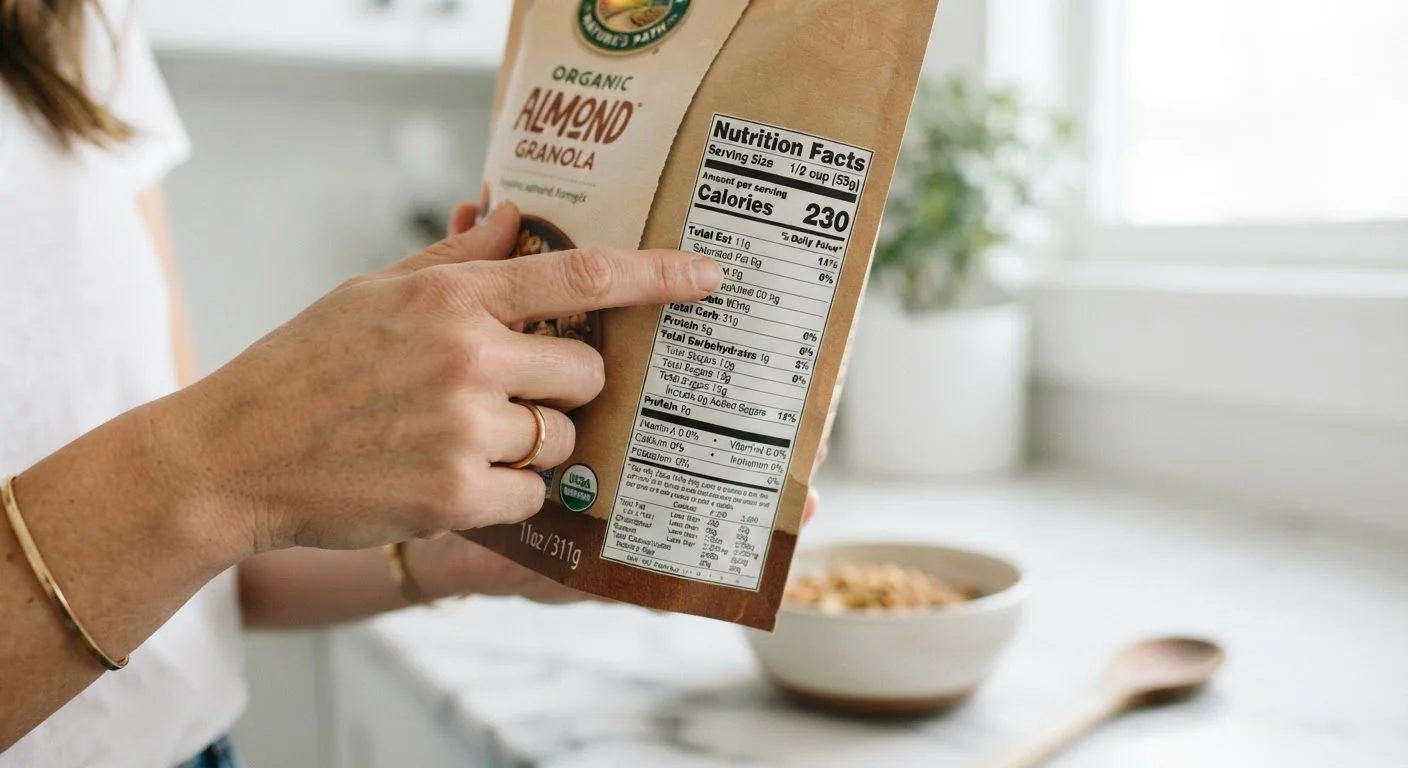
The very first line under "Nutrition Facts" states the serving size - for example, "2 crackers (30g)" or "1 cup (240mL)." Every calorie count and nutrient value on the entire label is based on this amount, not the whole package. If you eat twice the serving size, you're consuming twice the numbers shown.
The FDA updated label requirements so that serving sizes now reflect amounts people realistically eat, making this step more useful than it was on older labels.
Check Calories per Serving
Directly below serving size, calories are printed in large bold type. This number tells you how much energy one serving provides. Calories alone don't determine whether a food is nutritious - a handful of nuts and a handful of chips can have similar calorie counts but very different nutrient profiles - so always read further down the label.
Scan the % Daily Value Column
The right-hand column shows % Daily Value (%DV) for most listed nutrients. The FDA's general guidance: 5% DV or less is considered low for a nutrient, and 20% DV or more is considered high. Use these benchmarks to quickly compare products or assess whether a food contributes meaningfully to your daily intake of a given nutrient.
%DV is based on a 2,000-calorie reference diet. Your personal calorie needs may differ, so treat these figures as directional rather than exact targets. For more detail on what each section means, the Nutrition Label Explained section by section goes deeper into each row.
Review the Nutrients Listed
Work through the nutrients in order: total fat (including saturated and trans fat), cholesterol, sodium, total carbohydrate (including dietary fiber and total sugars, with added sugars broken out), and protein. Below a dividing line you'll find vitamins and minerals such as vitamin D, calcium, iron, and potassium.
Trans fat has no established safe level of consumption, so any amount listed warrants attention. Added sugars now have their own %DV row - this was added in the 2016 FDA label update and is one of the most useful changes for everyday shoppers.
Read the Ingredient List Alongside the Label
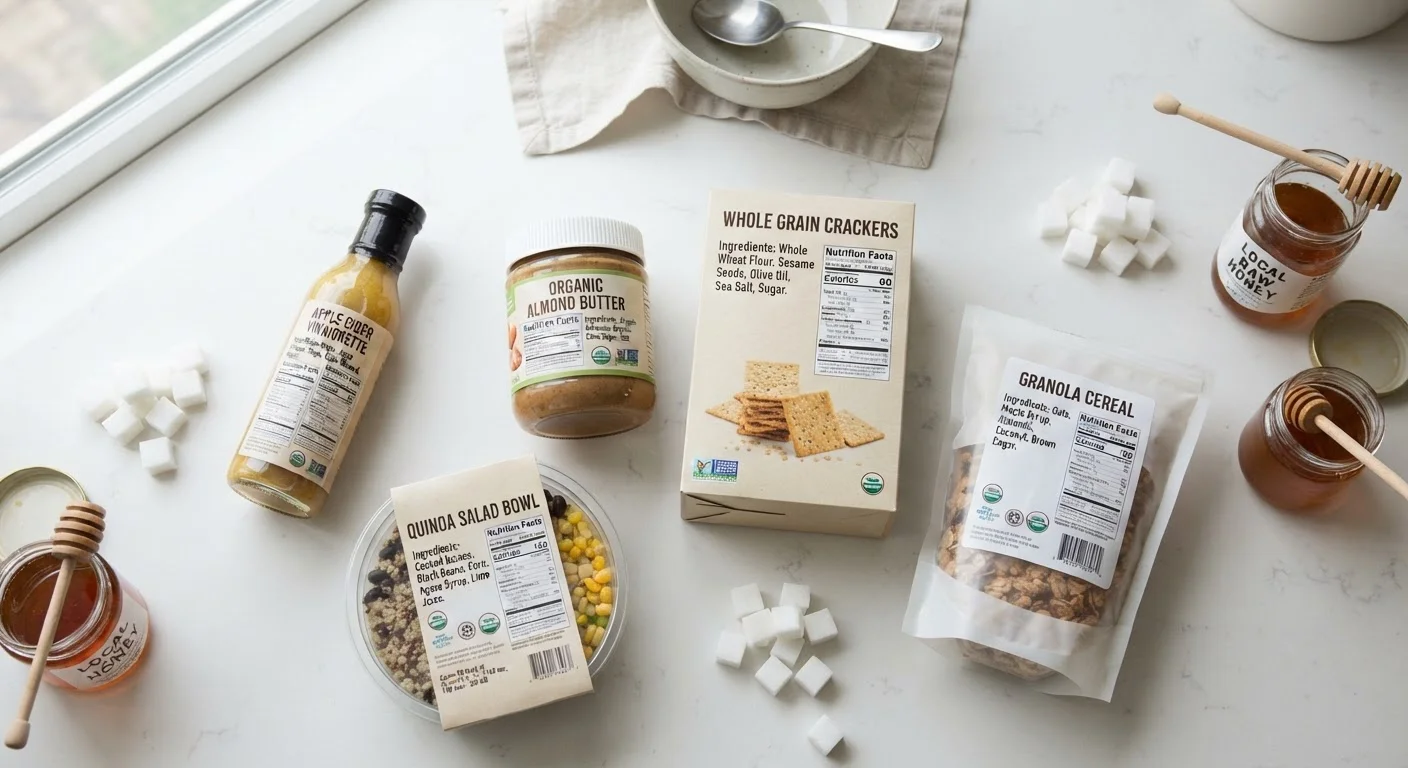
The Nutrition Facts panel tells you quantities; the ingredient list tells you sources. For instance, a label might show 10g of total sugars, but only the ingredient list reveals whether those sugars come from fruit or from added sweeteners. The two panels work together. See reading an ingredient list without getting lost for a practical guide to decoding that section.
Use Labels for Comparison, Not Perfection
Rather than aiming for a "perfect" label, use the panel to compare two similar options at the store - which has less sodium, more fiber, or fewer added sugars? Small consistent improvements across many choices add up over time. No single food makes or breaks an overall healthy eating pattern.
Nutrients to Watch - and Why
Most Americans consume too much sodium, saturated fat, and added sugar, and not enough fiber, vitamin D, calcium, and potassium. The label highlights this reality by grouping nutrients into two informal categories: those to limit and those to get enough of.
Limit these:
- Saturated fat - linked in research to cardiovascular risk when consumed in excess; aim to keep daily intake toward the lower end of your DV.
- Sodium - processed and packaged foods account for the majority of dietary sodium for most Americans. Even seemingly savory foods can carry surprising amounts.
- Added sugars - distinct from naturally occurring sugars in fruit or dairy, added sugars contribute calories without additional nutrients. For a deeper look at how they're disguised, see how added sugars hide on ingredient lists.
Seek more of these:
- Dietary fiber - supports digestive health and is associated with reduced risk of several chronic conditions.
- Vitamin D, calcium, iron, potassium - nutrients that many Americans fall short on. For a full breakdown of what vitamins and minerals do in the body, the micronutrients quick-reference guide is a useful companion resource.
Labels Reflect Averages, Not Your Needs
The %DV figures on every label are calculated using a 2,000-calorie reference diet established for general population guidance. People with specific health conditions, dietary restrictions, pregnancy, or different calorie needs should consult a registered dietitian or healthcare provider for personalized nutrient targets rather than relying solely on label benchmarks.
Once you're comfortable reading labels, you can apply this knowledge directly to building a balanced plate without counting every calorie - using portions and food variety rather than obsessive tracking.
This article provides general nutrition information and is not a substitute for personalized advice from a registered dietitian or qualified healthcare professional. Individual nutritional needs vary based on age, health status, and other factors.