Why the Label Says Almost Anything but 'Sugar'
Pick up a jar of tomato sauce, a container of yogurt, or a loaf of multigrain bread. Chances are, sugar is somewhere in the ingredient list - just not always called sugar. Food manufacturers use a wide vocabulary of sweetener names that are technically accurate but practically opaque to shoppers scanning a label in under ten seconds.
This matters because how much added sugar you consume across a day adds up quickly, especially when it's hiding in foods you'd never think of as sweet. Understanding the naming conventions is a practical literacy skill, not a nutrition-nerd hobby. For a broader foundation, see our guide on reading an ingredient list without getting lost.
Where Ingredient Lists and Nutrition Panels Work Together
The Nutrition Facts panel tells you how much added sugar is in a product; the ingredient list tells you what form it takes and how prominent it is. Neither source alone gives the full picture. Our article on the nutrition label explained section by section covers how these two parts of a food label complement each other.
A Taxonomy of Sugar Aliases
Rather than memorizing all 60-plus names, it helps to learn the categories. The vast majority of added sugar aliases fall into four groups:
- Syrups: High-fructose corn syrup, malt syrup, rice syrup, golden syrup, agave syrup, maple syrup. Anything labeled 'syrup' is a liquid sweetener.
- '-ose' endings: Fructose, dextrose, maltose, sucrose, glucose. These are individual sugar molecules or simple combinations of them.
- Juice concentrates: Apple juice concentrate, grape juice concentrate, and similar ingredients are essentially fruit-derived syrups stripped of most of their water and fiber.
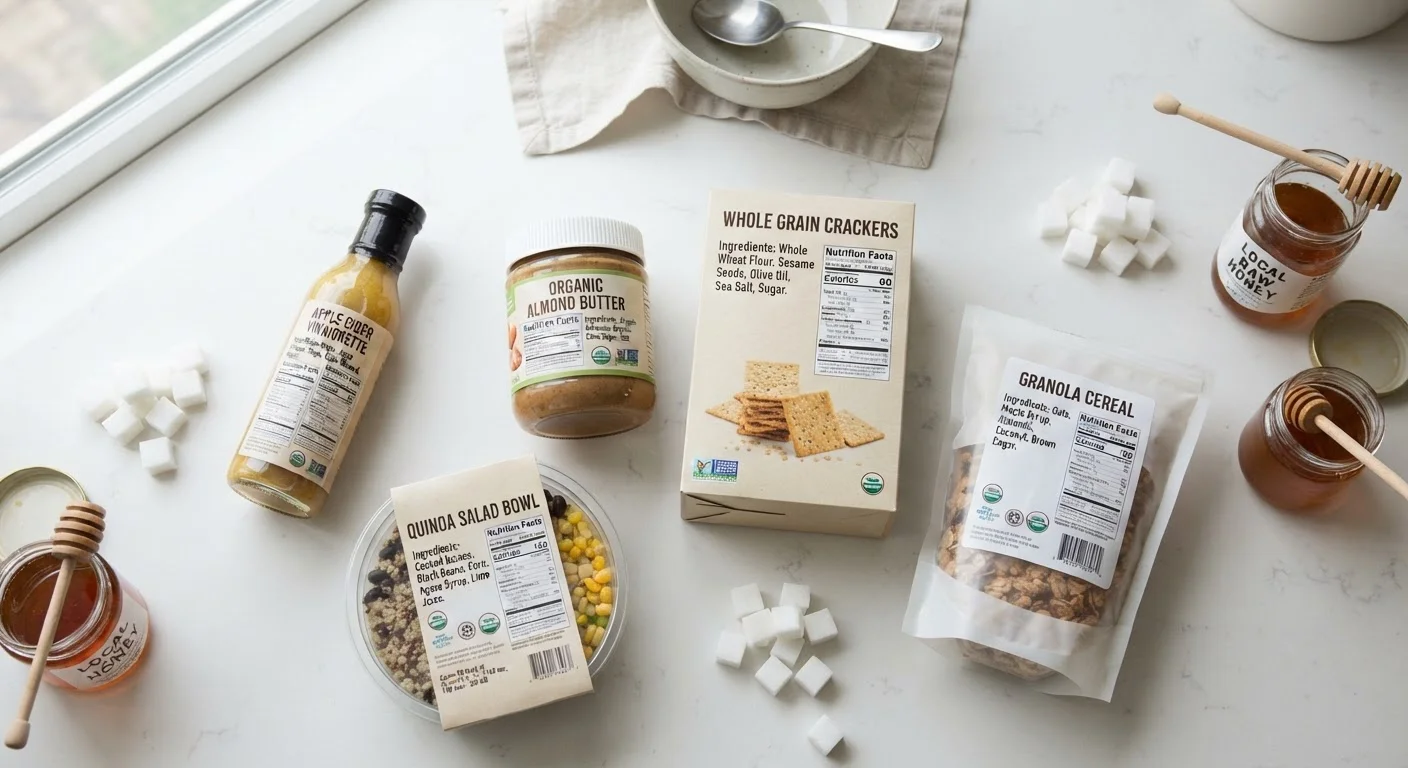
- Natural-sounding sweeteners: Coconut sugar, date sugar, honey, molasses, and cane juice crystals. These are still added sugars despite their wholesome branding.
A food can legally use multiple names from different categories, distributing smaller amounts of each across the list - a practice sometimes called sugar splitting. Each ingredient appears lower individually, even when their combined total is substantial.
60+
Names used for added sugars on labels
The FDA has identified over 60 distinct ingredient names that qualify as added sugars under current labeling regulations.
17 tsp
Average daily added sugar intake for U.S. adults
Data from the CDC's National Center for Health Statistics indicates the average American adult consumes roughly 17 teaspoons of added sugar per day.
50g
FDA Daily Value for added sugars
The FDA set the Daily Value reference amount at 50 grams (about 12 teaspoons) of added sugars per day, based on a 2,000-calorie diet.
Natural vs. Added: Why the Distinction Is Worth Making
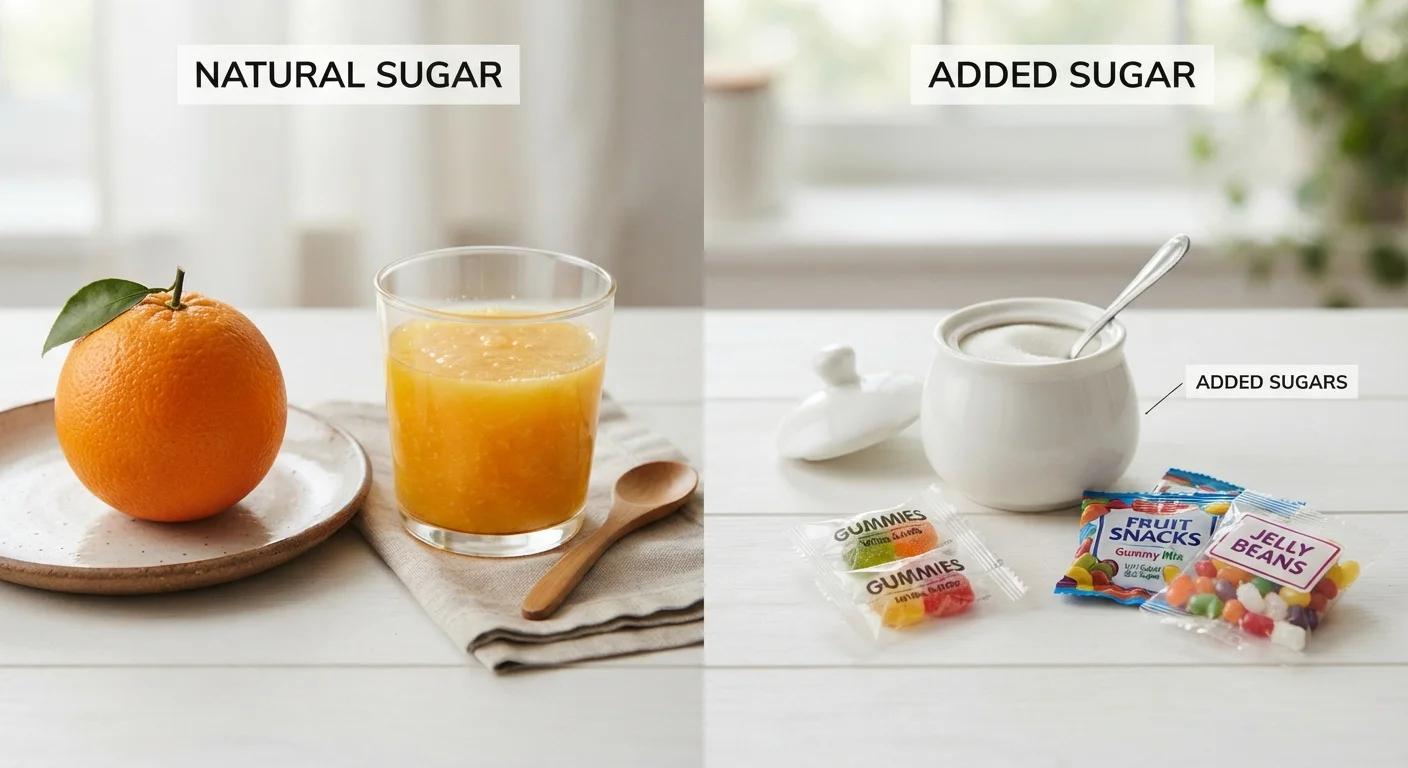
The chemistry of fructose in an apple and fructose in a sweetened beverage can be identical, but the food context around them is very different. Whole fruit delivers fiber, water, vitamins, and polyphenols alongside its natural sugars. That fiber slows digestion and moderates the rate at which sugar enters the bloodstream. A sweetened drink or processed snack typically delivers sugar without those accompanying nutrients.
This is why public health guidance focuses specifically on added sugars rather than total sugars. For a deeper look at the chemistry and context, our article on added sugar vs. natural sugar explains the distinction clearly.
“The problem isn't sugar itself - it's the sheer invisibility of how much we're consuming. When sweeteners travel under dozens of names, even motivated consumers find it hard to keep an accurate tally.”
— Marion Nestle, Professor Emerita of Nutrition, Food Studies, and Public Health, New York University
Using the Nutrition Facts Panel as Your First Check
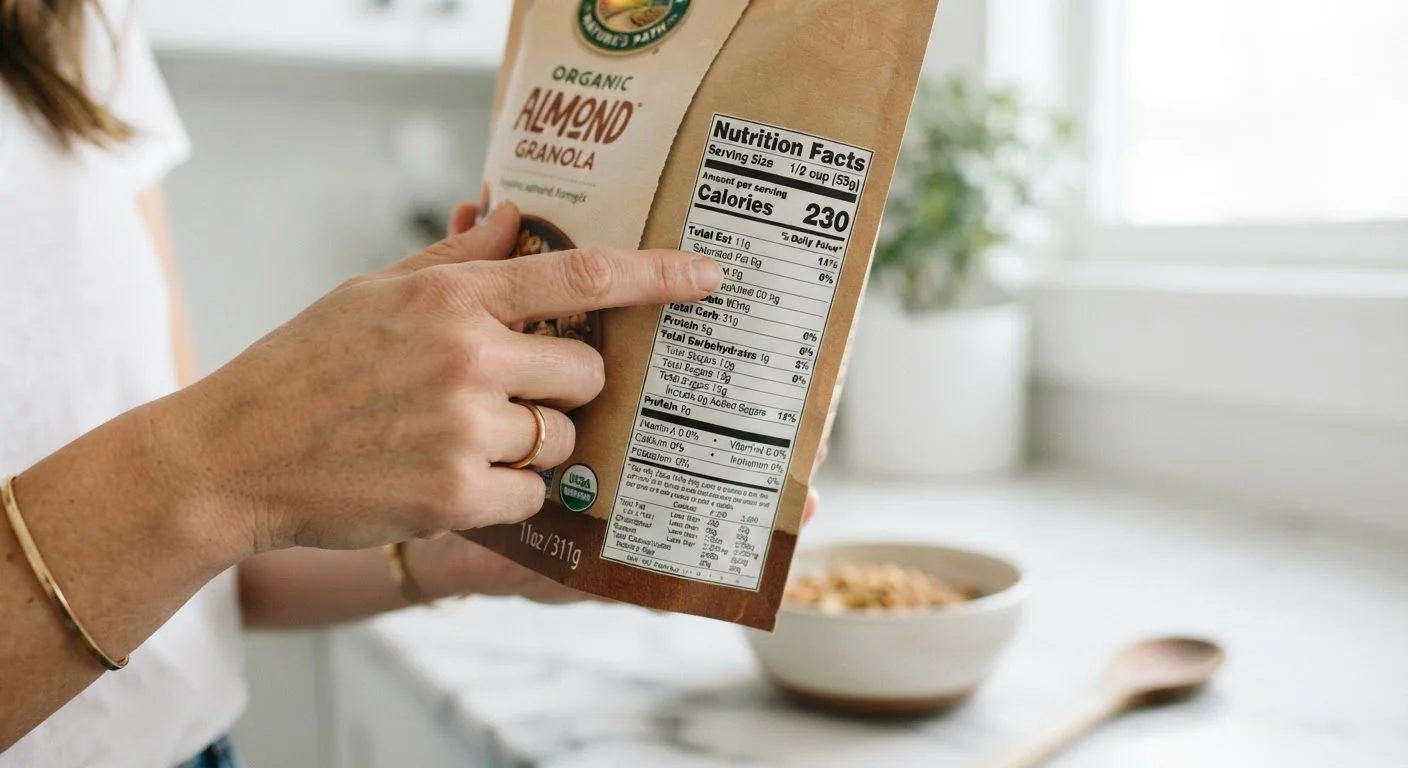
Before you even reach the ingredient list, the Nutrition Facts panel gives you a numerical shortcut. The updated U.S. label - required for most manufacturers - includes a line specifically for Added Sugars, shown in grams and as a percentage of the Daily Value. The FDA set that Daily Value at 50 grams per day based on a 2,000-calorie reference diet; many health organizations suggest aiming lower.
If the added sugars number is high, the ingredient list can tell you which aliases are responsible and how prominently they feature. A product with 15 grams of added sugar per serving and three sugar aliases in the top five ingredients tells a clearer story than either data point alone. For a full walkthrough of what each panel row means, see reading a Nutrition Facts label without getting lost.
A Quick Label-Reading Habit to Build
Start with the Added Sugars line on the Nutrition Facts panel to get a gram count, then glance at the ingredient list and count how many sugar aliases appear and how early they show up. This two-step check takes under 30 seconds and gives you a much clearer picture than either source alone. Over time, recognizing 'syrup,' '-ose,' and 'concentrate' becomes second nature.
This article is for general informational and educational purposes only and does not constitute medical or dietary advice. Consult a qualified healthcare professional or registered dietitian for guidance specific to your health needs.