How the Grocery Store Works Against You
Most shoppers enter the grocery store with genuine intentions - a mental list, a goal to eat better, maybe a new recipe to try. Yet research consistently shows that the majority of purchases deviate from what shoppers planned before they walked in. That gap isn't simply about willpower. Grocery stores are carefully designed environments, and understanding that design is the first step toward navigating it on your own terms.
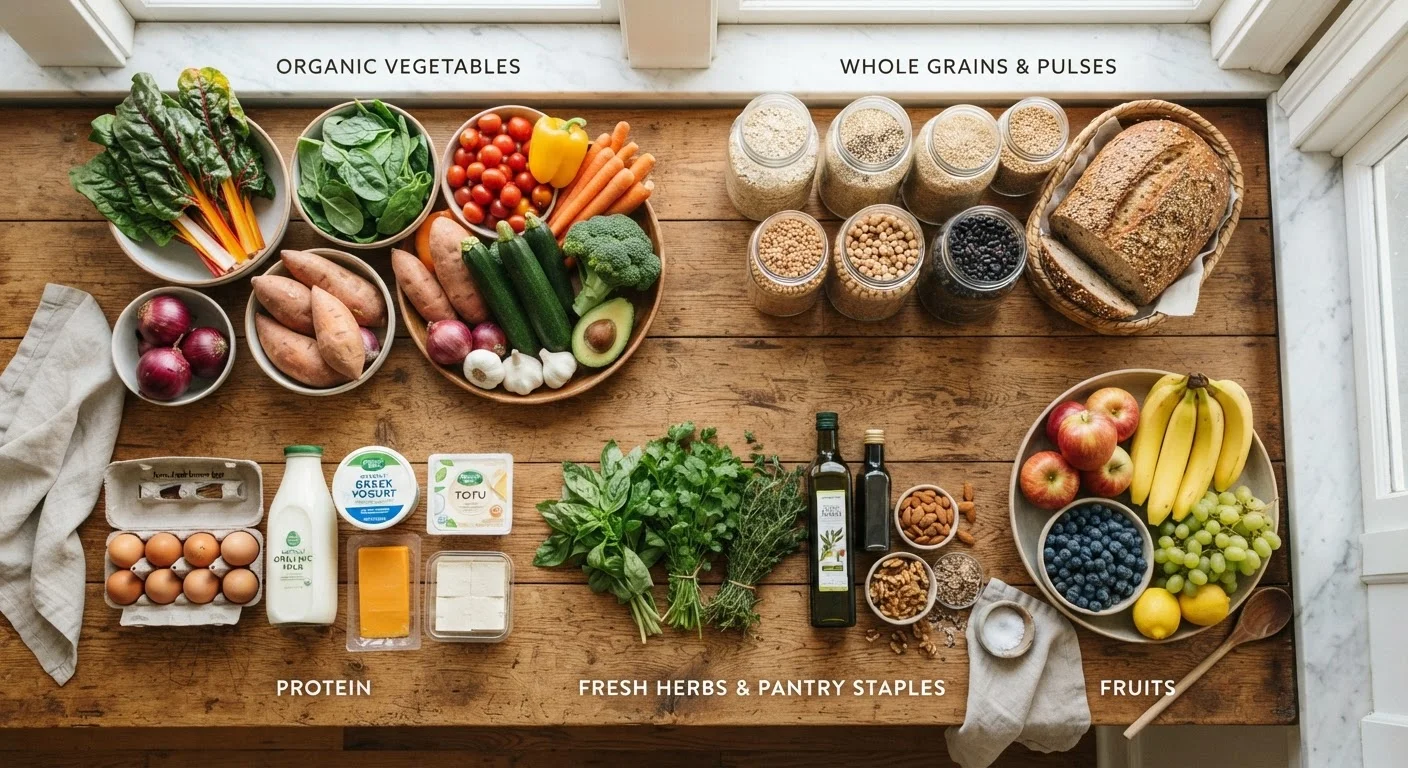
From the placement of produce at the entrance (signaling freshness and virtue) to the sugary snacks positioned at eye level near checkout, every square foot is optimized to influence purchasing behavior. Add in the crowded language of health claims on packaging, and even experienced shoppers can end up with a cart that doesn't reflect their values. The Healthy Eating Basics hub offers a strong foundation for understanding what balanced nutrition actually looks like - context that makes in-store decisions easier.
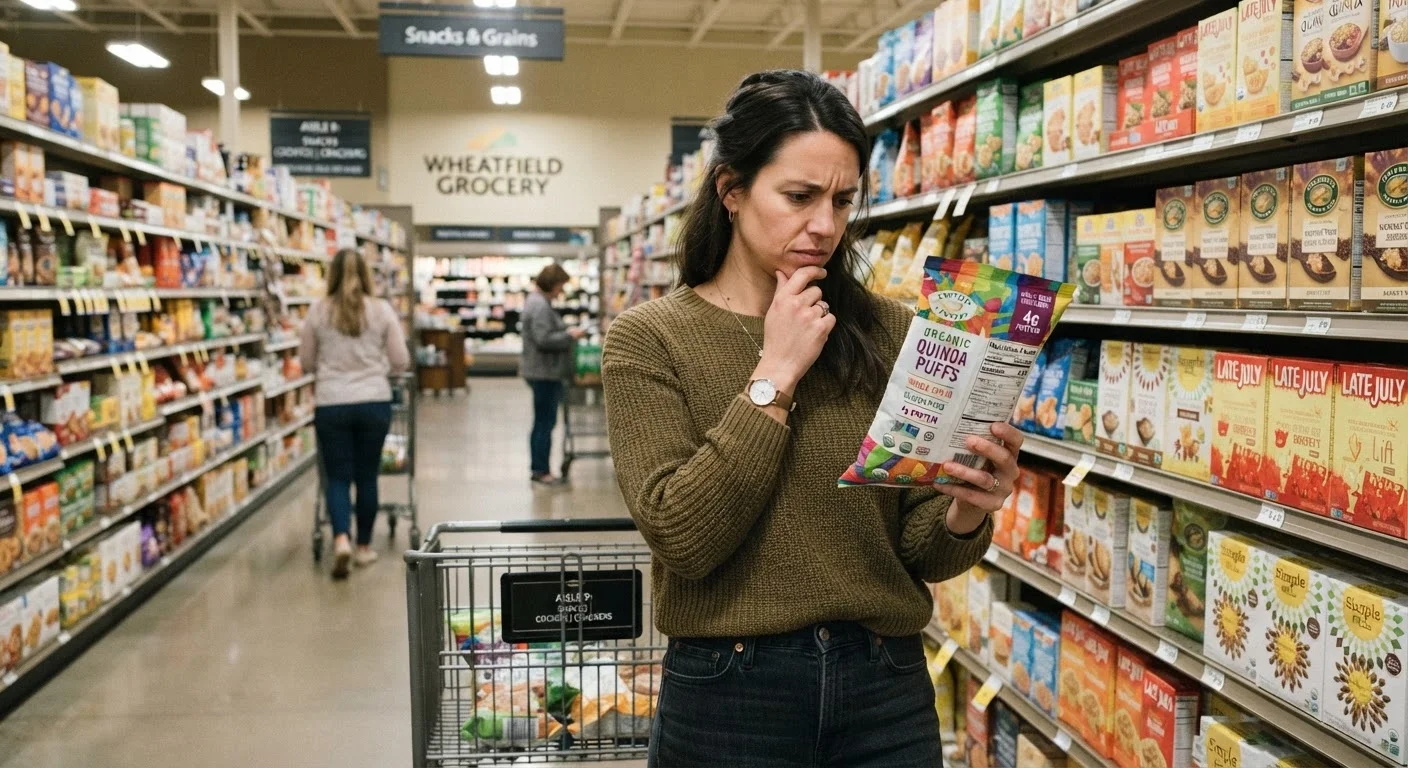
Trusting front-of-package health claims without reading the Nutrition Facts panel.
Why it happens: Terms like 'natural,' 'wholesome,' or 'made with real fruit' trigger automatic positive associations. Shoppers often use packaging language as a shortcut when time is short.
Assuming 'low-fat' or 'reduced sugar' automatically means healthier.
Why it happens: These claims highlight one removed ingredient, which sounds like an improvement. What often goes unnoticed is that removing fat or sugar frequently requires adding other ingredients - thickeners, sweeteners, or flavor enhancers - to compensate.
Shopping hungry, which amplifies impulsive, calorie-dense selections.
Why it happens: Hunger increases the perceived appeal of high-calorie foods and lowers the threshold for impulse decisions. This is well-documented in behavioral nutrition research.
Overloading on 'health halo' products that crowd out simpler whole foods.
Why it happens: Functional food marketing - protein-added, antioxidant-rich, gut-health-supporting - can make shoppers feel they're optimizing nutrition. These products often cost more and offer benefits achievable through less processed foods.
Neglecting unit price comparisons and buying bulk 'healthy' items that go to waste.
Why it happens: Larger packages of nutritious foods - nuts, seeds, whole grains - seem like good value, but overbuying perishables or items you'll use slowly leads to spoilage and ultimately doesn't support consistent healthy eating.
Making the Store Work for You Instead
Awareness of these patterns is genuinely useful, but awareness alone doesn't change habits. A few practical shifts can make a measurable difference in what ends up in your cart.
Shop with a written list. Planning meals before you shop - even loosely - gives you a framework to evaluate each purchase against. It also reduces the cognitive load that leaves you vulnerable to impulse decisions. For a category-by-category framework, the Grocery Shopping for Balanced Nutrition checklist is a practical starting point.
Read past the front of the package. The Nutrition Facts panel and ingredient list are standardized and regulated; the front-of-package claims are not. When evaluating a packaged food, flip it over. Ingredients are listed in descending order by weight - so if added sugar or refined flour appears near the top, that product leads with those components regardless of what the front label says. Our guide to reading an ingredient list walks through this process in plain terms.
Think about how foods will function between meals. Many items marketed as healthy snacks are high in added sugar or refined carbohydrates, providing short energy spikes rather than sustained nourishment. Understanding what makes a snack actually sustaining - protein, fiber, healthy fat - helps you evaluate options more accurately. Snacking Done Right covers those principles in depth.
~60%
Grocery purchases that are unplanned
Research published in the Journal of Marketing Research has estimated that a substantial majority of grocery store purchases are unplanned, highlighting the influence of in-store environment on shopper behavior.
80%+
Packaged foods with added sugars
An analysis of U.S. grocery store products found that more than 80% of packaged foods contain some form of added sugar, according to research supported by the University of North Carolina.
This article is for general informational and educational purposes only and is not a substitute for professional nutrition or medical advice. Consult a qualified healthcare provider or registered dietitian for guidance specific to your health needs.