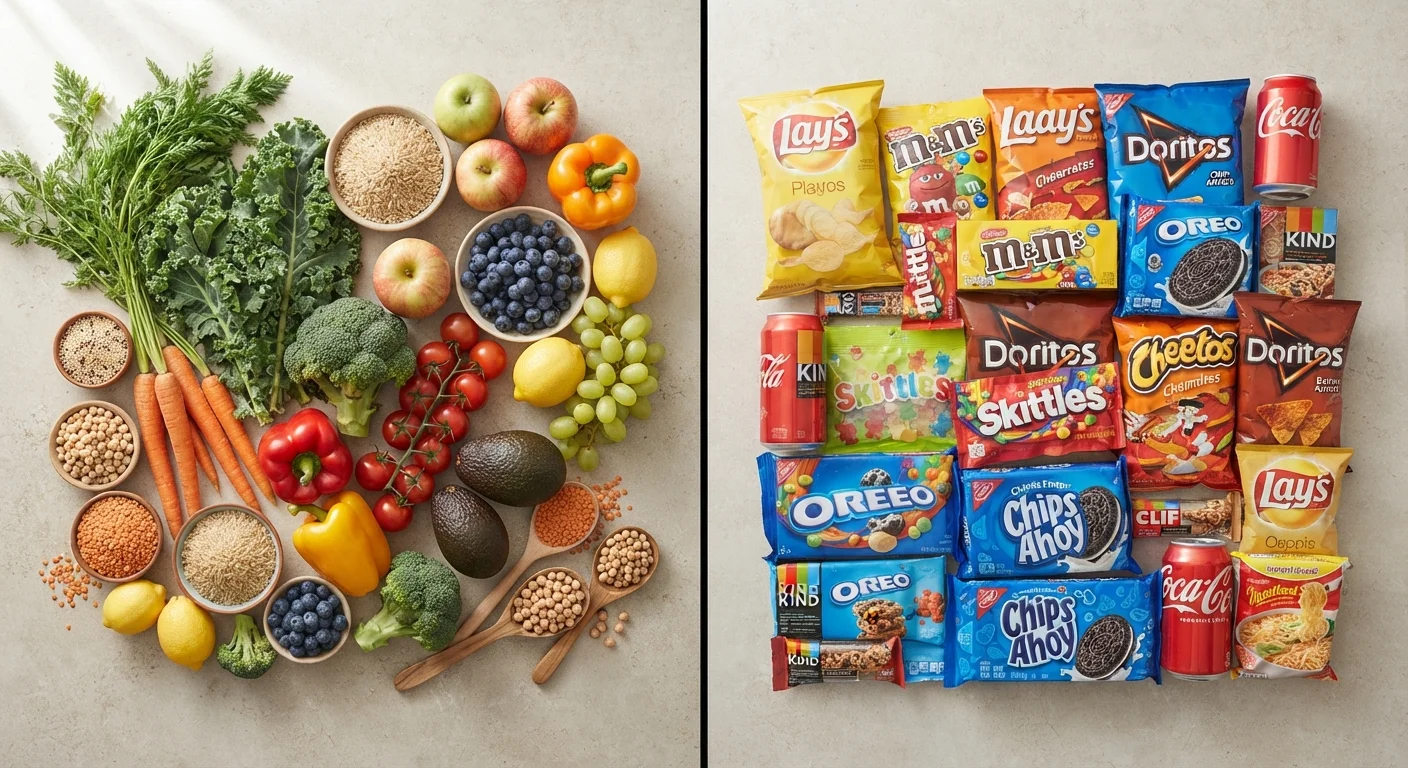
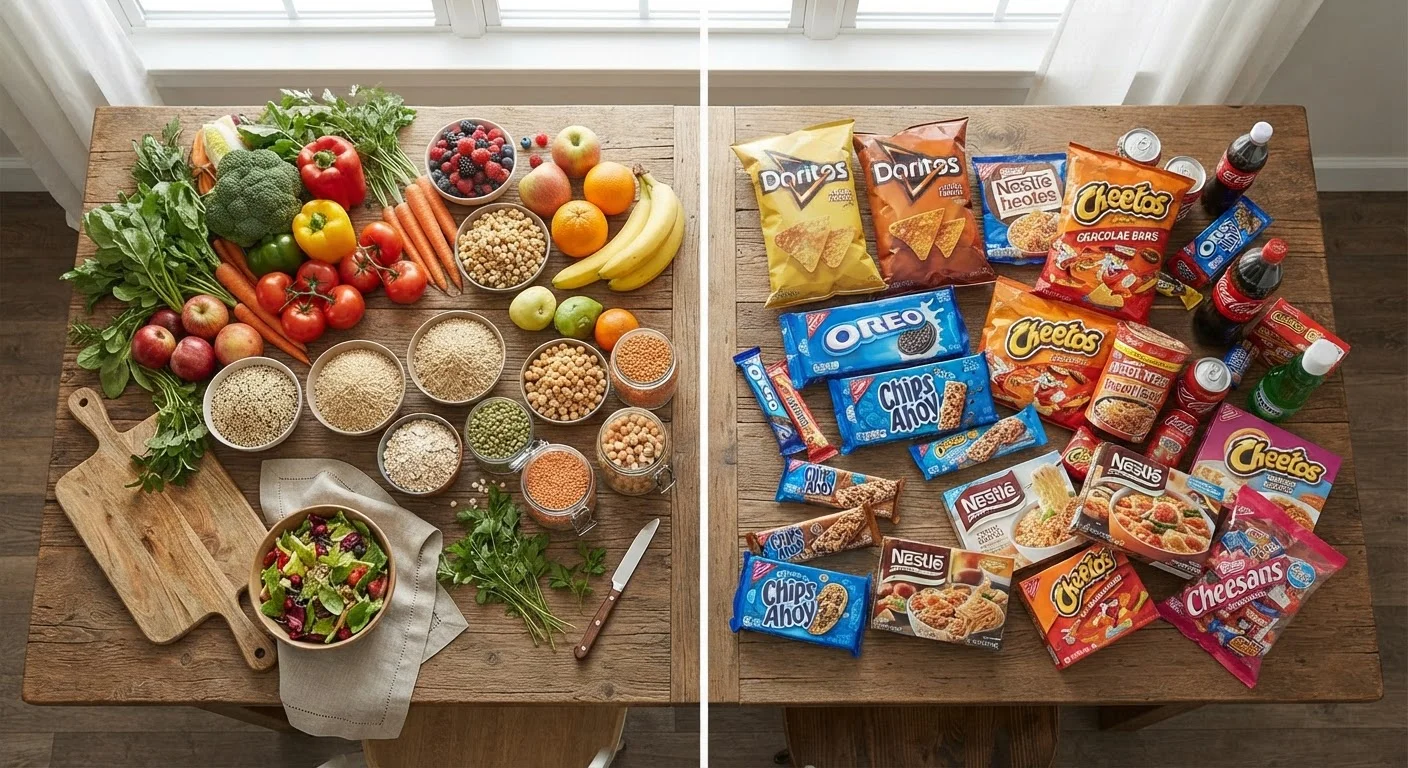
The Spectrum: What 'Processed' Actually Means
The word "processed" covers an enormous range of foods - from a bag of pre-washed spinach to a fluorescent-orange cheese puff. Treating these as equivalent would be misleading. Researchers and nutrition scientists commonly use frameworks like the NOVA classification to sort foods into four groups based on the extent and purpose of their industrial processing.
At one end sits minimally processed food: items like raw nuts, plain frozen vegetables, or pasteurized milk, where processing mainly extends shelf life or removes inedible parts without fundamentally altering nutritional composition. In the middle are culinary ingredients (flour, olive oil, salt) and processed foods that combine these with whole foods - think canned tomatoes with salt, or natural cheeses. At the far end are ultra-processed foods (UPF): industrially formulated products containing little or no whole-food ingredients, often loaded with additives, colorings, emulsifiers, and flavor enhancers. Packaged pastries, carbonated soft drinks, instant noodles, and many ready-to-eat breakfast cereals fall into this category.
Understanding where a food lands on this spectrum is more useful than a blanket fear of anything in a package. For a deeper look at how to parse these distinctions, see our guide to whole foods vs. processed foods.
| Criterion | Whole Foods | Processed Foods |
|---|---|---|
| Definition | Unaltered or minimally changed from natural state | Industrially modified; ranges from lightly to heavily altered |
| Fiber content | Naturally high; intact | Often reduced or absent, especially in UPF |
| Added sugars | None | Frequently elevated in ultra-processed products |
| Sodium levels | Low; naturally occurring | Often high, especially in packaged snacks and meals |
| Additives and preservatives | Absent | Common in processed; prevalent in ultra-processed |
| Convenience | Requires more preparation | Ready-to-eat or quick to prepare |
| Shelf life | Shorter; perishable | Extended, often significantly |
| Cost per serving | Varies; staples can be economical | Varies; convenience often adds cost |
Nutritional Trade-offs Across the Spectrum
Whole foods - vegetables, fruits, legumes, whole grains, eggs, plain meats - typically retain the fiber, vitamins, minerals, and phytonutrients that exist naturally in the ingredient. Fiber in particular plays a key role in digestive health, blood sugar regulation, and satiety. When grains are refined or fruits are processed into juices and snacks, much of this fiber is lost.
Ultra-processed foods often compensate for stripped nutrients with synthetic fortification, but the nutritional matrix - the way compounds interact in a whole food - is not fully replicated. Research published in major nutrition journals has consistently linked high UPF consumption with higher intakes of added sugars, saturated fat, and sodium, as well as lower intakes of fiber and micronutrients overall.
57%
Share of American calories from ultra-processed foods
A study published in BMJ Open estimated that ultra-processed foods account for roughly 57% of daily energy intake among U.S. adults.
~14g
Average daily fiber intake for U.S. adults
The Dietary Guidelines for Americans notes that most Americans consume well below the recommended 25-38 grams of dietary fiber per day.
4 groups
NOVA food processing classification categories
Developed by researchers at the University of São Paulo, the NOVA system is widely used in public health nutrition research to categorize foods by degree of industrial processing.
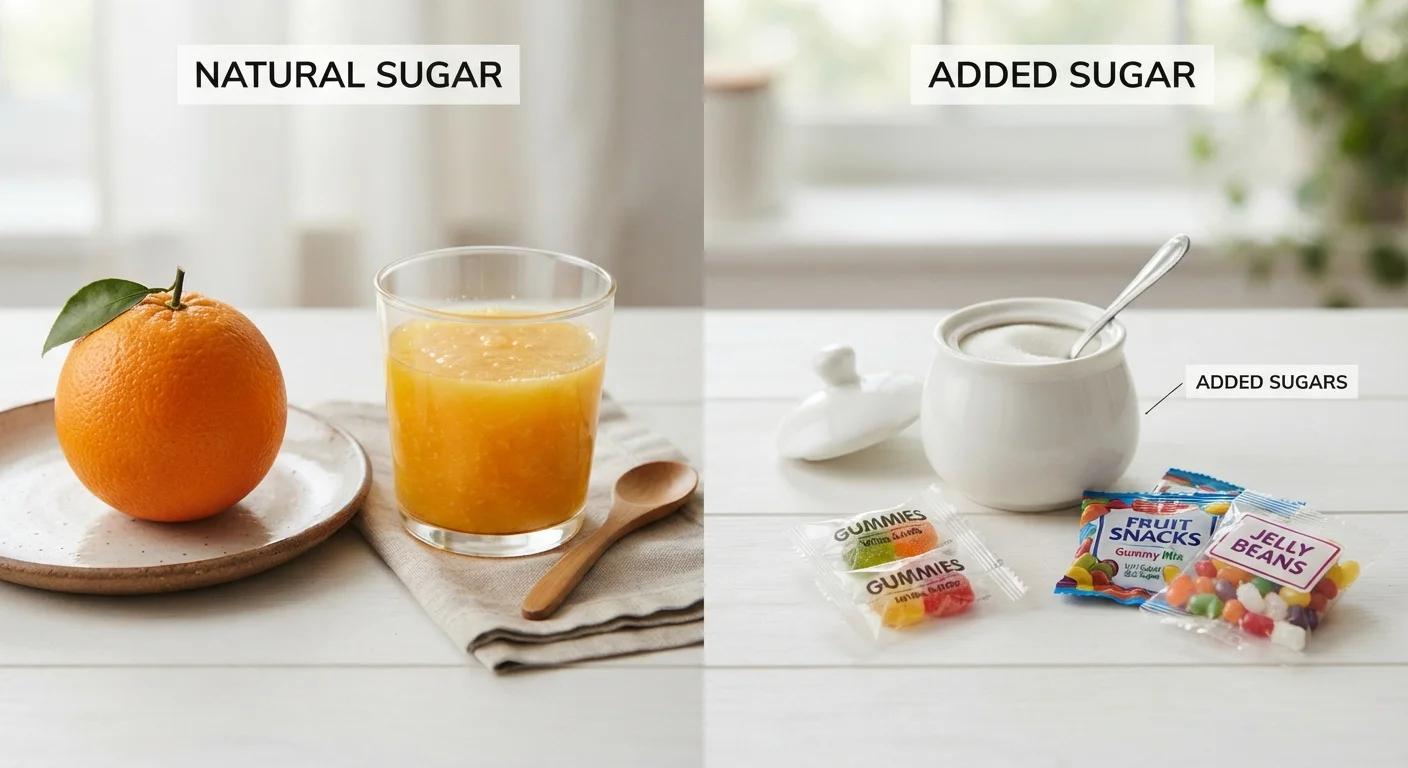
It's worth noting that some processing genuinely improves nutritional accessibility. Cooking tomatoes increases the bioavailability of lycopene. Fermenting dairy produces yogurt with beneficial probiotics. Fortifying milk with vitamin D addresses a widespread dietary gap. Context matters. For a related look at how food context affects nutritional value, our article on added sugar vs. natural sugar explores how the same molecule behaves differently depending on its source.
This article is for general informational purposes only and is not a substitute for advice from a qualified healthcare or registered dietitian professional.
Practical Habits for Shifting Toward Whole Foods
No single food determines overall diet quality - patterns do. A practical shift toward more whole and minimally processed foods doesn't require perfection or eliminating every convenience item. The most actionable approach focuses on ingredient lists: shorter lists with recognizable ingredients generally signal lower processing levels. Products with long ingredient lists featuring items like high-fructose corn syrup, partially hydrogenated oils, or dozens of numbered additives are likely ultra-processed.
How to Use the Ingredient List as a Quick Gauge
Ingredient lists are ordered by weight from most to least. If a refined grain, added sugar, or oil appears near the top, the product is likely highly processed. Identifying ingredients you wouldn't typically find in a home kitchen - such as maltodextrin, carrageenan, or artificial colorings - can signal a higher level of industrial processing. This isn't a perfect rule, but it's a practical starting point for everyday grocery decisions.
Building meals around whole-food anchors - a grain, a vegetable, a protein source - and then filling in with minimally processed items offers a sustainable middle ground. Canned beans, plain oats, and frozen fish are all processed to some degree but remain nutritionally valuable and practical. For broader context on how these choices fit into dietary patterns, our Healthy Eating Basics hub covers core principles of balanced nutrition. If you're evaluating a structured diet plan, the guide to reading special diet plans offers tools for navigating nutritional frameworks without getting overwhelmed.
Protein choices also intersect with processing level. Our comparison of animal vs. plant protein sources examines how both fit into everyday American diets at different levels of processing.