
Why Tight Budgets Make Emergency Funds More Critical - Not Less
It may seem counterintuitive to prioritize saving when income barely covers the bills. But households with little financial slack are more exposed to the consequences of an unexpected expense, not less. Without a cushion, even a $400 setback can force a choice between a high-interest payday loan, a credit card charge, or skipping a bill. That cycle is significantly harder to exit than it is to prevent.
A small emergency fund - even one that doesn't yet meet the three-to-six month standard - acts as the first line of defense against that cycle. You don't need a lot to start. You need a system. For context on how the fund-building process looks from the very beginning, see our related guide on building your first emergency fund from zero.
This Is Education, Not Personal Financial Advice
The strategies in this article are general financial education intended to help you understand common approaches to building savings. Everyone's financial situation is different. For guidance tailored to your specific circumstances - including debt obligations, income, and household needs - consider consulting a licensed financial professional.
If you want to clear up common misconceptions about fund size, account types, and what counts as an emergency, our article on common emergency fund myths is a helpful companion read.
What You'll Need Before You Start
What you will need
A separate savings account
Holds your emergency fund apart from everyday spending money, reducing temptation to use it.
Automatic transfer or payroll direct deposit split
Routes a set amount to savings on each payday without requiring a manual decision each time.
Written or app-based monthly budget
Gives you a clear picture of income, fixed costs, and discretionary spending so you can identify room to save.
Round-up savings app or feature
Rounds debit purchases to the nearest dollar and deposits the difference into savings automatically.
Step-by-Step: Building Your Fund
Set a realistic first milestone, not the full three-to-six month target
The conventional advice to save three to six months of living expenses is sound - but it can feel paralyzing when your budget is already stretched. Start with a smaller, concrete goal: $500 or $1,000. Research from institutions including the Federal Reserve and the Consumer Financial Protection Bureau (CFPB) consistently shows that even a small buffer meaningfully reduces the likelihood that a minor setback becomes a debt spiral. Once you hit your first milestone, you can recalibrate upward.
Map your current budget to find a contribution amount - however small
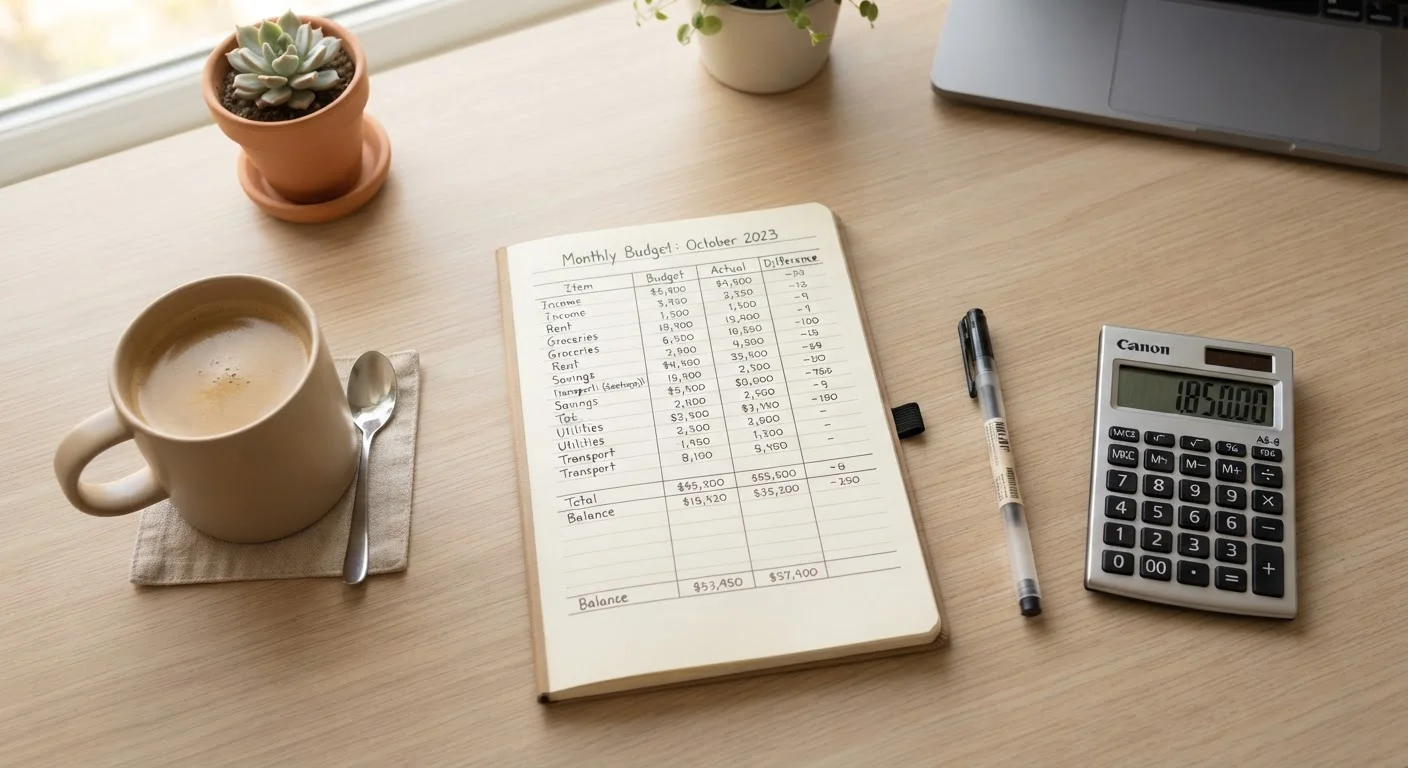
Before you can save consistently, you need a clear picture of where your money goes. If you haven't done this yet, see our step-by-step budget guide for a practical walkthrough. Once you have that map, look for a fixed, sustainable contribution - not your maximum possible save. Even $10-$25 per paycheck is a legitimate starting point. The goal right now is to establish the habit, not to maximize the number.
Open a dedicated savings account and automate the transfer
Keeping emergency savings in the same account as your spending money makes it far too easy to absorb it. Open a separate savings account - ideally one without a debit card attached - and set up an automatic transfer for your chosen amount on every payday. Many employers also allow you to split direct deposit across multiple accounts, which is even more effective because the money never touches your checking account. Removing the manual decision removes the friction point where most people fall off.
Layer in micro-saving tactics to accelerate without noticing
Beyond your fixed transfer, small supplemental tactics can move the needle faster. Consider:
- Round-up features: Many banking apps round each debit transaction to the nearest dollar and transfer the difference to savings automatically.
- Redirecting a specific category: If you underspend a budget line (say, you skipped a dinner out), immediately transfer that amount before it disappears into general spending.
- The "found money" rule: Any unexpected or irregular income - a side job, a rebate check - goes at least 50% into the fund before you spend any of it.
These additions compound over time without requiring a higher income. Be aware of habits that quietly undermine savings plans - small erosions in these tactics are often the culprit when progress stalls.
Protect the fund and define what counts as a true emergency
Before you need the money, decide clearly what qualifies as an emergency. A working definition: unexpected, necessary, and urgent - job loss, a medical expense not covered by insurance, a car repair required for work. Predictable irregular expenses (holiday gifts, annual subscriptions) are better handled with a sinking fund; see our guide on how sinking funds work for details. Having this definition written down helps you resist gray-area spending from the fund.
Replenish immediately after any withdrawal
If you use the fund for a legitimate emergency, treat replenishment as your next financial priority - ahead of increasing spending, but after meeting your required obligations. Restart your automatic transfer and, if possible, temporarily increase it slightly to rebuild faster. A depleted emergency fund is still a fund in progress; the habit and infrastructure you've built are the most valuable parts. For broader perspective on how saving interacts with debt, see balancing saving and debt repayment.
Use Windfalls as a Fast-Track Boost
Tax refunds, work bonuses, and cash gifts are excellent one-time opportunities to jump-start your fund. Even directing half of a modest windfall to savings while spending the rest can shorten your timeline significantly. You don't have to choose between enjoying money and building security.
Don't Raid the Fund for Non-Emergencies
An emergency fund is for genuine financial shocks: job loss, medical bills, urgent car repairs. Using it for predictable or discretionary expenses forces you to start over. If you find yourself dipping in repeatedly, that's a signal to revisit your budget structure - not to give up on the fund altogether.
Staying Consistent When Money Gets Even Tighter
There will be months when the contribution feels impossible. Rather than skipping entirely, try reducing it temporarily - even $5 keeps the habit and the automation in place. Stopping the transfer entirely, even with good intentions to restart, often leads to longer gaps than simply lowering the amount for a pay period or two.
Track your balance periodically - monthly is enough - so you can see progress accumulating. That visibility is one of the most reliable motivators in personal finance. Pairing this habit with an overall review of your monthly budget each month ensures that as your financial picture shifts, your savings strategy shifts with it.
This article is for general informational and educational purposes only and does not constitute personalized financial advice. Consult a qualified financial professional for guidance specific to your situation.