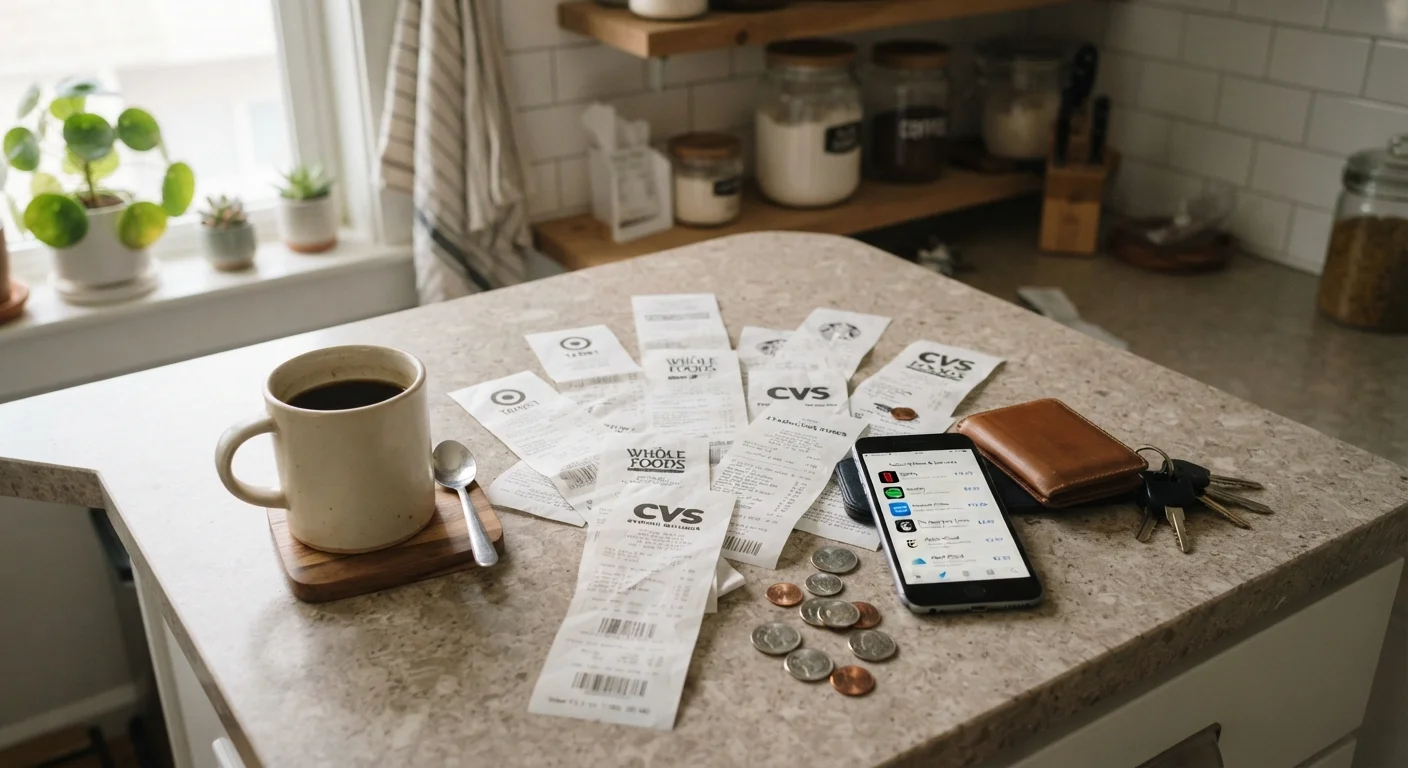

Why Small Habits Do More Damage Than Big Purchases
Most people mentally brace for big financial hits - an unexpected car repair, a medical bill, a slow month at work. What they rarely guard against are the small, routine behaviors that chip away at savings without triggering any alarm. Research in behavioral economics consistently shows that recurring low-cost decisions are harder to track and easier to rationalize than one-time splurges, which is exactly why they tend to do lasting damage. For a deeper look at why saving is structurally difficult for many households, see why Americans struggle to save.
The habits covered below are not about shaming ordinary spending. They're about shining a light on patterns that are easy to overlook - and relatively straightforward to adjust once you can see them clearly.
Saving whatever is left at the end of the month instead of saving first.
Why it happens: Most people think of savings as the surplus after all expenses are paid. But spending reliably expands to fill available income, so the surplus rarely materializes.
Keeping subscriptions running on autopilot without regular review.
Why it happens: Subscriptions are designed to be frictionless - they renew quietly, and individually feel too small to bother canceling. Over time, they accumulate into a significant monthly drain.
Setting vague savings goals with no defined target or timeline.
Why it happens: Abstract goals like 'save more' or 'build a cushion' feel motivating at first but provide no feedback mechanism. Without a measurable target, it's impossible to know whether you're on track.
Relying on memory instead of a system to track spending.
Why it happens: People consistently underestimate their spending in categories they perceive as small - coffee, delivery fees, convenience charges - because each transaction feels negligible in the moment.
Raiding savings for non-emergency expenses because the money is accessible.
Why it happens: When savings and spending accounts share the same bank interface, the boundary between them feels arbitrary. A sale, a convenience, or a desire becomes easy to justify as an 'exception.'
Turning Awareness Into Action
Recognizing a habit is the first step; replacing it is the second. The good news is that most of these patterns respond well to simple structural changes rather than requiring dramatic willpower or sacrifice.
Automate your savings first. Set up a recurring transfer to a dedicated savings account on or just after each payday. Even a modest fixed amount, moved before you have a chance to spend it, builds momentum quickly. For guidance on where to park that money, compare savings and money market accounts to understand your options.
Assign every savings goal a number and a date. "Save more" is not a goal - it's a wish. "Save $1,200 for an emergency fund by December" gives you a target to work backward from. The budgeting basics hub offers practical frameworks for structuring those targets inside a realistic monthly plan.
Run a subscription audit quarterly. Pull up your last two bank and credit card statements and flag every recurring charge. Cancel anything you haven't used in the past 30 days. This single habit can reclaim $50-$150 a month for many households - money that can be redirected immediately. For more on tracking these small spending leaks, our companion article walks through a step-by-step approach.
Build a starter emergency fund, even inside a tight budget. Without a financial cushion, any unexpected expense becomes a savings setback. Building an emergency fund on a tight budget is possible with incremental contributions - the key is consistency, not size.
Dipping Into Savings 'Just This Once' Adds Up
Each withdrawal from savings resets your momentum and compounds the time it takes to reach your goal. Studies in behavioral finance suggest that people who make even occasional unplanned withdrawals are significantly less likely to reach their savings targets than those who treat the account as off-limits. If you find yourself regularly raiding savings, that's a signal your monthly budget needs adjustment - not that your savings goal should be loosened.
This article is for general informational purposes only and does not constitute personalized financial advice. Consult a qualified financial professional for guidance specific to your situation.