How Envelope Budgeting Works
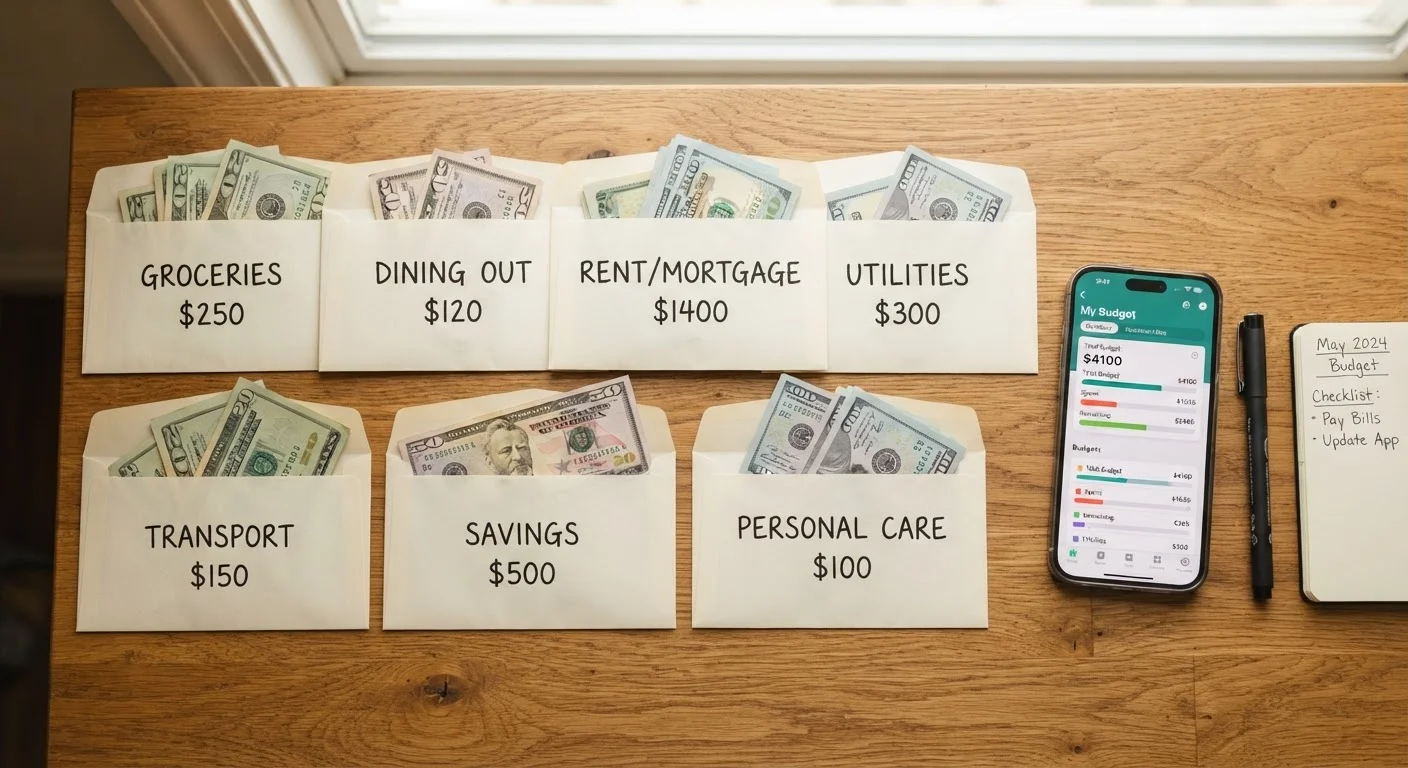
The envelope method is straightforward: at the start of each pay period, you divide your take-home income into labeled envelopes - one for groceries, one for dining out, one for gas, and so on. When an envelope is empty, spending in that category stops until the next pay period. No borrowing from tomorrow, no fudging the numbers.
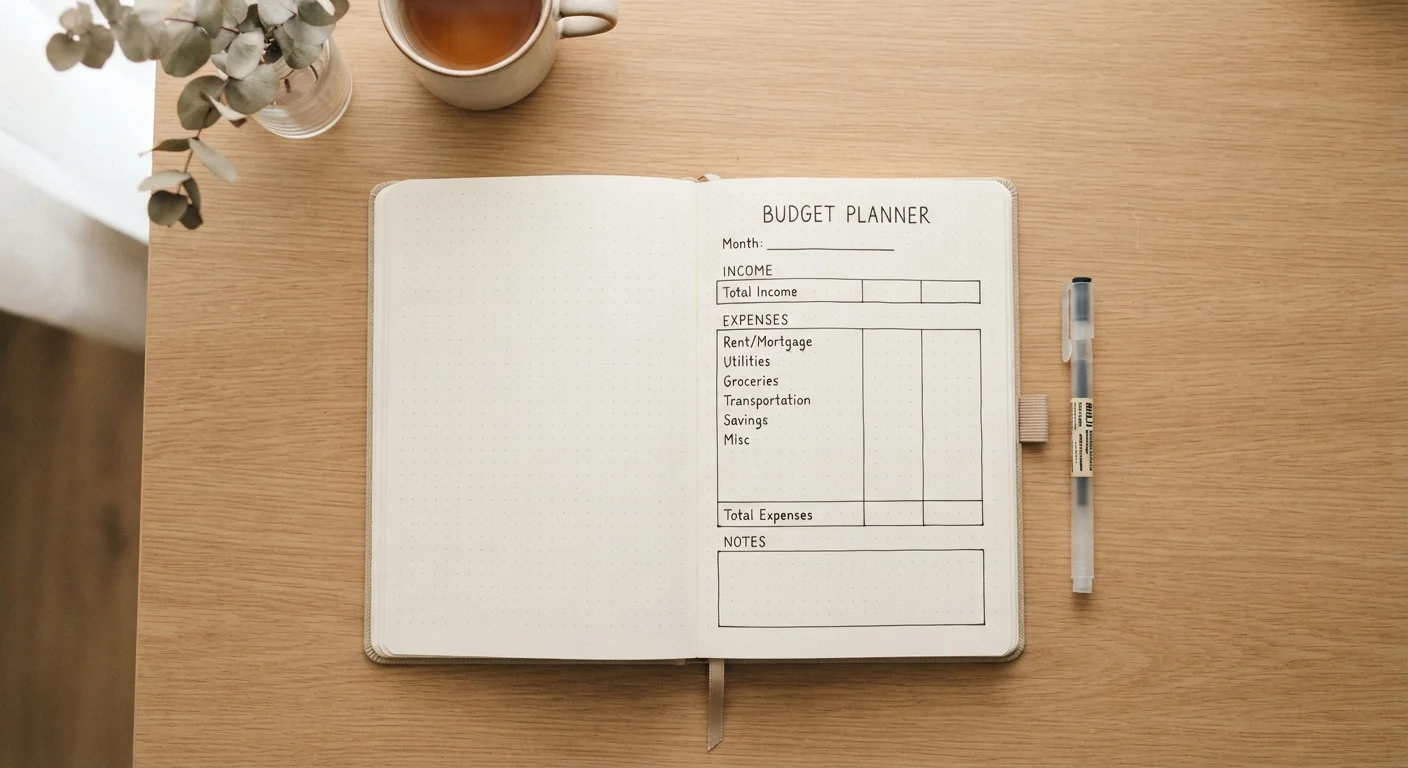
Traditionally this meant physical cash and literal paper envelopes, which is why the method predates spreadsheets by generations. The underlying logic, however, is the same as what financial educators now call zero-based budgeting - every dollar gets a job. If you want to see how envelope thinking compares to other structured approaches, our budgeting method comparison walks through the most common frameworks side by side.
Fixed expenses like rent and utilities typically sit outside the envelope system - those bills don't fluctuate much month to month. The envelopes govern the flexible, day-to-day spending that most people find hardest to control.
The Psychological Case for Envelope Budgeting
Part of what makes this method endure is behavioral, not mathematical. Research in consumer psychology consistently shows that people spend more freely when paying by card than with cash - a phenomenon sometimes called the pain of paying. Handing over physical bills registers as a real loss in a way that a tap-to-pay transaction simply doesn't.
~83%
Americans who primarily use non-cash payments
According to the Federal Reserve's Diary of Consumer Payment Choice, the vast majority of U.S. transactions are now made by card or digital means, creating a practical challenge for cash-based envelope systems.
12-18%
Typical overspend in discretionary categories
Consumer spending research suggests people routinely underestimate how much they spend on food, entertainment, and personal care - exactly the categories envelope budgeting targets.
Envelope budgeting forces a moment of decision at the point of spending: is this purchase worth emptying - or nearly emptying - this envelope? That friction is the feature, not a flaw. It turns vague category limits into something you can see and feel, which matters enormously for people who struggle with abstract digital balances.
If you're curious about other misconceptions that prevent people from budgeting at all, common budgeting myths are worth understanding before you pick any system.
Pros and Cons of the Envelope Method
Like any budgeting framework, envelope budgeting has genuine strengths and real limitations. Understanding both helps you decide whether it fits your life - or how to adapt it so it does.
Makes spending limits concrete and visible
Seeing a dwindling envelope - physical or digital - creates real-time awareness of how much remains in a category, which abstract account balances rarely achieve.
Stops overspending in problem categories
By capping each category at the start of the period, the method removes the opportunity to rationalize excess spending after the fact.
Simple enough to start without special tools
All you need is a budget, some envelopes, and cash - or a basic spreadsheet. There's no learning curve or subscription required to get started.
Builds intentional spending habits over time
Regularly allocating and tracking money by category trains attention toward spending patterns, helping people identify where their money actually goes.
Works well alongside other budgeting frameworks
Envelope logic can be layered onto the 50/30/20 rule or zero-based budgeting - you allocate your needs, wants, and savings buckets, then use envelopes within the 'wants' portion.
Carrying cash is inconvenient and less secure
Lost or stolen cash is generally unrecoverable, and many people find withdrawing specific amounts each pay period logistically awkward in a card-dominated economy.
Difficult to manage with variable or irregular income
When monthly income fluctuates - common for freelancers, gig workers, or tipped employees - deciding envelope amounts in advance becomes a guessing exercise.
Doesn't account for digital subscriptions and auto-payments
Streaming services, insurance premiums, and other automatic charges don't fit neatly into a cash-envelope system without additional tracking steps.
Can feel rigid when unexpected expenses arise
A car repair or medical copay can blow through a category envelope, leaving people unsure whether to stop spending, borrow from another envelope, or abandon the system.
Requires consistent manual effort to maintain
Unlike automated savings or category-tracking apps, traditional envelope budgeting demands regular attention - withdrawing cash, sorting it, and resisting the temptation to raid other envelopes.
For a fuller picture of how zero-based logic (which envelope budgeting closely resembles) stacks up against the popular 50/30/20 rule, see our zero-based budgeting comparison.
Adapting Envelope Budgeting for a Digital World
Most everyday spending today happens on debit cards, credit cards, or mobile payment apps - not with cash. That doesn't make envelope budgeting obsolete; it just means the envelopes need to go digital.
Digital Envelope Apps: What to Look For
If you want to go fully digital, look for apps that let you create named spending categories, manually assign funds to each at the start of the month, and show a running balance as you spend. The key feature is the ability to fund categories from your income - not just track spending after the fact. Manual transaction entry, even when the app could auto-import, is worth considering for the awareness it builds.
Several budgeting apps are built explicitly around envelope logic, allowing users to create virtual spending categories, fund them at the start of the month, and track real-time balances as transactions post. Some people take a simpler approach: a spreadsheet with a column per category, updated manually after each purchase.
The manual update step matters. The act of recording a transaction - even typing a number into a cell - recreates some of the psychological friction that physical cash provides. Automating everything can strip away exactly the awareness the method is designed to build. Our guide to tracking every dollar explores practical methods for keeping that awareness alive, from notebooks to apps.
If you're starting from zero and want to build a complete monthly budget around envelope logic, building a simple monthly budget from scratch provides a step-by-step walkthrough.
This article is for general informational and educational purposes only and does not constitute personalized financial advice. Consult a qualified financial professional for guidance specific to your situation.