Breaking Down the Three Categories
Understanding what belongs in each bucket is the first step to applying this framework effectively.
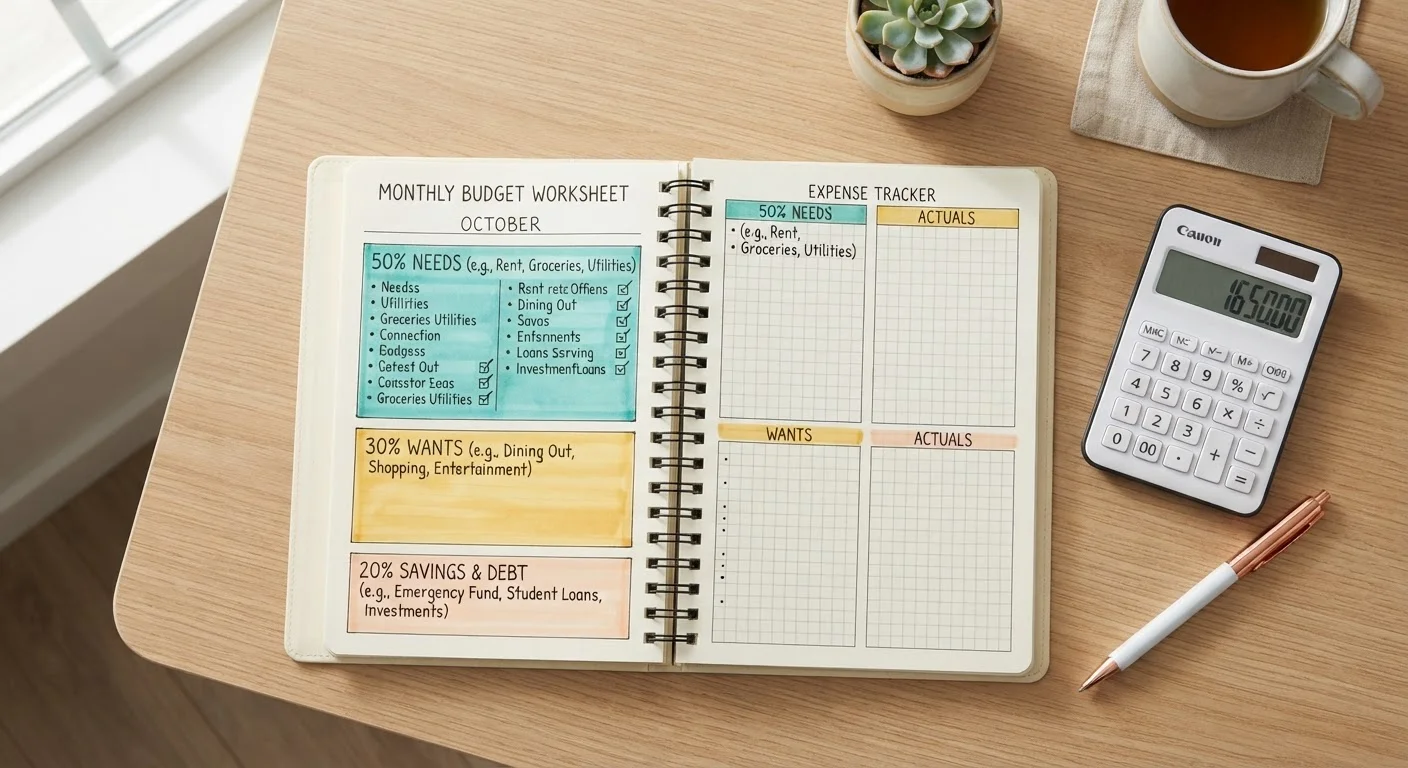
50% - Needs
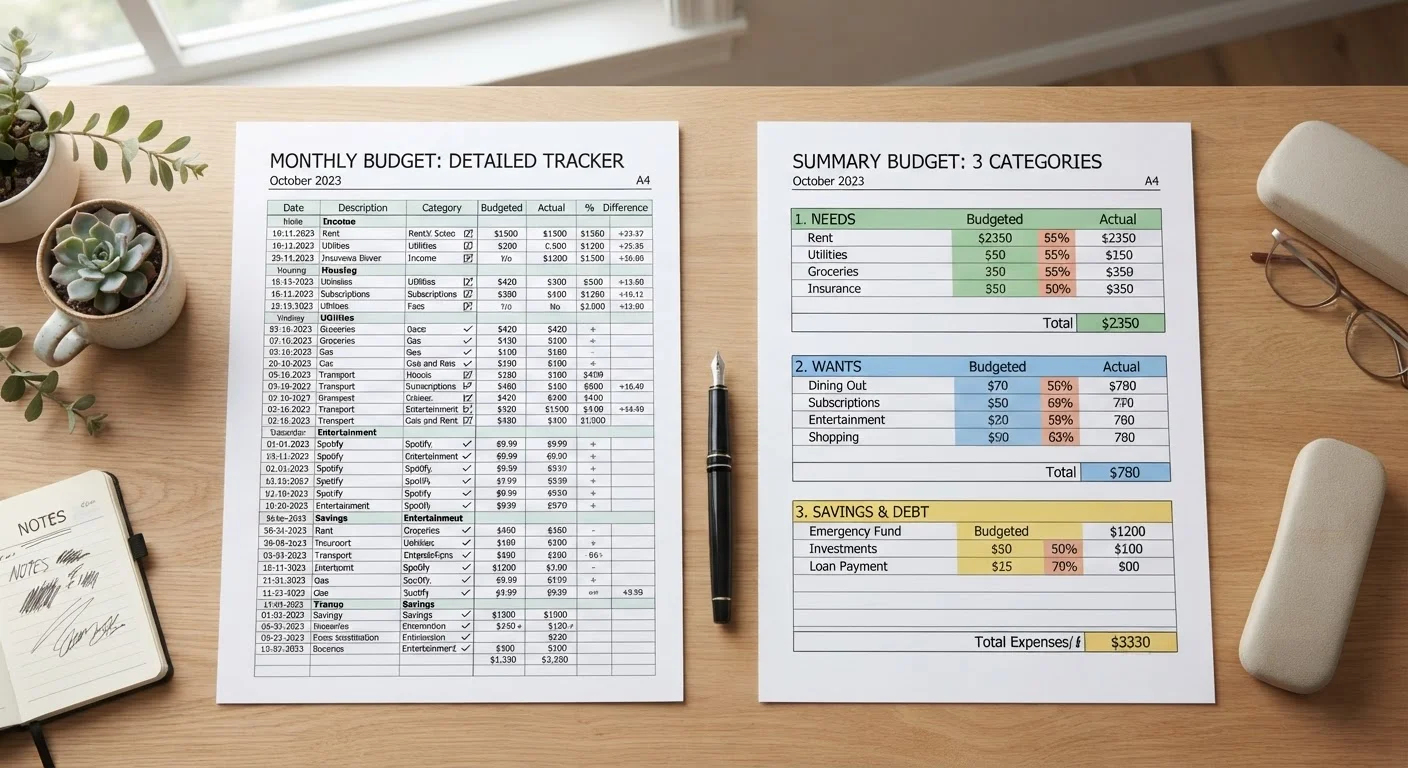
Needs are non-negotiable monthly expenses: rent or mortgage, utility bills, groceries, health insurance premiums, minimum loan payments, and transportation costs required for work. A useful test: if skipping it would result in losing your home, your job, or your health coverage, it's a need.
30% - Wants
Wants cover the quality-of-life spending that makes everyday life enjoyable but isn't strictly required for survival. Think streaming services, dining out, vacations, new clothes beyond basic replacements, and hobby expenses. The 30% bucket doesn't mean spend recklessly - it means spend intentionally, with a ceiling.
20% - Savings and Debt Repayment
This slice covers emergency fund contributions, retirement account deposits (like a 401(k) or IRA), and any extra payments above the required minimum on debts. Financial educators often recommend building a three-to-six month emergency fund before aggressively investing, though the right sequence depends on your personal situation. Consulting a licensed financial adviser can help you prioritize here.
57%
Americans living paycheck to paycheck
A 2023 LendingClub report found that 57% of U.S. consumers described themselves as living paycheck to paycheck, underscoring why a clear spending framework can matter.
30%+
Renters who are cost-burdened
The Harvard Joint Center for Housing Studies has documented that roughly half of U.S. renters spend more than 30% of income on housing, often making the 50% needs target difficult to achieve.
20%
Recommended savings and debt-payoff rate
Financial planning professionals broadly agree that directing at least 15-20% of income toward savings and debt reduction is a sound long-term target for most earners.
Where the Rule Works Well
The 50/30/20 rule earns its popularity for a few specific reasons. First, its simplicity lowers the barrier to entry. For someone who has never budgeted before, tracking three categories is far less intimidating than accounting for every individual transaction. Research consistently shows that complex systems tend to be abandoned - the 50/30/20 rule's strength is that it's easy enough to actually use.
Second, it provides flexibility within structure. You're not told how to spend your 30% wants allocation - that's your call. This reduces the feeling of deprivation that causes many detailed budgets to fail.
Third, it scales reasonably well for middle-income earners with predictable paychecks. If your take-home pay lands in a range where your housing costs sit close to 25-30% of income, hitting the 50% needs ceiling is realistic.
Start With One Month of Real Spending Data
Before deciding whether the 50/30/20 rule fits your life, spend one month simply recording what you actually spend and categorizing each expense as a need or want. Real spending data beats estimates every time. You may find your needs are already close to 50% - or discover that your wants category has been quietly running well above 30%.
Where the Rule Falls Short
The 50/30/20 rule has real limitations worth acknowledging honestly.
Housing Costs Can Break the Model
In many U.S. metro areas, rent alone can consume 40-50% of take-home pay for moderate-income earners. According to the Harvard Joint Center for Housing Studies, a significant share of American renters are "cost-burdened," meaning they spend more than 30% of gross income on housing. When housing alone exceeds half the needs budget, the math simply doesn't work without cuts elsewhere.
Lower Incomes Face Structural Barriers
The rule assumes there is discretionary income to allocate. For households earning at or near the federal poverty level, nearly all income may go to needs - leaving little room for a 30% wants category or a 20% savings category. Applying the framework rigidly in this situation can create discouragement rather than progress.
Irregular Income Complicates Fixed Percentages
Freelancers, gig workers, and anyone with variable earnings can struggle with a percentage-based system that assumes a consistent monthly baseline. Other budgeting methods, such as pay-yourself-first or zero-based budgeting, may be a better fit for variable income situations.
Irregular Income? Try a Baseline Budget
If your earnings vary month to month, calculate your lowest reliable monthly income and build your 50/30/20 allocations from that number. Treat any income above the baseline as a bonus directed first toward your savings category. This approach keeps your essential obligations covered even during slow months while still using a percentage-based structure.
How to Adapt the Framework for Your Situation
The most useful thing to know about the 50/30/20 rule is that the percentages are adjustable. The underlying principle - deliberately directing income across essential spending, discretionary spending, and future-building - is what matters. If your needs consistently run at 60%, try a 60/20/20 split. If you're in aggressive debt-payoff mode, shift toward 50/20/30 to funnel more into repayment.
Start by calculating your actual after-tax monthly income. Then total up your fixed expenses and sort them into needs versus wants. The gap between where your money currently goes and what the framework suggests often reveals where small changes could have the biggest impact.
For a broader look at how the 50/30/20 rule compares to other approaches, see our side-by-side comparison with zero-based budgeting. And if you've struggled to stick with a budget in the past, common budgeting myths may be worth examining before you restart.
This article is for general informational and educational purposes only and does not constitute personalized financial advice. Consider speaking with a qualified financial adviser about decisions specific to your circumstances.