How Each Method Actually Works
Understanding what makes these two approaches different starts with their core mechanics - not just their names.
Zero-based budgeting (ZBB) means starting from zero every month and assigning each dollar of your take-home income to a specific category - housing, groceries, utilities, savings, debt payments, entertainment, and so on - until nothing remains unassigned. The goal isn't to spend everything; it's to give every dollar a deliberate purpose. If you earn $4,200 this month, your budget line items should add up to exactly $4,200.
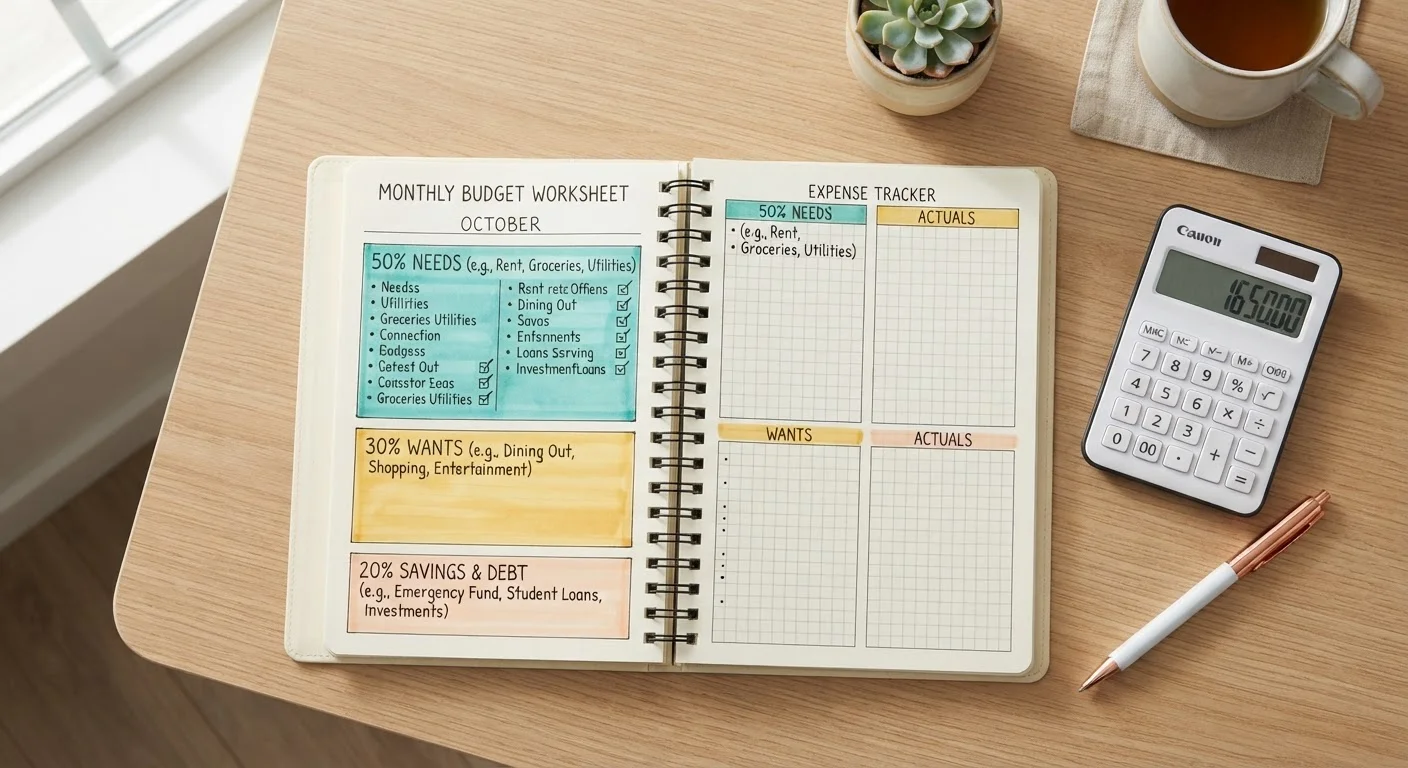
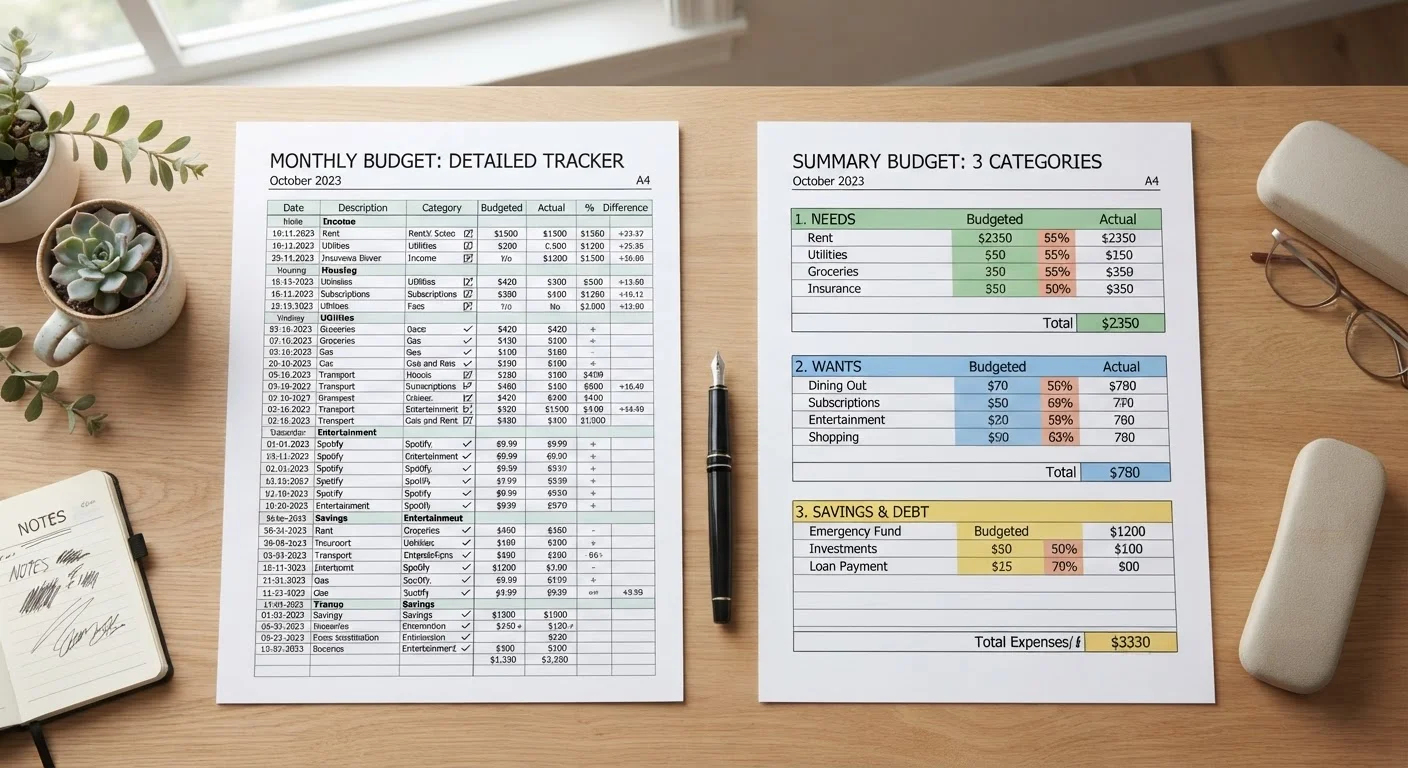
The 50/30/20 rule, popularized in part by Senator Elizabeth Warren and her daughter Amelia Warren Tyagi in their book All Your Worth, divides your after-tax income into three wide categories: 50% toward needs (rent, utilities, groceries, insurance), 30% toward wants (dining out, subscriptions, travel), and 20% toward savings and debt repayment. For that same $4,200 paycheck, you'd aim for roughly $2,100 in needs, $1,260 in wants, and $840 toward your financial future.
For a deeper look at how the 50/30/20 framework handles edge cases, see how it works and when it falls short.
| Criterion | Zero-Based Budgeting | The 50/30/20 Rule |
|---|---|---|
| Core concept | Assign every dollar a job | Split income into three buckets |
| Setup time | 1-2 hours per month | Under 1 hour to start |
| Ongoing tracking | Regular, category-level | Periodic, bucket-level |
| Best income type | Variable or irregular | Stable, predictable |
| Flexibility mid-month | Requires reallocation | Adjusts within buckets |
| Savings visibility | Precise, line-item control | 20% target, less granular |
| Learning curve | Moderate to steep | Low |
Time Commitment and Ongoing Effort
One of the biggest practical differences between these methods is how much time they demand once you've set them up.
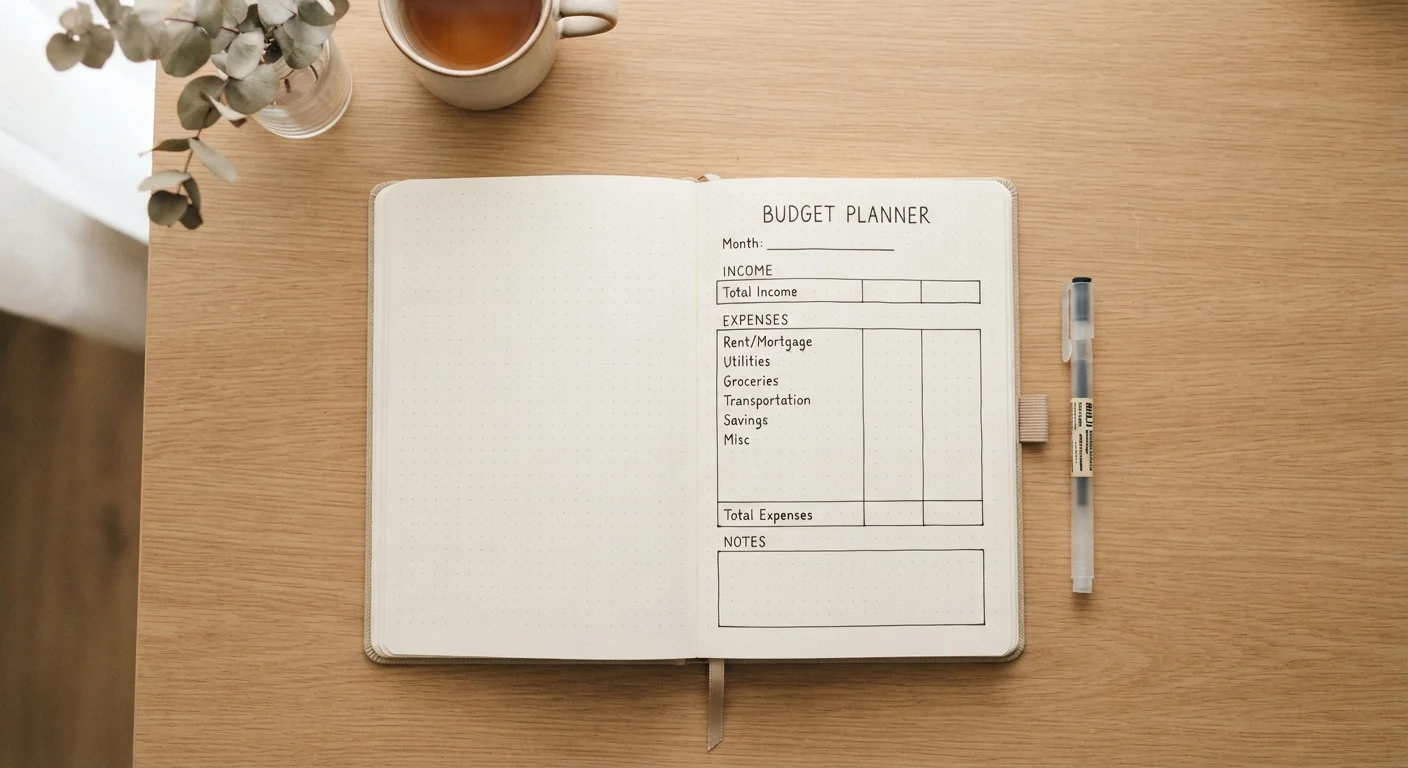
Zero-based budgeting is a monthly exercise. You sit down before the month begins - or as close to it as possible - and build your budget line by line based on expected income and planned expenses. Many people use a spreadsheet, a notebook, or a budgeting app designed for ZBB. Throughout the month, you track spending against each category. If you overspend on gas, something else has to give. This level of attention can feel empowering once you're in the habit, but it does require consistent engagement.
The 50/30/20 rule is far less demanding to maintain. Once you know your after-tax monthly income and have categorized your regular expenses, you mainly need to check in periodically to confirm you're staying within each bucket. Many people run a quick review at the end of each week or month rather than tracking daily. The tradeoff is less visibility into the granular patterns that might be quietly draining your budget.
74%
Americans living paycheck to paycheck
A 2023 report from LendingClub found that nearly three in four Americans report spending essentially all of their monthly income, underscoring why intentional budgeting matters regardless of which method you choose.
32%
Adults with a detailed written budget
The National Financial Educators Council has noted that a minority of U.S. adults maintain a formal, detailed budget - suggesting the barrier to entry is a significant factor in method choice.
If you're not sure which level of effort fits your personality, our budgeting myths guide addresses how to find a sustainable starting point.
Which Fits Your Financial Situation?
Both methods work - but neither works for everyone. The right fit depends on a few key factors.
Income Stability
If your income is consistent month to month, the 50/30/20 rule offers a reliable framework you can apply with minimal recalculation. If you're a freelancer, gig worker, or anyone whose paycheck varies, zero-based budgeting lets you reset allocations to match what you actually brought in. Applying fixed percentages to a highly variable income can leave you either overcommitting in lean months or underutilizing your money in strong ones.
Financial Goals
Zero-based budgeting gives you surgical control when you're working toward a specific goal - paying off a credit card, building an emergency fund, or saving for a down payment. You can see exactly where every dollar is going and redirect funds with precision. The 50/30/20 rule keeps savings as a priority through the 20% allocation, but it doesn't give you the same category-level visibility.
Lifestyle and Personality
Some people find detailed tracking motivating; others find it exhausting. There's no moral value in choosing one over the other. If a method feels like punishment, you're less likely to stick with it. The full budgeting method comparison explores additional frameworks - like the envelope method and pay-yourself-first - if neither of these feels like the right fit. You can also explore zero-based vs. percentage-based budgeting for a broader look at how these philosophies differ at a structural level.
Hybrid Approaches Are Perfectly Valid
Some budgeters use the 50/30/20 rule as a broad guardrail and apply zero-based logic within the 'needs' category to track utilities, groceries, and housing with precision. There's no rule requiring you to adopt one method in its entirety. If a hybrid approach keeps you engaged and on track, it's working. What matters most is that your budget reflects your actual priorities and that you review it consistently.
This article is for general informational purposes only and does not constitute personalized financial advice. Consider speaking with a qualified financial professional for guidance tailored to your specific circumstances.