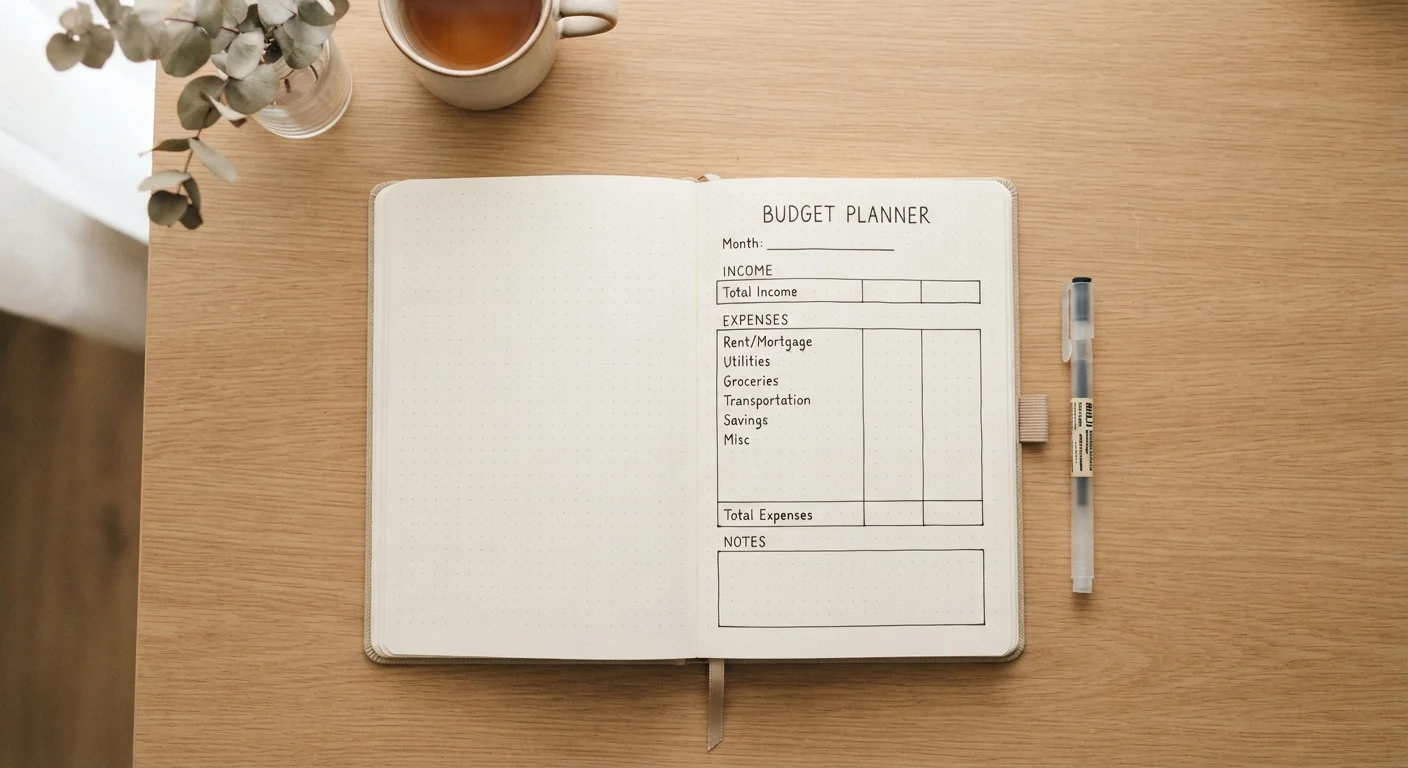

What a Budget Actually Does
A budget is a written plan that tells your money where to go instead of wondering where it went. That's it. It doesn't require a spreadsheet degree, a high salary, or a background in finance. If you've ever worried there isn't enough money to cover everything, a budget is the tool that replaces that anxiety with a clear picture.
Many people avoid budgeting because they assume it means restriction and sacrifice. In reality, a budget is permission - it explicitly authorizes you to spend on things you value while making sure the essentials are covered. Think of it less like a diet and more like a map. Common misconceptions about budgeting often stop people before they even begin, so it helps to approach this with an open mind.
Take-home income
The amount of money you actually receive after taxes and deductions are taken out of your paycheck - the real number to budget from.
Fixed expense
A bill or cost that stays the same every month, such as rent or a loan payment, making it easy to plan for in advance.
Discretionary spending
Money spent on non-essential wants - things like dining out, entertainment, or hobbies - that you can adjust when needed.
50/30/20 rule
A budgeting guideline that suggests spending roughly 50% of take-home income on needs, 30% on wants, and 20% on savings or debt repayment.
Irregular expense
A real but infrequent cost - like a car registration fee or holiday gifts - that doesn't appear every month but should still be planned for.
Sinking fund
A small amount of money set aside each month specifically for a known upcoming expense, so the cost doesn't feel like a surprise when it arrives.
Step 1: Know Your Take-Home Income
Before you allocate a single dollar, you need to know exactly how much money actually lands in your bank account each month. This is your take-home income - what remains after taxes, Social Security, and any other payroll deductions are removed. Do not use your gross salary (the number on your offer letter), because that money was never yours to spend.
Add up all income sources: your primary paycheck, any side work, freelance payments, government benefits, or other regular deposits. If your income varies month to month, use a conservative estimate - your lowest typical month - as your planning baseline. This protects you from over-committing in lean months.
Check Your Pay Stubs, Not Your Memory
Rather than estimating your take-home pay, look at actual pay stubs or bank deposit records from the last two or three months. This is especially important if you have deductions like a 401(k) contribution or health insurance premium that reduce your net pay below what you might expect.
Step 2: List Every Expense
Pull up your last two or three months of bank and credit card statements. Write down every expense you see, then sort them into three buckets:
- Fixed expenses - amounts that are the same each month, like rent, a car payment, or an insurance premium.
- Variable necessities - costs you must pay but that fluctuate, like groceries, gas, and utilities.
- Discretionary spending - the wants: dining out, subscriptions, entertainment, hobbies.
Don't forget irregular expenses - things like car registration, holiday gifts, or annual memberships. These feel like surprises but are actually predictable. Divide their annual cost by 12 and treat that monthly slice as a regular expense. For a detailed walkthrough of this process, see building a simple monthly budget from scratch.
Step 3: Set Spending Limits That Actually Fit
Now compare your total expenses to your take-home income. If expenses exceed income, that gap is the core problem your budget will address. If income exceeds expenses, you have room to direct money intentionally - toward savings, debt payoff, or financial goals.
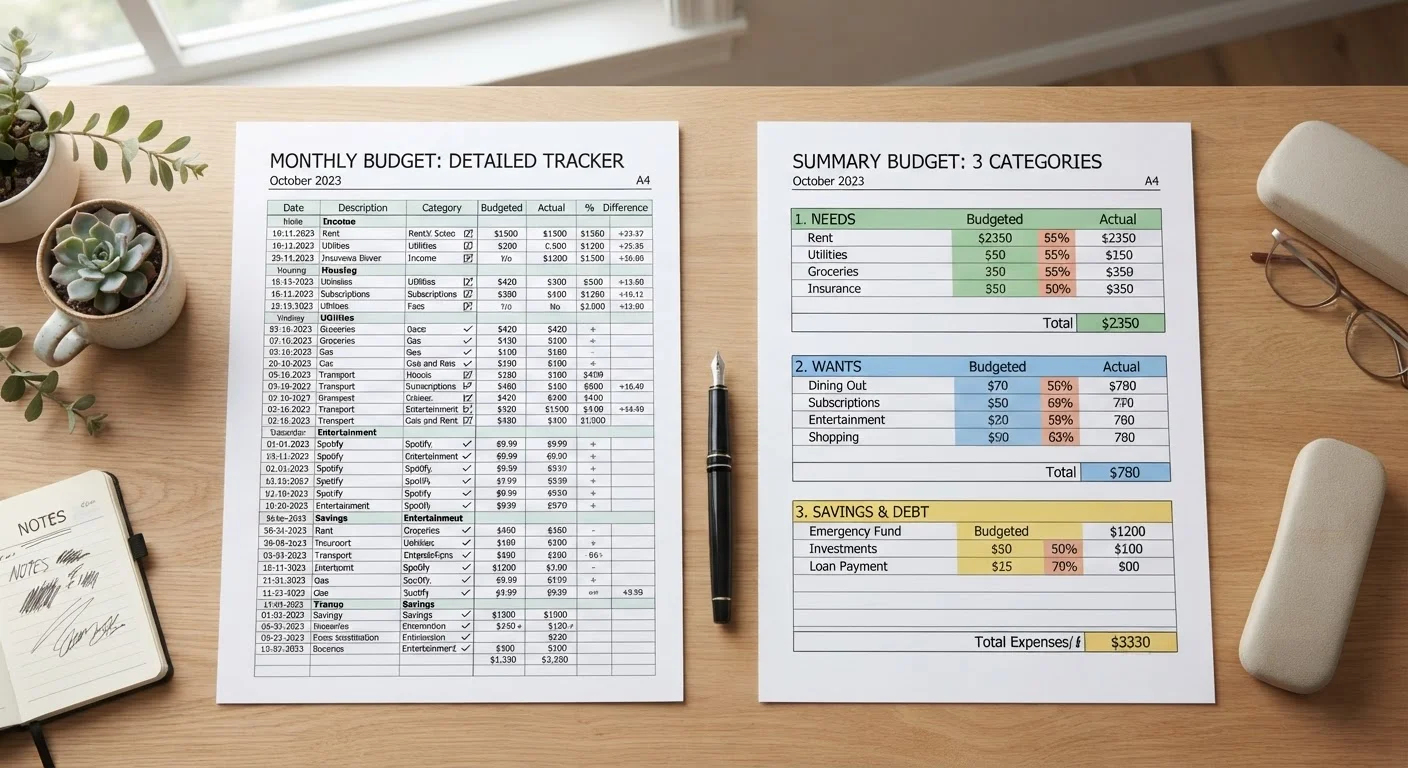
A widely cited starting framework is the 50/30/20 rule, which suggests allocating roughly 50% of take-home pay to needs, 30% to wants, and 20% to savings and debt beyond minimums. These percentages are guidelines, not commandments - your actual numbers may look different depending on where you live, your family size, or existing debt obligations.
Once you have initial limits, check whether they're realistic against what you actually spent last month. A budget that ignores reality won't survive contact with it. Adjust categories until the numbers add up to your take-home income - not more. When you're ready to explore different frameworks in depth, comparing zero-based budgeting to the 50/30/20 rule is a natural next step.
Don't Budget Based on Gross Income
A common first-time mistake is building a budget around your pre-tax salary rather than your actual take-home pay. If your gross salary is $60,000 per year, your monthly take-home could be $1,000 or more less than a simple division suggests, once taxes and other withholdings are accounted for. Always use the number that hits your bank account.
Step 4: Track, Adjust, and Keep Going
Setting a budget is the beginning, not the finish line. The habit that makes budgets work is tracking - recording what you actually spend and comparing it to your plan. You can do this weekly (10 minutes) or at the end of each month. Either way, the goal is to catch drift early, before small overages compound into a problem.
Expect to revise your categories in months two and three. That's not failure - it's calibration. A budget that evolves with your real life is far more valuable than a theoretically perfect plan you abandon. Over time, tracking also surfaces patterns: you might discover subscriptions you forgot about, or that you consistently overspend in one category while underspending in another.
For a deeper look at how different budgeting systems compare - including envelope budgeting, zero-based budgeting, and pay-yourself-first - see a budgeting method comparison. Building savings habits alongside your budget is also worth exploring at the Saving & Debt hub.
Consumer Financial Protection Bureau (CFPB) - Make a Budget
The CFPB offers a free, straightforward budget worksheet that helps you list income and expenses in one place - a useful companion for your first month of budgeting.
Budgeting Terms You Should Actually Know
A plain-language glossary covering the most common budgeting vocabulary - from discretionary spending to sinking funds - so jargon never slows you down.
This article is for general informational and educational purposes only and does not constitute personalized financial advice. Consider consulting a qualified financial professional for guidance specific to your situation.